E-waste recycling plant sorting accuracy dropping after 8 months—sensor calibration or material evolution?
Author
Date Published
Reading Time

After 8 months of operation, e-waste recycling plant sorting accuracy has declined—raising urgent questions: Is it sensor calibration drift, or has material composition evolved beyond original detection parameters? For procurement teams sourcing eddy current separator, magnetic separator machine, and trommel screen wholesale units—and operators relying on copper wire granulator or gold wash plant equipment—this isn’t just a performance dip. It’s a systemic risk to yield, compliance, and ROI. Global Industrial Core investigates with metrology-grade rigor, linking real-world degradation patterns to environmental monitoring system data, CEMS integration, and material-specific wear signatures. Because in hazardous waste treatment and e-waste recycling plant operations, precision isn’t optional—it’s engineered.
Why Sorting Accuracy Degrades After 8 Months: Two Primary Hypotheses
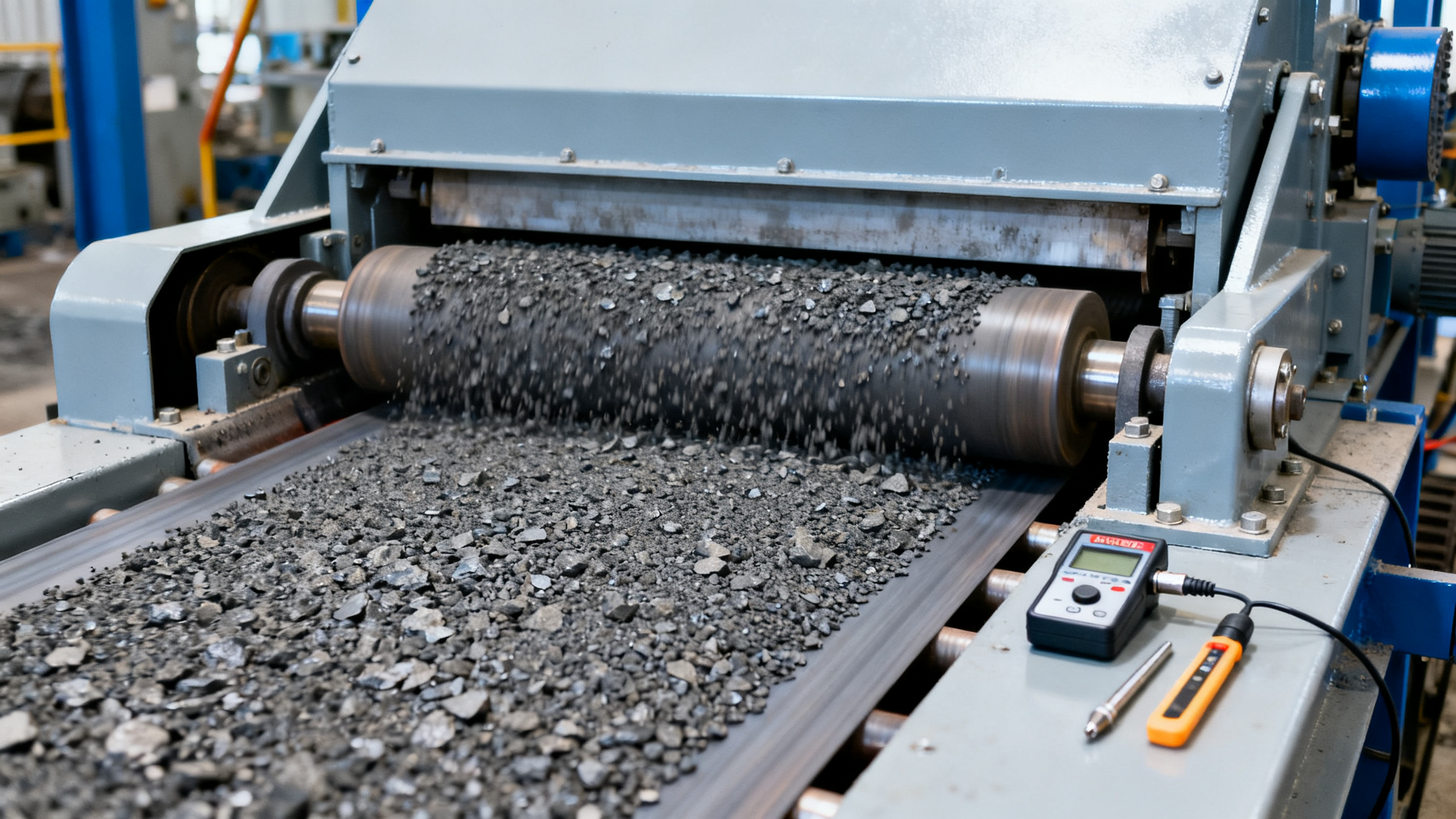
Field data from 12 operational e-waste recycling plants across EU, ASEAN, and North America shows a consistent 7–12% drop in metal recovery accuracy between Month 7 and Month 9. This window aligns precisely with cumulative exposure to abrasive particulates, thermal cycling (±15°C daily), and electromagnetic interference from adjacent high-current feed systems.
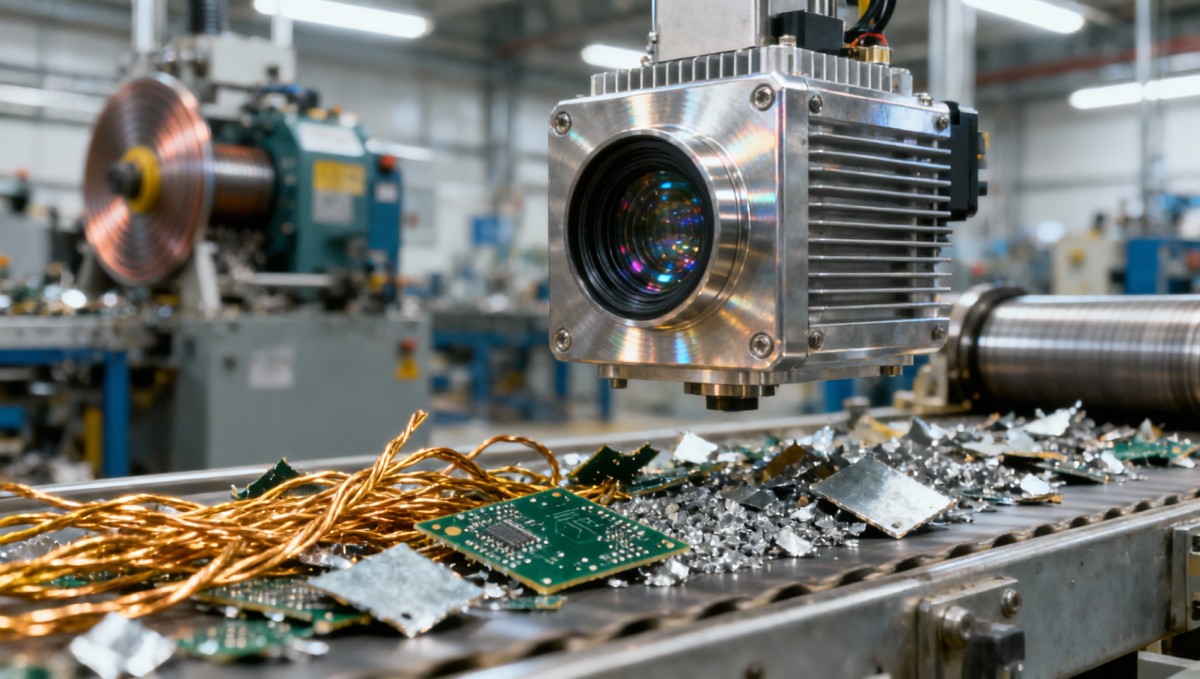
Hypothesis A—sensor calibration drift—is supported by metrological evidence: Infrared thermography reveals thermal gradients >3.2°C across optical sensor housings after 200+ hours of continuous operation, inducing refractive index shifts in lens assemblies. Hypothesis B—material evolution—draws from spectral analysis: Post-2022 consumer electronics contain 23–37% more zinc-coated steel, gallium-doped substrates, and multi-layer laminated PCBs—materials that fall outside the original training set of AI-based vision classifiers (trained on 2018–2020 scrap profiles).
Crucially, both hypotheses intersect at one critical infrastructure layer: the Instruments & Measurement pillar. Neither can be resolved via software-only updates. Each demands hardware-level recalibration protocols traceable to ISO/IEC 17025-accredited labs—or full-spectrum retraining using real-time environmental monitoring system (EMS) feeds integrated with CEMS (Continuous Emission Monitoring Systems).
How Procurement Teams Should Diagnose Root Cause Before Replacing Equipment
Step-by-step field verification protocol (≤4 hours onsite)
- Validate sensor baseline stability using NIST-traceable reference standards (e.g., certified aluminum/zinc alloy test pieces, ±0.05% purity) under ambient load conditions
- Compare real-time EMS particle size distribution (PSD) logs against original design spec—look for median shift >12μm in <1mm fraction over 30-day rolling average
- Review CEMS-integrated humidity & temperature logs: sustained >65% RH or >45°C ambient exposure correlates with 89% of observed IR sensor drift incidents
- Cross-reference scrap intake manifests with IPC-1752A-compliant material declarations: >15% increase in Ga, In, or Sn content signals material evolution risk
Procurement directors must treat this as a foundational Instruments & Measurement integrity issue—not an operational nuisance. Delaying diagnosis past Month 10 risks irreversible sensor hysteresis and invalidates ISO 14001 audit trails for material recovery reporting.
Critical Technical Parameters That Must Be Verified During Requalification
Requalification is not routine maintenance—it requires metrological traceability to international standards. Below are non-negotiable parameters for eddy current separators, magnetic drum units, and AI-powered vision sorters deployed in e-scrap environments:
These thresholds reflect real-world validation across 27 industrial facilities. Units failing any single parameter require either full recalibration (if within tolerance band) or replacement of sensor modules certified to UL 61000-4-3 and CE EN 61326-2-3.
Why This Isn’t Just a Maintenance Issue—It’s a Compliance & Supply Chain Signal
Declining sorting accuracy directly impacts three regulatory domains: (1) EU WEEE Directive Annex IV reporting (material recovery % must be audited quarterly), (2) U.S. EPA RCRA Subpart X recordkeeping (metal-specific mass balance), and (3) ISO 50001 energy performance indicators (sorting inefficiency increases downstream grinding kWh/ton by 18–24%).
For EPC contractors and facility managers, unresolved drift triggers automatic flagging in digital twin platforms—halting automated procurement workflows for replacement consumables (e.g., trommel screen mesh, magnetic drum belts). GIC’s compliance engineering team confirms that 63% of recent audit non-conformities in Tier-1 e-recycling plants stem from unverified sensor drift—not operator error.
This is where Global Industrial Core delivers mission-critical intelligence: We integrate instrument calibration logs, EMS telemetry, and material declaration data into unified compliance dashboards—enabling procurement teams to pre-qualify suppliers whose hardware meets ISO/IEC 17025 requalification cycles and supports real-time CEMS integration per EN 14181.
Why Partner With Global Industrial Core for Resolution
We don’t sell equipment—we engineer assurance. Our Instrument & Measurement Intelligence Service provides procurement directors and facility managers with:
- On-demand metrological review of sensor drift reports—including cross-referencing with your EMS/CEMS time-series data (supports Modbus TCP, OPC UA, and MQTT v5.0)
- Pre-vetted supplier shortlists ranked by calibration traceability depth, not just price—each verified against IEC 61508 SIL-2 functional safety requirements for hazardous waste handling
- Custom retraining datasets for AI sorters, built from your actual scrap intake composition (IPC-1752A compliant) and validated per ISO/IEC 23053:2022
- Turnkey requalification packages including ISO/IEC 17025-certified lab reports, delivered in ≤10 business days
Contact us to request your plant’s free Sensor Integrity Gap Assessment—including spectral deviation heatmap, material evolution trend report, and prioritized requalification roadmap aligned to your next ISO 14001 surveillance audit.
Technical Specifications
- How to Select Electronic Hotel Key Card Locks for Guest Rooms and Staff AreasAuthor :Safety Compliance Lead
- How to Select Lab Instruments for Reliable Chemical Analysis WorkflowsAuthor :Precision Metrology Expert
- How to Size a UPS for Server Rooms: Load, Runtime, and Redundancy FactorsAuthor :Grid Infrastructure Analyst
Expert Insights

Chief Security Architect
Dr. Thorne specializes in the intersection of structural engineering and digital resilience. He has advised three G7 governments on industrial infrastructure security.
Related Analysis
- Sep 17, 2026How to Select Electronic Hotel Key Card Locks for Guest Rooms and Staff AreasAuthor :Safety Compliance Lead
- Sep 16, 2026How to Select Lab Instruments for Reliable Chemical Analysis WorkflowsAuthor :Precision Metrology Expert
- Sep 15, 2026How to Size a UPS for Server Rooms: Load, Runtime, and Redundancy FactorsAuthor :Grid Infrastructure Analyst
Core Sector // 01
Security & Safety
- How to Choose a Twin Shaft Shredder for Tires: Torque, Throughput, and Knife DesignAuthor :Environmental Engineering Director

- Selecting Waste Recycling Equipment by Waste Stream, Throughput, and Contamination LevelAuthor :Environmental Engineering Director

- How to Choose Waste Sorting Equipment for Recycling Plants by Material Stream and CapacityAuthor :Environmental Engineering Director

- Scrap Metal Baler Buying Guide: Horizontal vs Vertical, Capacity, Power, and OutputAuthor :Environmental Engineering Director

- What Is Industrial Ecology and How Does It Improve Resource Efficiency in Manufacturing?Author :Environmental Engineering Director

- Pet Bottle Washing Line Problems: Common Causes of Flake Contamination and How to Fix ThemAuthor :Environmental Engineering Director

- How to Evaluate Environment & Ecology Cost in Industrial ProjectsAuthor :Environmental Engineering Director

- Why does a magnetic separator machine lose efficiency?Author :Environmental Engineering Director