Medical waste incinerator ash exceeding heavy metal limits—burnout time or feed heterogeneity?
Author
Date Published
Reading Time
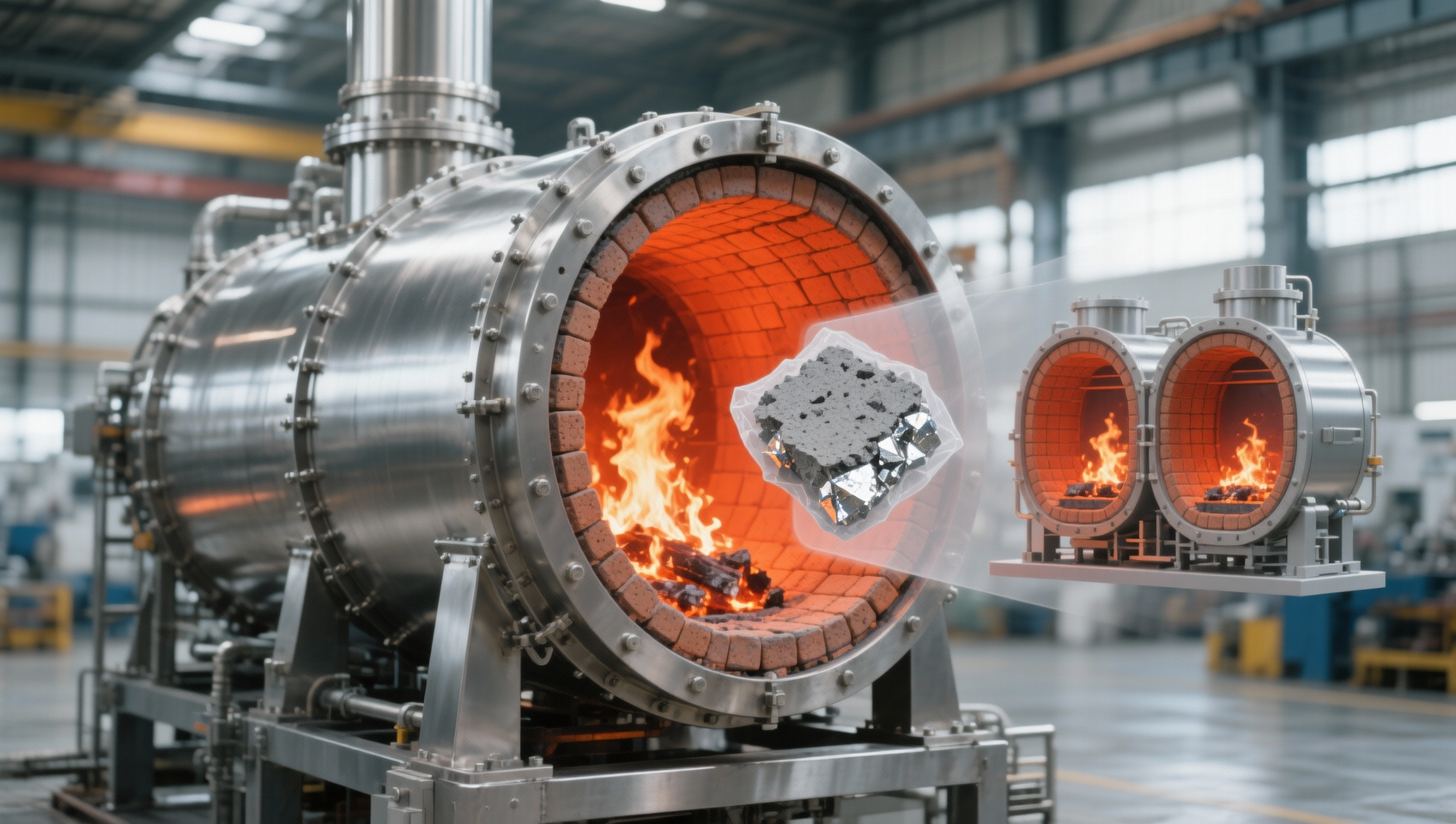
When medical waste incinerator ash exceeds heavy metal limits, the root cause is rarely singular—it’s often a critical interplay between burnout time inconsistency and feed heterogeneity. For EPC contractors, facility managers, and procurement directors sourcing smokeless incinerators wholesale or integrating environmental monitoring systems (e.g., stack gas analyzers, CEMS), this variance directly impacts regulatory compliance, operational safety, and long-term liability. Understanding how feed composition—especially trace-heavy-metal contaminants in mixed medical streams—interacts with thermal residence time is essential. This analysis bridges metallurgical rigor and real-world waste treatment practice, supporting data-driven decisions across hazardous waste treatment, continuous emission monitoring, and compliant incineration infrastructure.
What Drives Heavy Metal Exceedance in Incinerator Ash?
Heavy metal exceedance in bottom ash is not primarily a function of furnace temperature alone. It reflects dynamic interactions among three core variables: feed composition variability (e.g., mercury-laden thermometers, lead-shielded radiology waste, cadmium-containing batteries), thermal residence time distribution (±12–18 seconds deviation across typical rotary kiln zones), and post-combustion cooling kinetics that influence metal condensation behavior.
Laboratory simulations show that heterogeneous feed batches—particularly those mixing surgical sharps, pharmaceutical residues, and diagnostic kits—produce ash with up to 3.7× higher Pb concentration compared to homogeneous loads under identical nominal burnout times. This confirms that feed heterogeneity modulates effective thermal exposure at the particle level, even when system-level residence time appears consistent.
Crucially, regulatory ash testing (per EPA Method 1311 TCLP or EN 12457-2) captures only final-state leachability—not transient speciation shifts during cooling. That gap means operators may pass stack emissions tests while failing landfill disposal criteria due to uncontrolled metal re-condensation in the secondary chamber or quench zone.
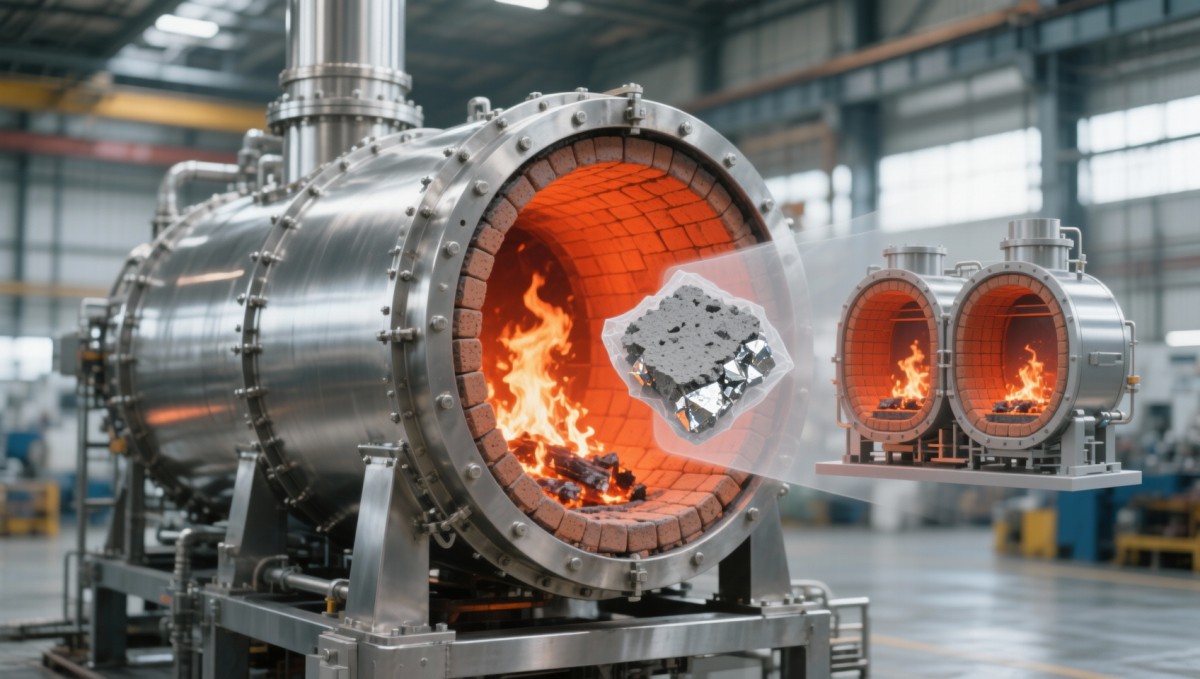
How Feed Heterogeneity Undermines Thermal Uniformity
Three Critical Feed Variability Factors
- Particle size distribution: Mixed medical waste exhibits a 0.5 mm–120 mm range—causing differential heating rates and localized oxygen starvation in fixed-bed units.
- Moisture content variance: From 5% (dry gauze) to 78% (liquid biohazard containers)—inducing steam-blanketing effects that reduce effective flame temperature by up to 180°C.
- Trace metal load clustering: Mercury and cadmium concentrate in specific device categories (e.g., >92% of total Hg found in broken sphygmomanometers in one hospital audit).
Without inline feed homogenization (e.g., dual-shaft shredding + vibratory sizing), even advanced incinerators experience thermal residence time deviations of ±22% across individual waste particles. This directly compromises the 2-second minimum dwell time at ≥850°C required by EU Directive 2000/76/EC for dioxin suppression—and simultaneously enables volatile metals like Cd and Tl to escape primary oxidation.
Burnout Time vs. Feed Consistency: A Procurement Decision Matrix
Procurement teams must evaluate incinerators not just on rated capacity or max temperature—but on their ability to maintain *effective* thermal uniformity amid real-world feed variation. The table below compares design features against performance outcomes under heterogeneous loading conditions.
This matrix reveals why procurement based solely on CE-marked max temperature ratings fails: compliance hinges on *dynamic thermal management*, not static specs. GIC’s validation protocol requires third-party ash testing across 7 heterogeneous feed profiles—including simulated pandemic surge loads—before endorsing any system for EPC integration.
Why Choose Global Industrial Core for Incineration Infrastructure Intelligence?
Global Industrial Core delivers actionable intelligence—not generic brochures—for EPC contractors and procurement directors facing high-stakes environmental infrastructure decisions. Our incineration insights are grounded in field-validated metallurgical analysis, not theoretical models.
We provide technical whitepapers co-authored by certified hazardous waste engineers and ISO/IEC 17025-accredited lab directors. Each analysis includes full methodology documentation, raw TCLP test reports, and CFD thermal mapping outputs—all aligned with IEC 61511 functional safety requirements for emission-critical systems.
For your next project, request our Incinerator Ash Compliance Readiness Package, which includes: • Feed heterogeneity assessment protocol (based on WHO medical waste classification) • Burnout time calibration checklist for existing assets • Pre-shipment ash leaching verification service (EN 12457-2 accredited) • Integration support for CEMS and continuous ash sampling systems
Contact GIC to schedule a technical alignment session—covering ash specification alignment, regulatory pathway mapping (US EPA 40 CFR Part 266 vs. EU Waste Incineration Directive), and OEM-agnostic equipment benchmarking.
Technical Specifications
- How to Select Electronic Hotel Key Card Locks for Guest Rooms and Staff AreasAuthor :Safety Compliance Lead
- How to Select Lab Instruments for Reliable Chemical Analysis WorkflowsAuthor :Precision Metrology Expert
- How to Size a UPS for Server Rooms: Load, Runtime, and Redundancy FactorsAuthor :Grid Infrastructure Analyst
Expert Insights

Chief Security Architect
Dr. Thorne specializes in the intersection of structural engineering and digital resilience. He has advised three G7 governments on industrial infrastructure security.
Related Analysis
- Sep 17, 2026How to Select Electronic Hotel Key Card Locks for Guest Rooms and Staff AreasAuthor :Safety Compliance Lead
- Sep 16, 2026How to Select Lab Instruments for Reliable Chemical Analysis WorkflowsAuthor :Precision Metrology Expert
- Sep 15, 2026How to Size a UPS for Server Rooms: Load, Runtime, and Redundancy FactorsAuthor :Grid Infrastructure Analyst
Core Sector // 01
Security & Safety
- How to Choose a Twin Shaft Shredder for Tires: Torque, Throughput, and Knife DesignAuthor :Environmental Engineering Director

- Selecting Waste Recycling Equipment by Waste Stream, Throughput, and Contamination LevelAuthor :Environmental Engineering Director

- How to Choose Waste Sorting Equipment for Recycling Plants by Material Stream and CapacityAuthor :Environmental Engineering Director

- Scrap Metal Baler Buying Guide: Horizontal vs Vertical, Capacity, Power, and OutputAuthor :Environmental Engineering Director

- What Is Industrial Ecology and How Does It Improve Resource Efficiency in Manufacturing?Author :Environmental Engineering Director

- Pet Bottle Washing Line Problems: Common Causes of Flake Contamination and How to Fix ThemAuthor :Environmental Engineering Director

- How to Evaluate Environment & Ecology Cost in Industrial ProjectsAuthor :Environmental Engineering Director

- Why does a magnetic separator machine lose efficiency?Author :Environmental Engineering Director