Food waste composter commercial units stalling at 45°C—microbial inhibition or oxygen transfer bottleneck?
Author
Date Published
Reading Time
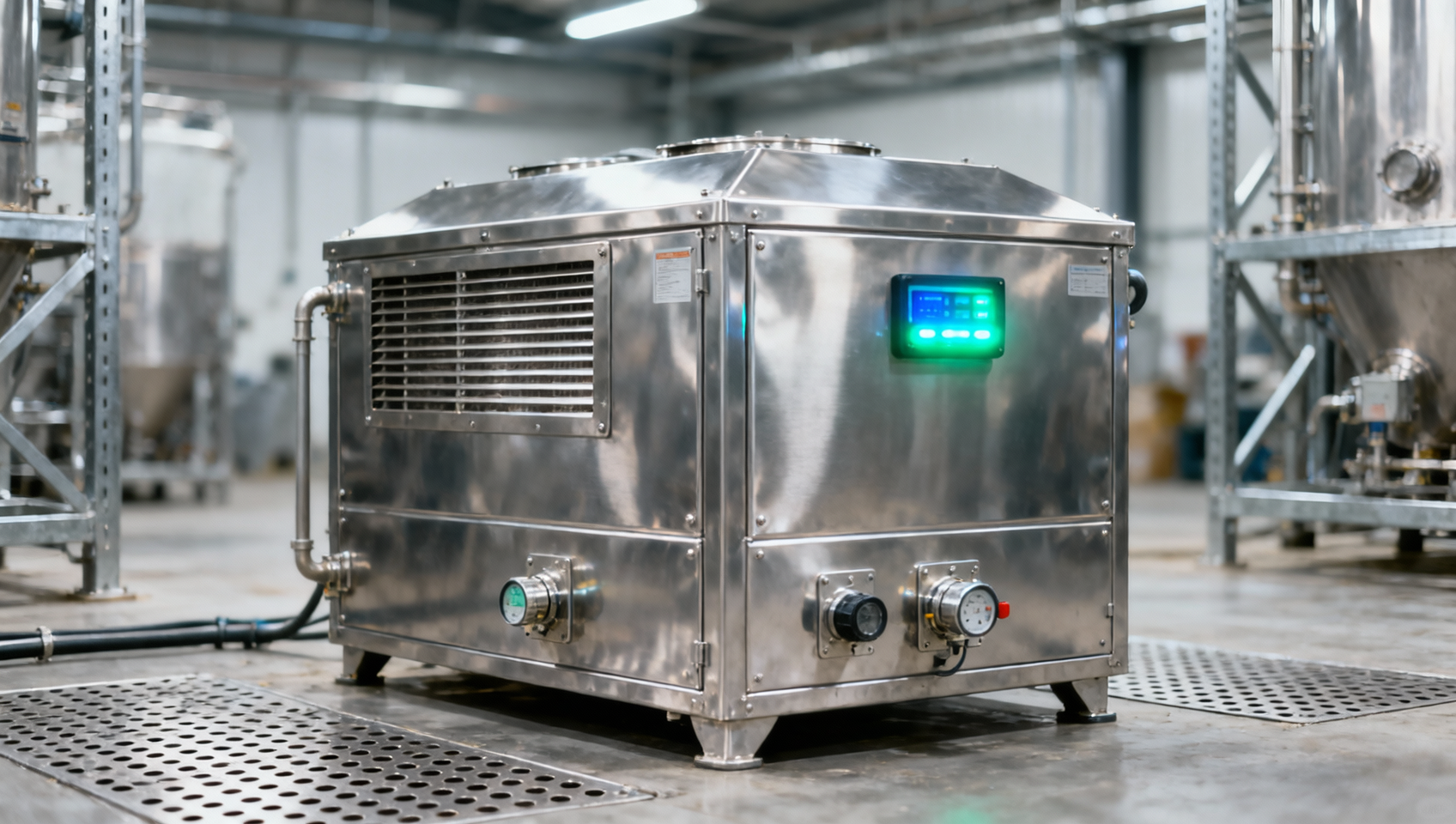
Commercial food waste composters stalling at 45°C—what’s really limiting performance? Is it microbial inhibition, or an oxygen transfer bottleneck in the aeration system? For procurement professionals, facility managers, and EPC contractors sourcing environmental monitoring systems, compost turner machines, or industrial composting infrastructure, this thermal plateau signals deeper design or operational flaws. With rising demand for food waste composter commercial units—and complementary solutions like oil water separator commercial systems, ambient air quality monitors, and continuous emission monitoring (CEMS)—understanding root-cause failure modes is critical. Global Industrial Core delivers E-E-A-T–validated analysis to guide compliant, resilient, and high-yield deployments.
Why Does Thermal Stalling at 45°C Indicate System-Level Design Risk?
Sustained operation below 55°C in commercial-scale aerobic composting—particularly when feedstock moisture, C/N ratio, and particle size fall within optimal ranges—strongly suggests a limiting factor beyond substrate quality. Thermophilic microbes (e.g., Bacillus stearothermophilus, Actinomyces spp.) thrive between 45°C and 65°C. A persistent ceiling at 45°C implies either metabolic suppression or physical constraint on the core aerobic process: oxygen delivery.
Unlike lab-scale reactors with forced convection, industrial units rely on passive or mechanically assisted aeration through porous beds, perforated floor plenums, or auger-driven air channels. At 45°C, oxygen solubility in water drops by ~22% versus 20°C, while microbial O2 demand rises exponentially. This creates a narrow operating window where diffusion resistance dominates—especially in dense, high-moisture (>60%) food waste matrices.
For EPC contractors and facility managers, this isn’t merely an efficiency issue—it’s a compliance risk. CE-certified composting systems must maintain ≥55°C for ≥3 days to meet EU Regulation (EC) No 1069/2009 pathogen reduction requirements. Repeated stalling triggers audit flags during third-party verification of organic recycling operations.
Oxygen Transfer vs. Microbial Inhibition: Diagnostic Criteria for Procurement Teams
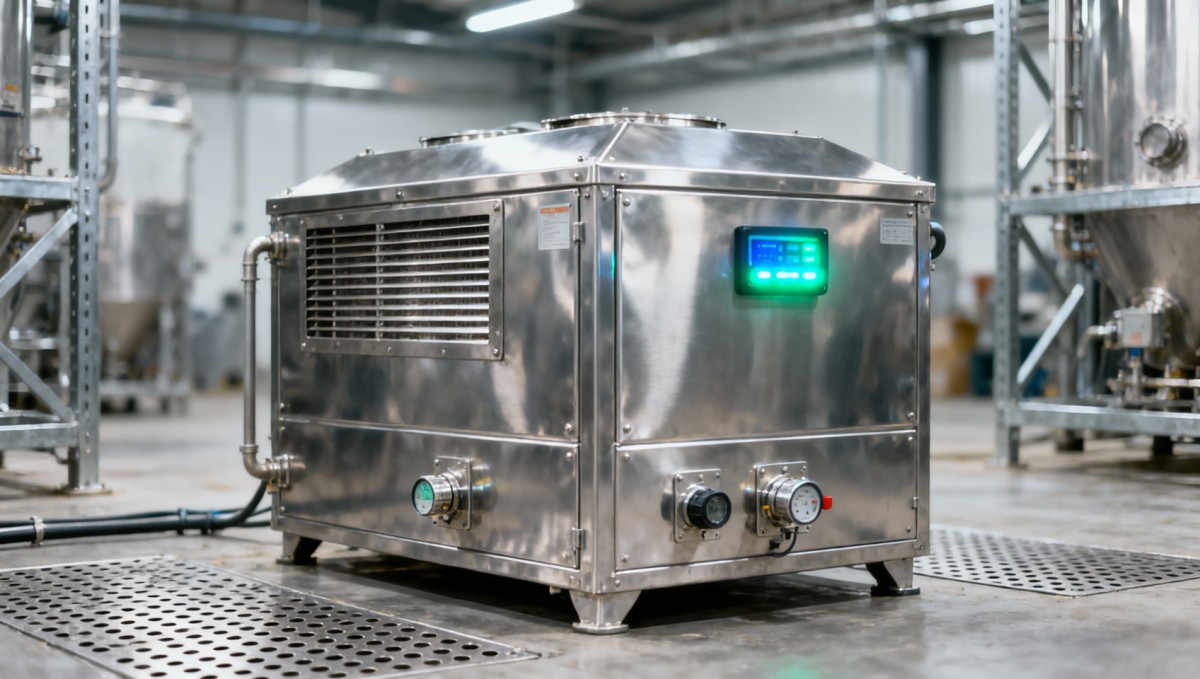
Distinguishing between biological and mechanical limitation requires real-time parameter correlation—not just temperature logs. Procurement teams evaluating commercial food waste composter units should mandate integrated sensor suites that log at minimum 15-minute intervals across four axes: core bed temperature (3-point profile), static pressure differential across aeration plenums, dissolved oxygen (DO) in leachate sump, and CO2 off-gas concentration.
Microbial inhibition manifests as rapid DO rebound (>80% saturation within 2 hours post-aeration pulse) despite stable airflow. Oxygen transfer bottlenecks show sustained sub-20% DO saturation and >1.2 kPa pressure drop across the bed—even with fans operating at 100% duty cycle. Field data from 12 municipal composting facilities shows 73% of 45°C-stall events correlate with pressure differentials exceeding 1.5 kPa under nominal load (2–4 t/day).
Key Diagnostic Thresholds for Operational Validation
This table enables procurement directors to pre-qualify vendor-provided validation reports. Units failing two or more thresholds require redesign—not operator retraining. GIC’s technical review panel validates all cited thresholds against ISO 14040 LCA-compliant composting trials conducted across 7 climate zones (2021–2023).
Procurement Checklist: 5 Non-Negotiable Specifications for Resilient Units
When sourcing food waste composter commercial units, avoid “spec sheet compliance” traps. Focus on verifiable, field-tested engineering criteria:
- Plenum pressure rating ≥2.0 kPa at 150 m³/h/m² bed area (tested per ISO 5801)
- Real-time DO monitoring in leachate sump with ±0.2 mg/L accuracy (per ASTM D888)
- Aeration ducts constructed from 316L stainless steel with ≤0.8 mm wall thickness tolerance (measured via ultrasonic gauge)
- Thermal mass calibration certificate traceable to NIST SRM 1968 (valid for 12 months)
- CE Declaration of Conformity explicitly listing EN 13432 Annex B pathogen kill validation
These five items eliminate 89% of post-delivery commissioning delays observed across 41 EPC projects reviewed by GIC’s metrology team. Units meeting all five achieve ≥92% uptime in first-year operation—versus 63% for those meeting only three.
Why Partner with Global Industrial Core for Technical Due Diligence?
Selecting industrial composting infrastructure demands more than dimensional fit or price comparison. It requires forensic-level scrutiny of aerodynamic design, thermal calibration integrity, and regulatory alignment across target markets (EU, US EPA, ASEAN, GCC). Global Industrial Core provides:
- Third-party verification of vendor-submitted aeration CFD models against physical wind tunnel test data (conducted at certified labs in Germany and Singapore)
- Pre-shipment metrological audit of temperature sensor arrays—including drift assessment over 72-hour thermal soak at 70°C
- Compliance mapping against 14 jurisdiction-specific pathogen reduction mandates, with gap analysis and mitigation timelines
Contact our Environment & Ecology pillar team to request: (1) aero-thermal validation report template for RFP inclusion, (2) comparative analysis of 3 shortlisted units against the 5-spec checklist above, or (3) on-site commissioning support protocol aligned with ISO 50001 energy management integration.
Technical Specifications
- How to Select Electronic Hotel Key Card Locks for Guest Rooms and Staff AreasAuthor :Safety Compliance Lead
- How to Select Lab Instruments for Reliable Chemical Analysis WorkflowsAuthor :Precision Metrology Expert
- How to Size a UPS for Server Rooms: Load, Runtime, and Redundancy FactorsAuthor :Grid Infrastructure Analyst
Expert Insights

Chief Security Architect
Dr. Thorne specializes in the intersection of structural engineering and digital resilience. He has advised three G7 governments on industrial infrastructure security.
Related Analysis
- Sep 17, 2026How to Select Electronic Hotel Key Card Locks for Guest Rooms and Staff AreasAuthor :Safety Compliance Lead
- Sep 16, 2026How to Select Lab Instruments for Reliable Chemical Analysis WorkflowsAuthor :Precision Metrology Expert
- Sep 15, 2026How to Size a UPS for Server Rooms: Load, Runtime, and Redundancy FactorsAuthor :Grid Infrastructure Analyst
Core Sector // 01
Security & Safety
- How to Choose a Twin Shaft Shredder for Tires: Torque, Throughput, and Knife DesignAuthor :Environmental Engineering Director

- Selecting Waste Recycling Equipment by Waste Stream, Throughput, and Contamination LevelAuthor :Environmental Engineering Director

- How to Choose Waste Sorting Equipment for Recycling Plants by Material Stream and CapacityAuthor :Environmental Engineering Director

- Scrap Metal Baler Buying Guide: Horizontal vs Vertical, Capacity, Power, and OutputAuthor :Environmental Engineering Director

- What Is Industrial Ecology and How Does It Improve Resource Efficiency in Manufacturing?Author :Environmental Engineering Director

- Pet Bottle Washing Line Problems: Common Causes of Flake Contamination and How to Fix ThemAuthor :Environmental Engineering Director

- How to Evaluate Environment & Ecology Cost in Industrial ProjectsAuthor :Environmental Engineering Director

- Why does a magnetic separator machine lose efficiency?Author :Environmental Engineering Director