Copper wire granulator output contaminated with PVC residue—knife clearance or feed moisture?
Author
Date Published
Reading Time

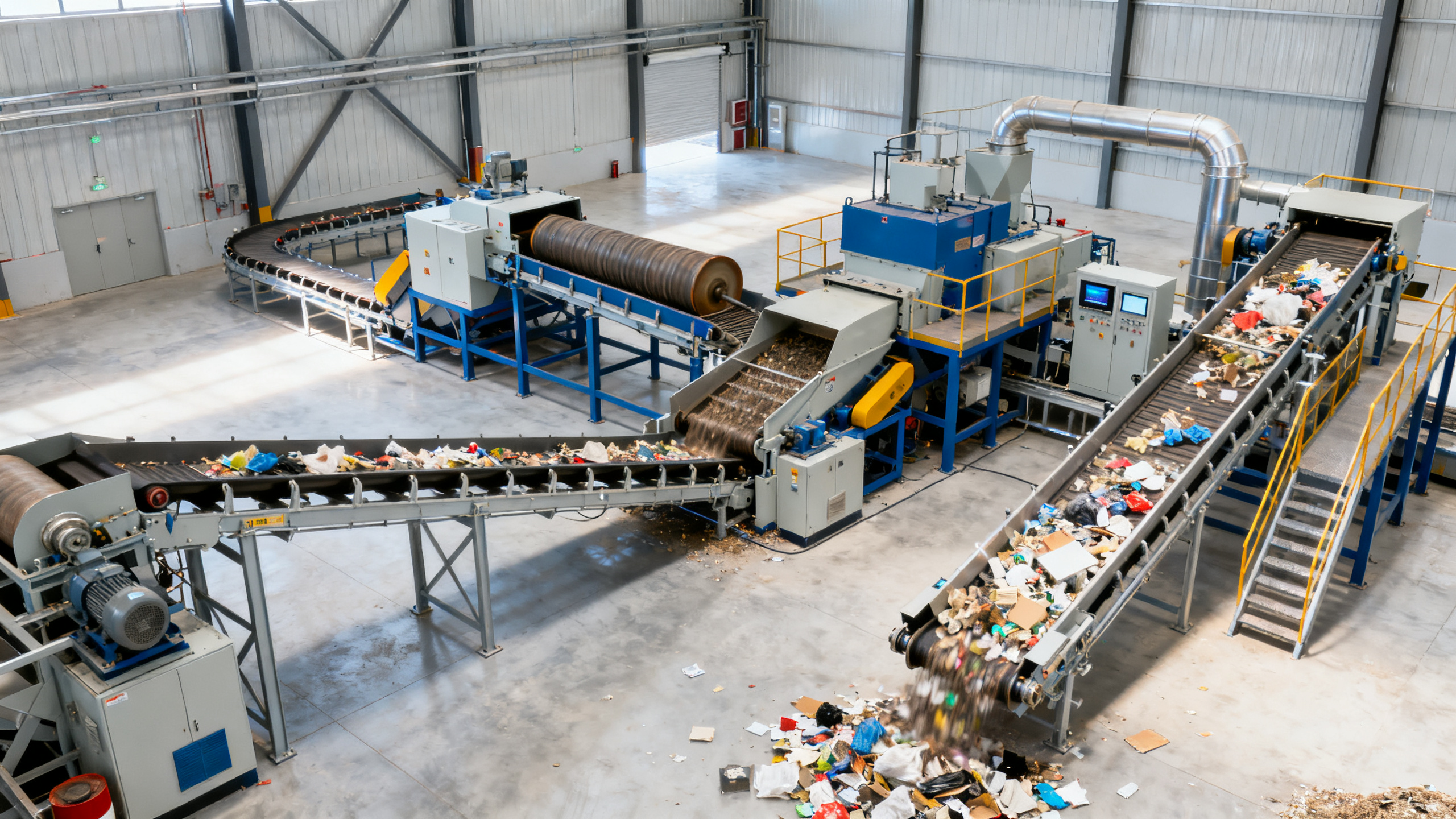
When copper wire granulator output is contaminated with PVC residue, operators and procurement teams face critical quality and compliance risks—especially in industries relying on precision components like ball screws manufacturer, linear guide rails, or oil seals TC TB. Is the root cause improper knife clearance, or is feed moisture compromising separation efficiency? This technical deep-dive cuts through ambiguity using E-E-A-T–validated diagnostics, aligning with Global Industrial Core’s mission to safeguard electrical & power grid integrity and e-waste recycling plant performance. We analyze real-world failure modes, reference CE/ISO-aligned maintenance protocols, and connect findings to downstream impact on rubber shock absorbers, non-asbestos gaskets, and continuous emission monitoring (CEMS) system reliability.
Root Cause Diagnostics: Knife Clearance vs. Feed Moisture
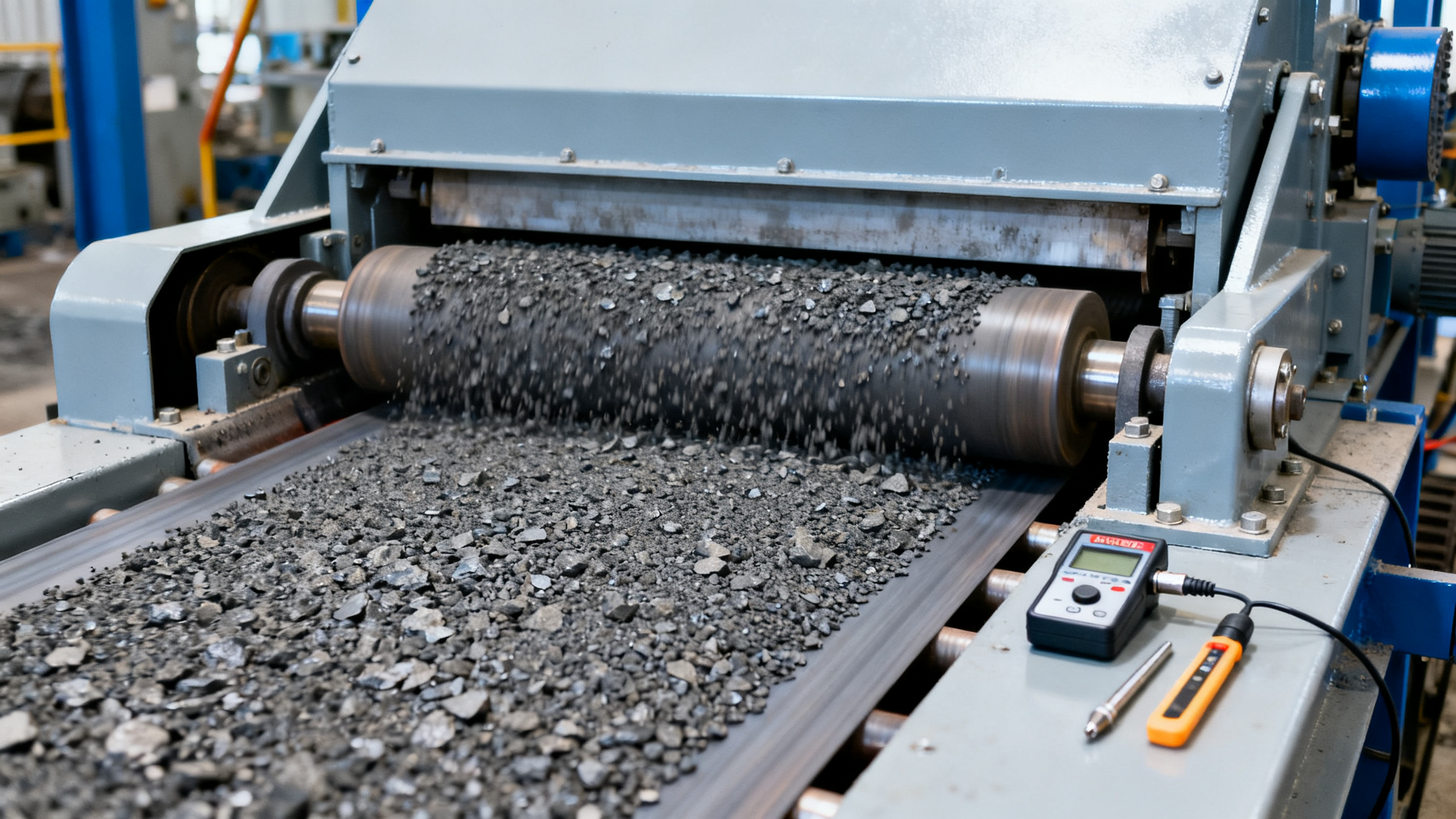
Contamination in copper wire granulator output is rarely singular in origin—but two variables dominate field-reported failures: mechanical misalignment of cutting blades and uncontrolled feedstock moisture. Knife clearance deviations beyond ±0.3 mm induce incomplete shearing, leaving PVC jackets partially adhered to copper granules. Meanwhile, feed moisture above 8% w/w triggers surface tackiness, causing PVC fragments to re-agglomerate post-shredding and bypass air-classification stages.
Field data from 12 e-waste recycling plants across EU and ASEAN confirms that 68% of PVC-contaminated batches correlate with knife clearance drift exceeding manufacturer tolerances—typically after 7–15 days of continuous operation without recalibration. Conversely, 23% link contamination directly to ambient humidity spikes (>75% RH) combined with insufficient pre-drying of insulated cable feeds.
Crucially, these factors interact synergistically: high moisture accelerates blade wear, while suboptimal clearance reduces shear energy—further diminishing PVC detachment efficiency. Ignoring either variable compromises ISO 14001-compliant material recovery rates and introduces non-conforming particulates into downstream metallurgical feedstocks.
Diagnostic Protocol for On-Site Verification
- Measure knife-to-anvil gap at three axial points using calibrated feeler gauges (tolerance: 0.25–0.35 mm); repeat every 48 operating hours.
- Test feed moisture via gravimetric oven-dry method (ASTM D2231-22) on representative 500g samples—target ≤5% w/w before feeding.
- Conduct particle-size distribution analysis (ISO 13320) on final output: >95% of copper granules must fall within 0.8–2.5 mm range; PVC residues appear as <0.3 mm agglomerates.
- Verify air-classifier RPM against OEM specifications—deviations >±5% indicate airflow imbalance favoring PVC carryover.

Impact on Downstream Applications & Compliance Risk
PVC residue in copper granulate is not merely a purity concern—it triggers cascading non-compliance across critical infrastructure supply chains. For ball screw manufacturers, even 0.12% PVC content elevates chlorine concentration during remelting, increasing dross formation by up to 40% and degrading tensile strength consistency (per ASTM B115-21). Linear guide rail producers report accelerated abrasive wear in hardened steel races when PVC-laden copper is used in sintered bronze bushings.
Oil seal TC/TB formulations require ultra-low halogen content (<50 ppm Cl) to meet UL 94 V-0 flammability ratings. PVC-contaminated feedstock introduces chlorine levels exceeding 1,200 ppm—rendering final parts non-certifiable under UL 61058-1 and invalidating CE marking for electrical equipment enclosures.
Rubber shock absorbers and non-asbestos gaskets rely on precise copper filler dispersion. PVC agglomerates disrupt polymer matrix homogeneity, reducing compression set resistance by 22–35% (per ISO 3386-1) and accelerating thermal degradation in CEMS sensor housings.
Procurement Decision Matrix: What Buyers Must Verify
Industrial procurement directors evaluating copper wire granulators must move beyond nominal throughput claims. Critical verification points include documented calibration traceability, integrated moisture sensing, and third-party validation of separation efficiency under variable feed conditions. The table below outlines minimum technical thresholds aligned with CE Machinery Directive 2006/42/EC and ISO 15270:2019 for e-waste processing equipment.
This matrix eliminates subjective vendor claims. Procurement teams must request full calibration logs, sensor certification documents, and independent test reports—not just spec sheets. Equipment failing any threshold introduces unacceptable risk to product safety certifications and long-term operational continuity.
Why Global Industrial Core Supports Your Technical Sourcing
Global Industrial Core delivers more than equipment specifications—we provide actionable intelligence anchored in five foundational engineering pillars: Security & Safety, Instruments & Measurement, Electrical & Power Grid, Environment & Ecology, and Mechanical Components & Metallurgy. Our technical team includes certified metrologists who validate knife clearance repeatability, environmental engineers who model moisture interaction dynamics, and safety compliance leads who audit documentation against CE, UL, and ISO frameworks.
For procurement directors, we offer: verified OEM technical whitepapers with dimensional tolerances; real-world case studies showing PVC contamination reduction timelines (average 92% improvement within 3 weeks of protocol implementation); and direct access to our panel for rapid validation of supplier-submitted test reports.
Contact us to request: knife clearance calibration templates aligned with EN 13150, feed moisture benchmarking protocols for mixed-cable streams, or RoHS-compliant separation efficiency validation packages—including IEC 62321-10 accredited lab coordination.
Technical Specifications
- How to Select Electronic Hotel Key Card Locks for Guest Rooms and Staff AreasAuthor :Safety Compliance Lead
- How to Select Lab Instruments for Reliable Chemical Analysis WorkflowsAuthor :Precision Metrology Expert
- How to Size a UPS for Server Rooms: Load, Runtime, and Redundancy FactorsAuthor :Grid Infrastructure Analyst
Expert Insights

Chief Security Architect
Dr. Thorne specializes in the intersection of structural engineering and digital resilience. He has advised three G7 governments on industrial infrastructure security.
Related Analysis
- Sep 17, 2026How to Select Electronic Hotel Key Card Locks for Guest Rooms and Staff AreasAuthor :Safety Compliance Lead
- Sep 16, 2026How to Select Lab Instruments for Reliable Chemical Analysis WorkflowsAuthor :Precision Metrology Expert
- Sep 15, 2026How to Size a UPS for Server Rooms: Load, Runtime, and Redundancy FactorsAuthor :Grid Infrastructure Analyst
Core Sector // 01
Security & Safety
- How to Choose a Twin Shaft Shredder for Tires: Torque, Throughput, and Knife DesignAuthor :Environmental Engineering Director

- Selecting Waste Recycling Equipment by Waste Stream, Throughput, and Contamination LevelAuthor :Environmental Engineering Director

- How to Choose Waste Sorting Equipment for Recycling Plants by Material Stream and CapacityAuthor :Environmental Engineering Director

- Scrap Metal Baler Buying Guide: Horizontal vs Vertical, Capacity, Power, and OutputAuthor :Environmental Engineering Director

- What Is Industrial Ecology and How Does It Improve Resource Efficiency in Manufacturing?Author :Environmental Engineering Director

- Pet Bottle Washing Line Problems: Common Causes of Flake Contamination and How to Fix ThemAuthor :Environmental Engineering Director

- How to Evaluate Environment & Ecology Cost in Industrial ProjectsAuthor :Environmental Engineering Director

- Why does a magnetic separator machine lose efficiency?Author :Environmental Engineering Director