Medium Voltage Switchgear IEC Standard: Key Ratings, Tests, and Compliance Checks
Author
Date Published
Reading Time

Why does the medium voltage switchgear IEC standard matter so much in project evaluation?

The medium voltage switchgear IEC standard is more than a reference number on a datasheet.
It defines how switchgear should perform under normal service, fault stress, and maintenance conditions.
In practical terms, it helps reduce ambiguity when comparing offers from different suppliers.
That matters in industrial power systems where outage cost, arc risk, and replacement delay can quickly exceed equipment price.
The core reference is IEC 62271, especially IEC 62271-200 for AC metal-enclosed switchgear and controlgear above 1 kV and up to 52 kV.
This framework covers ratings, service conditions, internal arc classification, type tests, and routine verification.
For organizations that rely on evidence-based sourcing, such as the editorial approach used by Global Industrial Core, standards alignment is a reliability filter first and a commercial filter second.
A compliant panel can still be wrong for the application, but a noncompliant one introduces avoidable risk from the start.
Which ratings should be checked before reading the test certificates?
A common mistake is jumping straight to brochures that highlight arc resistance or compact size.
The better sequence is to confirm the basic ratings first, because every later compliance claim depends on them.
Start with the electrical backbone
Rated voltage, rated insulation level, and rated frequency define the operating envelope.
These values must match the system design, not just the nominal network label.
For example, insulation coordination should reflect site altitude, surge exposure, and earthing practice.
Short-circuit capability is not a single number
The medium voltage switchgear IEC standard separates short-time withstand current, peak withstand current, and fault duration.
A panel rated 25 kA for 1 second is not equivalent to one rated 25 kA for 3 seconds.
Busbars, earthing switch, and cable compartment arrangements all need consistent fault-duty coordination.
Current capacity also needs context
Rated normal current should be assessed together with enclosure design, ambient temperature, and ventilation assumptions.
In compact rooms, heat rise becomes a real selection issue.
This is especially true for data-heavy facilities, process plants, and utility interface rooms.
This kind of rating table is often more useful than a marketing summary because it reveals hidden mismatches early.
What does IEC compliance actually include beyond a certificate?
IEC compliance is not proven by a single declaration sheet.
For medium voltage switchgear, the real question is whether the design, tested configuration, and supplied configuration still match.
That distinction is where many technical reviews become too superficial.
Type tests show design capability
Type tests usually cover dielectric performance, temperature rise, short-circuit withstand, mechanical operation, degree of protection, and internal arc behavior where applicable.
These tests validate a representative design under controlled conditions.
They do not automatically validate every later variant.
Routine tests confirm production consistency
Routine tests are performed on supplied units before shipment.
They normally include wiring checks, power-frequency withstand tests, mechanical inspections, and verification of control functions.
Routine testing is where assembly quality becomes visible.
Design changes require disciplined review
A different breaker, altered busbar layout, cable compartment rework, or modified pressure relief path may affect test validity.
Need to know whether the supplier is offering an extension by similarity, a fully tested configuration, or an engineering judgment.
The medium voltage switchgear IEC standard supports structured verification, but the buyer still has to ask the right questions.
How should internal arc classification and compartment design be judged?
This is where technical evaluation becomes very application-specific.
Internal arc classification is often presented as a headline feature, yet its usefulness depends on access pattern, installation room, and maintenance philosophy.
IEC markings such as AFL or AFLR describe accessibility from front, lateral, and rear sides during an arc event.
They do not replace site-specific arc risk review.
Compartmentalization matters in daily operation
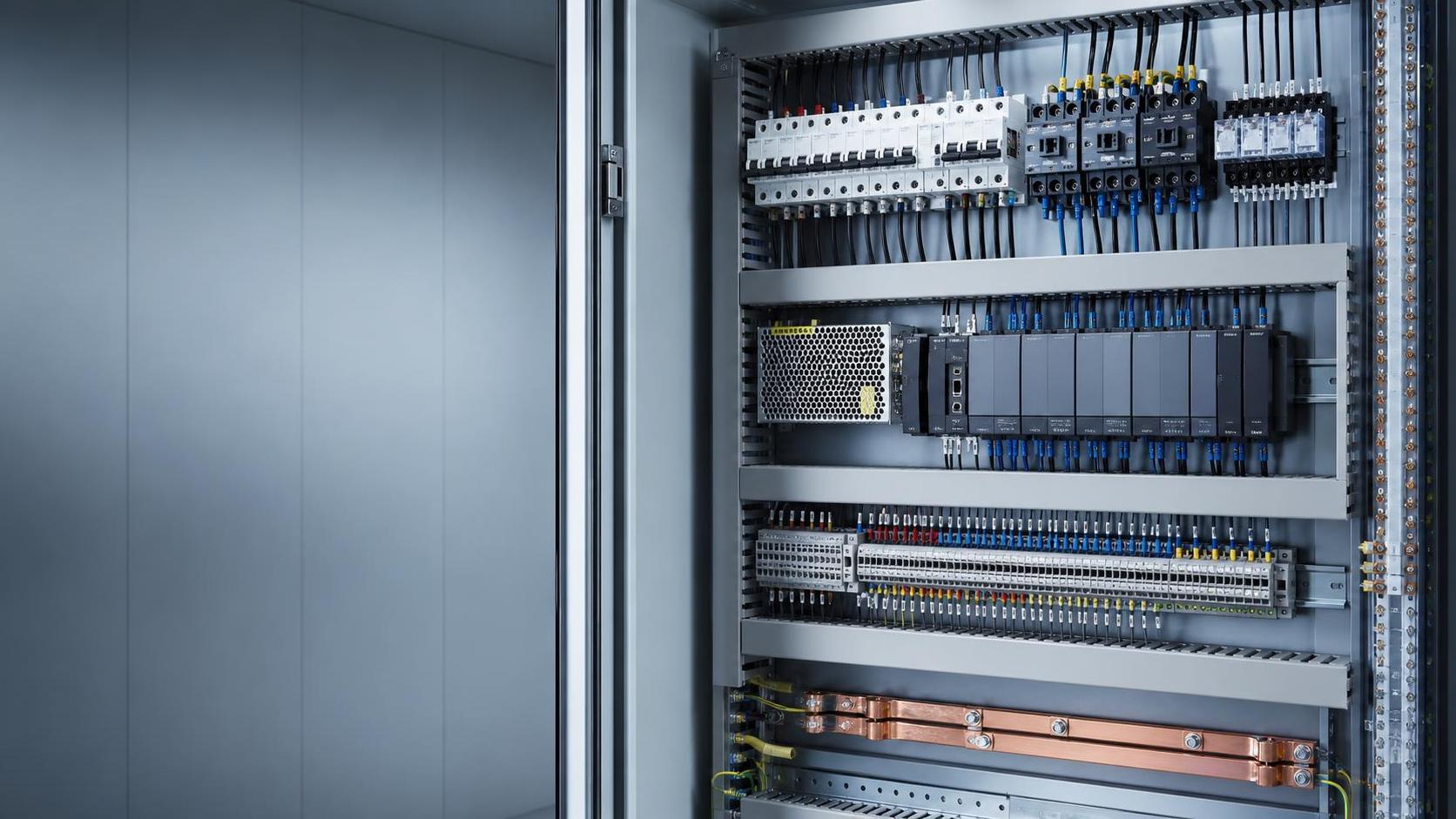
Metal-enclosed switchgear is usually divided into busbar, switching device, cable, and low-voltage compartments.
Well-designed separation reduces fault propagation and simplifies maintenance isolation.
Interlocking logic should also be checked carefully.
A panel may be compliant on paper, yet awkward or unsafe to operate under live-site procedures.
Look beyond the label
- Confirm whether arc tests covered the exact accessibility sides required by the room layout.
- Review pressure relief direction and ceiling clearance requirements.
- Check whether cable covers and instrument doors were part of the tested arrangement.
- Verify interlocks for breaker racking, earthing switch operation, and door opening.
In real facilities, these details often decide whether a compliant panel is also a workable panel.
Where do compliance checks usually fail during document review?
Most failures are not dramatic.
They show up as small disconnects between test evidence, project conditions, and delivered scope.
That is why document review should be treated as a technical exercise, not an administrative formality.
Common weak points
- Certificates refer to a family range, but the supplied panel differs in busbar current or breaker make.
- Altitude correction is ignored even though the site exceeds standard service conditions.
- Internal arc reports exist, but the tested accessibility class does not match installation access.
- Routine test records are incomplete or not traceable to serial numbers.
- Protection and control interfaces are added late without confirming low-voltage compartment capacity.
More careful teams also review whether IEC references are current and correctly cited.
Outdated or partial standard references can hide specification gaps.
This is one reason technical content platforms with expert review, including models used by GIC, place so much weight on traceable documentation rather than claims alone.
What is the most practical way to compare suppliers under the medium voltage switchgear IEC standard?
The cleanest approach is to compare evidence packages, not only price and lead time.
When the technical basis is structured, commercial differences become easier to interpret.
Use a short comparison sheet
This format helps separate robust IEC compliance from paperwork that only looks complete.
It also supports better lifecycle judgment, because maintainability and retrofit flexibility become visible earlier.
Before final approval, what should be confirmed one last time?
A final review should connect ratings, tests, and installation reality into one coherent picture.
If one part is missing, the medium voltage switchgear IEC standard has not been fully translated into project risk control.
- Check that rated voltage, insulation level, and fault duty align with the latest system study.
- Confirm that type-test evidence matches the supplied switchgear arrangement closely enough.
- Review routine test records and nameplate data before shipment release.
- Verify interlocks, compartment access, and arc relief against the actual room layout.
- Capture deviations in a formal technical clarification log.
That final discipline is what turns compliance review into operational resilience.
A well-evaluated panel is not simply IEC-labeled.
It is documented, application-matched, and defensible under audit, commissioning, and future maintenance.
The next sensible step is to build a project-specific checklist using the medium voltage switchgear IEC standard as the baseline, then compare each offer against actual site constraints, test evidence, and lifecycle demands.
Technical Specifications
- How to Select Electronic Hotel Key Card Locks for Guest Rooms and Staff AreasAuthor :Safety Compliance Lead
- How to Select Lab Instruments for Reliable Chemical Analysis WorkflowsAuthor :Precision Metrology Expert
- How to Size a UPS for Server Rooms: Load, Runtime, and Redundancy FactorsAuthor :Grid Infrastructure Analyst
Expert Insights

Chief Security Architect
Dr. Thorne specializes in the intersection of structural engineering and digital resilience. He has advised three G7 governments on industrial infrastructure security.
Related Analysis
- Sep 17, 2026How to Select Electronic Hotel Key Card Locks for Guest Rooms and Staff AreasAuthor :Safety Compliance Lead
- Sep 16, 2026How to Select Lab Instruments for Reliable Chemical Analysis WorkflowsAuthor :Precision Metrology Expert
- Sep 15, 2026How to Size a UPS for Server Rooms: Load, Runtime, and Redundancy FactorsAuthor :Grid Infrastructure Analyst
Core Sector // 01
Security & Safety
- How to Size a UPS for Server Rooms: Load, Runtime, and Redundancy FactorsAuthor :Grid Infrastructure Analyst

- How to Choose a Step-Down Transformer for a Control Panel: Key Sizing FactorsAuthor :Grid Infrastructure Analyst

- How Often Should Overseas Power Systems Undergo Safety Inspections?Author :Grid Infrastructure Analyst

- How to Choose Panels for Extreme-Cold Industrial Sites?Author :Grid Infrastructure Analyst

- What Should a Cross-Border EPC Equipment Procurement Reference Include?Author :Grid Infrastructure Analyst

- How to Compare Low-Voltage Equipment for Panel IntegrationAuthor :Grid Infrastructure Analyst

- IEC-Compliant Power Infrastructure: Key Design and Verification RequirementsAuthor :Grid Infrastructure Analyst

- Updated EN 61000-6-4:2026 Raises EMC Compliance Bar for EU-Bound Industrial EquipmentAuthor :Grid Infrastructure Analyst