Metal Clad Medium Voltage Equipment vs Metal Enclosed: Key Selection Differences
Author
Date Published
Reading Time
Choosing between metal clad medium voltage equipment and metal enclosed switchgear is rarely a naming issue. It shapes protection strategy, maintenance routines, arc-flash exposure, expansion flexibility, and long-term operating risk.
In industrial power distribution, the distinction matters because enclosure design affects how faults are contained and how safely internal components can be accessed. That becomes critical in plants, utilities, campuses, transport hubs, and process facilities.
For teams working through specification, bid review, or replacement planning, the useful question is not which label sounds better. The useful question is which construction method aligns with duty, standards, service practices, and lifecycle expectations.
Why the distinction matters in medium-voltage projects
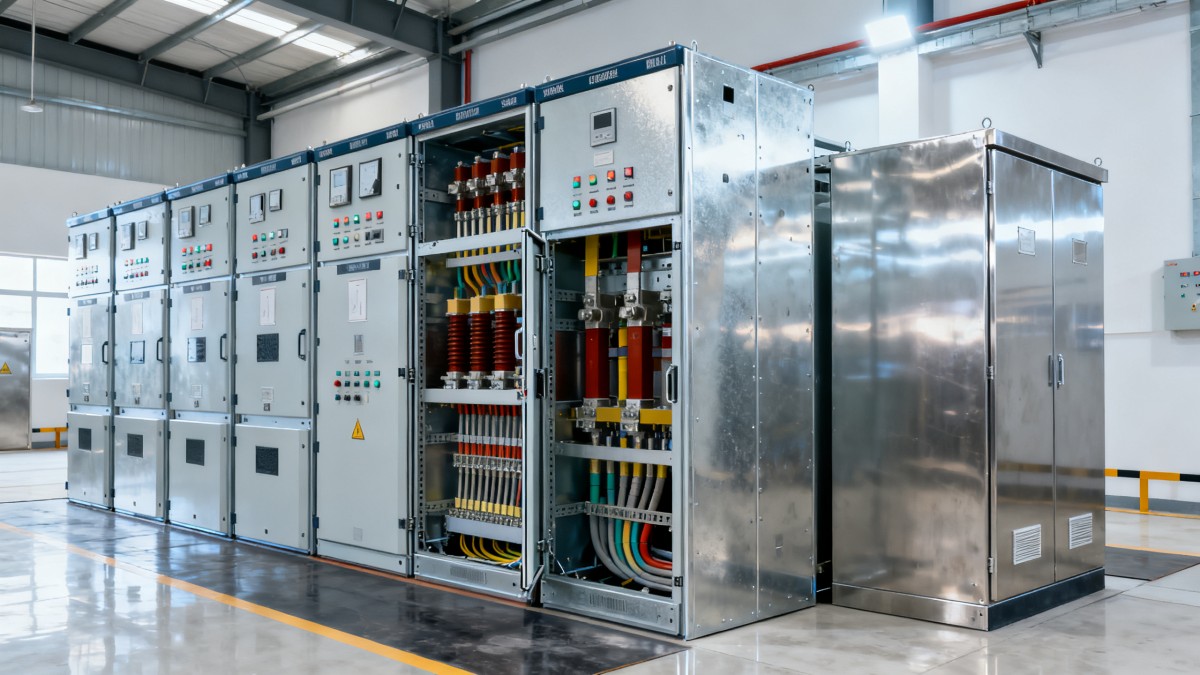
Medium-voltage assemblies sit at the center of operational continuity. A wrong selection can increase downtime during isolation, inspection, or breaker replacement, even when the initial purchase price appears competitive.
This is one reason GIC treats enclosure architecture as a strategic decision rather than a catalog detail. In infrastructure where failure is unacceptable, selection criteria must extend beyond ratings into maintainability and fault management.
Metal clad medium voltage equipment is generally associated with compartmentalized construction and stronger separation of major circuit elements. Metal enclosed assemblies can serve many applications well, but they are broader in design scope.
That broader scope creates the main challenge. Two products may appear similar from outside, yet differ sharply in internal barriers, breaker arrangement, shutter design, and test evidence for arc-resistant performance.
Core structural differences
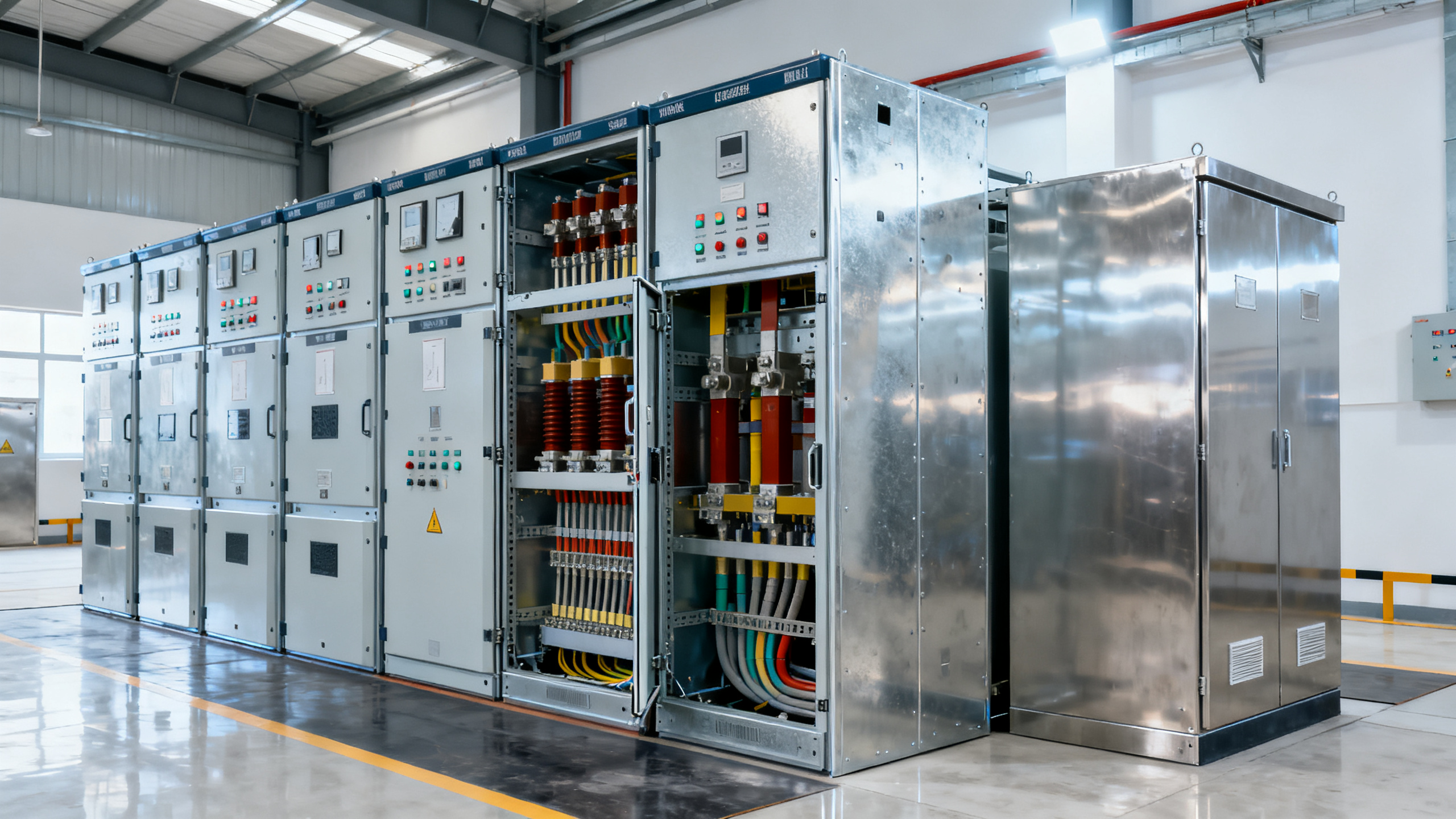
The most practical way to separate the two is by looking inside the lineup. Metal clad medium voltage equipment uses grounded metal barriers to isolate bus, cable, instrument, and switching compartments.
In many designs, the main switching device is drawout. That supports removal, testing, and maintenance while limiting direct exposure to adjacent energized sections.
Metal enclosed switchgear is a larger category. It also uses metal enclosures, but it does not always require the same degree of compartmental separation or the same internal accessibility philosophy.
Some metal enclosed arrangements are fixed-mounted. Others are simplified for load-interrupter, fused switching, ring main, or compact distribution roles where frequent drawout maintenance is not central to the design.
This structural distinction often drives the rest of the evaluation. Once compartment design changes, the implications spread to operator safety, outage planning, cable work, and testing procedures.
Standards, compliance, and fault containment
Selection should always move through applicable standards before it moves through pricing. In medium-voltage systems, compliance claims need to be tied to the exact assembly configuration, not only to a generic product family.
Depending on market and project location, review commonly includes IEC, IEEE, ANSI, UL, CE, and internal utility or owner specifications. GIC’s editorial position is consistent here: certification language must be matched to tested construction details.
Metal clad medium voltage equipment is frequently selected where arc-resistant design, internal isolation, and documented fault containment are major priorities. That does not mean every metal clad lineup is automatically arc-resistant.
The test basis still matters. Front, side, rear, and top accessibility types, pressure relief paths, door latching, and cable compartment configuration should all be checked against the actual installation layout.
Metal enclosed products may still meet demanding requirements, especially in compact or specialized networks. The point is that compliance cannot be inferred from enclosure wording alone.
What deserves close review
- Type test documentation for the exact voltage class and current rating
- Arc-resistant test scope and personnel access classification
- Interlocking logic, shutters, grounding provisions, and racking sequence
- Insulation medium, creepage performance, and contamination tolerance
- Site altitude, ambient temperature, seismic, and corrosion conditions
Where metal clad medium voltage equipment creates more value
The value case becomes stronger when continuity and safe intervention are central. Large motors, critical feeders, distributed process loads, and utility interconnection points often justify a more segregated architecture.
In these settings, metal clad medium voltage equipment supports planned maintenance with less disruption. Drawout breaker handling, isolated compartments, and clearer fault boundaries can reduce restoration time after service events.
It also helps when future modifications are likely. Expanding a plant, rebalancing feeders, or adding monitoring can be easier when the original switchgear design already anticipates routine intervention.
Lifecycle cost is part of this calculation. A lower first cost can lose its advantage if inspections are harder, outages are longer, or spare strategy becomes more complicated over twenty years of service.
When metal enclosed switchgear may be the better fit
Not every project needs the same architecture. Metal enclosed switchgear can be the right answer when the network is simpler, operating duty is lighter, or space and budget constraints outweigh drawout maintenance benefits.
This is common in secondary distribution, compact substations, ring configurations, or applications where switching frequency is limited and the protection philosophy is already well defined.
The key is disciplined matching. A compact metal enclosed lineup may perform very well if the protection scheme, service access, fault level, and environmental conditions are all within the intended operating envelope.
Problems usually appear when simplified construction is pushed into high-duty roles that demand more segregation, more maintainability, or stronger documented arc mitigation.
Selection checkpoints for real projects
A reliable decision usually comes from comparing the electrical one-line with the operating reality. The equipment has to fit the way the site will actually isolate, inspect, expand, and recover from abnormal events.
The following checkpoints help separate a sound technical choice from a superficial comparison.
Operational questions worth asking
- Will breakers require regular withdrawal, testing, or replacement?
- How critical is personnel protection during maintenance access?
- What are the available outage windows for inspection or repair?
- Is future feeder expansion expected within the same lineup?
- Does the site need remote condition monitoring or digital retrofit options?
Commercial and technical review points
- Compare tested configuration sheets, not only brochure summaries
- Check spare parts policy for breakers, relays, shutters, and controls
- Verify installation clearance and rear access requirements
- Review heat rise, bus ratings, and short-circuit withstand data
- Assess local service support and commissioning competence
These checkpoints are especially useful when two bids look comparable on headline ratings. In practice, the difference often sits in service philosophy and evidence quality.
A practical way to move the evaluation forward
For most critical installations, the decision should begin with fault level, maintenance model, and arc-risk tolerance. From there, compare whether metal clad medium voltage equipment is justified by the operating consequences of failure or intervention.
If the application is less demanding, a well-specified metal enclosed solution may be fully appropriate. The important step is to document why the chosen architecture matches the site’s real electrical and operational profile.
A strong next step is to build a short comparison matrix covering compartment segregation, breaker form, tested arc performance, maintenance access, expansion path, and total lifecycle implications.
That approach produces a clearer decision record, supports compliant procurement, and aligns with the evidence-based sourcing discipline expected across modern industrial infrastructure.
Technical Specifications
- How to Select Electronic Hotel Key Card Locks for Guest Rooms and Staff AreasAuthor :Safety Compliance Lead
- How to Select Lab Instruments for Reliable Chemical Analysis WorkflowsAuthor :Precision Metrology Expert
- How to Size a UPS for Server Rooms: Load, Runtime, and Redundancy FactorsAuthor :Grid Infrastructure Analyst
Expert Insights

Chief Security Architect
Dr. Thorne specializes in the intersection of structural engineering and digital resilience. He has advised three G7 governments on industrial infrastructure security.
Related Analysis
- Sep 17, 2026How to Select Electronic Hotel Key Card Locks for Guest Rooms and Staff AreasAuthor :Safety Compliance Lead
- Sep 16, 2026How to Select Lab Instruments for Reliable Chemical Analysis WorkflowsAuthor :Precision Metrology Expert
- Sep 15, 2026How to Size a UPS for Server Rooms: Load, Runtime, and Redundancy FactorsAuthor :Grid Infrastructure Analyst
Core Sector // 01
Security & Safety
- How to Size a UPS for Server Rooms: Load, Runtime, and Redundancy FactorsAuthor :Grid Infrastructure Analyst

- How to Choose a Step-Down Transformer for a Control Panel: Key Sizing FactorsAuthor :Grid Infrastructure Analyst

- How Often Should Overseas Power Systems Undergo Safety Inspections?Author :Grid Infrastructure Analyst

- How to Choose Panels for Extreme-Cold Industrial Sites?Author :Grid Infrastructure Analyst

- What Should a Cross-Border EPC Equipment Procurement Reference Include?Author :Grid Infrastructure Analyst

- How to Compare Low-Voltage Equipment for Panel IntegrationAuthor :Grid Infrastructure Analyst

- IEC-Compliant Power Infrastructure: Key Design and Verification RequirementsAuthor :Grid Infrastructure Analyst

- Updated EN 61000-6-4:2026 Raises EMC Compliance Bar for EU-Bound Industrial EquipmentAuthor :Grid Infrastructure Analyst