How to Evaluate a Containerized Generator Set Manufacturer for Project Reliability
Author
Date Published
Reading Time
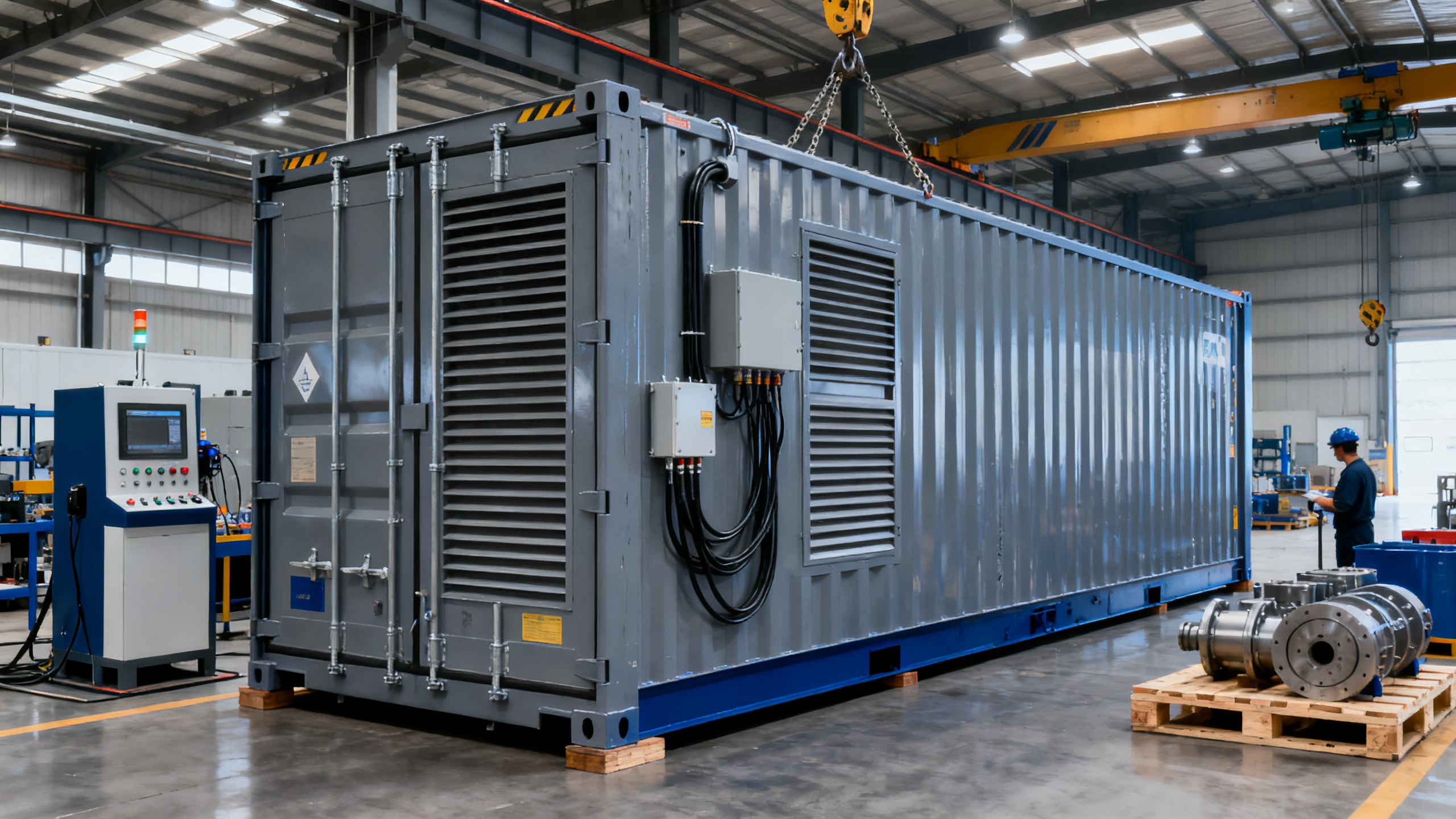
How to Evaluate a Containerized Generator Set Manufacturer for Project Reliability
Choosing a reliable containerized generator set manufacturer can determine whether your project stays on schedule, meets compliance requirements, and performs under demanding site conditions.
For sourcing teams, the decision goes far beyond unit price. It touches technical fit, certifications, lead time control, service response, and lifecycle cost.
A strong containerized generator set manufacturer helps reduce risk before equipment reaches site. A weak one usually creates hidden costs after the purchase order is signed.
That is why project reliability starts during supplier evaluation, not during commissioning. The right review process protects uptime, compliance, and delivery performance.
Start With Application Fit, Not Just Catalog Ratings
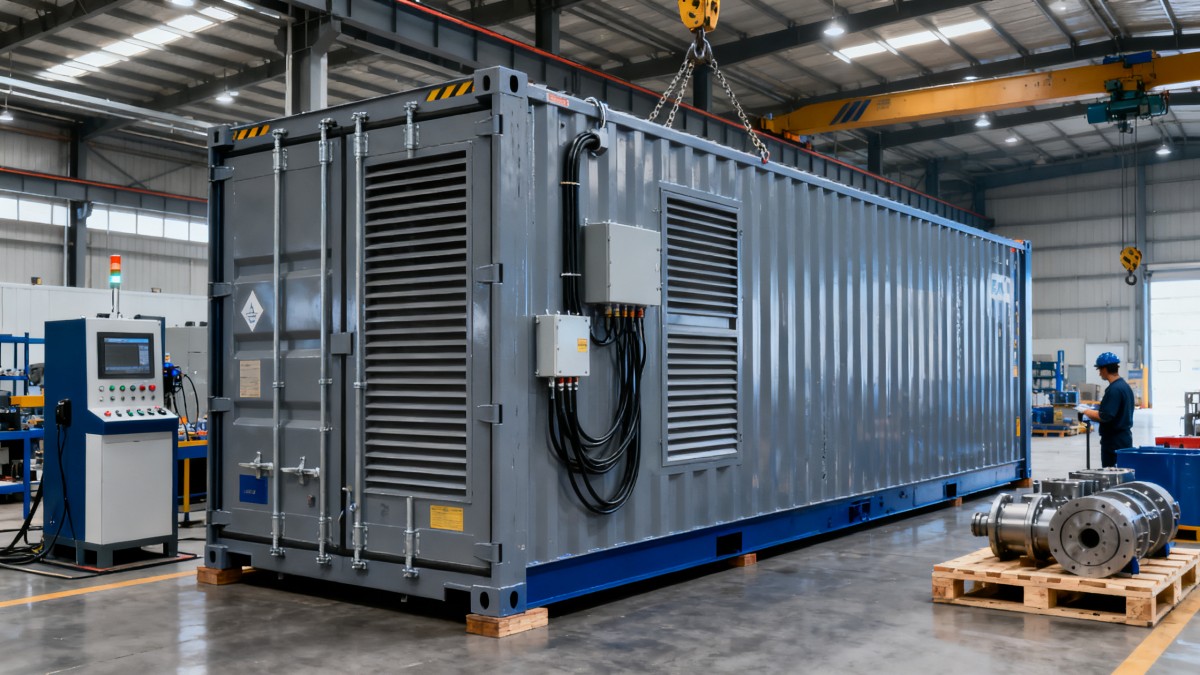
The first question is simple. Can the containerized generator set manufacturer support your actual operating conditions, not just standard brochure data?
A generator for a city commercial site differs from one for mining, oil and gas, utilities, or remote construction zones.
Review the manufacturer’s experience with load profile, ambient temperature, altitude, dust, humidity, corrosion exposure, and fuel quality.
Also check whether the enclosure design matches your use case. Sound attenuation, ventilation, fire resistance, access layout, and lifting points all affect field performance.
Ask for application-specific references. A qualified containerized generator set manufacturer should show comparable projects with similar duty cycles and environmental stress.
Key application questions
- Is the genset rated for prime, standby, or continuous operation?
- Can the supplier document derating at altitude and high temperature?
- Does the container layout support local maintenance access?
- Are noise limits aligned with site regulations?
- Can the design integrate fuel tank, ATS, switchgear, or remote monitoring?
Verify Engineering Depth and Manufacturing Control
A capable containerized generator set manufacturer is not just an assembler. Real reliability comes from engineering discipline and production consistency.
Look at how the manufacturer handles enclosure design, cooling airflow, vibration isolation, cable routing, exhaust systems, and weatherproofing.
Poor engineering often appears in small details first. Hot spots, difficult service access, weak corrosion protection, or unstable load performance are early warning signs.
Manufacturing control matters just as much. Review welding quality, coating process, testing records, material traceability, and final inspection standards.
In practice, the better manufacturers can explain why each design choice exists. That usually signals a stable process rather than ad hoc customization.
What to request during technical review
- General arrangement drawings and access layout.
- Cooling and ventilation calculations.
- Bill of materials for core components.
- Factory inspection and test plans.
- Quality management records and nonconformance handling procedures.
Check Certifications, Standards, and Compliance Readiness
Compliance is often where sourcing mistakes become expensive. A containerized generator set manufacturer must prove alignment with the standards your project requires.
Depending on destination market and application, this may include CE, UL, ISO, emissions rules, acoustic limits, and local electrical codes.
Do not accept vague statements such as “compliant design available.” Request valid certificates, test reports, and the exact scope covered by each document.
This point matters because some certificates apply to components, not the complete packaged set. That gap can delay approvals and site energization.
A dependable containerized generator set manufacturer should also understand documentation workflows for EPC projects, including FAT reports, manuals, wiring diagrams, and spare parts lists.
Compliance checks that reduce project risk
- Confirm certificate validity dates and issuing bodies.
- Match standards to the final destination country.
- Verify complete set compliance, not only engine or alternator compliance.
- Review emission stage requirements before RFQ release.
- Check whether witness testing is available before shipment.
Assess Delivery Reliability and Supply Chain Stability
Many projects do not fail because of poor equipment. They fail because equipment arrives late, incomplete, or without final documents.
So evaluate the containerized generator set manufacturer as a delivery partner, not only as a technical vendor.
Ask about lead times for engines, alternators, control systems, steel enclosures, and critical accessories. Identify which parts depend on third-party sourcing.
More importantly, review how the supplier manages schedule changes. A mature manufacturer usually has clear milestones, progress reporting, and escalation paths.
Look for evidence of on-time delivery performance across recent projects. Historical consistency is often a better signal than an aggressive promise.
Useful questions for supply assurance
Look Beyond Price to Total Cost of Ownership
A low quote from a containerized generator set manufacturer can look attractive during tender review. It can become costly after installation.
Total cost of ownership includes fuel efficiency, maintenance frequency, spare parts pricing, downtime exposure, operator training, and service availability.
This is where technical details affect finance. Better cooling design, stronger corrosion protection, and easier maintenance access can lower lifecycle cost in a measurable way.
Compare quotations on an equal basis. Make sure the scope includes control panel features, fuel system, batteries, silencers, base frame, testing, commissioning support, and warranty terms.
When bids vary sharply, the missing value is often hidden in exclusions. That is a common issue in containerized generator set manufacturer comparisons.
Cost areas worth comparing line by line
- Fuel consumption at expected load bands
- Preventive maintenance intervals
- Spare parts lead time and pricing structure
- Warranty coverage and exclusions
- Field service response time
Measure After-Sales Support and Long-Term Accountability
Project reliability does not end at shipment. A serious containerized generator set manufacturer stays accountable during installation, commissioning, and operation.
Review the service network, technical support process, spare parts stocking, and escalation route for urgent failures.
Also check whether the supplier can support remote diagnostics, controller troubleshooting, and operator guidance across time zones.
A reliable containerized generator set manufacturer will define warranty response in writing. Response hours, claim steps, and replacement responsibility should be clear.
This becomes even more important for critical facilities, where downtime costs far exceed equipment price.
Build a Practical Evaluation Framework Before Award
The most effective way to compare suppliers is to score them against the same decision criteria. That keeps discussions grounded in risk, not only negotiation pressure.
A practical scorecard for each containerized generator set manufacturer can cover technical compliance, certification readiness, delivery history, service support, and total ownership cost.
If the project is complex, add factory audit findings and reference checks. Those two inputs often expose differences that quotations cannot show.
In real procurement cycles, the best supplier is rarely the cheapest or the most recognized brand alone. It is the one with the strongest fit for your risk profile.
Final decision checklist
- Confirm project-specific technical suitability.
- Validate complete compliance documentation.
- Review factory quality and testing controls.
- Assess delivery reliability with evidence.
- Compare lifecycle cost, not just bid price.
- Lock in service terms before contract award.
Evaluating a containerized generator set manufacturer with this structure makes sourcing decisions more defensible and more resilient.
It also helps prevent the common mistake of treating industrial power equipment as a simple commodity purchase.
When reliability, compliance, and schedule matter, disciplined supplier evaluation is the shortest path to a safer project outcome and a lower long-term cost base.
Technical Specifications
- How to Select Electronic Hotel Key Card Locks for Guest Rooms and Staff AreasAuthor :Safety Compliance Lead
- How to Select Lab Instruments for Reliable Chemical Analysis WorkflowsAuthor :Precision Metrology Expert
- How to Size a UPS for Server Rooms: Load, Runtime, and Redundancy FactorsAuthor :Grid Infrastructure Analyst
Expert Insights

Chief Security Architect
Dr. Thorne specializes in the intersection of structural engineering and digital resilience. He has advised three G7 governments on industrial infrastructure security.
Related Analysis
- Sep 17, 2026How to Select Electronic Hotel Key Card Locks for Guest Rooms and Staff AreasAuthor :Safety Compliance Lead
- Sep 16, 2026How to Select Lab Instruments for Reliable Chemical Analysis WorkflowsAuthor :Precision Metrology Expert
- Sep 15, 2026How to Size a UPS for Server Rooms: Load, Runtime, and Redundancy FactorsAuthor :Grid Infrastructure Analyst
Core Sector // 01
Security & Safety
- How to Size a UPS for Server Rooms: Load, Runtime, and Redundancy FactorsAuthor :Grid Infrastructure Analyst

- How to Choose a Step-Down Transformer for a Control Panel: Key Sizing FactorsAuthor :Grid Infrastructure Analyst

- How Often Should Overseas Power Systems Undergo Safety Inspections?Author :Grid Infrastructure Analyst

- How to Choose Panels for Extreme-Cold Industrial Sites?Author :Grid Infrastructure Analyst

- What Should a Cross-Border EPC Equipment Procurement Reference Include?Author :Grid Infrastructure Analyst

- How to Compare Low-Voltage Equipment for Panel IntegrationAuthor :Grid Infrastructure Analyst

- IEC-Compliant Power Infrastructure: Key Design and Verification RequirementsAuthor :Grid Infrastructure Analyst

- Updated EN 61000-6-4:2026 Raises EMC Compliance Bar for EU-Bound Industrial EquipmentAuthor :Grid Infrastructure Analyst