Choosing an Industrial Electrical Infrastructure Supplier: Compliance and Lead Times
Author
Date Published
Reading Time

The strongest industrial electrical infrastructure supplier is one that can demonstrate both compliance for the specified equipment and a credible route to delivery before the project needs it. A low quotation offers little protection if the switchgear cannot pass acceptance, the certification covers a different configuration, or the delivery clock starts only after an undefined drawing approval process.
For procurement teams, the first decision is whether a supplier’s offer is sufficiently defined to compare. Establish the acceptance requirements, test the evidence against the proposed equipment, and connect the delivery promise to identifiable production milestones. Price becomes meaningful once those conditions are clear. On a constrained project, paying more for a documented manufacturing slot may be justified; paying a premium for an unsupported promise rarely is.
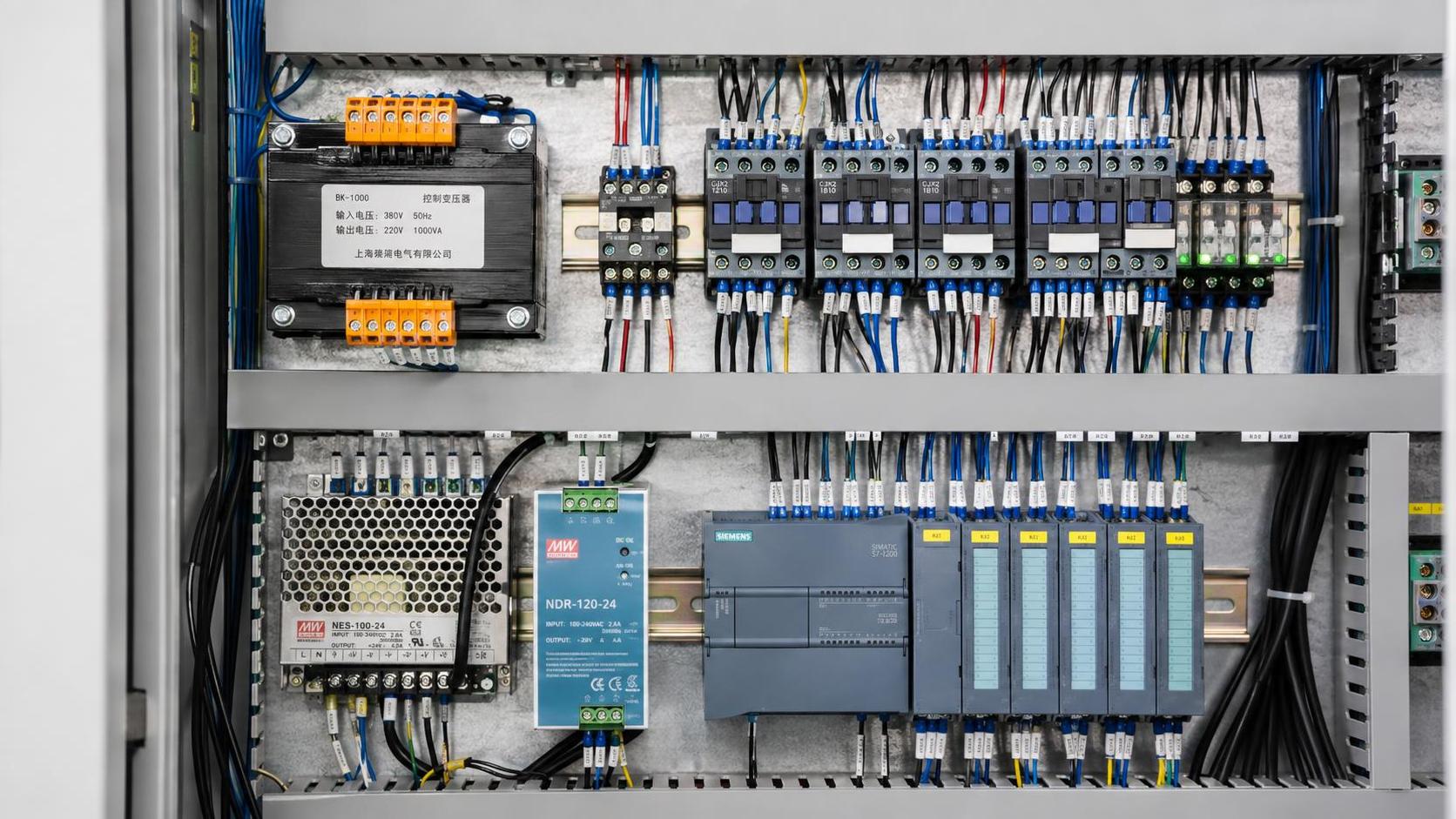
Define what must be accepted before comparing suppliers. “Electrical infrastructure” can include transformers, switchgear, distribution boards, protective devices, cables, and control assemblies. These products have different compliance routes and production constraints. A supplier qualified to distribute individual components may have limited capability to engineer, assemble, test, and document a complete power distribution package.
Start the request for quotation with the installation location, equipment scope, electrical ratings, operating environment, and required delivery point. Include the available fault level and protection requirements where established by the project engineer. Temperature, altitude, corrosive exposure, and enclosure conditions can affect suitability. Leaving these details open allows bidders to price different technical assumptions while appearing commercially comparable.
Identify who will approve the equipment: the owner’s engineer, utility, inspection body, authority having jurisdiction, or another designated party. Their roles may overlap, but their acceptance criteria are not necessarily identical. A utility connection requirement, for example, can introduce conditions beyond the purchaser’s general equipment specification. Resolve those interfaces before a supplier commits to a configuration.
A practical RFQ should distinguish mandatory requirements from preferences and permitted alternatives. Ask each bidder to return a clear deviations schedule. Silence should not count as agreement when the quotation contains exclusions elsewhere. An openly declared exception is easier to assess than a broad statement of compliance contradicted by a technical footnote.
Check what the compliance evidence actually covers. CE marking, UL certification, and ISO certification serve different purposes. They should not be treated as interchangeable badges of equipment quality. The relevant question is whether the proposed product, in its supplied configuration, satisfies the requirements applicable to its destination and intended use.
For equipment subject to applicable EU legislation, CE marking represents the manufacturer’s declaration of conformity under the relevant framework. It does not automatically indicate independent third-party product approval. Request the applicable EU Declaration of Conformity and check the manufacturer, product identification, legislation, and standards cited. The supporting documentation should correspond to the equipment being purchased.
Where a UL certification is required, verify the certification category, scope, model identification, and any conditions of acceptability. A certified component inside a cabinet does not establish certification of the complete assembly. Likewise, a certificate for one product family may not cover every rating, accessory, enclosure arrangement, or manufacturing location offered in a quotation.
An ISO 9001 certificate concerns the supplier’s quality management system within its stated scope. It can support an assessment of manufacturing controls, but it does not prove that a particular switchboard meets its required product standard. Check the entity, site, scope, and validity, then evaluate product compliance separately.
For low-voltage assemblies specified to the IEC 61439 series, ask how the supplier demonstrates the applicable design verification and routine verification requirements. A collection of compliant circuit breakers and busbar components does not by itself establish conformity of the finished assembly. The arrangement, integration, and verification of the assembly matter.
Procurement does not need to reproduce an engineering assessment, but it must obtain evidence that engineering can evaluate. Useful submissions identify the offered design, relevant ratings, verification basis, test scope, and any limitations. Generic brochures and unrelated test reports can create a substantial review workload without resolving whether the proposed equipment is acceptable.
Separate evidence needed for bid evaluation from records that can only be produced after manufacture. A routine test report for the purchased unit will follow production; the supplier’s proposed test procedure and acceptance criteria can be reviewed earlier. Define the final documentation package in the purchase order, including equipment identification, inspection records, drawings, operating instructions, and agreed certificates.
For a distributor or sourcing intermediary, establish who owns each obligation. Identify the manufacturer, the party responsible for any assembly modifications, and the organization issuing the final documentation. If the seller proposes an equivalent component during production, that change should pass through an agreed technical approval process before installation. Substitution can affect certification coverage, protection coordination, dimensions, and spare-parts compatibility.
Turn the quoted lead time into a schedule that can be challenged. “Delivery in 20 weeks” is incomplete without a starting event and an endpoint. The period might begin at purchase order acceptance, receipt of a deposit, approval of drawings, or release of all technical information. Its endpoint might be readiness for collection rather than arrival at the project site. Those distinctions can consume the apparent advantage of a faster offer.
Require a schedule showing engineering submissions, purchaser review, design release, critical component availability, assembly, testing, documentation, and dispatch. Add transport, import clearance, site receipt, and installation interfaces where they sit within the supplier’s scope or affect the required date. Each milestone should have an owner and a defined completion condition.

The critical path deserves closer attention than the headline manufacturing duration. Ask which components determine the promised date and whether their availability is confirmed, reserved, or assumed. A supplier may have assembly capacity while still depending on an unallocated breaker, relay, or transformer component. “Available from our network” is weaker evidence than an identified source with a confirmed supply commitment.
Capacity statements also need context. Establish whether the quotation includes a reserved production slot, how long that reservation lasts, and what releases it. A factory capable of building the equipment may still lack capacity during the project’s required window. Request milestone evidence appropriate to the order, such as confirmation of critical material orders and production release, rather than accepting repeated percentage-complete updates.
Drawing approval can create avoidable disputes. Agree what constitutes a complete submission, how comments will be consolidated, and how revisions affect the schedule. The buyer must also resource its own reviews. If approval takes longer than the contractual allowance, a supplier may have a legitimate basis for moving the delivery date. Conversely, incomplete submissions should not automatically transfer delay responsibility to the buyer.
Factory acceptance testing needs its own place in the programme. Define the tests, witness arrangements, notice period, acceptance criteria, and treatment of outstanding defects before the test date approaches. A passed test may still leave missing documentation or unresolved items that prevent release. State which conditions block shipment and which, if any, can be closed later with written agreement.
Schedule confidence should influence the sourcing strategy. For a new facility, the priority may be preserving energization and commissioning dates. For a replacement during a planned shutdown, dimensional compatibility, installation readiness, and arrival before the outage may dominate. A nominally faster product can be a poor choice if it requires late redesign or an acceptance route the project has not allowed time to complete.
Compare the cost of an accepted, usable delivery. Normalize quotations to the same scope before ranking them. Engineering, protection settings, testing, witness support, export packing, freight, commissioning assistance, and documentation may be included in one offer and excluded from another. Clarify delivery terms, unloading responsibilities, taxes and duties where applicable, and the point at which risk transfers.
The commercial comparison should also capture identifiable project consequences. These can include temporary power, additional installation work, expediting, storage, repeat inspections, or commissioning support. Avoid assigning a precise cost to every hypothetical failure. Use the project’s actual dependencies to identify which exposures could materially change the buying decision.
Consider an illustrative comparison: one supplier offers a lower equipment price with dispatch dependent on drawing approval and unconfirmed component supply. Another offers a higher price with the configuration agreed and a documented production allocation. The second offer may represent better value if the installation supports a fixed outage. That judgment depends on the strength of the evidence and the cost of missing the date, rather than the premium alone.
An expedited option needs equal scrutiny. Ask what changes operationally when the premium is paid: a reserved material allocation, additional assembly capacity, a different shipping method, or an earlier test slot. Check that the revised programme retains the agreed verification and acceptance requirements. Acceleration that merely moves equipment to site before it is ready for acceptance can shift work and cost onto the project.
Use a short sequence to keep supplier selection focused:
- Apply an acceptance gate: confirm that the offered configuration has a credible compliance route, with deviations visible and assigned for review.
- Assess delivery confidence: examine the starting event, critical materials, production allocation, approval assumptions, and test arrangements behind the promised date.
- Compare evaluated cost: align scope and delivery responsibilities, then include the project costs supported by identifiable differences between offers.
- Close the commitments: carry the agreed technical scope, evidence requirements, milestones, and change controls into the purchase order.
A weighted scorecard can help compare suppliers that pass the acceptance gate. Mandatory safety or approval requirements should remain pass-or-fail conditions; a strong price score should not compensate for an unresolved compliance gap. Where a gap can be closed, specify the evidence, responsible party, and deadline before committing expenditure that would be difficult to recover.
Payment milestones should follow observable progress. Depending on the order, suitable triggers might include approved engineering, documented material allocation, completed testing, or receipt of the agreed dispatch documents. Retain proportionate visibility into subcontracted work where it controls delivery. A supplier’s contractual accountability is more useful when supported by access to the information needed to detect slippage.
The award decision should leave procurement able to answer three questions plainly: what exact equipment will be accepted, what evidence supports its delivery date, and what happens if either basis changes? If those answers remain buried in qualifications or verbal assurances, the quotation is still an unfinished proposal. Closing those points before award gives the project a usable delivery commitment and a clear basis for managing the supplier.
Technical Specifications
- Nucor Raises Hot-Rolled Coil Spot Price by $15 to $1,270 per Short TonAuthor :
- Choosing an Industrial Electrical Infrastructure Supplier: Compliance and Lead TimesAuthor :Grid Infrastructure Analyst
- US Commerce Opens Changed Circumstances Review of Mexican Heavy-Walled Rectangular Welded Carbon Steel PipeAuthor :Heavy Industry Strategist
Expert Insights

Chief Security Architect
Dr. Thorne specializes in the intersection of structural engineering and digital resilience. He has advised three G7 governments on industrial infrastructure security.
Related Analysis
- Oct 27, 2026Nucor Raises Hot-Rolled Coil Spot Price by $15 to $1,270 per Short TonAuthor :
- Oct 27, 2026Choosing an Industrial Electrical Infrastructure Supplier: Compliance and Lead TimesAuthor :Grid Infrastructure Analyst
- Oct 26, 2026US Commerce Opens Changed Circumstances Review of Mexican Heavy-Walled Rectangular Welded Carbon Steel PipeAuthor :Heavy Industry Strategist
Core Sector // 01
Security & Safety
- Choosing an Industrial Electrical Infrastructure Supplier: Compliance and Lead TimesAuthor :Grid Infrastructure Analyst

- Selecting Flexible Copper Busbars for Switchgear: Current Rating and Bend RadiusAuthor :Grid Infrastructure Analyst

- Niagara Power Transformer Begins $71 Million-Plus Buffalo ExpansionAuthor :Grid Infrastructure Analyst

- Choosing a Step-Down Transformer Supplier: Test Reports, Lead Times, and WarrantyAuthor :Grid Infrastructure Analyst

- Metallurgy Processes That Improve Conductivity and Reliability in Power Grid ComponentsAuthor :Grid Infrastructure Analyst

- How to Size a UPS for Server Rooms: Load, Runtime, and Redundancy FactorsAuthor :Grid Infrastructure Analyst

- How to Choose a Step-Down Transformer for a Control Panel: Key Sizing FactorsAuthor :Grid Infrastructure Analyst

- How Often Should Overseas Power Systems Undergo Safety Inspections?Author :Grid Infrastructure Analyst