What a solid Electrical & Power quotation should include
Author
Date Published
Reading Time

A solid Electrical & Power quotation does far more than list prices—it defines technical scope, compliance standards, delivery terms, and lifecycle value that procurement teams rely on to reduce risk. For buyers handling critical industrial projects, knowing what a quotation should include is essential to comparing suppliers accurately, avoiding hidden costs, and securing reliable performance from the start.
In industrial procurement, especially for EPC projects, plant upgrades, utility interfaces, and mission-critical facilities, an incomplete quote can create delays of 2–6 weeks, trigger costly variation orders, or expose the project to compliance gaps. A strong Electrical & Power quotation gives buyers a structured basis for technical review, commercial comparison, and supplier accountability.
For procurement teams, the best quotation is not always the lowest initial price. It is the one that clearly defines supply boundaries, electrical ratings, certifications, testing, logistics, documentation, and post-delivery support. That clarity reduces bid ambiguity and improves decision-making across engineering, QA, finance, and operations.
Why quotation quality matters in Electrical & Power procurement
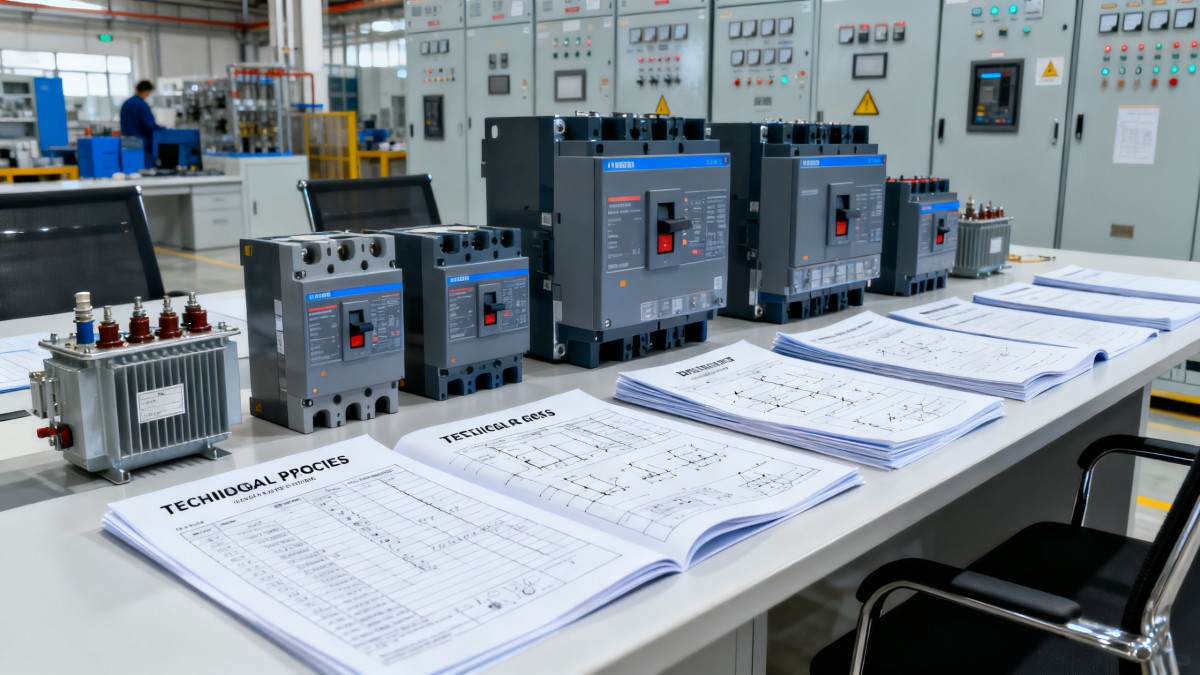
Electrical and power systems involve more than commodity purchasing. Whether the scope includes switchgear, transformers, cable assemblies, UPS systems, power distribution panels, busbars, protective relays, or control cabinets, the quotation must align with load conditions, fault levels, environmental factors, and installation constraints.
A weak Electrical & Power quotation often hides risk in three places: undefined scope, unclear compliance, and incomplete commercial terms. In practice, even a 3% pricing gap between suppliers may be far less important than whether the quote includes FAT, spare parts, IP rating confirmation, or cable gland compatibility.
Common procurement risks caused by poor quotations
When quotations are vague, buyers struggle to compare bids on an equal basis. One supplier may price only the core equipment, while another includes accessories, mounting hardware, terminal labeling, testing, and startup documents. Without a structured quote, procurement cannot perform a true apples-to-apples evaluation.
- Missing technical exclusions that later become change orders
- Undefined lead times for key components with 8–20 week supply cycles
- No reference to CE, UL, IEC, ISO, or site-specific compliance needs
- Unclear warranty duration, often ranging from 12 to 24 months
- No stated packing, storage, or transportation requirements for sensitive equipment
What procurement teams need from the quotation stage
A quotation should support at least 4 internal review functions: technical validation, commercial benchmarking, project scheduling, and risk control. If any of these areas are underdefined, the burden shifts downstream to engineering clarification, contract disputes, or site rework.
For industrial buyers, a reliable quotation becomes an operational document. It should be detailed enough to support RFQ comparison, bid tabulation, supplier negotiation, and purchase order drafting without requiring multiple rounds of basic clarification.
Core elements every Electrical & Power quotation should include
The strongest Electrical & Power quotation is structured in layers. It starts with commercial identity, then moves into technical scope, ratings, standards, delivery, testing, and service terms. Procurement teams should expect enough detail to verify both supply completeness and performance suitability.
1. Supplier and quotation identification
Every quote should begin with basic but critical data: supplier legal name, quotation number, revision number, issue date, buyer reference, project name, currency, validity period, and contact details. A quotation validity window of 15–30 days is common for imported electrical equipment due to copper, freight, and exchange-rate fluctuations.
Minimum identification details
- RFQ or inquiry number for traceability
- Revision status to avoid outdated commercial terms
- Incoterms reference such as EXW, FOB, CFR, or DDP
- Named contact for commercial and technical clarifications
2. Detailed scope of supply
This is the heart of the Electrical & Power quotation. The supplier should identify exactly what is included, item by item, and what is excluded. For assemblies, the quote should separate the main unit from accessories, protective devices, metering, cable terminations, enclosure hardware, and documentation.
For example, a power distribution panel quotation should state breaker type, busbar material, enclosure thickness, metering package, protection scheme, cable entry orientation, painting system, and internal wiring standard. If not, procurement risks receiving equipment that fits price targets but fails site expectations.
The table below shows the level of detail buyers should expect when reviewing the scope section of an Electrical & Power quotation.
A quotation that clearly separates inclusions and exclusions gives procurement stronger negotiation leverage. It also reduces disputes during PO review and site acceptance, especially when multiple vendors contribute to one integrated electrical package.
3. Electrical ratings and technical parameters
A quotation should define the operating parameters that determine fit for service. These may include voltage, frequency, phase, current, short-circuit rating, insulation class, temperature rise, ingress protection, ambient operating range, and duty cycle. For industrial applications, values like 400V/50Hz, 480V/60Hz, IP54, IP65, or fault withstand ratings are not optional details.
Where applicable, suppliers should also state dimensional data, heat dissipation, efficiency range, harmonic tolerance, and interface compatibility. For cables or conductors, conductor material, cross-sectional area, insulation type, flame-retardant level, and allowable temperature range should appear in the quote or attachment.
Technical details that deserve line-item confirmation
- Nominal voltage and frequency
- Rated current and peak load conditions
- Breaking capacity or short-circuit withstand value
- Enclosure rating such as IP54, IP55, or IP65
- Ambient conditions, for example -10°C to 45°C
- Mounting type, footprint, and cable entry direction
4. Standards, testing, and documentation
In heavy industry and infrastructure, compliance language matters. The quotation should reference applicable standards such as IEC, UL, CE, ISO-related quality processes, or project-specific specifications. If the project requires third-party inspection, FAT, routine tests, insulation resistance checks, or calibration certificates, these must be listed explicitly.
Documentation should include datasheets, GA drawings, wiring diagrams, terminal schedules, operation manuals, test reports, packing lists, and certificate copies where relevant. Procurement should also confirm how many document sets are included and whether digital files are delivered in PDF, DWG, or native editable formats.
Commercial terms that prevent hidden cost and delivery disputes
Even technically sound quotations can create commercial problems if pricing conditions are vague. A complete Electrical & Power quotation should show unit price, total price, taxes if applicable, freight assumptions, packing charges, insurance status, payment schedule, and warranty terms. Procurement should avoid accepting lump-sum pricing with no commercial breakdown on high-value equipment.
Lead time, packing, and logistics terms
Industrial electrical products often include both standard and long-lead components. A quotation should identify manufacturing lead time, inspection window, dispatch readiness, and transit assumptions. Typical ranges may be 2–4 weeks for standard panel accessories, 6–10 weeks for assembled switchboards, and 10–20 weeks for certain transformers or engineered systems.
Packing terms are equally important. Sensitive components such as relays, meters, batteries, and coated busbars may need moisture protection, shock-resistant crating, or export-compliant wooden packing. If the quotation does not specify packing type, the buyer may absorb preventable damage risk in cross-border transport.
Payment milestones and warranty scope
Payment terms should match project risk. Common structures include 30% advance and 70% before shipment, or milestone-based payment tied to drawing approval, FAT completion, and dispatch. The quotation should also state whether pricing includes commissioning support, remote troubleshooting, or replacement terms for defective components.
Warranty language should answer three questions: how long, what is covered, and how claims are handled. A 12-month warranty from commissioning or 18 months from shipment is common, but the effective trigger date should be stated clearly to avoid interpretation issues.
The table below outlines the commercial checkpoints procurement teams should review before comparing an Electrical & Power quotation purely on price.
When these terms are clearly documented, procurement teams can compare total commercial exposure rather than unit price alone. That often changes the ranking of supplier offers, particularly when downtime cost is high or shutdown windows are short.
How to evaluate and compare quotations with confidence
A practical evaluation process usually combines technical scoring, commercial review, and supplier responsiveness. For critical projects, procurement teams often use a weighted matrix across 5–7 factors, including specification compliance, delivery, documentation, warranty, total cost, and support capability.
Use a structured comparison checklist
Before award, buyers should normalize the quotations. That means identifying which supplier included testing, which one excluded cable accessories, which one quoted alternative materials, and which one assumed different Incoterms. This step often reveals that the lowest quote carries the highest implementation risk.
- Check revision consistency against the latest RFQ package
- Verify all mandatory technical parameters line by line
- Review deviations, alternatives, and exceptions in writing
- Confirm delivery schedule against project milestone dates
- Assess after-sales support response time, such as 24–72 hours
Watch for red flags in supplier quotations
There are several warning signs procurement should not ignore. These include unusually short lead times without explanation, missing standards references, broad statements like “as per specification” with no attachment, or no distinction between optional and mandatory items. Another common red flag is the absence of a deviation list, which can hide mismatches until the engineering review phase.
Three high-impact red flags
- No stated short-circuit rating or protection coordination basis
- No documentation list for drawings, manuals, or test reports
- No declared exclusions for installation, commissioning, or software
What suppliers can do to make quotations easier to approve
From a supplier perspective, a strong Electrical & Power quotation speeds approvals when it is easy to review. Procurement teams appreciate structured sections, concise deviation statements, and clearly attached datasheets. A quote that answers likely buyer questions up front can shorten the clarification cycle from several rounds to one or two.
Suppliers serving industrial buyers should also present options where relevant. For example, offering a base scope and an optional enhanced scope for IP rating, premium component brand, or extended warranty helps buyers balance budget with operational risk. This approach is especially useful on cross-border projects where replacement lead times may exceed 6–8 weeks.
Recommended quotation format for better conversion
A buyer-friendly quotation typically follows 6 sections: project reference, scope of supply, technical data, compliance and testing, commercial terms, and exclusions. Adding a final clarification page for assumptions and optional items improves transparency and reduces post-award negotiation friction.
Final guidance for procurement teams
A dependable Electrical & Power quotation should function as a decision tool, not just a price sheet. It must define what is being supplied, under which standards, at what rating, with what documentation, on what lead time, and with which commercial protections. For industrial procurement, that level of detail is what turns a quote into a reliable basis for purchase.
For EPC contractors, plant operators, and sourcing managers working under tight schedules and strict compliance demands, disciplined quotation review can reduce rework, shorten approval cycles, and improve supplier accountability from day one. If you need support comparing supplier offers, refining RFQ structure, or identifying quotation gaps in Electrical & Power procurement, contact Global Industrial Core to get a more decision-ready sourcing framework and tailored solution guidance.
Technical Specifications
- How to Select Electronic Hotel Key Card Locks for Guest Rooms and Staff AreasAuthor :Safety Compliance Lead
- How to Select Lab Instruments for Reliable Chemical Analysis WorkflowsAuthor :Precision Metrology Expert
- How to Size a UPS for Server Rooms: Load, Runtime, and Redundancy FactorsAuthor :Grid Infrastructure Analyst
Expert Insights

Chief Security Architect
Dr. Thorne specializes in the intersection of structural engineering and digital resilience. He has advised three G7 governments on industrial infrastructure security.
Related Analysis
- Sep 17, 2026How to Select Electronic Hotel Key Card Locks for Guest Rooms and Staff AreasAuthor :Safety Compliance Lead
- Sep 16, 2026How to Select Lab Instruments for Reliable Chemical Analysis WorkflowsAuthor :Precision Metrology Expert
- Sep 15, 2026How to Size a UPS for Server Rooms: Load, Runtime, and Redundancy FactorsAuthor :Grid Infrastructure Analyst
Core Sector // 01
Security & Safety
- Selecting PTFE Insulated Hookup Wire for High-Temperature Control PanelsAuthor :Grid Infrastructure Analyst

- How Contractors Can Evaluate EPC Sourcing Solutions for Cost, Lead Time, and RiskAuthor :Grid Infrastructure Analyst

- What Drives Silicone Cable Bulk Price in Industrial Orders?Author :Grid Infrastructure Analyst

- EN 61000-6-4:2026 Takes Effect for EU-Bound ControlsAuthor :Grid Infrastructure Analyst

- How to Choose Low Smoke Cables and Wiring for Safer Commercial Buildings?Author :Grid Infrastructure Analyst

- Medium Voltage Armored Cable Selection Guide: Voltage Rating, Armor Type, and InstallationAuthor :Grid Infrastructure Analyst

- EU Publishes EN IEC 61000-6-4:2026 for Industrial EMCAuthor :Grid Infrastructure Analyst

- Choosing an XLPE Power Cable Manufacturer: 7 Checks for Voltage Class and ComplianceAuthor :Grid Infrastructure Analyst