Choosing an XLPE Power Cable Manufacturer: 7 Checks for Voltage Class and Compliance
Author
Date Published
Reading Time
Choosing an XLPE Power Cable Manufacturer: 7 Checks for Voltage Class and Compliance
Choosing the right XLPE power cable manufacturer is rarely just a price exercise. In industrial projects, one wrong cable specification can trigger delays, failed inspections, or early service problems.
That is why voltage class and compliance should come first. Before discussing discounts or shipping dates, buyers need evidence that the cable will perform safely under the actual operating conditions.
A capable XLPE power cable manufacturer should prove technical fit, not just claim it. This guide breaks the evaluation into seven practical checks that reduce sourcing risk and support a more defensible buying decision.
1. Confirm the Voltage Class Matches the Real Duty
Start with the exact voltage class required by the project. Do not assume that a general medium-voltage label means the cable is suitable for the intended network.
Ask the XLPE power cable manufacturer for rated voltage details in the standard format, such as 0.6/1 kV, 6/10 kV, 8.7/15 kV, or 12/20 kV. The rating must align with system design, grounding method, and installation environment.
This matters because under-rating creates safety risk, while over-specifying can drive unnecessary cost. In procurement terms, the goal is technical accuracy, not simply the highest number on a datasheet.
- Request the cable design standard used for each voltage class.
- Check conductor temperature rating and short-circuit performance.
- Verify whether the cable is intended for fixed installation, ducts, trays, or direct burial.
A reliable XLPE power cable manufacturer will usually ask these questions before issuing a quote. That is often a better signal than a fast, generic offer.
2. Verify Compliance Against the Correct Standards
Compliance is not one document. It is a chain of standards, tests, and traceable records tied to the exact cable construction being offered.
Ask which standards the XLPE power cable manufacturer follows, such as IEC 60502, IEC 60228, BS, UL, or local grid authority requirements. Then confirm that the certification matches the same product family, not a similar one.
In practice, this is where many sourcing mistakes happen. A supplier may provide broad compliance claims, while the delivered cable differs in insulation thickness, sheath compound, or conductor class.
- Request test reports tied to the quoted model.
- Check issue dates and certificate validity.
- Confirm whether third-party labs or only internal labs were used.
- Review fire, smoke, and halogen requirements where applicable.
A strong XLPE power cable manufacturer should be comfortable walking through each certificate line by line. If the answers stay vague, the risk is already visible.
3. Review Raw Material Consistency, Not Just Brand Claims
Cable reliability starts with materials. Copper purity, XLPE compound quality, and sheath formulation all affect electrical performance, aging behavior, and installation durability.
Many buyers ask for material origin, which is useful. But the better question is whether the XLPE power cable manufacturer can control batch consistency across repeated orders.
Recent market shifts make this more important. Volatility in metal pricing and resin supply can push some suppliers toward substitutions that are not obvious on the quotation sheet.
- Ask for conductor material specifications and tolerance limits.
- Request insulation and sheath compound data sheets.
- Check whether incoming materials are tested per batch.
- Confirm traceability from raw material lot to finished drum.
A dependable XLPE power cable manufacturer will have documented controls here. That is especially relevant for framework contracts and repeat supply programs.
4. Evaluate Manufacturing Capability for the Exact Cable Construction
Not every cable plant is equipped for every voltage class or shielding design. Some suppliers trade broadly, but only manufacture a limited range in-house.
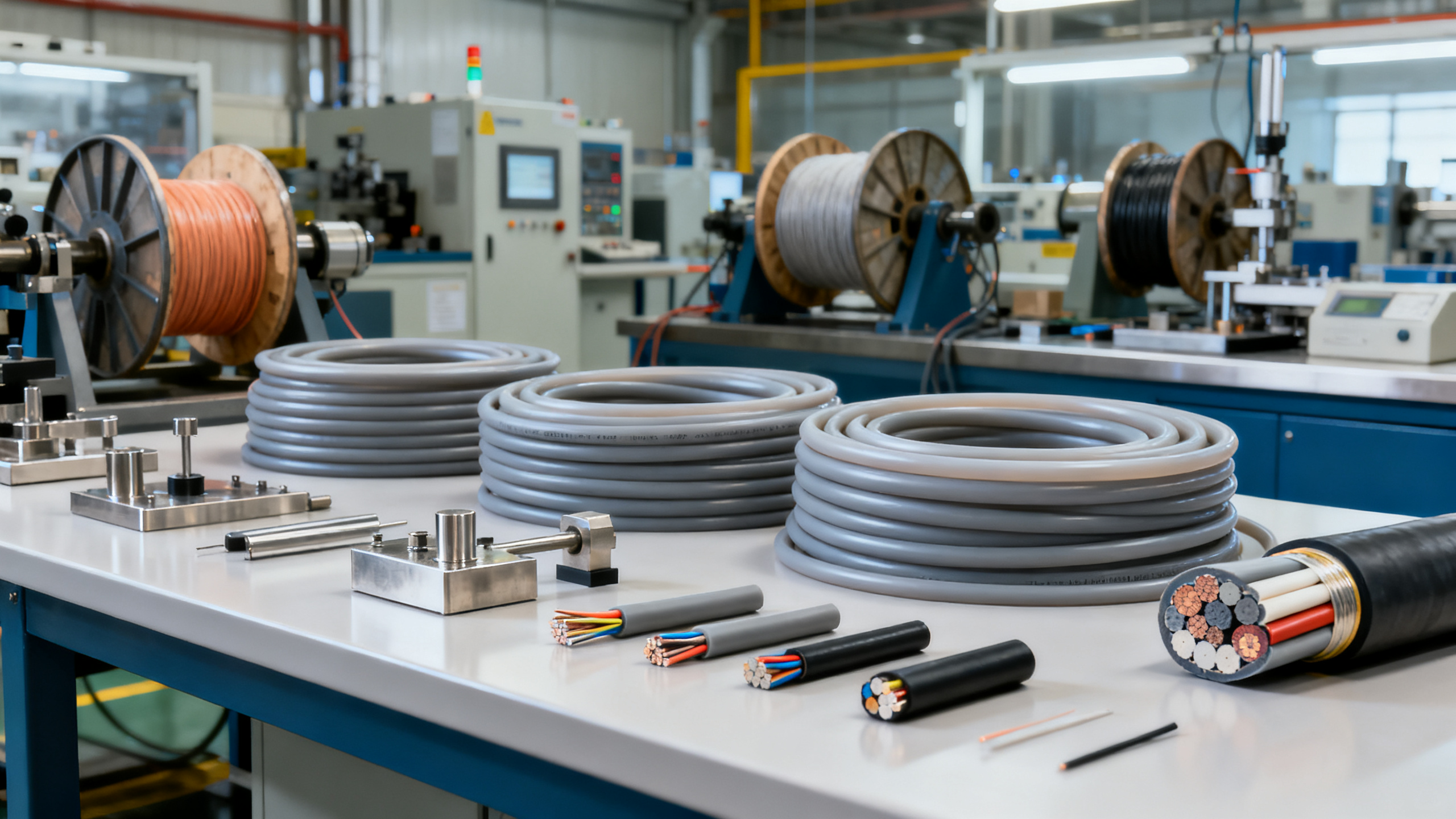
That distinction matters. An XLPE power cable manufacturer with true production capability can control conductor stranding, insulation extrusion, curing, screening, armoring, and final testing under one quality system.
Ask direct questions about the line setup. Can they produce the requested conductor size, insulation thickness, metallic screen, armor type, and sheath compound without subcontracting key stages?
For industrial procurement, production fit is often a stronger predictor of project success than brochure scale.
5. Check Type Testing, Routine Testing, and Witness Testing Options
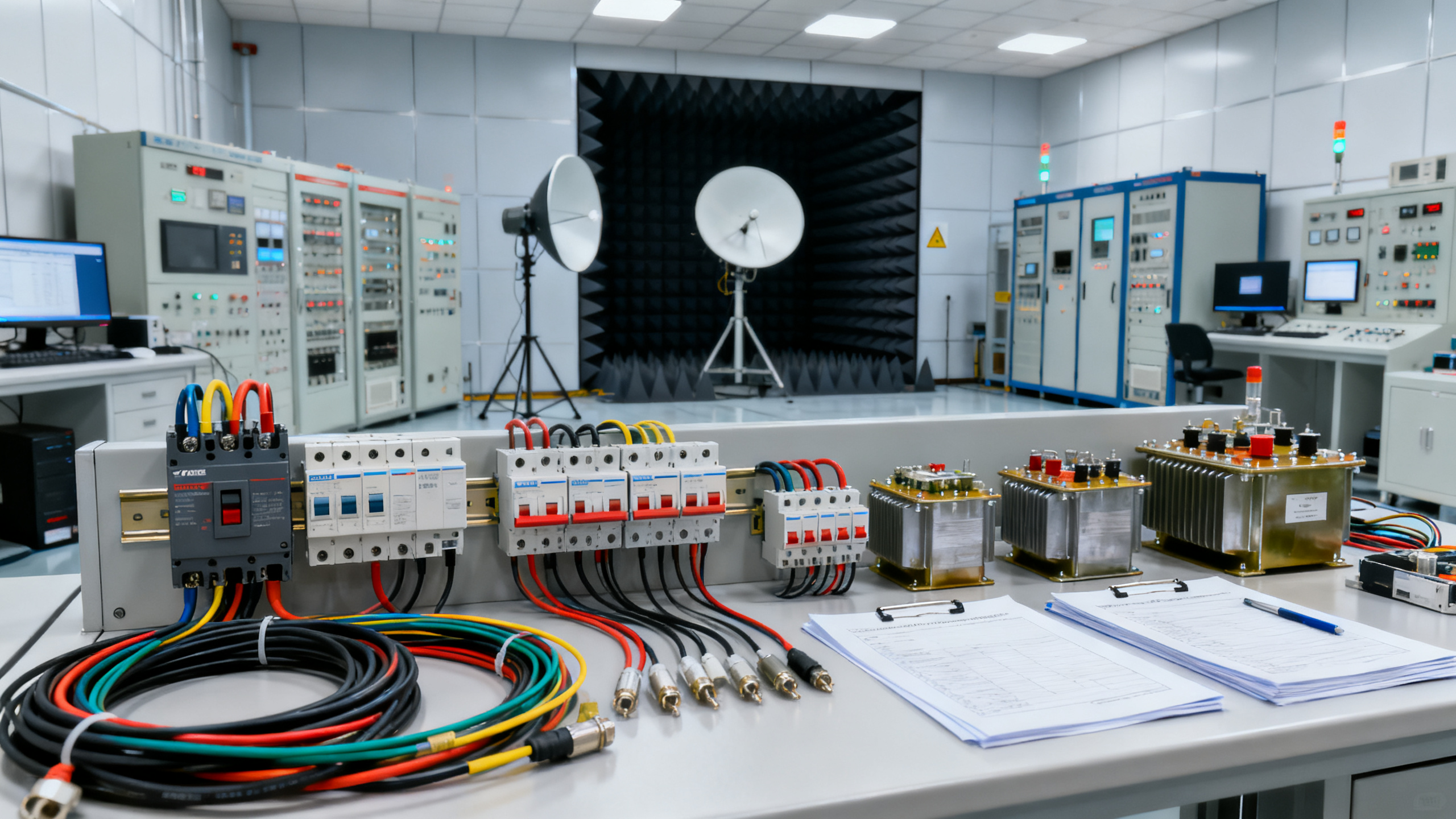
Testing capability separates a serious XLPE power cable manufacturer from a basic supplier. It also gives buyers leverage when project risk is high or specifications are strict.
Type tests show the design can meet the standard. Routine tests confirm each production batch meets essential electrical and physical requirements. Sample tests add another layer of ongoing quality control.
In higher-value purchases, ask whether witness testing is possible before shipment. This is especially useful for utility, petrochemical, transport, and large facility projects.
- Routine tests should include conductor resistance and high-voltage checks.
- Sample tests may include dimensional checks and aging performance.
- Witness testing helps close the gap between paperwork and delivered goods.
A transparent XLPE power cable manufacturer will define which tests are standard, which are optional, and how reports are issued.
6. Assess Supply Reliability, Lead Time Discipline, and Export Readiness
Even a compliant cable becomes a problem if it arrives late, mislabeled, or poorly packed. This is where sourcing decisions move from engineering review into execution risk.
Ask the XLPE power cable manufacturer how lead times are built. Are they based on raw material availability, actual line capacity, and test scheduling, or are they only commercial promises?
Export readiness also matters. Marking, drum protection, moisture barriers, shipping documents, and destination compliance can all affect receiving and site acceptance.
- Check past on-time delivery performance.
- Review packing standards for long transit routes.
- Confirm labeling, drum numbering, and test report matching.
- Ask how nonconformance and replacement claims are handled.
An experienced XLPE power cable manufacturer usually has a clearer answer on logistics than on marketing. That is a useful sign during supplier comparison.
7. Compare Total Procurement Cost, Not Just Unit Price
The lowest quote can become the highest-cost option once failures, rework, or approval delays are included. This is especially true for power infrastructure and heavy industrial installations.
When comparing an XLPE power cable manufacturer, build a simple total-cost view. Include price, scrap risk, inspection cost, logistics, documentation effort, installation impact, and expected service reliability.
More importantly, compare the cost of uncertainty. A supplier with strong compliance records and stable quality may reduce hidden risk far beyond the visible purchase price.
In actual buying cycles, this is often the point where a shortlist becomes clear. One XLPE power cable manufacturer may be cheaper on paper, while another is easier to approve, install, and trust.
A Practical Shortlist Framework
To make the evaluation more consistent, use a weighted supplier review. Keep it simple and tied to project risk.
- Voltage class fit and application match
- Compliance strength and certificate traceability
- Material control and batch consistency
- Production capability for the specified design
- Testing depth and witness support
- Delivery discipline and export handling
- Total cost over the project lifecycle
This approach keeps discussions factual. It also helps justify supplier selection internally when compliance and reliability matter as much as cost.
Final Decision Point
Selecting an XLPE power cable manufacturer should be treated as a risk decision with technical, commercial, and operational consequences. The strongest suppliers prove voltage class accuracy, compliance integrity, and repeatable manufacturing control.
If a supplier can answer these seven checks with clear documents and consistent detail, the sourcing conversation becomes much easier. That is usually the point where confidence replaces guesswork.
Use these checks before the quotation stage narrows too quickly around price. A better evaluation process usually leads to a better cable outcome, and fewer problems after delivery.
Technical Specifications
- How to Select Electronic Hotel Key Card Locks for Guest Rooms and Staff AreasAuthor :Safety Compliance Lead
- How to Select Lab Instruments for Reliable Chemical Analysis WorkflowsAuthor :Precision Metrology Expert
- How to Size a UPS for Server Rooms: Load, Runtime, and Redundancy FactorsAuthor :Grid Infrastructure Analyst
Expert Insights

Chief Security Architect
Dr. Thorne specializes in the intersection of structural engineering and digital resilience. He has advised three G7 governments on industrial infrastructure security.
Related Analysis
- Sep 17, 2026How to Select Electronic Hotel Key Card Locks for Guest Rooms and Staff AreasAuthor :Safety Compliance Lead
- Sep 16, 2026How to Select Lab Instruments for Reliable Chemical Analysis WorkflowsAuthor :Precision Metrology Expert
- Sep 15, 2026How to Size a UPS for Server Rooms: Load, Runtime, and Redundancy FactorsAuthor :Grid Infrastructure Analyst
Core Sector // 01
Security & Safety
- Selecting PTFE Insulated Hookup Wire for High-Temperature Control PanelsAuthor :Grid Infrastructure Analyst

- How Contractors Can Evaluate EPC Sourcing Solutions for Cost, Lead Time, and RiskAuthor :Grid Infrastructure Analyst

- What Drives Silicone Cable Bulk Price in Industrial Orders?Author :Grid Infrastructure Analyst

- EN 61000-6-4:2026 Takes Effect for EU-Bound ControlsAuthor :Grid Infrastructure Analyst

- How to Choose Low Smoke Cables and Wiring for Safer Commercial Buildings?Author :Grid Infrastructure Analyst

- Medium Voltage Armored Cable Selection Guide: Voltage Rating, Armor Type, and InstallationAuthor :Grid Infrastructure Analyst

- EU Publishes EN IEC 61000-6-4:2026 for Industrial EMCAuthor :Grid Infrastructure Analyst

- Choosing an XLPE Power Cable Manufacturer: 7 Checks for Voltage Class and ComplianceAuthor :Grid Infrastructure Analyst