Ningbo-Zhoushan Tightens Export Release for Cables
Author
Date Published
Reading Time
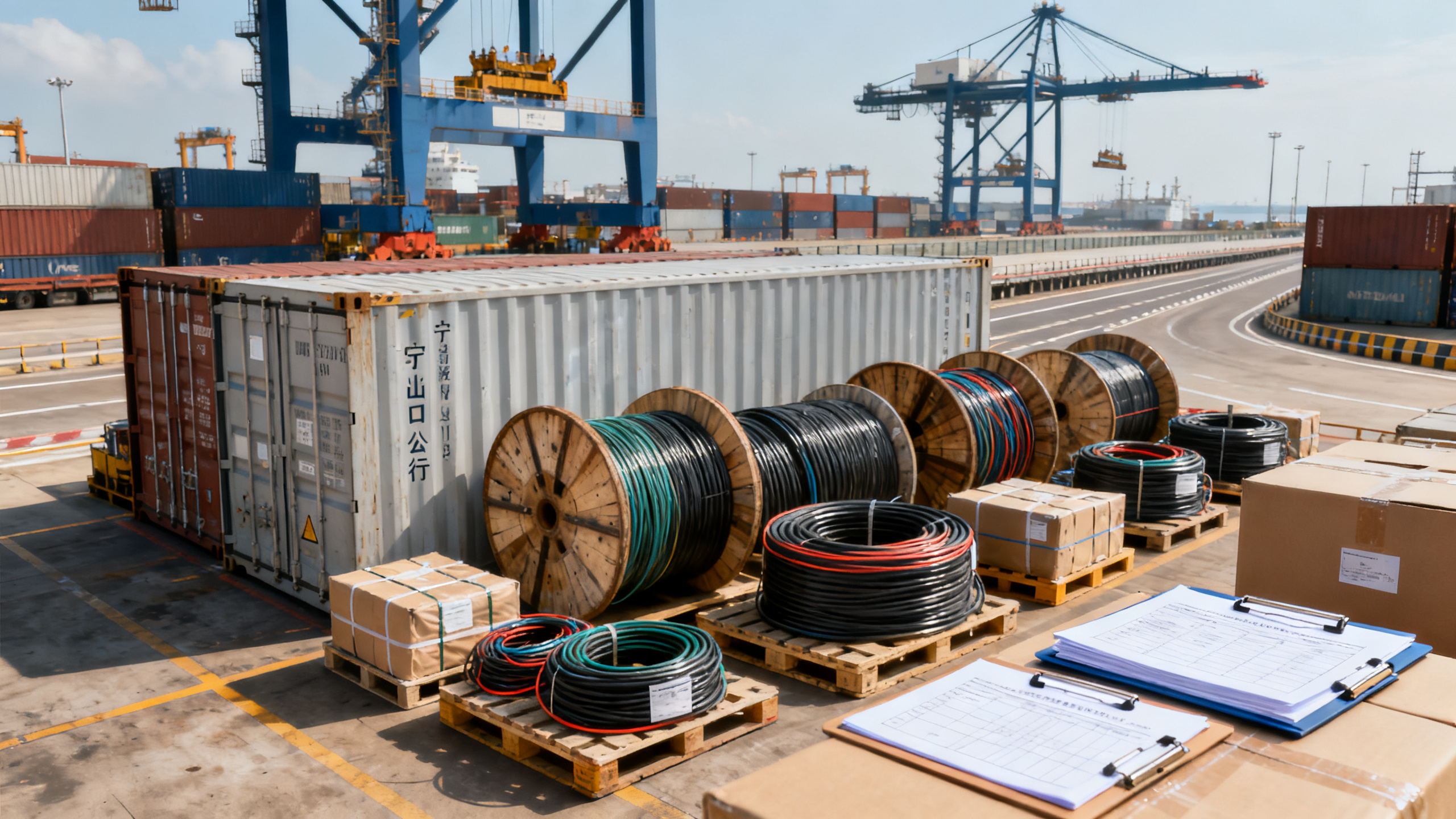
On July 9, 2026, Port of Ningbo-Zhoushan put into effect a mandatory real-time e-release protocol for exports of cables, wiring harnesses, and armored cable. The change shifts container release for these shipments toward pre-verified digital documentation, specifically export licenses, UL/CE test reports, and RoHS declarations. For exporters, manufacturers, buyers, and supply chain service providers handling these product categories, the development deserves attention because non-digital filings are already associated with much longer port dwell times, directly affecting release efficiency and delivery planning.
What the new release requirement now includes
According to the provided event summary, the port launched the system with effect from 2026-07-09. It is described as a mandatory e-release mechanism for all shipments of cables, wiring harnesses, and armored cable passing through Ningbo-Zhoushan Port.
The filing package now requires pre-verified export licenses, UL/CE test reports, and RoHS declarations. The same summary also states that non-digital submissions now face delays, with average dwell time rising from 12 hours to 48 hours for manual filings.
No further execution detail, policy text, or official link was provided in the input beyond these points.
Where the pressure is likely to show first
Exporters and shipment coordinators
From an industry perspective, exporters are the first group likely to feel the operational effect because container release now depends on whether required compliance documents are already verified in digital form. The main impact is on booking readiness, customs-facing document preparation, and handoff timing at the port. What deserves closer attention is whether internal export files, test reports, and declarations are aligned before cargo reaches the release stage.
Manufacturers of cables and wiring assemblies
For manufacturers, the rule change is likely to affect document management rather than production itself. Analysis shows that products already covered by the requirement now need supporting export and compliance records to be prepared in a form suitable for e-release. This makes technical files, certification records, and product-level declarations more visible within the shipment process, especially where multiple cable categories or models are involved.
Buyers, procurement teams, and delivery planners
Buyers and procurement teams may see the impact through lead-time risk. Observably, a manual filing route that moves average dwell time from 12 hours to 48 hours changes delivery assumptions even when the goods themselves are ready. For procurement and supply planning, the practical issue is less about a new commercial restriction and more about whether suppliers can support release with compliant digital documentation on time.
Logistics and compliance service providers
Freight forwarders, customs support teams, testing-related service providers, and compliance coordinators are also exposed because the release process now places greater weight on document completeness before shipment release. The business effect is likely to appear in pre-shipment coordination, exception handling, and communication with cargo owners when filings are incomplete or still being prepared manually.
What companies should review now
Check whether shipment files are digitally ready before handover
Analysis shows that the immediate practical issue is not simply possession of documents, but whether the required export license, UL/CE test report, and RoHS declaration are ready for the e-release workflow before cargo enters the release queue. Companies handling covered products should therefore review document sequencing and internal approval timing.
Reassess lead times for covered export orders
Where shipments still depend on manual filing, the reported increase in average dwell time from 12 hours to 48 hours should be treated as a planning factor rather than a minor exception. This is especially relevant for orders with tight delivery windows, consolidated shipments, or procurement schedules linked closely to vessel cut-off and customer receipt dates.
Focus on product scope and supporting technical records
The requirement explicitly covers cables, wiring harnesses, and armored cable. Companies active in these categories should pay close attention to whether product documentation, testing records, and declarations can be matched cleanly to the shipment being filed. Since the input does not provide detailed execution guidance, it is more appropriate to treat this as an area requiring continued verification rather than assuming a settled practice across all cases.
Watch for further clarification in execution language
No detailed procedural note, official implementation guidance, or published interpretation was included in the input. For that reason, companies should continue watching for how the requirement is described in official notices, operational instructions, trade documentation requests, and counterpart communications. The rule is already effective, but the precise execution language may still matter for day-to-day filing decisions.
Why this reads as an execution signal, not just a policy headline
Observably, this development is more than a general statement about digital trade administration because the summary includes both a mandatory filing requirement and an immediate operational consequence for manual submissions. That combination makes it more appropriate to understand the event as an already active execution signal in the export release process for the named product categories.
At the same time, analysis shows there is still reason to keep the interpretation measured. The input confirms the rule change and the reported dwell-time effect, but it does not provide the fuller detail that companies usually need to assess edge cases, filing exceptions, or differences between document preparation and release acceptance. That means the market should read this as a live compliance and delivery issue, while still monitoring how implementation language develops.
How the market may best read this change for now
The practical significance of this update lies in the fact that export release for covered cable products at a major port now depends more directly on pre-verified digital compliance documents. For industry participants, the clearest immediate takeaway is not a broad trade conclusion, but a narrower operational one: documentation readiness now has a more direct connection to release timing.
It is more appropriate to understand this event as an implemented rule change with immediate execution implications, while reserving judgment on broader commercial impact until more detailed operating guidance and market feedback become available.
Basis of this article and what still needs verification
This article is based on the user-provided news title, event date, and event summary. For developments of this type, commonly relevant source categories may include official port notices, regulatory or supervisory releases, customs or trade administration information, industry association updates, standards-related documents, and reporting by authoritative trade media.
No specific official source link was provided in the input, so the underlying official publication path still requires follow-up verification. What still warrants continued observation includes any detailed implementation notice, interpretation of documentation requirements, filing practice for covered products, possible changes in tender or procurement documentation, industry feedback, and how companies are adapting their export execution processes.
Technical Specifications
- Air Handling Unit Supplier Checklist: Performance Data, Lead Times, and SupportAuthor :Environmental Engineering Director
- Buying Fiberglass Water Tanks Wholesale: Compare Quotes and Delivery CostsAuthor :Environmental Engineering Director
- Choosing an XLPE Power Cable Supplier: Test Reports, Traceability, and Lead TimesAuthor :Grid Infrastructure Analyst
Expert Insights

Chief Security Architect
Dr. Thorne specializes in the intersection of structural engineering and digital resilience. He has advised three G7 governments on industrial infrastructure security.
Related Analysis
- Oct 19, 2026Air Handling Unit Supplier Checklist: Performance Data, Lead Times, and SupportAuthor :Environmental Engineering Director
- Oct 18, 2026Buying Fiberglass Water Tanks Wholesale: Compare Quotes and Delivery CostsAuthor :Environmental Engineering Director
- Oct 17, 2026Choosing an XLPE Power Cable Supplier: Test Reports, Traceability, and Lead TimesAuthor :Grid Infrastructure Analyst
Core Sector // 01
Security & Safety
- Choosing an XLPE Power Cable Supplier: Test Reports, Traceability, and Lead TimesAuthor :Grid Infrastructure Analyst

- How to Select XLPO Insulated Solar Cable for UV, Heat, and High-Voltage PV SystemsAuthor :Grid Infrastructure Analyst

- Selecting PTFE Insulated Hookup Wire for High-Temperature Control PanelsAuthor :Grid Infrastructure Analyst

- How Contractors Can Evaluate EPC Sourcing Solutions for Cost, Lead Time, and RiskAuthor :Grid Infrastructure Analyst

- What Drives Silicone Cable Bulk Price in Industrial Orders?Author :Grid Infrastructure Analyst

- EN 61000-6-4:2026 Takes Effect for EU-Bound ControlsAuthor :Grid Infrastructure Analyst

- How to Choose Low Smoke Cables and Wiring for Safer Commercial Buildings?Author :Grid Infrastructure Analyst

- Medium Voltage Armored Cable Selection Guide: Voltage Rating, Armor Type, and InstallationAuthor :Grid Infrastructure Analyst