CBP Tightens Cable Import Checks Under Directive 26-07
Author
Date Published
Reading Time
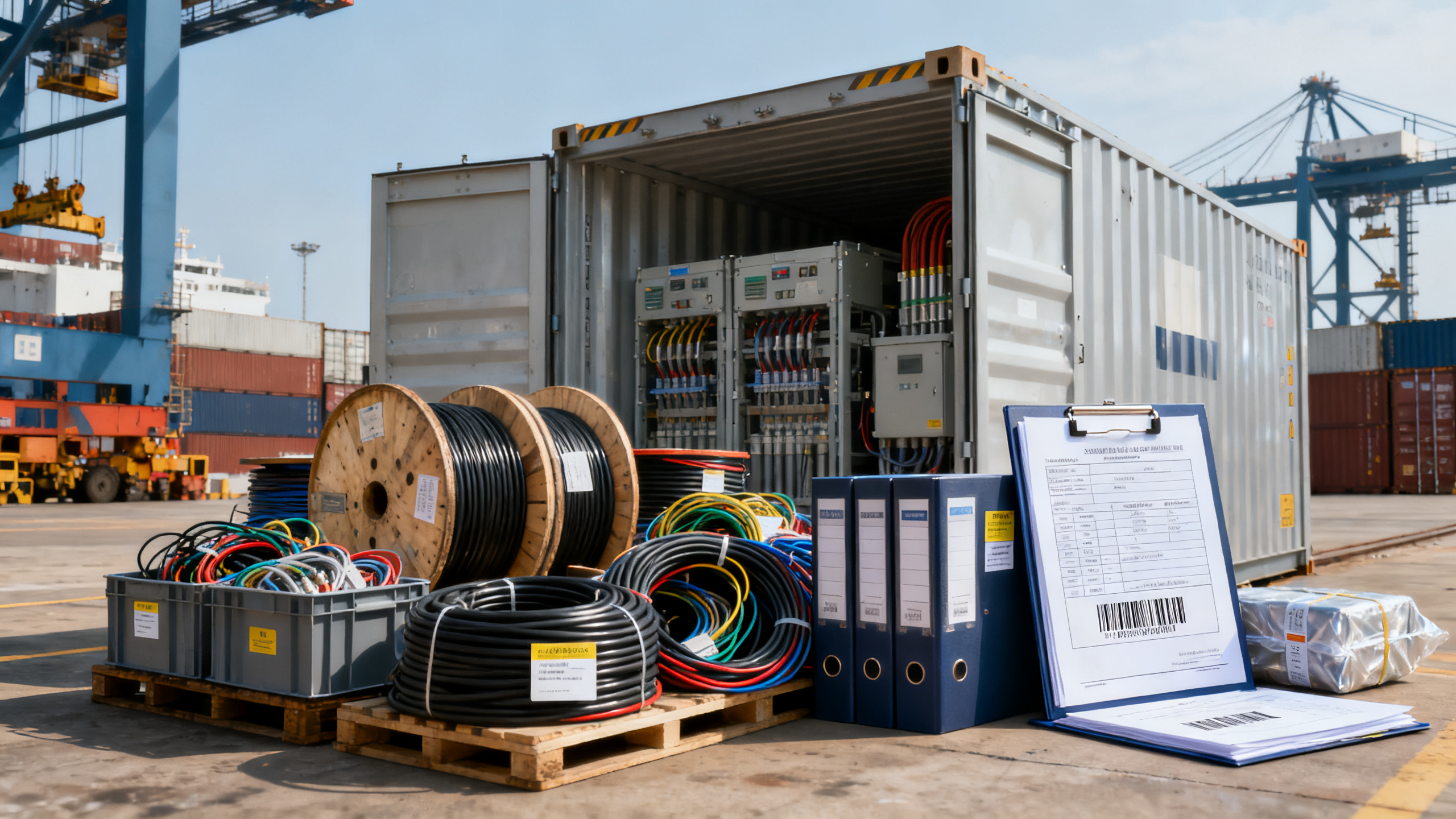
On July 9, 2026, U.S. Customs and Border Protection introduced Directive 26-07, raising documentary scrutiny for imported cables, wiring harnesses, and insulated conductors entering U.S. ports. The move deserves close attention from importers, manufacturers, procurement teams, and logistics providers because the new verification focus targets product compliance records and origin documentation, while non-compliant shipments may face 72-hour holds and possible re-export orders.
What the New CBP Requirement Covers
According to the information provided, Directive 26-07 requires enhanced documentary verification for all imported cables, wiring harnesses, and insulated conductors entering U.S. ports. The required checks include UL certification validation, origin tracing, and flame-retardant test reports. The same information states that consignments found non-compliant may be held for 72 hours and could also be subject to re-export orders.
Where the Immediate Pressure May Appear
Import-facing companies may see documentation become a shipping gate
From an industry perspective, direct trading companies and importers may be the first to feel the impact because the directive is centered on entry screening at U.S. ports. The likely pressure point is not only the product itself, but whether supporting records are complete, consistent, and ready for review at the time of import processing.
Manufacturing and assembly operations may face upstream record demands
Analysis shows that manufacturers of cables, wiring harnesses, and insulated conductors may need closer alignment between production output and compliance files. Where origin tracing and flame-retardant test reports are under scrutiny, the affected business link is likely to be the handoff between factory documentation and export execution rather than manufacturing volume alone.
Supply chain service providers may need to manage timing risk more carefully
Customs brokers, freight coordinators, and other supply chain service providers may be affected because a 72-hour hold can alter delivery timing and cargo planning. What deserves closer attention is whether shipment files are review-ready before arrival, since the operational impact may appear through delays, customer communication pressure, and contingency handling.
Buyers and downstream users may need to watch delivery reliability
Procurement teams and downstream industrial users may not be the party filing entry documents, but they can still be exposed if imported consignments are delayed or ordered for re-export. Observably, the issue for these participants is supply continuity and contract timing rather than customs procedure itself.
What Companies Should Watch Now
Check whether compliance files can withstand document-level review
Companies handling affected products should pay close attention to whether UL certification records, origin-related materials, and flame-retardant test reports are complete and internally consistent. This is a practical point because the directive emphasizes documentary verification rather than a general statement of compliance.
Separate formal policy wording from operational execution
What deserves closer attention is the difference between the directive's stated requirements and how screening is implemented in daily port operations. Businesses should keep watching for any further official clarification, procedural detail, or interpretive guidance that may affect how documents are reviewed in practice.
Prepare for delivery and communication contingencies
Given the stated risk of 72-hour holds and potential re-export orders, companies may need to review delivery promises, buffer time, and customer communication plans. This is especially relevant for shipments with tight handover schedules or projects that depend on specific cable and wiring components arriving on time.
Reconfirm supplier-side document readiness
Analysis shows that supplier qualification may now need to be viewed together with documentary responsiveness. For businesses sourcing affected products, the immediate question is whether suppliers can provide the required compliance and origin records in a form that supports customs review without last-minute gaps.
Why This Looks Like More Than a Routine Port Check
Observably, this development is best read as a compliance-focused signal rather than a routine procedural footnote. The directive does not by itself confirm a broader long-term market outcome, but it does indicate that documentation quality for cable and wiring imports has become a more immediate control point at U.S. entry. It is more appropriate to understand this as a development that has near-term operational consequences and may also signal tighter enforcement expectations if similar checks continue.
How to Read the Current Signal
At this stage, the industry significance lies in the fact that import screening for these products is being tied more directly to documentary proof, with explicit consequences for non-compliance. A cautious reading is more appropriate than a sweeping conclusion: this is already a concrete short-term change in port-entry requirements for affected products, while its broader trade and supply-chain implications still require continued observation.
Basis of This Article and What Still Needs Verification
This article is based on the user-provided news title, event date, and event summary concerning CBP Directive 26-07. For developments of this kind, relevant source types typically include official government notices, company disclosures, industry association updates, authoritative media reporting, and standards-related documents. A specific official source link was not provided in the input, so the exact original publication and any later clarifications still need ongoing verification. Follow-up attention should focus on any further official wording, implementation detail, and related compliance interpretation affecting imported cables, wiring harnesses, and insulated conductors.
Technical Specifications
- How to Select Electronic Hotel Key Card Locks for Guest Rooms and Staff AreasAuthor :Safety Compliance Lead
- How to Select Lab Instruments for Reliable Chemical Analysis WorkflowsAuthor :Precision Metrology Expert
- How to Size a UPS for Server Rooms: Load, Runtime, and Redundancy FactorsAuthor :Grid Infrastructure Analyst
Expert Insights

Chief Security Architect
Dr. Thorne specializes in the intersection of structural engineering and digital resilience. He has advised three G7 governments on industrial infrastructure security.
Related Analysis
- Sep 17, 2026How to Select Electronic Hotel Key Card Locks for Guest Rooms and Staff AreasAuthor :Safety Compliance Lead
- Sep 16, 2026How to Select Lab Instruments for Reliable Chemical Analysis WorkflowsAuthor :Precision Metrology Expert
- Sep 15, 2026How to Size a UPS for Server Rooms: Load, Runtime, and Redundancy FactorsAuthor :Grid Infrastructure Analyst
Core Sector // 01
Security & Safety
- Selecting PTFE Insulated Hookup Wire for High-Temperature Control PanelsAuthor :Grid Infrastructure Analyst

- How Contractors Can Evaluate EPC Sourcing Solutions for Cost, Lead Time, and RiskAuthor :Grid Infrastructure Analyst

- What Drives Silicone Cable Bulk Price in Industrial Orders?Author :Grid Infrastructure Analyst

- EN 61000-6-4:2026 Takes Effect for EU-Bound ControlsAuthor :Grid Infrastructure Analyst

- How to Choose Low Smoke Cables and Wiring for Safer Commercial Buildings?Author :Grid Infrastructure Analyst

- Medium Voltage Armored Cable Selection Guide: Voltage Rating, Armor Type, and InstallationAuthor :Grid Infrastructure Analyst

- EU Publishes EN IEC 61000-6-4:2026 for Industrial EMCAuthor :Grid Infrastructure Analyst

- Choosing an XLPE Power Cable Manufacturer: 7 Checks for Voltage Class and ComplianceAuthor :Grid Infrastructure Analyst