China's New Maritime Code Effective May 1, 2026: Shipper Bears Primary Liability for Unclaimed Cargo
Author
Date Published
Reading Time
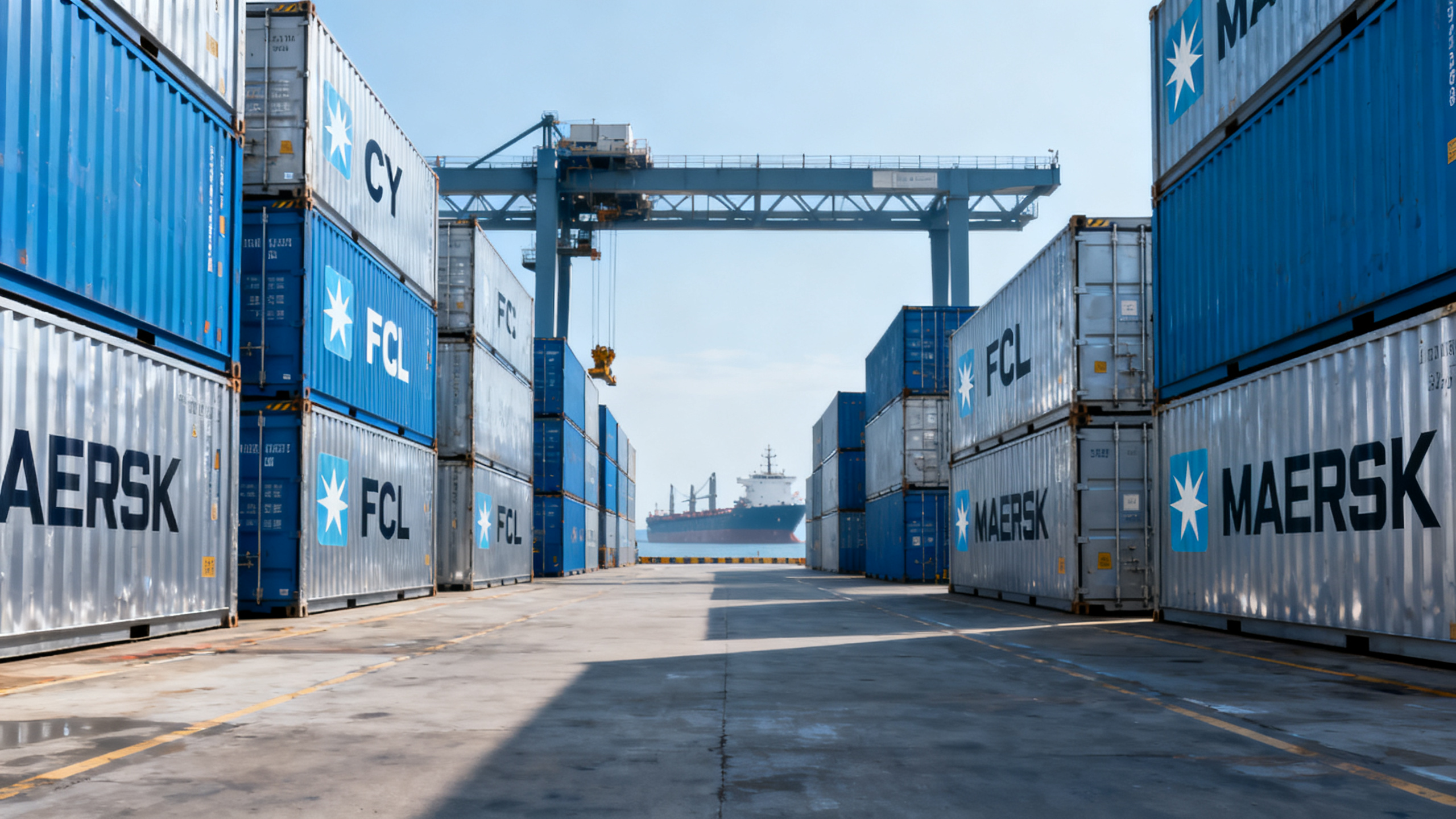
On May 1, 2026, the revised People’s Republic of China Maritime Code enters into force, introducing a significant shift in liability allocation for unclaimed cargo at discharge ports — placing primary responsibility on shippers rather than consignees. This change directly affects international shipping operations, particularly for overseas importers, distributors, and EPC project procurement parties engaged with Chinese suppliers. It warrants close attention from stakeholders across global supply chains involving Chinese maritime exports.
Event Overview
Effective May 1, 2026, the newly revised Maritime Code of the People’s Republic of China comes into effect. Article 93 explicitly reassigns primary liability for unclaimed cargo at the port of discharge from the consignee to the shipper. This legal adjustment is publicly confirmed and applies to all maritime transport contracts governed by Chinese law.
Which Subsectors Are Affected
Direct Trading Enterprises (e.g., Overseas Importers)
These entities typically rely on delivery terms such as FOB, CFR, or CIF and assume that title and risk transfer upon shipment or arrival. Under the new provision, however, shippers — often their Chinese suppliers — now bear statutory primary responsibility for unclaimed cargo. This may indirectly impact importers’ ability to claim against carriers or insurers, delay customs clearance resolution, and increase exposure to demurrage and detention charges if coordination with the shipper falters.
Distribution & Wholesaling Companies
Distributors managing multi-tiered inbound logistics — especially those holding inventory centrally before regional dispatch — face heightened operational dependency on timely pickup instructions and accurate documentation from Chinese suppliers. Delays or miscommunication regarding cargo release may now trigger liability cascades under the revised framework, affecting warehouse planning, cost allocation, and service-level agreements with downstream buyers.
EPC Project Procurement Units
For engineering, procurement, and construction projects sourcing equipment or materials from China, unclaimed cargo can disrupt critical path timelines. The revised rule increases pressure on procurement teams to verify and contractually align cargo-handling responsibilities with Chinese vendors — particularly where delivery terms do not explicitly address post-arrival custody, storage, or disposal protocols.
Supply Chain Service Providers (e.g., Freight Forwarders, NVOCCs)
Forwarders acting as contractual shippers — especially when issuing house bills of lading — may now be exposed to direct liability under Article 93. This raises questions about internal risk controls, subcontractor vetting, and clarity in master vs. house bill relationships. Service providers must reassess indemnity clauses, insurance coverage scope, and client-facing disclosures related to cargo release obligations.
What Relevant Enterprises or Practitioners Should Focus On and How to Respond Now
Review and revise trade terms with Chinese suppliers
Parties using FOB, CFR, or CIF should explicitly define responsibilities for cargo collection, storage, and disposal post-discharge in commercial contracts — including timeframes, cost allocation for demurrage/detention, and procedures for abandonment or return. Avoid reliance solely on Incoterms® rules without supplementary contractual language.
Assess insurance policy coverage for cargo custody risks
Verify whether existing marine cargo or liability policies cover losses arising from unclaimed cargo scenarios under the new liability regime — especially where the insured is named as shipper (e.g., under a house bill) or has assumed de facto control. Engage insurers early to clarify coverage triggers and exclusions.
Update internal SOPs for documentation and communication handoffs
Establish clear internal checkpoints for confirming receipt of original bills of lading, notifying consignees ahead of vessel arrival, and documenting attempts to arrange pickup. Where possible, integrate electronic tracking and notification systems to demonstrate due diligence in cargo release coordination.
Monitor official guidance and judicial interpretation
While Article 93 is effective as of May 1, 2026, practical enforcement — including how courts will interpret “shipper,” apply exceptions (e.g., force majeure), or allocate secondary liability — remains subject to future judicial practice and potential administrative clarifications. Track announcements from the Supreme People’s Court or Ministry of Transport for interpretive guidance.
Editorial Observation / Industry Perspective
Observably, this amendment signals a structural recalibration of risk distribution in China’s maritime export ecosystem — shifting emphasis toward upstream accountability. Analysis shows it is less an immediate operational disruption and more a long-term contractual and insurance alignment signal. From an industry perspective, it reflects growing institutional attention to container utilization efficiency and port congestion mitigation, but its full impact depends heavily on how consistently it is applied across jurisdictions and dispute forums. Current practice suggests that while the rule is legally effective, real-world enforcement patterns — particularly in cross-border disputes — will take time to crystallize.
Conclusion: The revised Maritime Code does not alter fundamental Incoterms® allocations, but it introduces a binding domestic legal layer that overrides default assumptions about consignee-led cargo release. It is best understood not as a standalone compliance requirement, but as a catalyst for proactive contractual clarification, insurance review, and inter-company process alignment between Chinese exporters and their overseas trading partners. Prudent stakeholders will treat it as a prompt to audit and strengthen end-to-end cargo-handling governance — rather than as an isolated regulatory event.
Source Disclosure:
Primary source: Official promulgation notice of the revised Maritime Code of the People’s Republic of China, effective May 1, 2026.
Note: Judicial interpretations, enforcement precedents, and administrative implementation guidelines remain pending and are subject to ongoing observation.
Technical Specifications
- How to Select Electronic Hotel Key Card Locks for Guest Rooms and Staff AreasAuthor :Safety Compliance Lead
- How to Select Lab Instruments for Reliable Chemical Analysis WorkflowsAuthor :Precision Metrology Expert
- How to Size a UPS for Server Rooms: Load, Runtime, and Redundancy FactorsAuthor :Grid Infrastructure Analyst
Expert Insights

Chief Security Architect
Dr. Thorne specializes in the intersection of structural engineering and digital resilience. He has advised three G7 governments on industrial infrastructure security.
Related Analysis
- Sep 17, 2026How to Select Electronic Hotel Key Card Locks for Guest Rooms and Staff AreasAuthor :Safety Compliance Lead
- Sep 16, 2026How to Select Lab Instruments for Reliable Chemical Analysis WorkflowsAuthor :Precision Metrology Expert
- Sep 15, 2026How to Size a UPS for Server Rooms: Load, Runtime, and Redundancy FactorsAuthor :Grid Infrastructure Analyst
Core Sector // 01
Security & Safety
- Selecting PTFE Insulated Hookup Wire for High-Temperature Control PanelsAuthor :Grid Infrastructure Analyst

- How Contractors Can Evaluate EPC Sourcing Solutions for Cost, Lead Time, and RiskAuthor :Grid Infrastructure Analyst

- What Drives Silicone Cable Bulk Price in Industrial Orders?Author :Grid Infrastructure Analyst

- EN 61000-6-4:2026 Takes Effect for EU-Bound ControlsAuthor :Grid Infrastructure Analyst

- How to Choose Low Smoke Cables and Wiring for Safer Commercial Buildings?Author :Grid Infrastructure Analyst

- Medium Voltage Armored Cable Selection Guide: Voltage Rating, Armor Type, and InstallationAuthor :Grid Infrastructure Analyst

- EU Publishes EN IEC 61000-6-4:2026 for Industrial EMCAuthor :Grid Infrastructure Analyst

- Choosing an XLPE Power Cable Manufacturer: 7 Checks for Voltage Class and ComplianceAuthor :Grid Infrastructure Analyst