What a fair Electrical & Power quotation should include
Author
Date Published
Reading Time
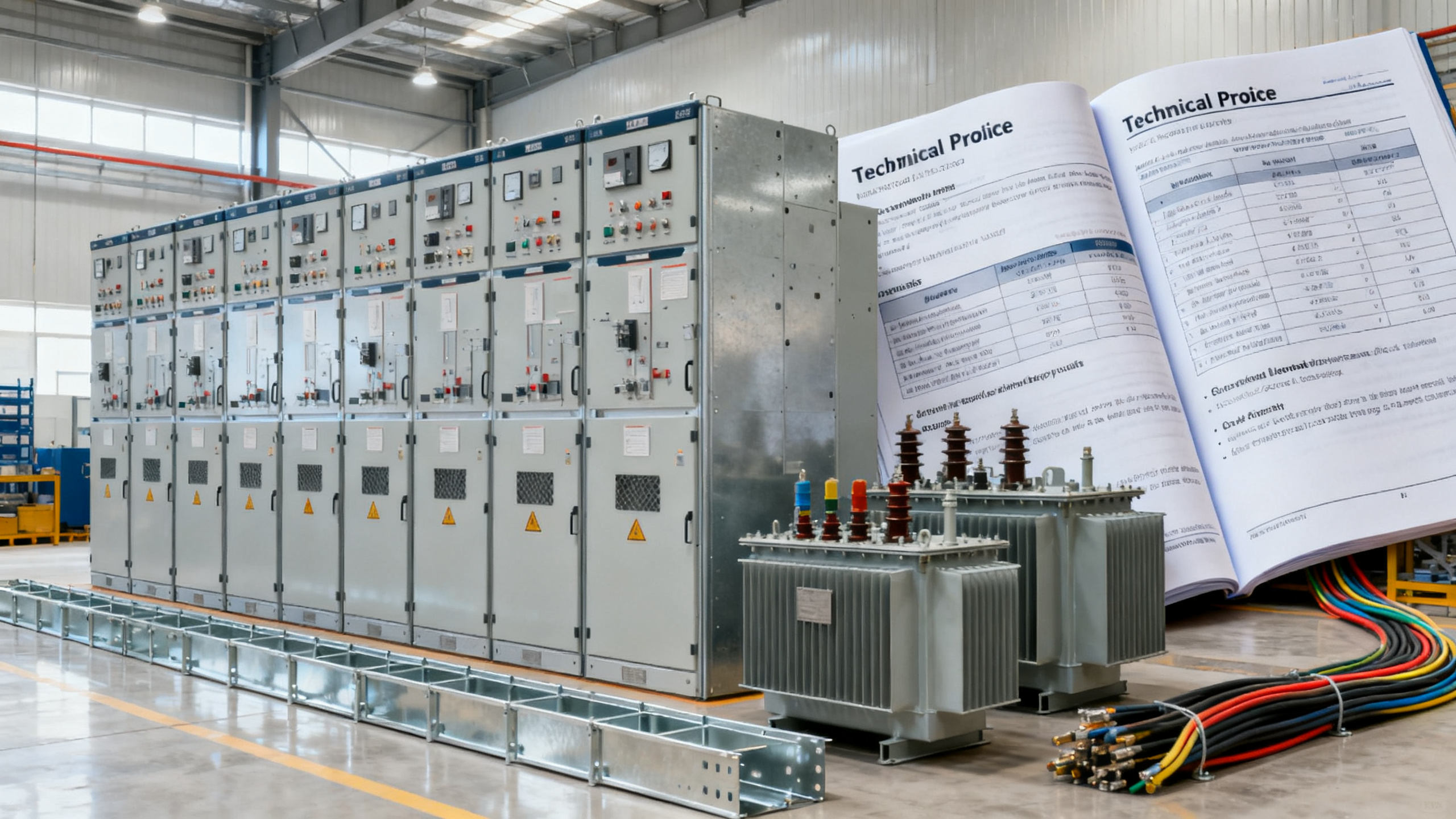
A fair Electrical & Power quotation should do more than list prices—it should define scope, compliance, performance, delivery, and lifecycle value with full transparency. For procurement teams, knowing what must be included helps reduce technical risk, prevent hidden costs, and ensure suppliers meet project, safety, and reliability requirements from the start.
Why procurement teams should scrutinize an Electrical & Power quotation beyond unit price
In industrial procurement, an Electrical & Power quotation is rarely just a commercial document. It is also a technical, contractual, and risk-control tool. When quotations are vague, missing scope boundaries, or silent on compliance, the buyer often absorbs the downstream risk through delays, rework, change orders, or operational failure.
This is especially true across general industry projects where electrical systems support manufacturing lines, utilities, processing plants, warehouses, critical buildings, and infrastructure upgrades. In these environments, procurement teams must compare not only price, but also suitability, certification, delivery assurance, and service commitments.
Global Industrial Core (GIC) focuses on this decision layer. For EPC buyers, facility managers, and sourcing leaders, the real question is simple: does the quotation fully describe what will be supplied, how it will perform, what standards it follows, and what total cost may emerge after purchase?
- A low quote can become expensive if enclosure ratings, cable accessories, testing, or commissioning are excluded.
- A technically detailed quote helps internal stakeholders align procurement, engineering, HSE, and operations before purchase approval.
- A transparent supplier proposal reduces disputes over delivery, substitutions, warranty conditions, and acceptance criteria.
What should a fair Electrical & Power quotation include?
A fair Electrical & Power quotation should present a clear structure. Procurement teams should be able to review technical scope, commercial terms, compliance, logistics, and after-sales responsibilities without guessing. If critical information is buried or omitted, comparison across suppliers becomes unreliable.
The table below summarizes the minimum content that should appear in a professional Electrical & Power quotation for industrial projects.
A strong quotation makes review easier for both technical and commercial stakeholders. It also shortens the RFQ-to-PO cycle because fewer clarifications are needed after bid submission.
Core elements that should never be left ambiguous
- Exact model or configuration basis, including approved alternatives if substitutions are allowed.
- Interface responsibilities, such as who provides terminations, cable glands, busbar links, software, or field calibration.
- Inspection documentation, including datasheets, test reports, manuals, and as-built deliverables.
- Exceptions and deviations from buyer specifications, stated openly rather than hidden in notes.
Which technical parameters matter most in an Electrical & Power quotation?
Procurement teams often receive quotations that mention only broad product names such as switchgear, transformer, UPS, cable, or protection relay. That is not enough. A fair Electrical & Power quotation should translate equipment names into measurable technical parameters linked to the application.
The following parameter checklist helps buyers confirm whether quotations are technically comparable or only commercially similar on the surface.
When these parameters are absent, procurement cannot verify like-for-like equivalence. That is where many low-cost bids create risk: the supplier appears competitive, but the proposed configuration is lighter, less protected, or less suitable than the requirement.
Questions buyers should send back before approval
- What is included in the base price, and what is optional?
- Which parameters are guaranteed at site conditions rather than factory reference conditions?
- Are accessories needed for installation, protection, mounting, or commissioning already listed?
- Does the quotation reference the buyer specification revision and approved drawings?
How to compare quotations fairly when suppliers use different scope assumptions
Two Electrical & Power quotation packages may appear similar but differ materially in execution scope. One may include FAT, cable lugs, stainless hardware, and supervision. Another may exclude all of them. If procurement compares only total value, the decision will likely favor a misleading price.
A fair comparison starts with normalization. Buyers should align bid assumptions into a common comparison sheet covering specification match, exclusions, deviations, services, delivery, and documentation obligations.
The matrix below can be used as a practical bid leveling tool for electrical and power procurement.
This approach shifts procurement from price comparison to risk-adjusted decision-making. That is often the difference between a bid that looks attractive in the approval stage and one that performs reliably through installation and operation.
What compliance, documentation, and testing should appear in the quotation?
For industrial power systems, documentation quality is as important as equipment quality. A fair Electrical & Power quotation should state what compliance evidence will be delivered and what inspections are available before shipment or startup.
Requirements vary by geography and project type, but common references include IEC-based design criteria, CE-related declarations where applicable, UL-related conformity for specified markets, and ISO-managed manufacturing or quality processes where relevant to supplier qualification.
- Datasheets should match the quoted item, not a generic catalog page with broad ranges.
- Routine tests, inspection points, and witness options should be identified before order placement.
- Documentation lists should include manuals, GA drawings, wiring diagrams, nameplate details, and spare parts lists if relevant.
- Any deviations from requested standards should be disclosed directly in the quotation.
Buyers working on regulated facilities, export projects, or insured assets should pay special attention to testing scope. Missing factory testing or unclear documentation handover often creates site acceptance delays that cost more than the original price gap between suppliers.
Common documentation gaps that create procurement risk
- No stated revision link to the RFQ, causing confusion about which requirement set was quoted.
- No warranty conditions tied to installation, storage, or commissioning responsibilities.
- No statement on consumables, startup support, or recommended spare parts.
- No mention of excluded third-party inspections, logistics insurance, or export packing.
Where hidden costs usually appear in an Electrical & Power quotation
Procurement teams under budget pressure often focus on base price first. That is understandable, but electrical and power packages frequently carry indirect or deferred costs. A quotation can be commercially acceptable on day one and still become costly after logistics, installation, integration, or maintenance are considered.
Typical hidden costs include unquoted accessories, missing software licenses, specialized termination kits, additional testing, delayed documentation, non-standard packing, and the need for field modifications because of incomplete interface definitions.
Procurement can reduce this exposure by using a lifecycle cost lens rather than a purchase-price-only lens. In many cases, the better quotation is the one with fewer exclusions, stronger documentation, and more realistic support commitments.
- Check whether site services are included or quoted separately by day rate.
- Verify whether consumables, glands, lugs, mounting hardware, and protection accessories are part of supply.
- Ask whether firmware, programming tools, or communications modules are optional.
- Confirm warranty response scope, especially for overseas projects and remote sites.
FAQ: what buyers often ask about an Electrical & Power quotation
How detailed should an Electrical & Power quotation be for industrial procurement?
It should be detailed enough that engineering, procurement, quality, and operations can all confirm scope without separate assumptions. At minimum, it should identify equipment ratings, included accessories, compliance basis, test scope, delivery terms, warranty, and all exclusions. If comparison requires repeated clarification emails, the quotation is not detailed enough.
What is the biggest red flag in a supplier quotation?
The biggest red flag is a low price paired with unclear scope. This usually signals omitted accessories, reduced specification, unsupported lead times, or weak documentation. Another warning sign is when deviations from the RFQ are not clearly listed but only appear later during technical review or order execution.
Should procurement accept equivalent alternatives?
Equivalent alternatives can be acceptable, but only if equivalence is demonstrated through ratings, standards alignment, environmental suitability, and interface compatibility. Procurement should request a deviation sheet and technical cross-reference instead of accepting general statements such as “equal or better.”
How can buyers shorten quotation review time?
Use a structured bid tabulation sheet before RFQ release, requiring suppliers to respond line by line on scope, compliance, lead time, tests, and exclusions. This makes every Electrical & Power quotation easier to compare and reduces internal review cycles.
Why choose us when reviewing or sourcing an Electrical & Power quotation?
Global Industrial Core supports buyers who need more than a price check. Our strength is translating complex industrial requirements into sourcing clarity across electrical and power systems, compliance expectations, documentation depth, and supplier comparison logic.
If your team is evaluating an Electrical & Power quotation, we can help you review parameter completeness, compare technical deviations, assess compliance language, and identify where hidden lifecycle cost may emerge. This is particularly valuable for EPC packages, plant upgrades, utility interfaces, and cross-border procurement where documentation quality matters as much as equipment value.
- Consult us for parameter confirmation when supplier datasheets are inconsistent or incomplete.
- Ask for sourcing guidance on product selection, alternative evaluation, or scope normalization.
- Discuss delivery timelines, documentation expectations, packaging, and inspection planning before PO release.
- Request support for certification alignment, sample review logic, warranty clarification, and quotation communication strategy.
A fair quotation protects both budget and performance. When the scope is transparent and the technical basis is clear, procurement gains leverage, engineering gains confidence, and project execution starts on stronger ground.
Technical Specifications
- How to Select Electronic Hotel Key Card Locks for Guest Rooms and Staff AreasAuthor :Safety Compliance Lead
- How to Select Lab Instruments for Reliable Chemical Analysis WorkflowsAuthor :Precision Metrology Expert
- How to Size a UPS for Server Rooms: Load, Runtime, and Redundancy FactorsAuthor :Grid Infrastructure Analyst
Expert Insights

Chief Security Architect
Dr. Thorne specializes in the intersection of structural engineering and digital resilience. He has advised three G7 governments on industrial infrastructure security.
Related Analysis
- Sep 17, 2026How to Select Electronic Hotel Key Card Locks for Guest Rooms and Staff AreasAuthor :Safety Compliance Lead
- Sep 16, 2026How to Select Lab Instruments for Reliable Chemical Analysis WorkflowsAuthor :Precision Metrology Expert
- Sep 15, 2026How to Size a UPS for Server Rooms: Load, Runtime, and Redundancy FactorsAuthor :Grid Infrastructure Analyst
Core Sector // 01
Security & Safety
- Selecting PTFE Insulated Hookup Wire for High-Temperature Control PanelsAuthor :Grid Infrastructure Analyst

- How Contractors Can Evaluate EPC Sourcing Solutions for Cost, Lead Time, and RiskAuthor :Grid Infrastructure Analyst

- What Drives Silicone Cable Bulk Price in Industrial Orders?Author :Grid Infrastructure Analyst

- EN 61000-6-4:2026 Takes Effect for EU-Bound ControlsAuthor :Grid Infrastructure Analyst

- How to Choose Low Smoke Cables and Wiring for Safer Commercial Buildings?Author :Grid Infrastructure Analyst

- Medium Voltage Armored Cable Selection Guide: Voltage Rating, Armor Type, and InstallationAuthor :Grid Infrastructure Analyst

- EU Publishes EN IEC 61000-6-4:2026 for Industrial EMCAuthor :Grid Infrastructure Analyst

- Choosing an XLPE Power Cable Manufacturer: 7 Checks for Voltage Class and ComplianceAuthor :Grid Infrastructure Analyst