2026 AOC Cable Manufacturer Rankings Released
Author
Date Published
Reading Time
LightCounting’s May 2026 report highlights a pivotal shift in the active optical cable (AOC) market: global AOC revenue exceeded USD 4.5 billion, with 28% year-on-year growth. Notably, domestic Chinese AOC suppliers captured 38% of the short-reach interconnect market in AI training clusters and liquid-cooled data centers—driven by domestic IT innovation (Xinchuang) adoption. This development warrants close attention from data center infrastructure providers, AI hardware integrators, and optical interconnect supply chain stakeholders, as it signals both accelerated localization and evolving technical readiness in high-performance computing environments.
Event Overview
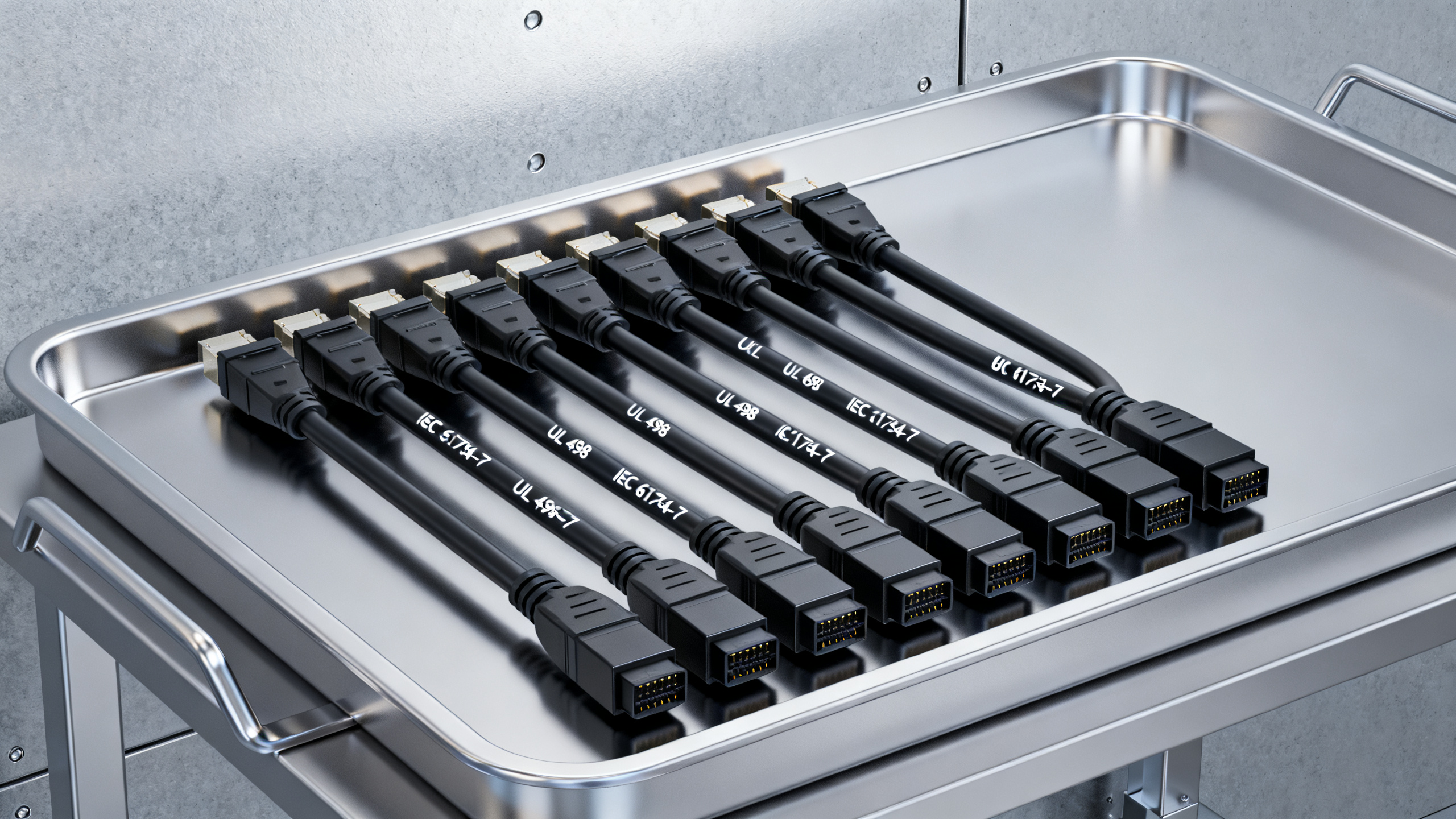
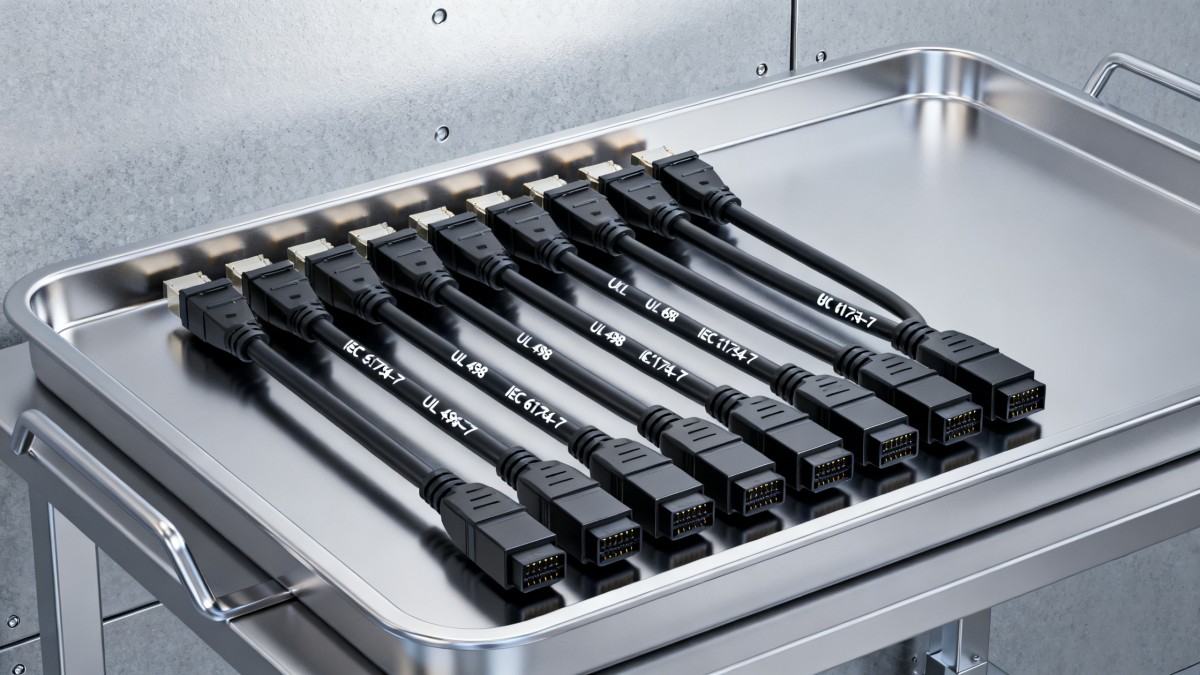
In May 2026, LightCounting published its annual AOC market report, confirming that the global AOC market size surpassed USD 4.5 billion, representing 28% growth year-on-year. The report states that within China’s AI compute infrastructure segment—including AI training clusters and liquid-cooled data centers—domestically manufactured AOCs achieved a 38% market share. Key Chinese AOC suppliers have obtained UL 498 and IEC 61754-7 certifications, and average delivery lead times have been reduced to six weeks.
Industries Affected
Data Center Infrastructure Providers
These entities are directly impacted because AOCs serve as critical short-reach interconnects between GPUs, CPUs, and switches in AI training racks. With 38% domestic AOC share in such deployments, procurement strategies, thermal design margins (especially under liquid cooling), and interoperability validation workflows may require reassessment.
AI Hardware Integrators & System Builders
Integrators assembling AI training servers or rack-scale systems face revised component qualification timelines and sourcing options. Increased availability of certified domestic AOCs affects bill-of-materials (BOM) flexibility, compliance documentation requirements, and time-to-deployment for new cluster builds.
Optical Interconnect Supply Chain Service Providers
Firms offering logistics, customs clearance, testing support, or certification consultancy for optical components must adapt to rising demand for UL 498 and IEC 61754-7–aligned documentation—and shorter lead-time expectations across domestic AOC fulfillment channels.
Key Considerations and Recommended Actions
Monitor certification alignment and interoperability test reports
While UL 498 and IEC 61754-7 certification is confirmed, actual plug-compatibility with leading switch ASICs (e.g., Broadcom Tomahawk, NVIDIA Spectrum) and GPU interconnect stacks (e.g., NVLink over AOC) remains vendor-specific. Cross-vendor validation data—not just certification status—should guide integration decisions.
Track delivery cycle consistency beyond headline figures
The reported six-week delivery window reflects current averages; however, volume ramp-up in Q3–Q4 2026 may pressure capacity. Procurement teams should assess supplier production scalability and buffer stock policies before committing to large-scale AOC orders tied to AI cluster deployment schedules.
Evaluate Xinchuang policy linkage and future tender eligibility
Although not explicitly stated in the LightCounting report, the 38% share is attributed to Xinchuang-driven substitution. Organizations participating in government or state-owned enterprise tenders should verify whether specific AOC models appear on official Xinchuang product lists—and whether certification scope includes full system-level validation.
Assess thermal and signal integrity implications under liquid cooling
AOCs deployed in liquid-cooled environments face distinct mechanical stress and thermal cycling conditions. Users should request vendor-provided reliability test summaries (e.g., thermal shock, bend durability, connector retention force after 1,000 cycles) rather than relying solely on standard compliance marks.
Editorial Perspective / Industry Observation
Observably, this 38% domestic AOC share represents early-stage structural change—not yet full technology parity, but measurable progress in meeting stringent performance and compliance thresholds for mission-critical AI infrastructure. Analysis shows the figure reflects adoption in defined short-reach use cases (≤100 m), not broad replacement across all optical interconnect layers. It is better understood as a signal of growing maturity in manufacturing execution and standards alignment, rather than an indication of immediate global competitiveness across all AOC form factors or data rates. Continued monitoring is warranted—not only for market share trends, but for evidence of expanded application scope (e.g., co-packaged optics adjacency, 224 Gbps PAM4 AOC qualification).
Overall, this milestone underscores how localized supply chain development is beginning to reshape procurement logic in high-growth AI infrastructure segments—but remains tightly bounded by use case, certification rigor, and delivery discipline. It does not signify wholesale displacement of incumbent vendors, but rather the emergence of viable, standards-compliant alternatives where performance envelopes align and policy incentives apply.
Source: LightCounting, “Active Optical Cable Market Report,” May 2026.
Note: Certification scope, exact vendor names, and Xinchuang list inclusion status are not specified in the publicly available report and remain subjects for ongoing verification.
Technical Specifications
- How to Select Electronic Hotel Key Card Locks for Guest Rooms and Staff AreasAuthor :Safety Compliance Lead
- How to Select Lab Instruments for Reliable Chemical Analysis WorkflowsAuthor :Precision Metrology Expert
- How to Size a UPS for Server Rooms: Load, Runtime, and Redundancy FactorsAuthor :Grid Infrastructure Analyst
Expert Insights

Chief Security Architect
Dr. Thorne specializes in the intersection of structural engineering and digital resilience. He has advised three G7 governments on industrial infrastructure security.
Related Analysis
- Sep 17, 2026How to Select Electronic Hotel Key Card Locks for Guest Rooms and Staff AreasAuthor :Safety Compliance Lead
- Sep 16, 2026How to Select Lab Instruments for Reliable Chemical Analysis WorkflowsAuthor :Precision Metrology Expert
- Sep 15, 2026How to Size a UPS for Server Rooms: Load, Runtime, and Redundancy FactorsAuthor :Grid Infrastructure Analyst
Core Sector // 01
Security & Safety
- Selecting PTFE Insulated Hookup Wire for High-Temperature Control PanelsAuthor :Grid Infrastructure Analyst

- How Contractors Can Evaluate EPC Sourcing Solutions for Cost, Lead Time, and RiskAuthor :Grid Infrastructure Analyst

- What Drives Silicone Cable Bulk Price in Industrial Orders?Author :Grid Infrastructure Analyst

- EN 61000-6-4:2026 Takes Effect for EU-Bound ControlsAuthor :Grid Infrastructure Analyst

- How to Choose Low Smoke Cables and Wiring for Safer Commercial Buildings?Author :Grid Infrastructure Analyst

- Medium Voltage Armored Cable Selection Guide: Voltage Rating, Armor Type, and InstallationAuthor :Grid Infrastructure Analyst

- EU Publishes EN IEC 61000-6-4:2026 for Industrial EMCAuthor :Grid Infrastructure Analyst

- Choosing an XLPE Power Cable Manufacturer: 7 Checks for Voltage Class and ComplianceAuthor :Grid Infrastructure Analyst