What defines a dependable Electrical & Power manufacturer
Author
Date Published
Reading Time
Choosing a dependable Electrical & Power manufacturer is a strategic decision that directly affects safety, compliance, uptime, and long-term project value. For business decision-makers navigating complex industrial supply chains, understanding what truly defines reliability goes far beyond price—it requires evaluating technical capability, certification standards, production consistency, and global support capacity.
For most enterprise buyers, the real question is not simply who can supply electrical products. It is which manufacturer can reduce operational risk, protect project schedules, and support performance over the full lifecycle of critical assets.
A dependable Electrical & Power manufacturer is defined by proven compliance, engineering depth, stable quality systems, transparent documentation, resilient supply capability, and responsive after-sales support. These are the factors that matter when failure carries financial, safety, and reputational consequences.
What business decision-makers are really trying to evaluate
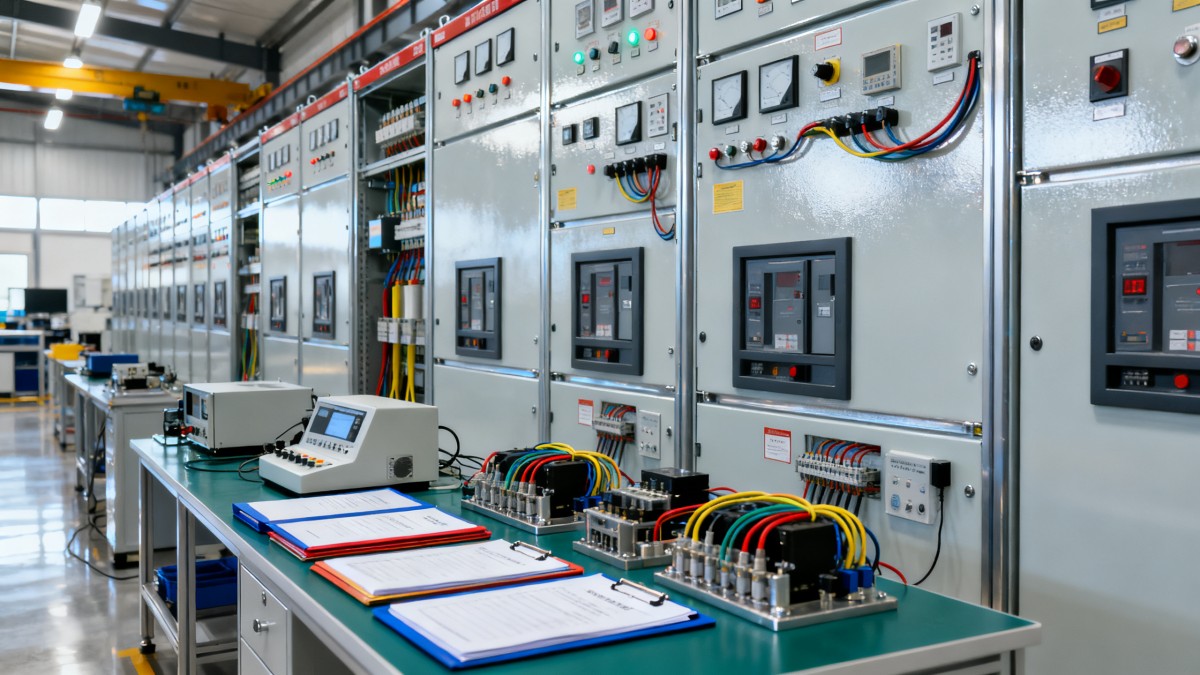
When buyers search for a dependable Electrical & Power manufacturer, they are usually comparing risk, not just product catalogs. They want confidence that a supplier can meet technical requirements without creating hidden costs later.
That concern is especially important in industrial environments where switchgear, transformers, cables, control panels, protection systems, and power distribution components directly influence uptime, worker safety, and regulatory exposure.
Executives, procurement directors, and project leaders are often asking four practical questions. Can this manufacturer meet standards? Can it deliver consistently? Can it support us globally? And will it still be a reliable partner after commissioning?
These questions reflect a broader search intent: identifying a manufacturer that contributes to resilient operations rather than becoming a source of delays, rework, warranty claims, or compliance issues.
Dependability starts with compliance, not marketing claims
In electrical and power applications, dependability begins with documented compliance to relevant international and regional standards. A serious manufacturer should be able to provide clear evidence, not vague assurances.
Depending on the product category and target market, this may include CE, UL, IEC, ISO 9001, ISO 14001, and sector-specific test certifications. In many cases, buyers should also verify type test reports, routine test procedures, and traceability records.
Certification matters because it reduces uncertainty. It helps buyers confirm that products have been designed, tested, and manufactured to recognized safety and performance benchmarks rather than internal assumptions.
However, certificates alone are not enough. Decision-makers should check whether certifications are current, issued by credible bodies, and relevant to the exact product configuration being purchased.
A dependable Electrical & Power manufacturer treats compliance as part of operational discipline. That usually shows up in documentation accuracy, change control, quality records, and a willingness to answer technical questions in detail.
Engineering capability is what separates vendors from strategic manufacturers
One of the clearest signs of a dependable manufacturer is strong in-house engineering capability. This is critical when projects require customization, system integration, harsh-environment performance, or alignment with EPC specifications.
Manufacturers with genuine engineering depth can do more than quote standard products. They can interpret load profiles, insulation requirements, fault levels, enclosure ratings, thermal limits, and network conditions with precision.
That capability becomes valuable when specifications evolve mid-project. A supplier with experienced engineers can respond quickly, validate design implications, and avoid costly mistakes that less capable vendors might overlook.
Buyers should look for technical teams that can provide drawings, datasheets, design calculations, test protocols, and application guidance. Strong engineering communication is often a better indicator of reliability than aggressive sales language.
For complex industrial projects, dependable manufacturers also understand the operational context. They know that a component is not just a unit shipped from a factory, but part of a larger system with uptime, safety, and maintainability requirements.
Consistent production quality matters more than one successful sample
Many suppliers can produce a good prototype or pass an initial inspection. The real test is whether they can maintain the same standard across production batches, delivery cycles, and multiple project locations.
Consistency depends on process control, supplier qualification, inspection routines, workforce training, and manufacturing discipline. Buyers should assess whether the manufacturer has repeatable systems rather than isolated quality successes.
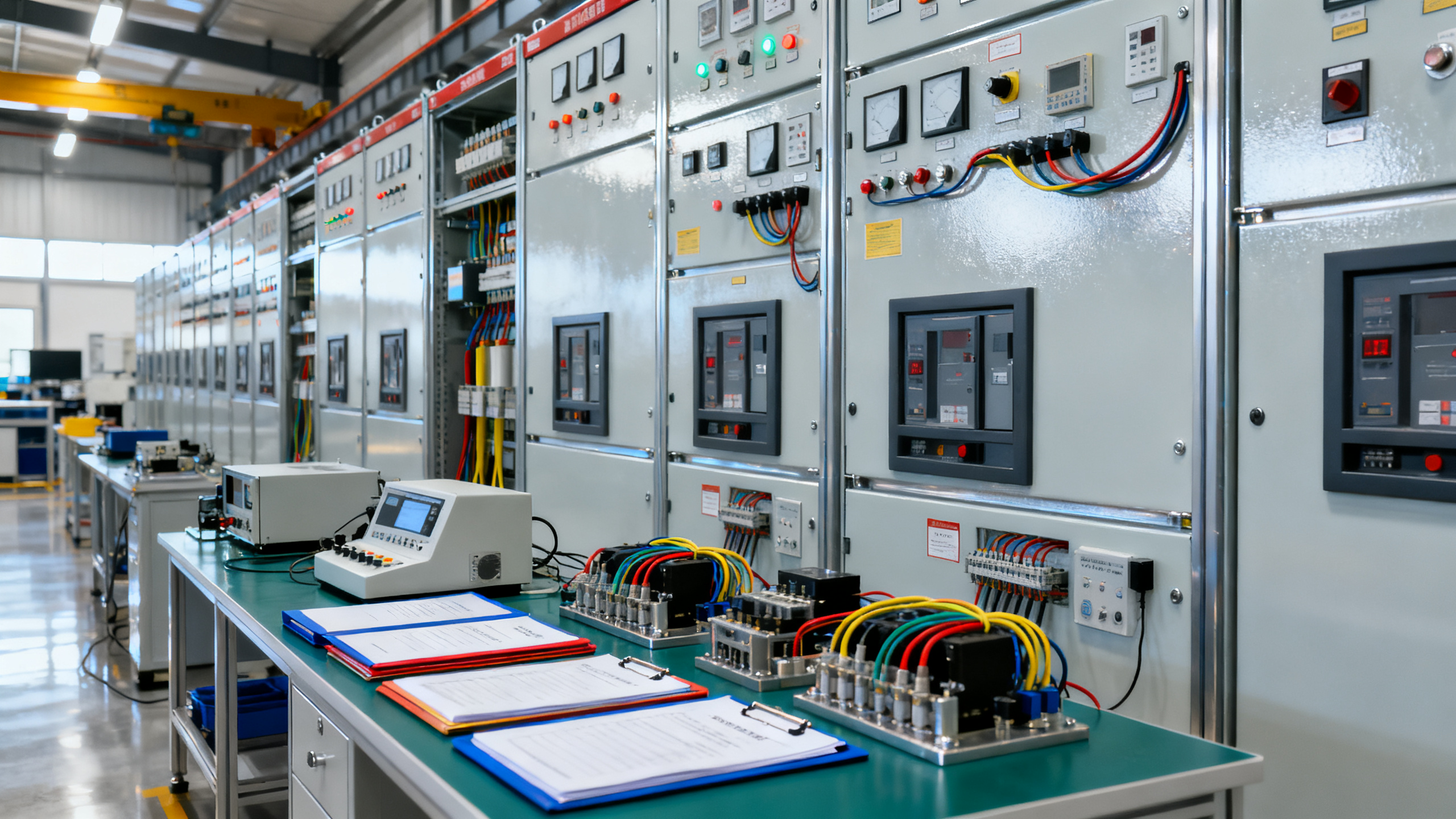
This is where factory audits can be highly useful. A well-run facility usually shows visible process flow, calibration control, incoming material checks, nonconformance handling, and documented final inspection procedures.
It is also wise to ask about defect trends, corrective action processes, and warranty history. A dependable Electrical & Power manufacturer should be prepared to discuss how issues are identified, contained, and prevented from recurring.
Production consistency has direct financial implications. Inconsistent quality can trigger site delays, installation problems, safety incidents, and premature replacement costs that quickly outweigh any apparent purchase savings.
Supply chain resilience is now part of manufacturer reliability
In recent years, many industrial buyers have learned that technical capability alone is not enough. A manufacturer may have a strong product line but still create risk if its supply chain is fragile or opaque.
Dependable manufacturers typically have stronger sourcing controls for raw materials, critical components, and subassemblies. They also tend to maintain better visibility into lead times, alternative sourcing options, and inventory planning.
For business decision-makers, this matters because project schedules are often tightly linked to power equipment delivery. Delays in breakers, busbars, control systems, or cable accessories can disrupt entire construction and commissioning sequences.
Ask whether the manufacturer has contingency planning for component shortages, logistics disruptions, and sudden demand spikes. The goal is to understand whether delivery commitments are based on robust planning or optimistic assumptions.
Global support capacity is equally important for multinational operations. Manufacturers with regional service networks, multilingual documentation, and export experience are usually better equipped to support complex deployments across jurisdictions.
After-sales support reveals whether a manufacturer is dependable in practice
Reliability is not proven at the point of purchase. It is proven when products are installed, energized, maintained, and occasionally challenged by real operating conditions.
That is why after-sales support should be a core evaluation criterion. A dependable Electrical & Power manufacturer offers structured support for installation, commissioning, troubleshooting, spare parts, and warranty response.
For critical facilities, buyers should examine response times, field service availability, remote technical support, and spare part continuity. A low-cost supplier becomes expensive quickly if service gaps extend downtime.
Documentation quality also plays a major role. Clear manuals, wiring diagrams, maintenance instructions, and parts lists reduce installation errors and improve lifecycle efficiency for facility teams.
The strongest manufacturers view support as a long-term relationship, not a post-sale obligation. That mindset is often reflected in training resources, lifecycle recommendations, upgrade pathways, and transparent communication when problems occur.
How to evaluate a manufacturer beyond price comparisons
Price remains important, but for enterprise procurement it should be considered within total cost of ownership. A cheaper purchase can become a more expensive decision if it increases risk, maintenance burden, or replacement frequency.
A more effective evaluation framework includes five dimensions: compliance, engineering capability, production consistency, supply reliability, and service responsiveness. Together, these provide a clearer picture of long-term value.
Decision-makers should also compare documentation quality during the bidding phase. Manufacturers that provide precise answers, complete technical files, and timely clarifications are often more reliable during execution.
Reference projects are another valuable signal. Ask for examples in similar industries, operating environments, or voltage classes. Past performance in relevant use cases is often more meaningful than broad claims of global experience.
Financial stability can also matter, especially for long projects or framework agreements. A dependable manufacturer should have the organizational capacity to support warranties, product continuity, and future service commitments.
Red flags that suggest a manufacturer may not be dependable
Some warning signs appear early if buyers know where to look. One common red flag is incomplete or inconsistent technical documentation, especially when specifications involve safety-critical or high-load applications.
Another concern is excessive dependence on generic claims such as “international quality” without supporting evidence. Serious manufacturers can usually provide standards references, testing records, and detailed product data without hesitation.
Frequent changes in quoted lead times, unclear answers about material origins, or weak traceability practices may indicate unstable operations. These issues often become more serious after the purchase order is placed.
Buyers should also be cautious when a supplier resists audits, avoids engineering discussions, or cannot explain its quality control process clearly. Lack of transparency is rarely a good sign in industrial procurement.
If after-sales support terms are vague, local service is unavailable, or spare parts planning is uncertain, the long-term risk may outweigh any short-term commercial advantage.
Why the right manufacturing partner creates strategic value
Choosing the right Electrical & Power manufacturer is not just a sourcing decision. It is an operational and financial decision that affects reliability, compliance exposure, maintenance efficiency, and project predictability.
Dependable manufacturers help organizations reduce rework, avoid unplanned downtime, streamline approvals, and improve asset longevity. These benefits are especially meaningful for capital-intensive industries where interruption costs are high.
They also support internal alignment. Procurement teams gain confidence in delivery. Engineers gain confidence in technical fit. Operations teams gain confidence in long-term maintainability. Leadership gains confidence in investment protection.
In this sense, the best manufacturer is not always the one with the lowest quote or the largest product range. It is the one that can consistently perform under the real conditions your business faces.
Conclusion: dependability is measurable, and it should be tested before commitment
What defines a dependable Electrical & Power manufacturer is not a single feature, but a pattern of evidence. Reliable manufacturers combine verified compliance, strong engineering, disciplined production, resilient supply chains, and responsive support.
For business decision-makers, the most effective approach is to evaluate manufacturers through the lens of operational risk and lifecycle value rather than unit price alone. That shift leads to better procurement outcomes and stronger infrastructure performance.
Before making a final selection, validate certifications, review technical depth, audit quality systems, test communication responsiveness, and confirm support capacity. The more critical the application, the more rigorous the evaluation should be.
In electrical and power infrastructure, dependability is not a branding claim. It is a measurable business asset—and choosing the right manufacturing partner can protect both project success and long-term operational resilience.
Technical Specifications
- How to Select Electronic Hotel Key Card Locks for Guest Rooms and Staff AreasAuthor :Safety Compliance Lead
- How to Select Lab Instruments for Reliable Chemical Analysis WorkflowsAuthor :Precision Metrology Expert
- How to Size a UPS for Server Rooms: Load, Runtime, and Redundancy FactorsAuthor :Grid Infrastructure Analyst
Expert Insights

Chief Security Architect
Dr. Thorne specializes in the intersection of structural engineering and digital resilience. He has advised three G7 governments on industrial infrastructure security.
Related Analysis
- Sep 17, 2026How to Select Electronic Hotel Key Card Locks for Guest Rooms and Staff AreasAuthor :Safety Compliance Lead
- Sep 16, 2026How to Select Lab Instruments for Reliable Chemical Analysis WorkflowsAuthor :Precision Metrology Expert
- Sep 15, 2026How to Size a UPS for Server Rooms: Load, Runtime, and Redundancy FactorsAuthor :Grid Infrastructure Analyst
Core Sector // 01
Security & Safety
- Can SPDs Handle Repeated Voltage Spikes in Tropical Grids?Author :Grid Infrastructure Analyst

- How to Evaluate IEC-Compliant Power Protection Devices for Industrial PanelsAuthor :Grid Infrastructure Analyst

- How to Choose Smart Industrial Control Equipment for Harsh Plant EnvironmentsAuthor :Grid Infrastructure Analyst

- EU EMC Update Triggers Re-Certification for BreakersAuthor :Grid Infrastructure Analyst

- How to Select the Right SPD for Solar Inverter Protection in PV Systems?Author :Grid Infrastructure Analyst

- Industrial Valve Systems Factory Checklist: What Buyers Should Verify Before OrderingAuthor :Grid Infrastructure Analyst

- Breaker and Relay Lead Times Hit 24 WeeksAuthor :Grid Infrastructure Analyst

- IEC 61850-10-3 Sets Cybersecurity Bar for Grid DevicesAuthor :Grid Infrastructure Analyst