Solid State Relays SSR vs Electromechanical Relays: Which Fits Your Control Panel?
Author
Date Published
Reading Time
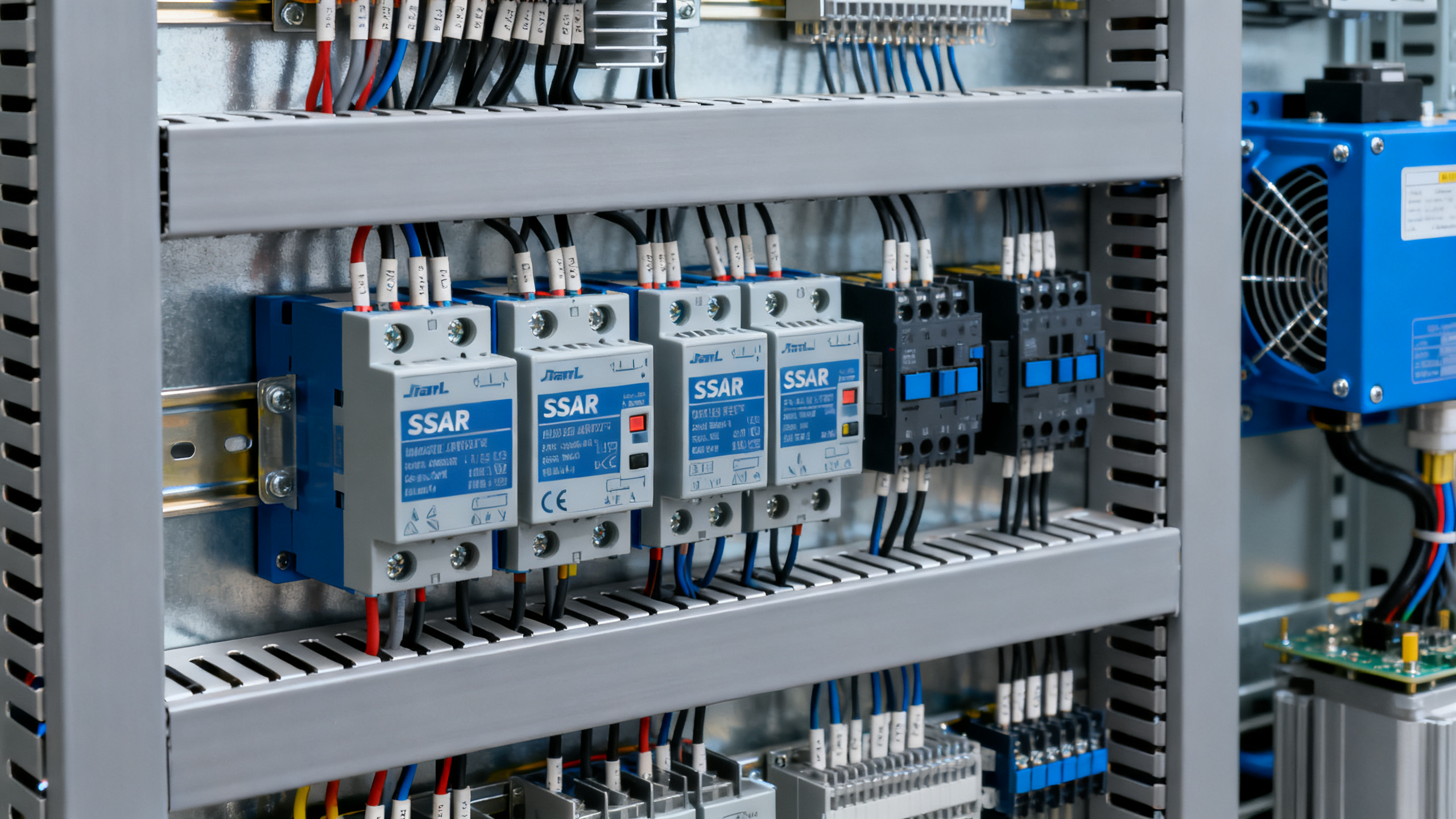
Why relay choice changes with real control panel conditions
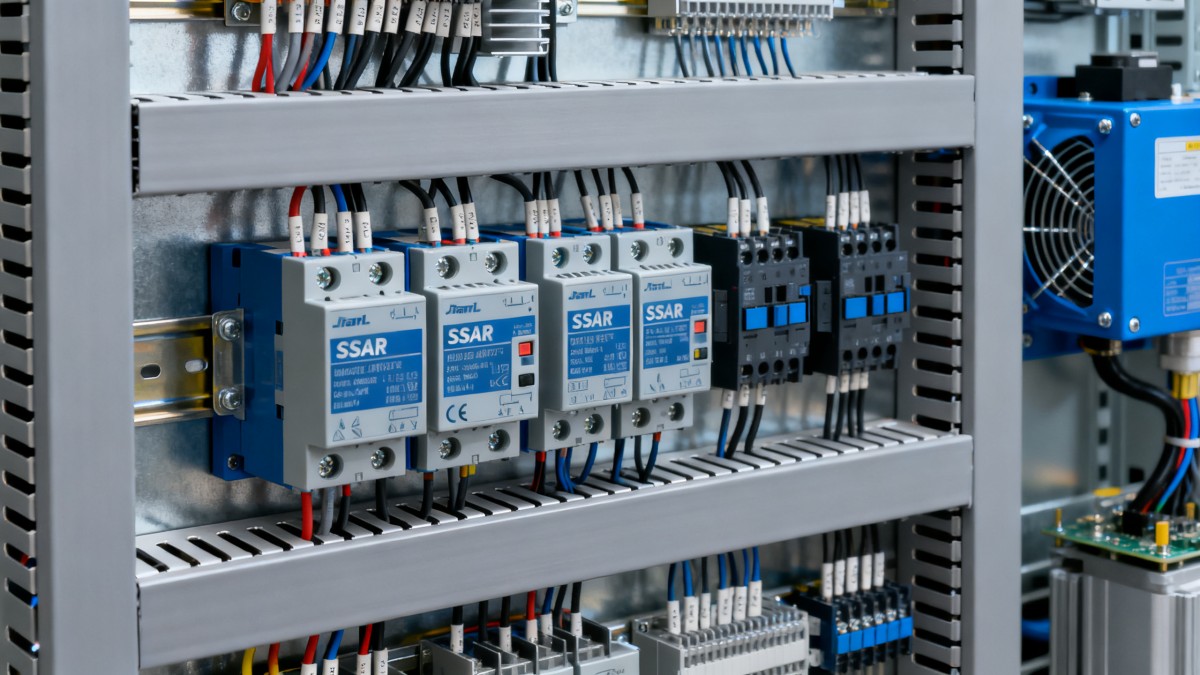
In control panels, relay selection affects more than switching. It shapes heat buildup, fault response, service intervals, and how stable the panel remains under daily load changes.
That is why solid state relays SSR and electromechanical relays should not be compared only by catalog ratings. The right answer depends on how the panel actually works.
In heavy industry and mixed infrastructure environments, the relay often sits between sensitive control logic and demanding field equipment. A mismatch can create nuisance trips, welded contacts, excess heat, or premature replacement cycles.
A practical review usually starts with five questions. How often does the load switch, what kind of load is present, how much panel cooling is available, what failure mode is acceptable, and which standards apply?
This is the same logic used in disciplined infrastructure engineering. Sound decisions connect electrical behavior, maintenance realities, and compliance expectations rather than focusing on a single component feature.
Where solid state relays SSR usually make more sense
High-cycle switching is the clearest case. When heaters, valves, or process controls switch many times each minute, solid state relays SSR usually outperform mechanical contacts.
The reason is simple. SSRs have no moving contacts, so they avoid mechanical wear from repeated operation. In temperature control loops, that often translates into steadier performance and fewer service interruptions.
A common example is packaged heating equipment. Tight control bands may require rapid on-off cycling. Electromechanical relays can handle this for a time, but contact life drops quickly as switching frequency rises.
Noise-sensitive panels are another strong fit. Solid state relays SSR operate silently, which matters in indoor technical spaces, laboratories, or enclosed equipment skids where mechanical clicking becomes noticeable.
There is also less contact arcing during switching. In some instrumentation cabinets, that cleaner behavior helps reduce electrical disturbance around control circuits.
Still, the advantage is not automatic. SSRs generate heat continuously when on. In a compact panel, thermal design becomes part of the relay decision, not an afterthought.
Typical SSR-friendly conditions
- Frequent switching of resistive heaters or tightly controlled thermal loads
- Applications needing fast response and repeatable switching behavior
- Panels where acoustic noise should remain low
- Systems where reduced mechanical wear improves uptime planning
When electromechanical relays remain the better panel decision
Electromechanical relays still fit many industrial panels because their strengths are different, not outdated. They are often chosen where switching is less frequent and clear isolation is important.
Motor starters, alarm outputs, interlocks, and general-purpose control signals often fall into this category. These loads may switch only occasionally, but they require robust contact arrangements or multiple poles.
Unlike SSRs, electromechanical relays offer true open contacts with very low leakage current. That matters when a load must be fully off, especially in low-power control paths or sensitive input circuits.
They also tend to be more forgiving in simple panels without dedicated heat sinking. If the enclosure already runs warm, replacing a cool-running mechanical relay with an SSR can create an unexpected thermal problem.
In maintenance practice, some sites also prefer mechanical relays because failure is easier to diagnose visually or by contact testing. That can simplify troubleshooting during unplanned downtime.
Conditions that favor electromechanical relays
- Low switching frequency with moderate or varied load types
- Need for physical contact separation and near-zero off-state leakage
- Panels with limited cooling space or strict temperature margins
- Applications using multi-pole contacts or straightforward field replacement
Different loads change the answer more than many expect
The most common mistake is treating all loads as equal. Relay choice should follow load behavior first, because resistive, inductive, and mixed loads stress switching devices in very different ways.
For resistive heating, solid state relays SSR often perform very well. For motors, solenoids, contactor coils, and transformer-fed circuits, the decision becomes more careful.
Inductive loads create inrush and back EMF. Mechanical relays may face contact wear, while SSRs may need stronger surge protection and correct derating to survive repeated transients.
Capacitive loads bring another challenge. The inrush current can exceed normal operating current by a wide margin. A relay selected only from steady-state current data may fail early.
In practical panel design, mixed architectures are common. One enclosure may use solid state relays SSR for heater control and electromechanical relays for alarms, fan outputs, and interlocks.
Panel environment often decides the better option
Relay selection changes again when environmental conditions become harsh. Dust, vibration, high ambient temperature, and unstable supply conditions all influence which technology holds up better.
In vibration-prone installations, solid state relays SSR avoid moving parts and can reduce mechanical failure risk. That can be valuable on mobile skids, compressor packages, or utility equipment near rotating machinery.
But in hot enclosures, SSR heat loss can become the limiting factor. If the panel lacks airflow, heat sink space, or conservative derating, the theoretical SSR life advantage may disappear.
Electromechanical relays may cope better in some warm cabinets simply because they do not produce the same continuous on-state dissipation. That does not make them universally safer. It means the enclosure must be part of the decision.
Compliance also matters. Panels built for CE, UL, or sector-specific approvals should verify relay ratings in the exact installation context, including spacing, load class, protection devices, and thermal limits.
Common misjudgments before installation
One frequent error is choosing by amperage alone. Nameplate current tells only part of the story. Duty cycle, inrush profile, and ambient temperature often decide service life.
Another issue is ignoring leakage current in solid state relays SSR. Some loads appear off but still see a small residual current. In sensitive devices, that can cause false indication or incomplete shutdown.
The opposite mistake happens with mechanical relays in rapid control loops. The relay may function at startup, yet contact wear and switching noise emerge much earlier than expected.
Cost comparisons are also often too narrow. A lower purchase price may not offset shorter replacement intervals, extra downtime, or added thermal management hardware later.
More reliable selection comes from matching relay type to the load profile, enclosure conditions, and maintenance strategy together rather than reviewing each factor separately.
A practical way to decide what fits your control panel
A useful starting point is to map each relay point by switching frequency and load type. That quickly separates positions suited to solid state relays SSR from positions better left mechanical.
Then check enclosure temperature rise, cooling method, and available mounting space. If SSRs need heat sinks or spacing, include that in the panel layout before final selection.
After that, confirm off-state behavior, surge protection, and standards alignment. This is especially important in infrastructure systems where shutdown logic, alarm reliability, and compliance records must stay defensible.
- List every switched load and mark resistive, inductive, or capacitive behavior
- Record switching frequency during normal and peak operation
- Check panel thermal limits before selecting solid state relays SSR
- Verify leakage, isolation, and protection requirements at each relay point
- Compare replacement effort, downtime impact, and expected life cycle cost
In many panels, the strongest answer is not SSR versus electromechanical relays everywhere. It is using each where its behavior best matches the real operating condition.
That approach usually produces a safer, cleaner, and more maintainable result. It also aligns with the disciplined engineering logic expected in modern industrial infrastructure, where reliability is judged over years, not only at commissioning.
Technical Specifications
- How to Select Electronic Hotel Key Card Locks for Guest Rooms and Staff AreasAuthor :Safety Compliance Lead
- How to Select Lab Instruments for Reliable Chemical Analysis WorkflowsAuthor :Precision Metrology Expert
- How to Size a UPS for Server Rooms: Load, Runtime, and Redundancy FactorsAuthor :Grid Infrastructure Analyst
Expert Insights

Chief Security Architect
Dr. Thorne specializes in the intersection of structural engineering and digital resilience. He has advised three G7 governments on industrial infrastructure security.
Related Analysis
- Sep 17, 2026How to Select Electronic Hotel Key Card Locks for Guest Rooms and Staff AreasAuthor :Safety Compliance Lead
- Sep 16, 2026How to Select Lab Instruments for Reliable Chemical Analysis WorkflowsAuthor :Precision Metrology Expert
- Sep 15, 2026How to Size a UPS for Server Rooms: Load, Runtime, and Redundancy FactorsAuthor :Grid Infrastructure Analyst
Core Sector // 01
Security & Safety
- Can SPDs Handle Repeated Voltage Spikes in Tropical Grids?Author :Grid Infrastructure Analyst

- How to Evaluate IEC-Compliant Power Protection Devices for Industrial PanelsAuthor :Grid Infrastructure Analyst

- How to Choose Smart Industrial Control Equipment for Harsh Plant EnvironmentsAuthor :Grid Infrastructure Analyst

- EU EMC Update Triggers Re-Certification for BreakersAuthor :Grid Infrastructure Analyst

- How to Select the Right SPD for Solar Inverter Protection in PV Systems?Author :Grid Infrastructure Analyst

- Industrial Valve Systems Factory Checklist: What Buyers Should Verify Before OrderingAuthor :Grid Infrastructure Analyst

- Breaker and Relay Lead Times Hit 24 WeeksAuthor :Grid Infrastructure Analyst

- IEC 61850-10-3 Sets Cybersecurity Bar for Grid DevicesAuthor :Grid Infrastructure Analyst