Poland CPI at 3.2% as EU Safety Rules Near
Author
Date Published
Reading Time

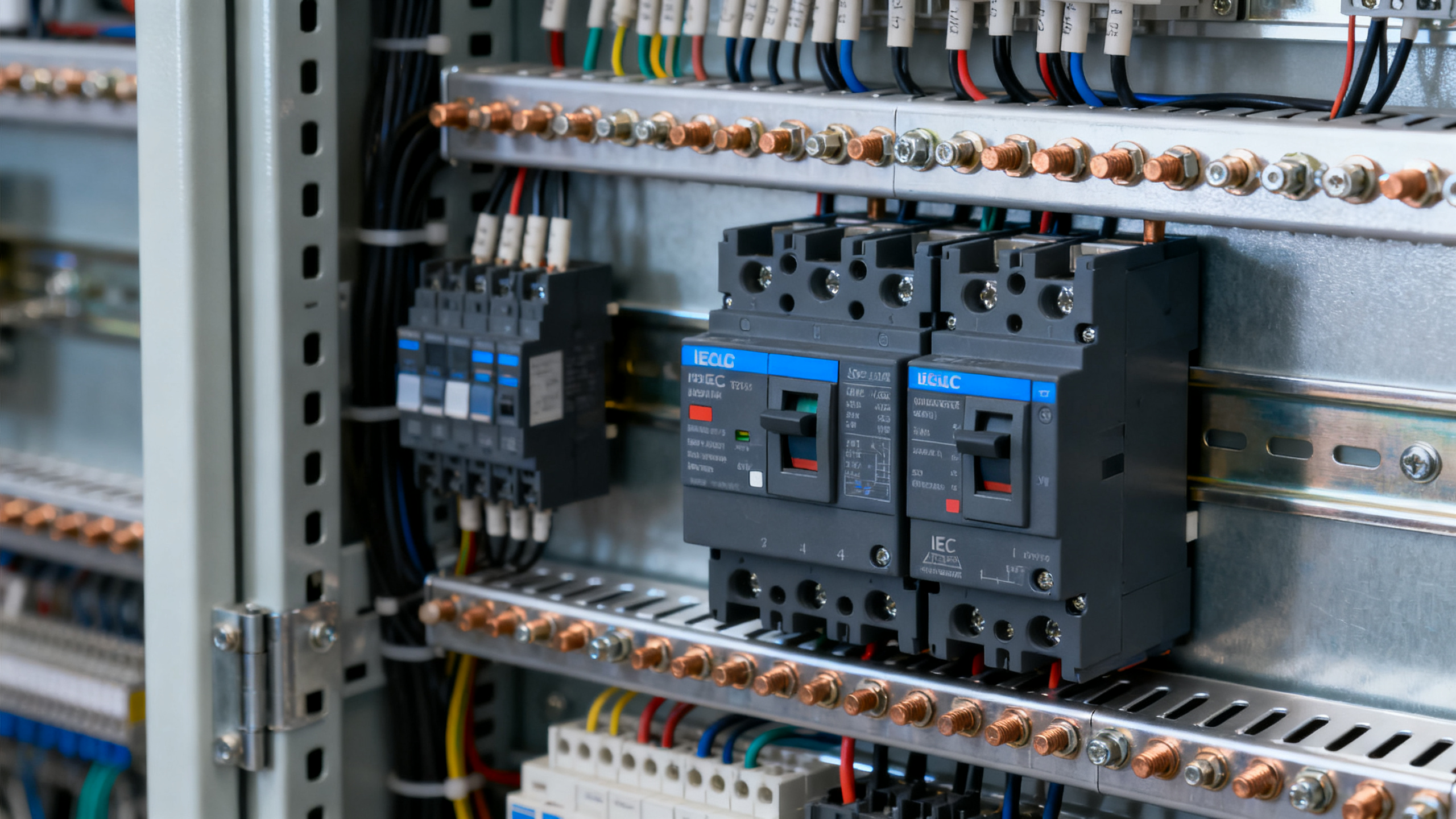
Image placement plan: 1 image recommended before the main facts section to illustrate electrical components, customs inspection, or compliance testing under updated EU safety requirements.

On April 1, 2026, the market focus turned to Poland after April CPI reached 3.2%, while inflation pressure was cited as a driver behind the faster rollout of transition arrangements under the revised Low Voltage Directive, LVD 2026/XX. The change directly affects the electrical equipment trade and manufacturing chain because, from October 1, 2026, newly imported circuit breakers, relays, and industrial terminal blocks must meet the updated EN IEC 61000-6-4:2025 electromagnetic compatibility certification requirement, with non-compliant goods facing customs detention and corrective follow-up in Poland.
Confirmed Developments and Compliance Timeline
According to the provided event summary, Poland’s CPI reached 3.2% in April 2026. Against that background, the transition arrangement for the revised Low Voltage Directive, LVD 2026/XX, is moving into a key countdown stage.
The confirmed requirement is that, starting on October 1, 2026, all newly imported circuit breakers, relays, and industrial terminal blocks must pass certification under the updated EN IEC 61000-6-4:2025 standard for electromagnetic compatibility. Products that do not meet the requirement will be detained by Polish customs and may be subject to retrospective corrective action. The stated consequences include delivery disruption and higher customs clearance costs.
How the Rule Change May Affect Market Participants
Impact on trading companies handling direct imports
Direct importers are affected first because the new requirement is tied to goods entering the market. Their exposure is concentrated in customs clearance, shipment scheduling, document review, and contract execution. What deserves close attention is whether the imported product scope includes circuit breakers, relays, or industrial terminal blocks classified as newly imported goods after the effective date.
Implications for companies sourcing materials and components
Companies responsible for upstream purchasing may be affected because procurement decisions now need to reflect certification readiness, not only price and availability. The impact may appear in supplier screening, component selection, purchase order conditions, and technical file collection. From a business perspective, buyers should pay closer attention to whether supporting compliance documents for EN IEC 61000-6-4:2025 can be provided in time for downstream delivery needs.
Pressure on processing and manufacturing operations
Manufacturers and assemblers may face changes in testing, product configuration control, and export preparation where the affected product categories are involved. The practical impact may emerge in pre-shipment verification, design alignment with electromagnetic compatibility requirements, and release approval before export. Observably, any mismatch between product status and certification status could increase the risk of shipment delay once the October 1, 2026 threshold begins to apply.
New tasks for supply chain service providers
Supply chain service providers, including logistics and customs support functions, may also feel the effects because clearance risk becomes more compliance-sensitive. The impact may be visible in document coordination, shipment timing, exception handling, and communication between exporter, importer, and customs-facing teams. A key point to monitor is whether cargo files clearly demonstrate compliance before arrival, reducing the risk of detention and follow-up rectification.
Key Actions Companies Should Prioritize
Review product scope and certification status now
Companies should first identify whether their products fall within the stated categories of circuit breakers, relays, and industrial terminal blocks, and whether they will be treated as newly imported after October 1, 2026. This review should be linked directly to the updated EN IEC 61000-6-4:2025 certification requirement and not handled as a general compliance exercise.
Align technical documents with the updated EMC requirement
Technical teams and commercial teams should verify that test reports, declarations, product specifications, and related technical documentation are consistent with the updated electromagnetic compatibility standard. This is especially relevant where tenders, buyer specifications, or import files still reflect older documentation logic.
Adjust delivery planning around customs and remediation risk
Because non-compliant products may be detained by Polish customs and subjected to retrospective corrective action, companies should reassess lead times, buffer windows, and shipment release plans. This is not only a certification matter but also a delivery management issue that can affect clearance cost and customer scheduling.
Tighten supplier qualification and traceability controls
Where procurement relies on external manufacturers or component suppliers, firms should place greater emphasis on supplier qualification, compliance evidence, and traceability support. After-sales response and quality tracking may also become more important if any shipment is questioned and requires remediation after customs review.
Industry Observation: Compliance Is Becoming a Trade Gate
From an industry perspective, this development is more appropriately understood not only as a technical standards update, but also as a sharper market-entry condition for affected electrical products. Analysis shows that once customs detention is explicitly linked to certification status, compliance moves from a background documentation issue to a front-end trade control point.
Observably, the combination of inflation pressure and accelerated regulatory transition may compress preparation time for importers and manufacturers. It would be prudent to view this as a signal that supply chain readiness, technical documentation discipline, and certification timing may increasingly shape delivery reliability in the affected product segments.
What deserves closer attention is that the operational burden may not fall evenly across the market. Businesses with slower document coordination or weaker supplier control could face greater scheduling pressure, even if the rule itself applies uniformly.
What This Means for the Industry
The significance of this event lies in the clear linkage between regulatory transition, import compliance, and border enforcement. For companies involved in circuit breakers, relays, and industrial terminal blocks, the issue is no longer limited to monitoring a policy update; it now affects shipment timing, clearance cost exposure, and internal compliance preparation.
A balanced reading is that the change does not automatically determine market outcomes, but it does raise the practical importance of certification readiness before the October 1, 2026 deadline. Firms that prepare earlier may be better positioned to reduce disruption, while those that delay may face more operational uncertainty.
Source Note and Ongoing Verification Points
This article was generated based on the user-provided news title, event date, and event summary. Specific official source links were not provided in the input and should be verified continuously.
For follow-up monitoring, companies should continue watching for detailed implementation guidance, enforcement interpretation for certification checks, changes in tender or specification language, customs execution practice, and feedback from affected industry participants. Typical source types relevant to developments of this kind may include regulatory notices, customs guidance, standardization updates, and certification-related compliance communications.
Technical Specifications
- How to Select Electronic Hotel Key Card Locks for Guest Rooms and Staff AreasAuthor :Safety Compliance Lead
- How to Select Lab Instruments for Reliable Chemical Analysis WorkflowsAuthor :Precision Metrology Expert
- How to Size a UPS for Server Rooms: Load, Runtime, and Redundancy FactorsAuthor :Grid Infrastructure Analyst
Expert Insights

Chief Security Architect
Dr. Thorne specializes in the intersection of structural engineering and digital resilience. He has advised three G7 governments on industrial infrastructure security.
Related Analysis
- Sep 17, 2026How to Select Electronic Hotel Key Card Locks for Guest Rooms and Staff AreasAuthor :Safety Compliance Lead
- Sep 16, 2026How to Select Lab Instruments for Reliable Chemical Analysis WorkflowsAuthor :Precision Metrology Expert
- Sep 15, 2026How to Size a UPS for Server Rooms: Load, Runtime, and Redundancy FactorsAuthor :Grid Infrastructure Analyst
Core Sector // 01
Security & Safety
- Can SPDs Handle Repeated Voltage Spikes in Tropical Grids?Author :Grid Infrastructure Analyst

- How to Evaluate IEC-Compliant Power Protection Devices for Industrial PanelsAuthor :Grid Infrastructure Analyst

- How to Choose Smart Industrial Control Equipment for Harsh Plant EnvironmentsAuthor :Grid Infrastructure Analyst

- EU EMC Update Triggers Re-Certification for BreakersAuthor :Grid Infrastructure Analyst

- How to Select the Right SPD for Solar Inverter Protection in PV Systems?Author :Grid Infrastructure Analyst

- Industrial Valve Systems Factory Checklist: What Buyers Should Verify Before OrderingAuthor :Grid Infrastructure Analyst

- Breaker and Relay Lead Times Hit 24 WeeksAuthor :Grid Infrastructure Analyst

- IEC 61850-10-3 Sets Cybersecurity Bar for Grid DevicesAuthor :Grid Infrastructure Analyst