How to Choose Low Smoke Cables and Wiring for Safer Commercial Buildings?
Author
Date Published
Reading Time
How to Choose Low Smoke Cables and Wiring for Safer Commercial Buildings?
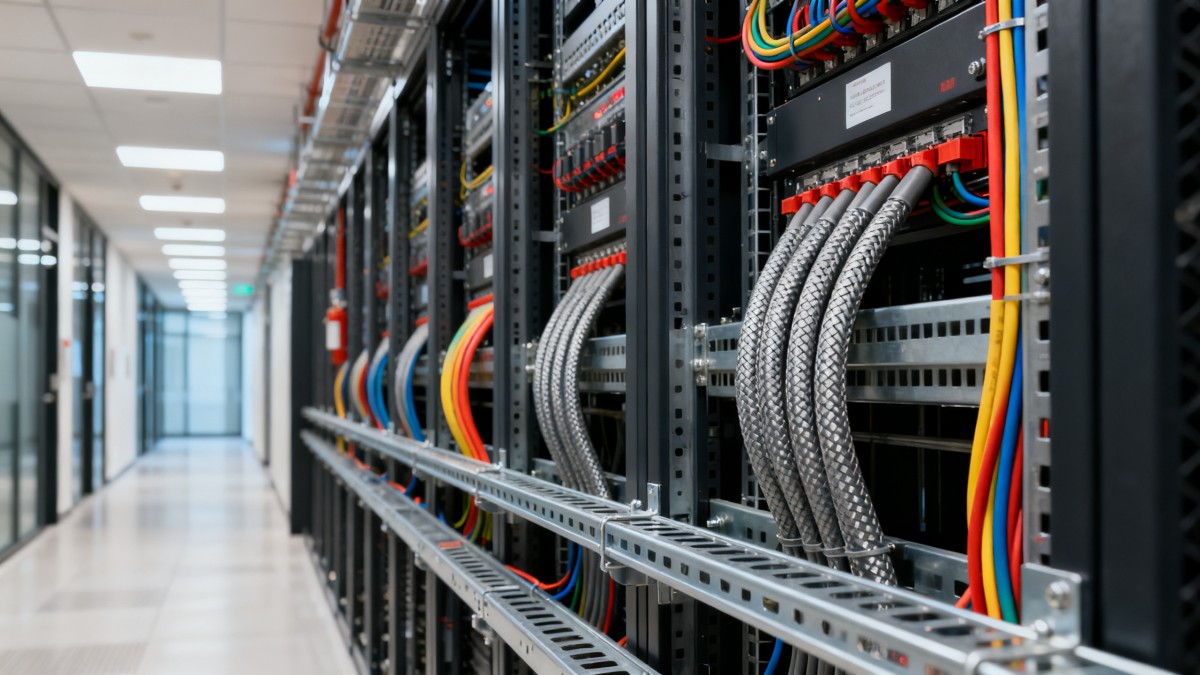
In commercial buildings, cable choice shapes fire safety, evacuation visibility, and long-term compliance performance.
That is why low smoke cables and wiring have moved from optional upgrades to core specification items.
The real decision is not simply about smoke reduction.
It also involves flame behavior, toxic gas control, circuit integrity, installation environment, and certification traceability.
In practice, a safer selection process starts with understanding where fire risk becomes operational risk.
Office towers, hospitals, airports, data centers, malls, and mixed-use complexes all face that pressure.
A cable that performs well on paper may still fail the building’s actual hazard profile.
So the better question is this: which low smoke cables and wiring fit the building, not just the budget?
Why Low Smoke Cables and Wiring Matter in Commercial Fire Safety
During a fire, smoke often creates danger faster than flames.
Dense smoke reduces visibility, slows evacuation, and complicates firefighter access.
Conventional cable jackets can also release corrosive and toxic gases when burned.
That combination threatens people first, then equipment, systems, and recovery timelines.
Low smoke cables and wiring are designed to limit smoke generation and harmful emissions.
Many options also reduce halogen release, which lowers corrosion risk after a fire event.
This matters even more in buildings with sensitive electronics, emergency systems, and dense occupancy.
From a business perspective, lower smoke output can support continuity and reduce post-fire restoration costs.
More importantly, it supports life safety objectives that no commercial project can compromise.
Start with the Building’s Risk Profile
Choosing low smoke cables and wiring begins with application mapping.
A retail complex, hospital, and transport terminal do not carry the same consequences during fire.
This is where many specifications become too generic.
Instead, review the building through four practical filters:
- Occupant density and evacuation complexity
- Presence of mission-critical electrical loads
- Location of cables in shafts, ceilings, risers, or escape routes
- Exposure to heat, moisture, chemicals, or mechanical stress
A low smoke cable for a public corridor may not suit a plant room or generator interface.
Likewise, wiring near life safety systems may require fire-resistant performance, not just low smoke behavior.
The clearer the risk map, the easier it becomes to compare products with confidence.
Know the Difference Between Low Smoke, LSZH, and Fire-Resistant Types
Not all low smoke cables and wiring offer the same protection level.
This is a common source of misalignment during product evaluation.
Low smoke usually refers to reduced smoke output during combustion.
LSZH means low smoke zero halogen, which also limits halogen acid gas emissions.
Fire-resistant cables are different again.
They are built to maintain circuit function during fire for a defined period.
That function is essential for alarms, emergency lighting, smoke extraction, and evacuation controls.
In real specifications, these categories often overlap.
Still, the selection should always match the required function, not just a marketing label.
Check the Standards Before Comparing Price
Low smoke cables and wiring should never be shortlisted by price first.
The first screen is standards compliance and test evidence.
Depending on project geography, relevant benchmarks may include IEC, BS, EN, UL, CE, and ISO-related frameworks.
Look closely at test scope, not just certificate presence.
Useful checks often include:
- Smoke density test results
- Halogen acid gas emission data
- Flame propagation performance
- Circuit integrity duration under fire
- Third-party certification validity and traceability
More recently, project teams have become stricter about verifying batch consistency.
That shift makes sense.
A cable family may pass one test, while a substituted compound changes actual performance.
So ask for current reports, declared construction details, and approval alignment with the project specification.
Evaluate Material and Installation Trade-Offs
The best low smoke cables and wiring also need to work on site.
Some compounds improve fire behavior but change flexibility, stripping characteristics, or bending radius.
That affects labor time and termination quality.
This is where technical reviews should move beyond datasheets.
Check conductor class, insulation material, sheath toughness, operating temperature, and compatibility with trays or conduits.
Also assess whether the chosen low smoke cable supports easy identification and clean routing.
In congested commercial systems, installation errors often create more risk than product defects.
A practical evaluation should include these points:
- Can crews terminate it without damaging insulation?
- Does it tolerate routing in tight service zones?
- Is the outer sheath durable enough for the environment?
- Are accessories and glands approved for the same system?
Those details often decide whether a compliant design remains compliant after installation.
Match Cable Selection to Specific Commercial Zones
Commercial buildings are not uniform electrical environments.
A stronger selection process divides low smoke cables and wiring by zone and function.
For example, public corridors, lobbies, and stairwells usually justify higher smoke control priorities.
Data rooms and control areas may also need low corrosive gas output to protect equipment.
Meanwhile, emergency circuits need continuity under fire, not only reduced smoke.
A useful zone-based approach looks like this:
- Escape routes: prioritize LSZH and clear compliance evidence
- Fire alarm circuits: prioritize fire-resistant low smoke construction
- Office and tenant areas: balance safety, flexibility, and installation efficiency
- Plant rooms: check thermal, mechanical, and chemical exposure limits
- IT spaces: prioritize low smoke, low corrosive emissions, and cable management compatibility
This method reduces overspecification in low-risk zones and underperformance in critical ones.
It also creates a clearer approval path with designers, contractors, and compliance teams.
Questions That Improve Procurement Decisions
By the time products reach commercial review, most brochures look similar.
The useful difference comes from sharper technical questions.
When assessing low smoke cables and wiring, ask suppliers to respond clearly on these points:
- Which exact standards and test methods apply to this product?
- Is the tested construction identical to the offered construction?
- What limitations apply to installation temperature, bending, and containment?
- Has the cable been used in similar commercial building projects?
- What supporting documents are available for inspection and handover?
These questions help filter out vague claims and weak substitutions.
They also support better total cost decisions.
A lower purchase price can disappear quickly if installation slows down or approvals fail.
A Practical Selection Framework
A dependable low smoke cables and wiring decision usually follows a simple sequence.
First, define the fire scenario and operational consequence by building zone.
Second, identify whether smoke control, halogen control, or fire resistance is the primary requirement.
Third, screen products against standards, third-party certifications, and tested construction details.
Fourth, validate installation practicality with contractors and system integrators.
Finally, document the approved cable schedule and substitution limits before procurement starts.
That process is not complicated, but it is disciplined.
And in commercial buildings, disciplined selection is what keeps safety intent intact from design through operation.
When low smoke cables and wiring are chosen through function, evidence, and installation reality, the result is a safer and more resilient building system.
Technical Specifications
- How to Select Electronic Hotel Key Card Locks for Guest Rooms and Staff AreasAuthor :Safety Compliance Lead
- How to Select Lab Instruments for Reliable Chemical Analysis WorkflowsAuthor :Precision Metrology Expert
- How to Size a UPS for Server Rooms: Load, Runtime, and Redundancy FactorsAuthor :Grid Infrastructure Analyst
Expert Insights

Chief Security Architect
Dr. Thorne specializes in the intersection of structural engineering and digital resilience. He has advised three G7 governments on industrial infrastructure security.
Related Analysis
- Sep 17, 2026How to Select Electronic Hotel Key Card Locks for Guest Rooms and Staff AreasAuthor :Safety Compliance Lead
- Sep 16, 2026How to Select Lab Instruments for Reliable Chemical Analysis WorkflowsAuthor :Precision Metrology Expert
- Sep 15, 2026How to Size a UPS for Server Rooms: Load, Runtime, and Redundancy FactorsAuthor :Grid Infrastructure Analyst
Core Sector // 01
Security & Safety
- Selecting PTFE Insulated Hookup Wire for High-Temperature Control PanelsAuthor :Grid Infrastructure Analyst

- How Contractors Can Evaluate EPC Sourcing Solutions for Cost, Lead Time, and RiskAuthor :Grid Infrastructure Analyst

- What Drives Silicone Cable Bulk Price in Industrial Orders?Author :Grid Infrastructure Analyst

- EN 61000-6-4:2026 Takes Effect for EU-Bound ControlsAuthor :Grid Infrastructure Analyst

- How to Choose Low Smoke Cables and Wiring for Safer Commercial Buildings?Author :Grid Infrastructure Analyst

- Medium Voltage Armored Cable Selection Guide: Voltage Rating, Armor Type, and InstallationAuthor :Grid Infrastructure Analyst

- EU Publishes EN IEC 61000-6-4:2026 for Industrial EMCAuthor :Grid Infrastructure Analyst

- Choosing an XLPE Power Cable Manufacturer: 7 Checks for Voltage Class and ComplianceAuthor :Grid Infrastructure Analyst