Safety Compliance Certification for Industrial Components: Key Standards and Documents
Author
Date Published
Reading Time
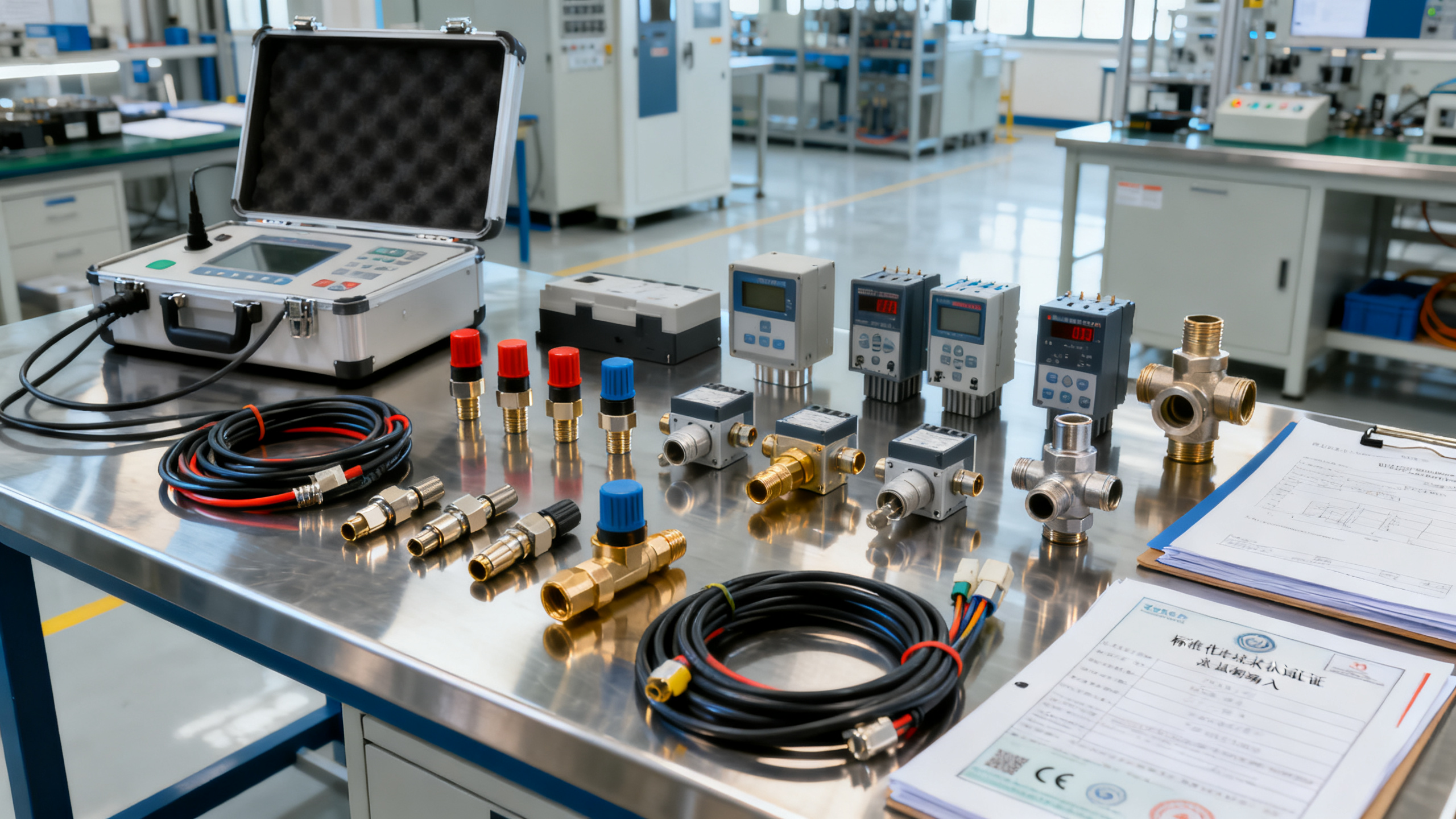
Safety compliance certification for industrial components sits at the intersection of regulation, engineering discipline, and commercial readiness. In practice, it determines whether a cable gland, pressure switch, enclosure, relay, valve, or connector can be installed safely, inspected confidently, and accepted across target markets without costly interruption.
That is why the topic matters beyond paperwork. A missing test report, an outdated declaration, or an incorrect standard reference can delay commissioning, expose workers to avoidable hazards, and weaken supply chain trust. For infrastructure projects where failure is not an option, certification supports reliability as much as legality.
Across heavy industry, the discussion is also becoming more strategic. As Global Industrial Core highlights through its focus on safety, measurement, power systems, environmental performance, and mechanical integrity, compliant components are now judged not only by price, but by traceable evidence, regional acceptability, and performance under real operating stress.
What safety compliance certification really covers
The phrase safety compliance certification for industrial components does not refer to a single global approval. It describes a structured process used to verify that a component meets applicable safety, electrical, mechanical, environmental, or hazardous-location requirements.
Usually, certification combines several layers. One layer concerns product design. Another concerns test performance. A third concerns technical documentation, labeling, and ongoing production consistency.
This distinction matters because two products may look identical, yet differ in insulation class, material traceability, ingress protection, flame resistance, or fault tolerance. Certification is the formal bridge between design intent and proven compliance.
Certification, testing, and self-declaration are not the same
A laboratory test report confirms that a sample passed defined tests. A certificate usually indicates third-party review against a standard. A declaration, such as a Declaration of Conformity, states that the manufacturer accepts legal responsibility for compliance.
In real projects, confusion between these terms causes procurement and audit problems. A component may have been tested, yet still lack the legal documentation needed for import, installation, or customer approval.
The standards that shape market access
The right standards depend on component type, installation environment, and destination market. Even so, several frameworks appear repeatedly in safety compliance certification for industrial components.
More specific product standards often sit underneath these schemes. A circuit breaker, stainless fastener, gas detector, pressure transmitter, or emergency stop device will each be evaluated against different technical requirements.
That is why standard selection should start with actual use conditions. Voltage, pressure, temperature, corrosion exposure, vibration, and ignition risk all affect which compliance path is valid.
Why the same component may need different approvals
A power connector sold into the EU may require CE-related documentation. The same item for a North American panel builder may need UL recognition. If used offshore or in a refinery, hazardous-area requirements may also apply.
In other words, safety compliance certification for industrial components is context dependent. The component alone is only part of the equation. The installation environment completes it.
The documents that auditors and buyers look for
Most compliance delays happen because documentation is incomplete, inconsistent, or outdated. A technically strong component can still be rejected if the paperwork does not support the claim.
- Certificate of Conformity or product certificate from a recognized body
- Declaration of Conformity with the correct directives or regulations
- Test reports referencing the exact edition of the applied standard
- Technical file with drawings, materials, ratings, and risk information
- Nameplate or label evidence showing marks, ratings, and traceability
- Installation instructions, limitations of use, and maintenance guidance
- Quality system records for production consistency when required
Version control is especially important. A declaration issued three years ago may reference withdrawn standards. A test report may apply only to an earlier design revision. Even small changes in polymer grade or sealing material can affect certification status.
Common document mismatches
- Part number on the certificate does not match the delivered item
- Temperature or voltage rating differs across documents
- Factory location on approval records is no longer current
- Certificate remains valid, but the applied standard edition changed
- Instructions omit installation restrictions that affect safe use
Where compliance pressure is increasing
Several industrial trends are raising the bar. Electrification projects demand tighter control of switching, protection, and thermal performance. Hazardous-area installations require cleaner traceability. Environmental exposure is also gaining more attention.
In parallel, multinational projects now combine components from many jurisdictions. That makes cross-border acceptance more difficult. A supplier may be acceptable in one region, yet non-compliant in another because the evidence package is incomplete.
This is where a data-led review process becomes useful. The GIC perspective is relevant because procurement decisions in core industrial systems increasingly depend on how well technical papers, certification records, and field performance align.
High-risk component categories
Not every item carries the same safety burden. Some categories attract stricter scrutiny because failure creates immediate operational or personnel risk.
How to evaluate safety compliance certification in practice
A useful review starts before purchase and continues through receipt inspection, installation, and audit preparation. The goal is not simply to collect certificates. The goal is to confirm that evidence matches product reality.
A practical review sequence
- Define the installation conditions, including hazard class and local market rules
- Map required approvals to each component category, not just the assembly
- Check that certificates, declarations, labels, and manuals reference the same item
- Verify that the issuing body is recognized in the destination market
- Review certificate validity, scope limits, and revision history
- Retain digital records in a searchable format for audits and future replacements
This process helps reduce hidden exposure. It also improves maintenance planning because replacement components can be checked against the same baseline instead of being approved informally under time pressure.
What often gets overlooked
One recurring issue is assuming system certification covers every subcomponent. In many cases, individual items still need their own listing, recognition, or supporting test evidence.
Another issue is relying on logos alone. Marks on a datasheet or housing are not enough. Effective safety compliance certification for industrial components depends on traceable documents, clear scope, and technical consistency.
Turning certification into a stronger control framework
Used well, certification data becomes more than a pass-fail record. It supports supplier qualification, root-cause analysis, spare parts control, and site standardization across projects.
It also creates stronger internal alignment. When technical files, test certificates, and installation limits are organized early, design review and site acceptance become faster and less subjective.
The next step is usually straightforward: identify the components that carry the highest operational consequence, build a document checklist around their applicable standards, and compare current supplier evidence against that baseline. From there, safety compliance certification for industrial components becomes easier to judge, easier to defend, and far more useful in day-to-day decision-making.
Technical Specifications
- How to Select Electronic Hotel Key Card Locks for Guest Rooms and Staff AreasAuthor :Safety Compliance Lead
- How to Select Lab Instruments for Reliable Chemical Analysis WorkflowsAuthor :Precision Metrology Expert
- How to Size a UPS for Server Rooms: Load, Runtime, and Redundancy FactorsAuthor :Grid Infrastructure Analyst
Expert Insights

Chief Security Architect
Dr. Thorne specializes in the intersection of structural engineering and digital resilience. He has advised three G7 governments on industrial infrastructure security.
Related Analysis
- Sep 17, 2026How to Select Electronic Hotel Key Card Locks for Guest Rooms and Staff AreasAuthor :Safety Compliance Lead
- Sep 16, 2026How to Select Lab Instruments for Reliable Chemical Analysis WorkflowsAuthor :Precision Metrology Expert
- Sep 15, 2026How to Size a UPS for Server Rooms: Load, Runtime, and Redundancy FactorsAuthor :Grid Infrastructure Analyst
Core Sector // 01
Security & Safety
- Can SPDs Handle Repeated Voltage Spikes in Tropical Grids?Author :Grid Infrastructure Analyst

- How to Evaluate IEC-Compliant Power Protection Devices for Industrial PanelsAuthor :Grid Infrastructure Analyst

- How to Choose Smart Industrial Control Equipment for Harsh Plant EnvironmentsAuthor :Grid Infrastructure Analyst

- EU EMC Update Triggers Re-Certification for BreakersAuthor :Grid Infrastructure Analyst

- How to Select the Right SPD for Solar Inverter Protection in PV Systems?Author :Grid Infrastructure Analyst

- Industrial Valve Systems Factory Checklist: What Buyers Should Verify Before OrderingAuthor :Grid Infrastructure Analyst

- Breaker and Relay Lead Times Hit 24 WeeksAuthor :Grid Infrastructure Analyst

- IEC 61850-10-3 Sets Cybersecurity Bar for Grid DevicesAuthor :Grid Infrastructure Analyst