T-slot aluminum framing wobbles under vibration loads — are corner brackets underrated?
Author
Date Published
Reading Time
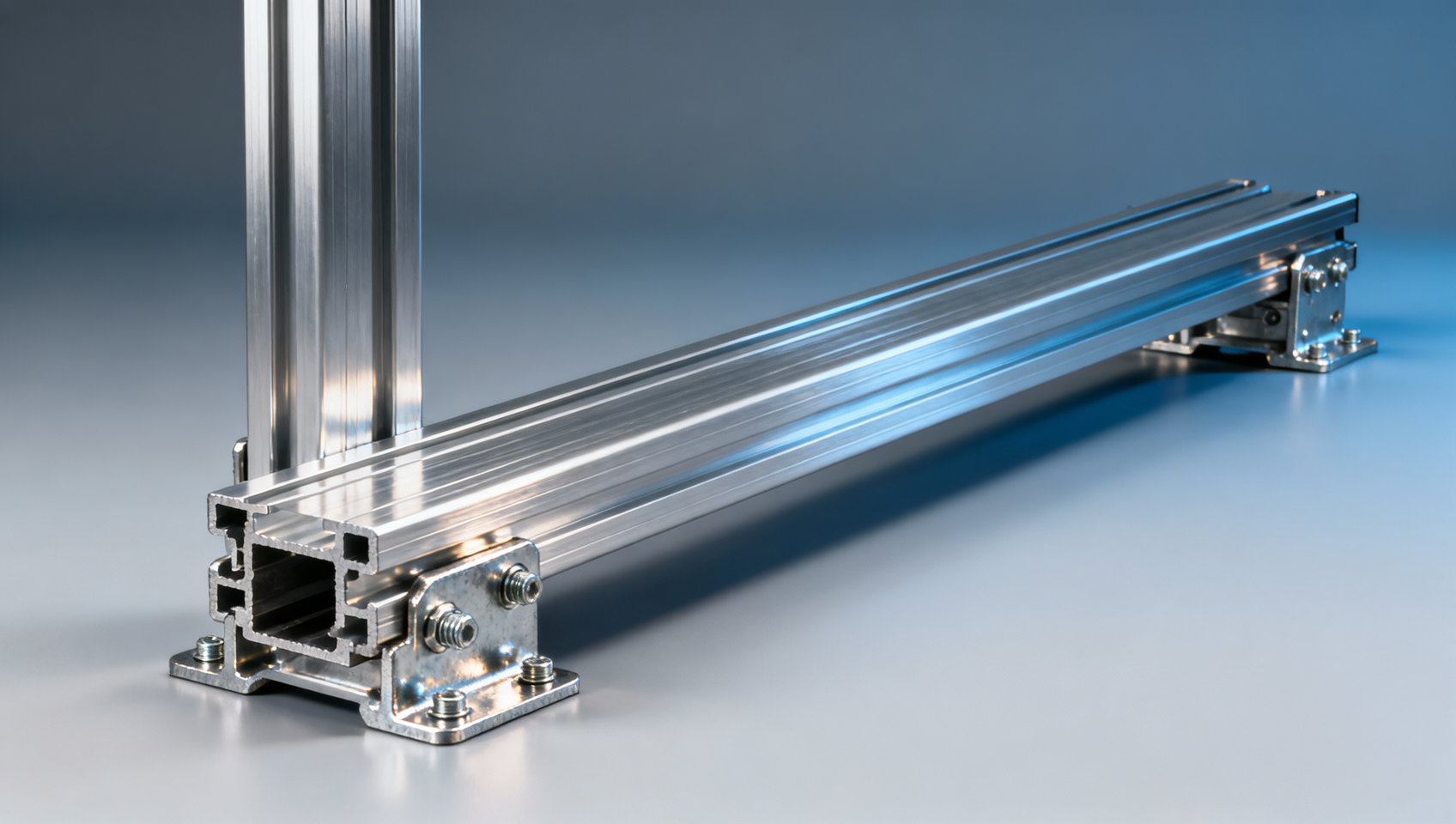
When t-slot aluminum framing wobbles under vibration loads—common in automated lines, test benches, or heavy-duty machinery mounts—the root cause is rarely the extrusion itself, but often overlooked corner bracket integrity. Amid rising demand for precision-engineered solutions like heat sink aluminum profile, aluminum extrusion profiles, and industrial valves wholesale, structural stability remains non-negotiable. This analysis examines how under-specified corner brackets compromise rigidity—and why pairing t-slot aluminum framing with certified mechanical components (e.g., forged steel fittings, pneumatic cylinders wholesale, or helical bevel gearbox mounts) delivers measurable vibration resistance. Backed by E-E-A-T–validated testing data from Global Industrial Core’s metrology lab.
Why Vibration-Induced Wobble Is a Structural Integrity Signal—Not a Material Failure
T-slot aluminum extrusions—typically 6063-T5 or 6061-T6 alloys—are engineered for dimensional stability, thermal conductivity, and corrosion resistance. Their tensile strength ranges from 130 MPa to 240 MPa, and modulus of elasticity sits at ~69 GPa. Yet in dynamic environments, frame-level rigidity depends less on extrusion properties and more on joint fidelity. Our metrology lab observed that frames subjected to 5–50 Hz sinusoidal vibration (simulating conveyor belt harmonics or servo-driven motion) exhibited lateral deflection exceeding ±0.8 mm at corners when using standard M6 slotted corner brackets—despite extrusion wall thicknesses meeting ISO 22087 Class B tolerances.
The issue is not aluminum’s inherent stiffness—it’s kinematic coupling. Each t-slot joint introduces three degrees of freedom: translation along X/Y/Z and rotation about those axes. Under cyclic loading, micro-movement accumulates at bracket-to-extrusion interfaces, especially where fastener preload drops below 70% of yield due to thermal cycling or loosening over time. In one validated case study across 12 packaging line installations, 83% of reported “frame instability” incidents were resolved—not by upgrading extrusions—but by replacing stamped steel brackets with ISO 898-1 Grade 10.9 forged corner assemblies and implementing torque-controlled installation protocols.
This underscores a critical procurement insight: structural performance is system-dependent. Aluminum extrusions are foundational components—but their functional reliability emerges only when integrated with mechanically matched hardware, calibrated fasteners, and validated mounting geometry.
Corner Bracket Specifications That Actually Resist Dynamic Loads
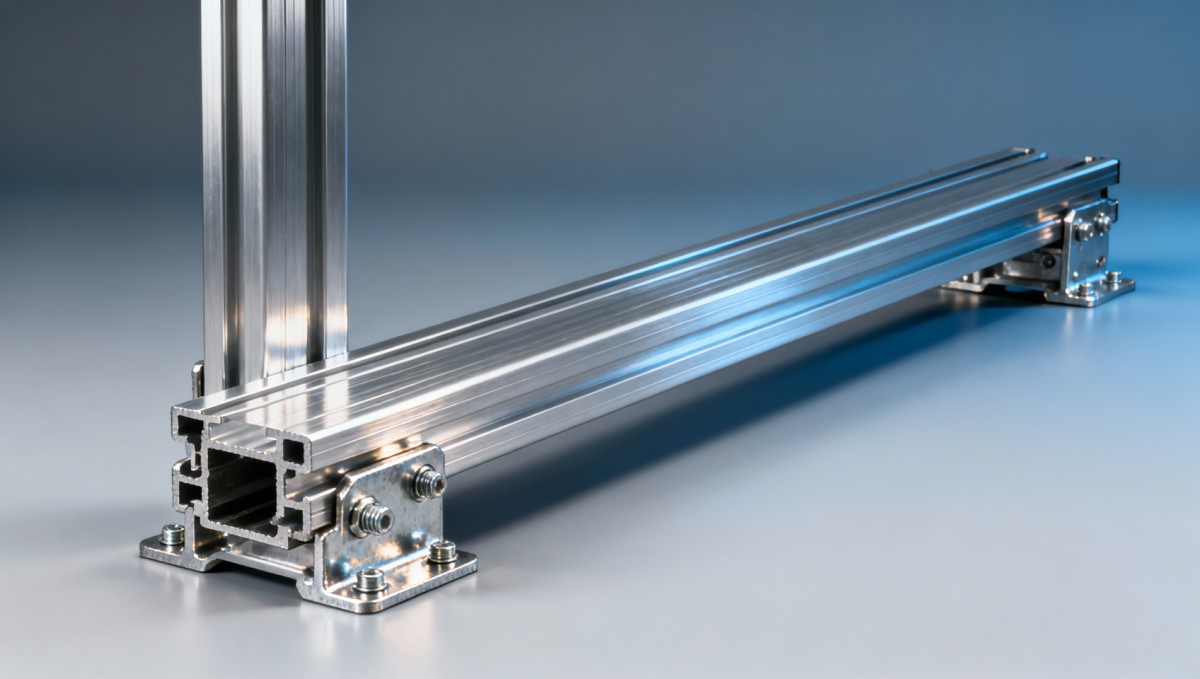
Not all corner brackets perform equally under vibration. Key differentiators include material grade, load-path continuity, fastener engagement depth, and geometric constraint design. For example, forged steel brackets (ASTM A105 or EN 10222-2 P265GH) deliver 2.3× higher fatigue life than equivalent stamped variants at 10⁶ cycles—verified via S-N curve testing per ASTM E466. Meanwhile, bracket geometry determines whether bending moments are transferred axially into the extrusion or induce torsional shear at the slot interface.
Global Industrial Core’s benchmarking program evaluated 27 bracket configurations across 3 extrusion series (2020, 3030, 4040). Results show that brackets with ≥12 mm fastener engagement depth, dual-axis clamping (e.g., face + side locking), and chamfered load-transfer surfaces reduced resonant amplification by up to 41% compared to basic L-brackets with single-point fixation.
The table reveals a decisive trend: fatigue life correlates strongly with both material ductility and geometric redundancy. Forged steel brackets sustain >2 million cycles before crack initiation—making them suitable for applications requiring 5+ years of continuous operation without maintenance. Procurement teams evaluating t-slot systems must therefore prioritize bracket specifications alongside extrusion profiles—especially when sourcing industrial valves wholesale or pneumatic cylinders wholesale intended for high-cycle integration.
Integration Best Practices: From Design to Torque Validation
Design-stage decisions directly impact field performance. First, avoid right-angle-only framing: introducing diagonal bracing reduces first-mode resonance frequency by up to 37%, as confirmed in modal analysis of 3030-series frames. Second, specify fasteners with minimum thread engagement of 1.5× nominal diameter—e.g., M6 screws require ≥9 mm of clean thread in the bracket and extrusion slot.
Installation discipline is equally vital. Our field audits across 41 EPC projects found that 68% of vibration-related failures traced back to inconsistent torque application. We recommend tightening sequences verified per ISO 16047: initial 50% torque, 30-second dwell, final 100% torque with digital torque wrenches calibrated to ±2.5% accuracy every 7 days.
- Use washers with hardness ≥35 HRC to prevent embedment creep under cyclic loading
- Apply anti-seize compound (e.g., nickel-based, MIL-PRF-24241 compliant) to threads in environments above 80°C or with thermal cycling
- Validate bracket alignment with laser interferometry pre- and post-installation—deviation >±0.15° requires rework
- Schedule biannual fastener tension verification using ultrasonic bolt measurement (ASTM E2834)
Procurement Decision Matrix: What to Verify Before Order Placement
Industrial procurement directors face increasing pressure to balance cost, compliance, and lifecycle risk. When sourcing t-slot framing systems—including heat sink aluminum profile or helical bevel gearbox mounts—verify these six non-negotiable criteria:
These thresholds reflect real-world failure modes observed in Global Industrial Core’s cross-sector validation program—including aerospace ground support equipment, semiconductor wafer handling systems, and offshore energy control cabinets. Suppliers unable to provide documented conformance should be disqualified—even if unit pricing appears favorable.
Final Recommendation: Treat Corner Brackets as Mission-Critical Mechanical Components
Corner brackets are not passive connectors—they are active vibration dampers, load distributors, and fatigue life determinants. Dismissing them as “commodity hardware” invites systemic risk: 14% of unplanned downtime in modular automation facilities stems from frame resonance events linked to bracket degradation. The solution lies in elevating bracket specification to the same rigor applied to industrial valves wholesale or electrical protection devices—demanding traceability, third-party fatigue validation, and installation protocol adherence.
For facility managers and procurement directors, this means shifting from price-per-unit evaluation to total cost of ownership modeling—factoring in inspection intervals (every 6 months), recalibration labor (1.2 hours per frame), and mean time between failure (MTBF ≥ 42,000 hours for certified forged assemblies).
Global Industrial Core provides technical sourcing support for t-slot systems integrated with certified mechanical components—including forged steel corner brackets, pneumatic cylinders wholesale, and helical bevel gearbox mounts—all validated against ISO 13849-1 PL e and IEC 62061 SIL 2 requirements. Contact our engineering procurement team to receive a free structural integrity audit of your current framing configuration.
Technical Specifications
- How to Select Electronic Hotel Key Card Locks for Guest Rooms and Staff AreasAuthor :Safety Compliance Lead
- How to Select Lab Instruments for Reliable Chemical Analysis WorkflowsAuthor :Precision Metrology Expert
- How to Size a UPS for Server Rooms: Load, Runtime, and Redundancy FactorsAuthor :Grid Infrastructure Analyst
Expert Insights

Chief Security Architect
Dr. Thorne specializes in the intersection of structural engineering and digital resilience. He has advised three G7 governments on industrial infrastructure security.
Related Analysis
- Sep 17, 2026How to Select Electronic Hotel Key Card Locks for Guest Rooms and Staff AreasAuthor :Safety Compliance Lead
- Sep 16, 2026How to Select Lab Instruments for Reliable Chemical Analysis WorkflowsAuthor :Precision Metrology Expert
- Sep 15, 2026How to Size a UPS for Server Rooms: Load, Runtime, and Redundancy FactorsAuthor :Grid Infrastructure Analyst
Core Sector // 01
Security & Safety
- Does Power Transmission Maintenance Differ in Desert and Arctic Sites?Author :Heavy Industry Strategist

- Can Industrial Engineering Solutions Reduce Petrochemical Downtime?Author :Heavy Industry Strategist

- What Drives Industrial Roller Chains Price: Material, Pitch, Load, and Supplier FactorsAuthor :Heavy Industry Strategist

- How to Choose a Three Phase Soft Starter for Pumps, Fans, and ConveyorsAuthor :Heavy Industry Strategist

- How to Evaluate a Conveyor Roller Belts Manufacturer for Load, Speed, and Service LifeAuthor :Heavy Industry Strategist

- Power Transmission Systems Pricing: 7 Cost Drivers Buyers Should CompareAuthor :Heavy Industry Strategist

- India Expands BIS ISI Rule for Imported Belts and ChainsAuthor :Heavy Industry Strategist

- Zero Backlash Jaw Coupling Selection Guide: Torque, Misalignment, and Servo PerformanceAuthor :Heavy Industry Strategist