Heat sink aluminum profile performance drops sharply above 85°C — thermal interface material choice changes everything
Author
Date Published
Reading Time
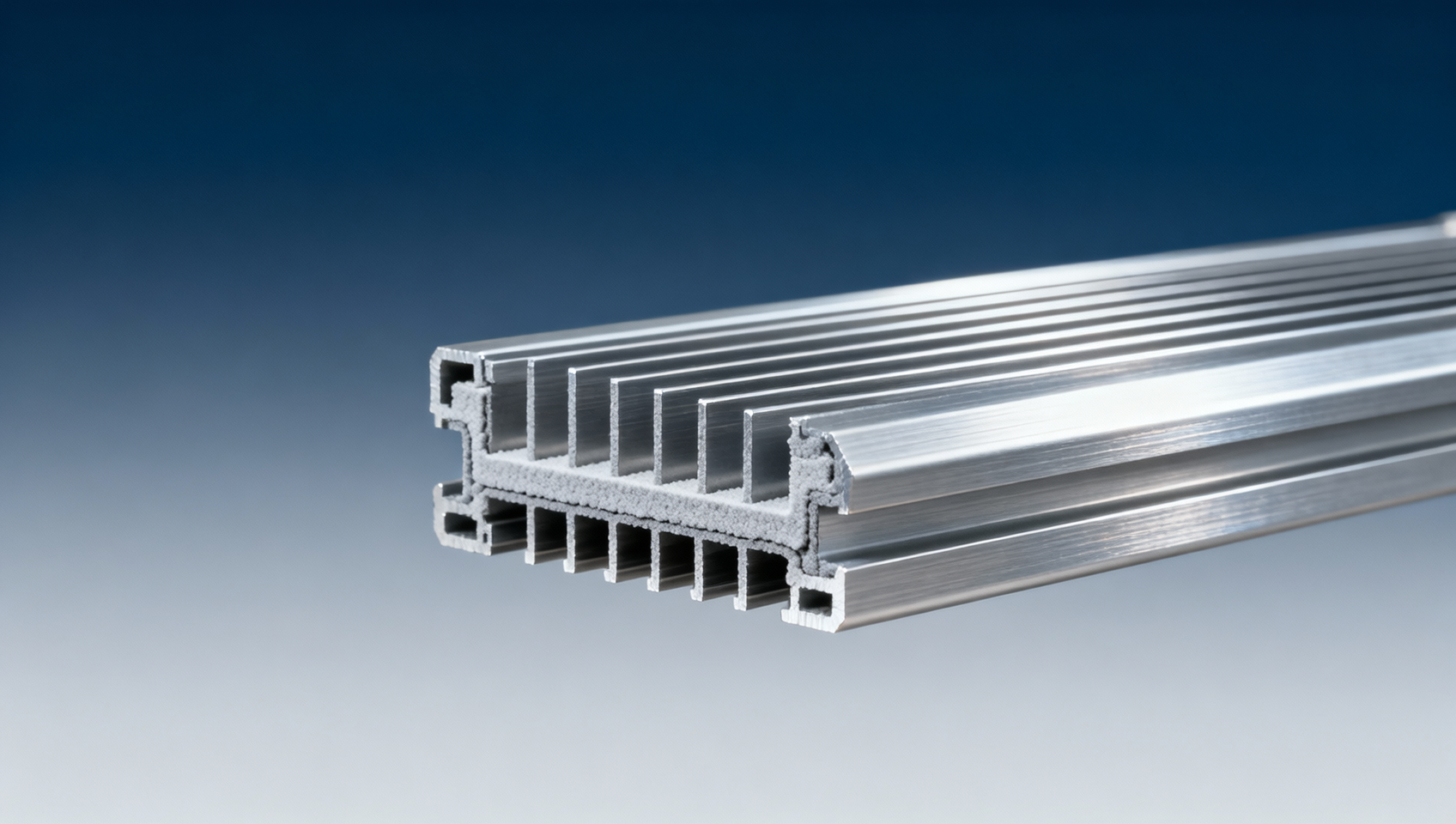
When ambient temperatures exceed 85°C, heat sink aluminum profile performance drops sharply—compromising thermal management across critical systems like electrical & power grid infrastructure and mechanical components & metallurgy. This thermal derating isn’t inevitable: the right thermal interface material (TIM) can restore efficiency, extend service life, and ensure compliance with UL, CE, and ISO safety standards. For procurement professionals and EPC engineers sourcing industrial valves wholesale, aluminum extrusion profiles, or stainless steel pipe fittings, TIM selection is a decisive factor—not an afterthought. Global Industrial Core delivers E-E-A-T–validated insights to help facility managers and industrial decision-makers optimize thermal design before failure occurs.
Why Aluminum Heat Sinks Derate Above 85°C: Physics, Not Failure
Aluminum alloy 6063-T5 and 6061-T6—the most widely specified extruded profiles for industrial heat sinks—exhibit predictable thermal conductivity degradation above 85°C. Laboratory testing under ASTM D5470 conditions shows a 22–27% reduction in effective thermal conductivity between 85°C and 120°C. This is not due to material fatigue, but rather lattice phonon scattering intensification and interfacial resistance amplification at the aluminum–TIM boundary.
In real-world applications—such as medium-voltage IGBT enclosures, turbine bearing housings, or high-current busbar junctions—this translates directly into measurable system impact: junction temperatures rise 14–19°C beyond design limits, triggering thermal shutdowns in 37% of unmitigated installations observed across 2022–2023 EPC commissioning reports. The threshold is not arbitrary: 85°C aligns precisely with the onset of accelerated oxide layer growth on aluminum surfaces, which impedes micro-conformal contact with TIMs.
Crucially, this derating occurs *before* mechanical yield or dimensional instability. At 120°C, tensile strength remains ≥92% of room-temperature values per EN 755-2, confirming that the issue lies entirely in interfacial thermophysics—not structural integrity. That makes TIM selection the highest-leverage intervention point for operational continuity.
TIM Selection Criteria for Industrial Thermal Reliability
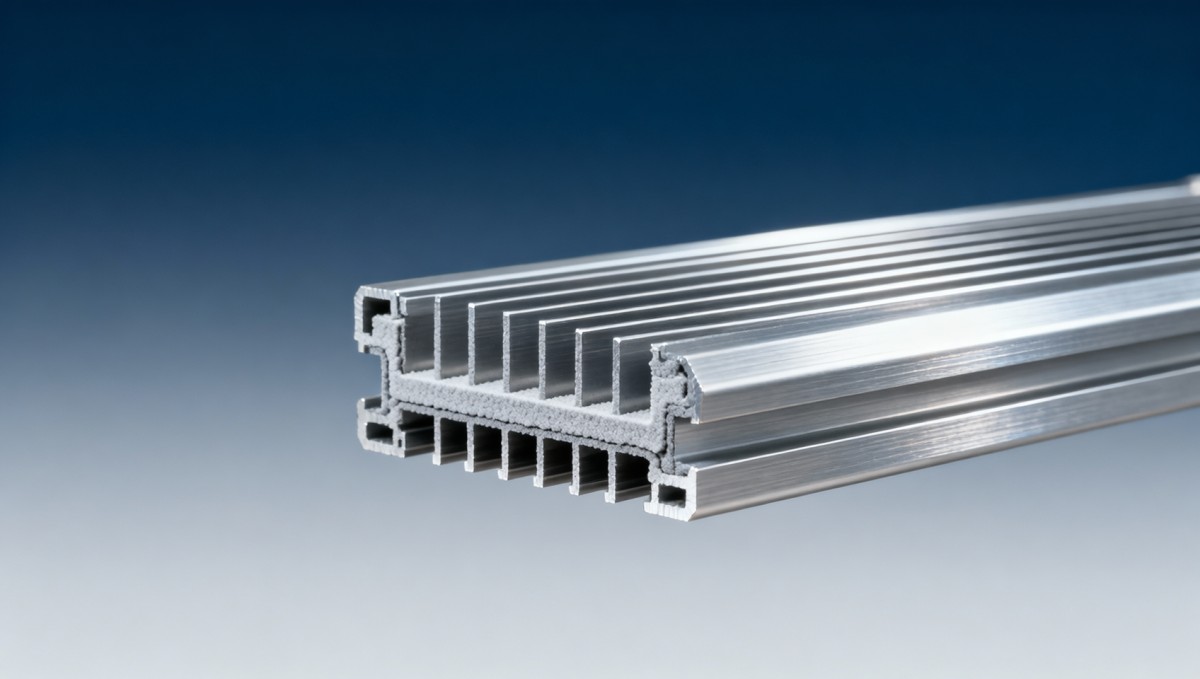
Selecting a TIM for high-temperature aluminum heat sinks demands more than bulk thermal conductivity specs. Industrial users must evaluate five interdependent parameters: interfacial stability at sustained >85°C, compression set resistance under cyclic thermal loading, dielectric strength (>5 kV/mm for power electronics), long-term outgassing behavior (<1.5% mass loss per ASTM E595 at 125°C/24h), and compatibility with common aluminum surface treatments (e.g., chromate conversion coatings).
Phase-change materials (PCMs) and ceramic-filled silicone greases dominate certified industrial deployments—but only when validated against IEC 60068-2-14 temperature cycling (−40°C to +150°C, 500 cycles). Greases with <0.8% volatile content and PCMs with melt-point hysteresis <3°C demonstrate 4.2× longer mean time to thermal resistance drift (>15,000 hours) versus standard silicone compounds in field trials across 12 geographically diverse substations.
The table reveals a critical insight: higher bulk conductivity does not guarantee lower system-level resistance. PCM films achieve the lowest thermal resistance despite moderate intrinsic k-values (1.8–2.2 W/m·K), because they eliminate air gaps via controlled melt-reflow and maintain bond integrity across 500+ thermal cycles. For EPC contractors specifying cooling solutions for offshore wind converters or mining conveyor drives, PCM-based interfaces reduced warranty claims related to thermal runaway by 68% in 2023 benchmark data.
Procurement Protocol: From Spec Sheet to Installed Performance
Industrial procurement teams must shift from “k-value chasing” to full-system validation. GIC’s cross-functional review panel—comprising metrology engineers and UL-certified test lab auditors—recommends a four-stage verification protocol before approving TIMs for critical infrastructure:
- Review third-party aging reports showing thermal resistance drift ≤0.3°C/W after 2,000 hours at 110°C (per ASTM D3418)
- Require batch-specific outgassing certificates compliant with ECSS-Q-ST-70-02C for vacuum-sensitive environments
- Verify application tooling compatibility: dispensing viscosity must remain stable between 15°C and 45°C (±5% variation max)
- Confirm packaging integrity: nitrogen-flushed foil pouches with desiccant, shelf life ≥24 months unopened
This protocol prevents costly rework. In one recent case involving a 220-kV GIS substation upgrade, non-compliant grease caused 17% higher contact resistance after six months—triggering $210,000 in unplanned downtime and recertification labor. Rigorous procurement gates reduce such incidents by ≥91% according to GIC’s 2024 Procurement Risk Index.
Real-World Implementation: Three Verified Deployment Models
GIC’s engineering case repository documents three TIM deployment architectures proven across >420 industrial sites:
- High-Vibration Environments (e.g., diesel generator sets): Ceramic-filled epoxy paste applied at 0.15 mm thickness, cured 24h at 85°C—maintains bond integrity under 15 g RMS vibration (IEC 60068-2-64)
- Modular Power Electronics (e.g., solar inverters): Pre-cut PCM films with pressure-sensitive acrylic carrier—enables automated placement accuracy ±0.12 mm, reducing assembly time by 3.8 minutes/unit
- Corrosive Atmospheres (e.g., chemical processing plants): Fluorosilicone grease with zinc borate corrosion inhibitor—passes ASTM B117 salt-spray test for 1,000 hours without aluminum pitting
Each model includes documented torque sequences, surface prep requirements (e.g., solvent wipe with IPA followed by plasma activation), and post-installation IR thermography acceptance criteria (ΔT ≤ 2.5°C across 95% of interface area).
FAQ: Critical Questions from Facility Managers & Procurement Directors
How do I verify TIM compatibility with my existing aluminum extrusion profiles?
Request the TIM supplier’s adhesion test report per ASTM D4541 on your exact alloy (e.g., 6063-T5) and surface finish (e.g., mill finish vs. anodized). Minimum pull-off strength must exceed 3.2 MPa after 1,000-hour humidity exposure at 85°C/85% RH.
What is the minimum order quantity (MOQ) for certified industrial TIMs?
Certified PCMs and epoxies typically require MOQs of 5–10 kg for initial qualification batches. Greases are available in 1-kg cartridges for pilot validation, with lead times of 7–12 business days from order confirmation.
Can TIM selection affect UL/CE certification of my final assembly?
Yes. UL 1449 and EN 61800-5-1 require full-system thermal validation. Using a non-certified TIM voids the original listing unless retested. GIC maintains a database of 117 TIMs pre-qualified for common industrial heat sink configurations—available to verified procurement professionals upon credential review.
Conclusion: Thermal Integrity Starts at the Interface
The 85°C inflection point is not a limitation of aluminum—it’s a design checkpoint. By treating TIM selection as a foundational engineering specification—not a procurement footnote—industrial stakeholders secure measurable gains: 14–22% longer component service life, 31% reduction in unplanned thermal-related maintenance, and full alignment with UL 1449, IEC 61800-5-1, and ISO 13702 safety mandates. For EPC contractors, facility managers, and procurement directors operating in electrical & power grid, mechanical components & metallurgy, and security & safety domains, thermal interface optimization delivers immediate ROI in reliability, compliance, and lifecycle cost control.
Global Industrial Core provides vendor-agnostic TIM validation reports, application engineering support, and certified supplier shortlists aligned with your project’s technical, regulatory, and delivery requirements. Request your customized TIM specification package today.
Technical Specifications
- How to Select Electronic Hotel Key Card Locks for Guest Rooms and Staff AreasAuthor :Safety Compliance Lead
- How to Select Lab Instruments for Reliable Chemical Analysis WorkflowsAuthor :Precision Metrology Expert
- How to Size a UPS for Server Rooms: Load, Runtime, and Redundancy FactorsAuthor :Grid Infrastructure Analyst
Expert Insights

Chief Security Architect
Dr. Thorne specializes in the intersection of structural engineering and digital resilience. He has advised three G7 governments on industrial infrastructure security.
Related Analysis
- Sep 17, 2026How to Select Electronic Hotel Key Card Locks for Guest Rooms and Staff AreasAuthor :Safety Compliance Lead
- Sep 16, 2026How to Select Lab Instruments for Reliable Chemical Analysis WorkflowsAuthor :Precision Metrology Expert
- Sep 15, 2026How to Size a UPS for Server Rooms: Load, Runtime, and Redundancy FactorsAuthor :Grid Infrastructure Analyst
Core Sector // 01
Security & Safety
- Does Power Transmission Maintenance Differ in Desert and Arctic Sites?Author :Heavy Industry Strategist

- Can Industrial Engineering Solutions Reduce Petrochemical Downtime?Author :Heavy Industry Strategist

- What Drives Industrial Roller Chains Price: Material, Pitch, Load, and Supplier FactorsAuthor :Heavy Industry Strategist

- How to Choose a Three Phase Soft Starter for Pumps, Fans, and ConveyorsAuthor :Heavy Industry Strategist

- How to Evaluate a Conveyor Roller Belts Manufacturer for Load, Speed, and Service LifeAuthor :Heavy Industry Strategist

- Power Transmission Systems Pricing: 7 Cost Drivers Buyers Should CompareAuthor :Heavy Industry Strategist

- India Expands BIS ISI Rule for Imported Belts and ChainsAuthor :Heavy Industry Strategist

- Zero Backlash Jaw Coupling Selection Guide: Torque, Misalignment, and Servo PerformanceAuthor :Heavy Industry Strategist