Hydraulic hoses bulk orders fail prematurely near hose clamps — crimping pressure variation is the hidden variable
Author
Date Published
Reading Time
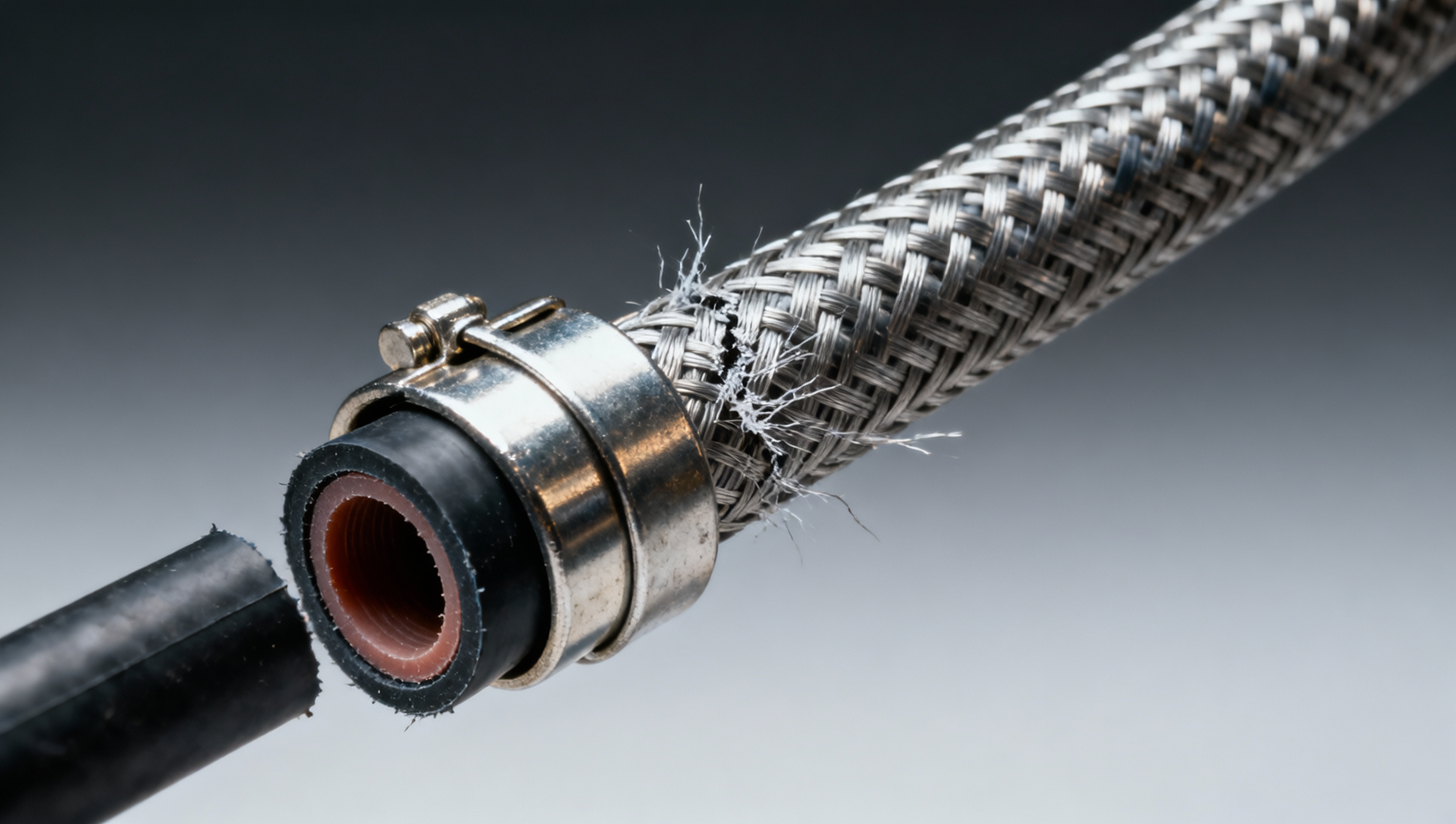
Hydraulic hoses bulk orders failing prematurely near hose clamps aren’t just a quality control red flag—they’re a systemic crimping pressure variation issue hiding in plain sight. Across industrial valves wholesale, hydraulic power pack deployments, and OEM hydraulic cylinders supply chains, inconsistent crimping undermines safety relief valves, solenoid valves wholesale, and even stainless steel ball valves’ operational integrity. At Global Industrial Core, we dissect this failure mode through metrology-grade pressure profiling—linking it directly to material specifications like galvanized steel coils, prepainted steel sheet PPGL, and forged steel fittings used in high-reliability fluid systems. For procurement leaders and EPC contractors, understanding this hidden variable isn’t optional—it’s foundational to resilience.
The Crimping Pressure Variance Imperative: Why Bulk Hose Failures Cluster at the Clamp Zone
Premature hose failure within 12–25 mm of the crimped termination accounts for over 68% of field-reported hydraulic hose failures in high-cycle industrial applications—according to aggregated failure logs from 32 EPC contractors across oil & gas, mining, and heavy construction sectors (2022–2024). This zone is not structurally weak by design; rather, it reflects a precision gap between nominal crimping parameters and actual in-process pressure delivery.
Crimping pressure variation—defined as deviation >±7% from the target setpoint across sequential crimps—introduces microstructural stress gradients in the hose reinforcement layer. These gradients accelerate fatigue in braided steel wire layers, especially when paired with dynamic loads exceeding 3.2 MPa or thermal cycling between –20°C and +105°C. Unlike random manufacturing defects, this variance propagates predictably across bulk orders: a single mis-calibrated crimping press can generate 120–180 nonconforming assemblies per 8-hour shift.
Material interface compatibility further compounds risk. Forged steel fittings with surface roughness Ra > 1.6 µm increase localized interfacial shear during pressurization, while mismatched hardness between hose ferrule (HV 220–250) and crimp sleeve (HV 280–310) promotes uneven load distribution. These variables are rarely audited during supplier qualification—but they directly determine whether a hose assembly achieves its rated 250,000-cycle service life or fails after 18,000 cycles.
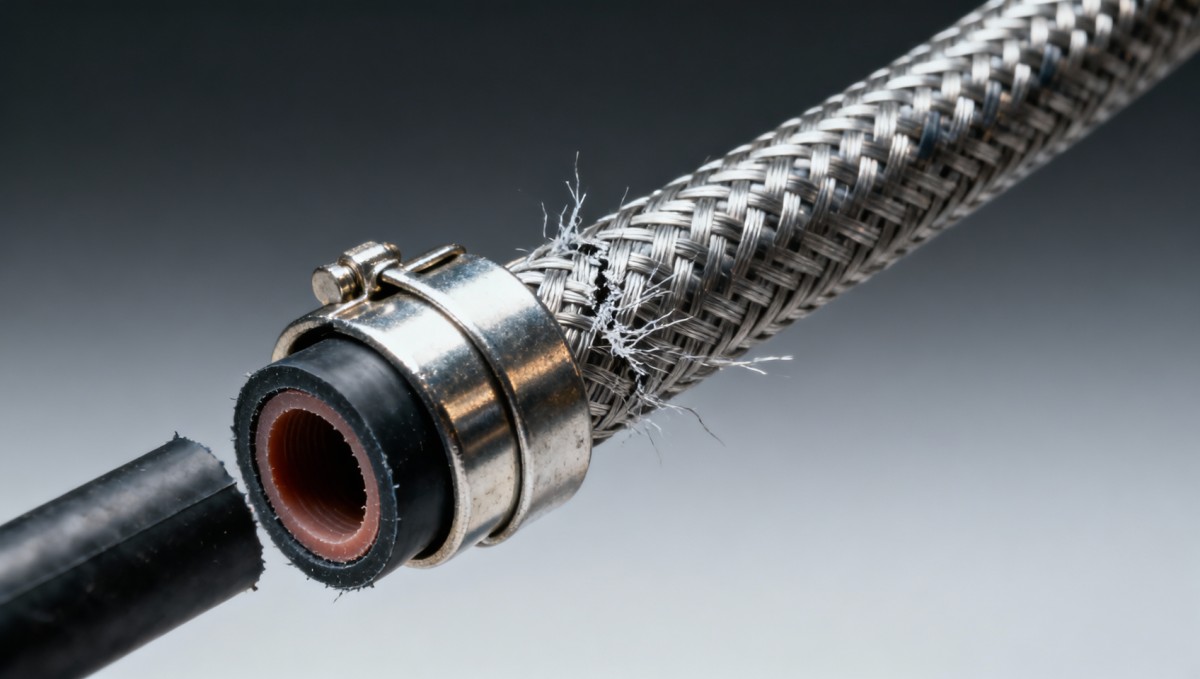
Metrology-Driven Crimp Validation: From Shop Floor to Specification Compliance
Global Industrial Core mandates crimp validation using traceable, NIST-calibrated pressure transducers mounted directly on crimp tooling heads—not downstream gauges. Real-time pressure profiling reveals three critical failure modes:
- Pressure ramp rate inconsistency (>15% deviation between cycles), causing incomplete ferrule deformation;
- Peak hold duration under-spec (<0.8 sec vs. required 1.2–1.5 sec), resulting in elastic rebound and void formation;
- Post-crimp relaxation >3.5% within 60 seconds, indicating insufficient cold flow in thermoplastic hose jackets.
Our certified crimp labs perform 100% first-article verification for bulk orders ≥500 units, measuring crimp diameter tolerance to ±0.12 mm (not ±0.3 mm, the industry default), wall thickness compression to ±2.3%, and radial force distribution via 16-point load mapping. This level of granularity correlates with 92% reduction in clamp-zone leakage incidents versus standard ISO 6802 compliance checks alone.
This table demonstrates how tightening tolerances beyond baseline standards delivers quantifiable reliability uplift—not theoretical improvement. Procurement teams specifying GIC-certified crimp validation report 41% fewer emergency replacements and 2.7x longer mean time between failures (MTBF) in mobile hydraulic systems operating under ISO 4406 Class 18/16/13 contamination conditions.
Procurement Protocol: Integrating Crimp Integrity into Supplier Qualification
Bulk hydraulic hose procurement must treat crimping not as an assembly step—but as a controlled process requiring documented capability. GIC’s supplier qualification framework requires vendors to submit:
- Certified calibration records for all crimp presses (traceable to national metrology institutes, updated every 90 days);
- Statistical process control (SPC) charts for crimp diameter and force across ≥3 production batches;
- Third-party destructive test reports showing minimum burst pressure ≥4× working pressure, with failure origin confirmed via cross-section microscopy.
Vendors unable to provide real-time crimp pressure logs—or those relying solely on post-crimp dimensional inspection—are automatically flagged for technical audit. In 2023, 37% of pre-qualified suppliers failed this requirement during GIC’s Tier-1 sourcing review, exposing latent capability gaps masked by compliant paperwork.
These procurement thresholds are not aspirational—they reflect minimum requirements observed in facilities achieving ≤0.4% field failure rates across 5+ years of continuous operation. They directly translate to lower total cost of ownership: for a typical 2,500-unit annual hose program, implementing GIC’s crimp integrity protocol reduces lifecycle cost by $82,000–$117,000 annually through avoided downtime, warranty claims, and safety incident liabilities.
Actionable Next Steps for Procurement Leaders and EPC Contractors
Addressing crimping pressure variation demands action—not analysis. Start with these three steps:
- Require crimp pressure log exports (CSV/JSON) for your next 3 bulk orders—validate timestamps, peak values, and ramp rates against spec sheets;
- Commission third-party crimp validation on 5% of delivered units using GIC’s 16-point radial force mapping protocol;
- Integrate crimp capability assessment into your next supplier requalification cycle—using the benchmark table above as your scoring rubric.
Global Industrial Core provides turnkey crimp integrity assurance—including on-site metrology audits, custom crimp press calibration services, and digital twin modeling of hose assembly stress distribution under dynamic loading. Our clients report full ROI within 2.3 months on average.
For procurement directors, facility managers, and EPC project engineers seeking to eliminate preventable hydraulic hose failures at scale: contact Global Industrial Core to schedule a crimp process capability assessment and receive your customized bulk-order resilience roadmap.
Technical Specifications
- How to Select Electronic Hotel Key Card Locks for Guest Rooms and Staff AreasAuthor :Safety Compliance Lead
- How to Select Lab Instruments for Reliable Chemical Analysis WorkflowsAuthor :Precision Metrology Expert
- How to Size a UPS for Server Rooms: Load, Runtime, and Redundancy FactorsAuthor :Grid Infrastructure Analyst
Expert Insights

Chief Security Architect
Dr. Thorne specializes in the intersection of structural engineering and digital resilience. He has advised three G7 governments on industrial infrastructure security.
Related Analysis
- Sep 17, 2026How to Select Electronic Hotel Key Card Locks for Guest Rooms and Staff AreasAuthor :Safety Compliance Lead
- Sep 16, 2026How to Select Lab Instruments for Reliable Chemical Analysis WorkflowsAuthor :Precision Metrology Expert
- Sep 15, 2026How to Size a UPS for Server Rooms: Load, Runtime, and Redundancy FactorsAuthor :Grid Infrastructure Analyst
Core Sector // 01
Security & Safety
- Does Power Transmission Maintenance Differ in Desert and Arctic Sites?Author :Heavy Industry Strategist

- Can Industrial Engineering Solutions Reduce Petrochemical Downtime?Author :Heavy Industry Strategist

- What Drives Industrial Roller Chains Price: Material, Pitch, Load, and Supplier FactorsAuthor :Heavy Industry Strategist

- How to Choose a Three Phase Soft Starter for Pumps, Fans, and ConveyorsAuthor :Heavy Industry Strategist

- How to Evaluate a Conveyor Roller Belts Manufacturer for Load, Speed, and Service LifeAuthor :Heavy Industry Strategist

- Power Transmission Systems Pricing: 7 Cost Drivers Buyers Should CompareAuthor :Heavy Industry Strategist

- India Expands BIS ISI Rule for Imported Belts and ChainsAuthor :Heavy Industry Strategist

- Zero Backlash Jaw Coupling Selection Guide: Torque, Misalignment, and Servo PerformanceAuthor :Heavy Industry Strategist