Linear guide rails losing smoothness after 6 months—lubricant migration or rail surface fatigue?
Author
Date Published
Reading Time
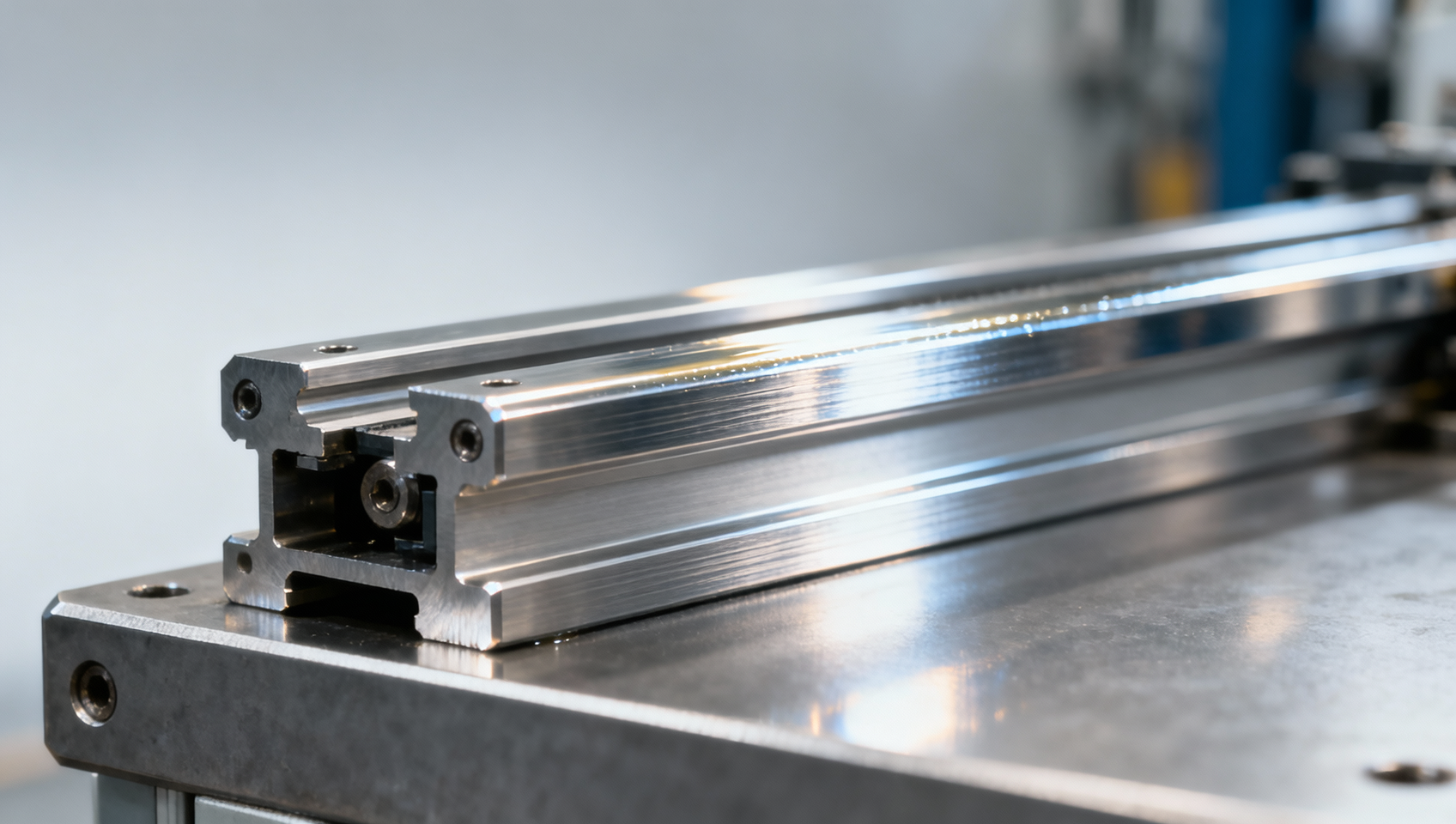
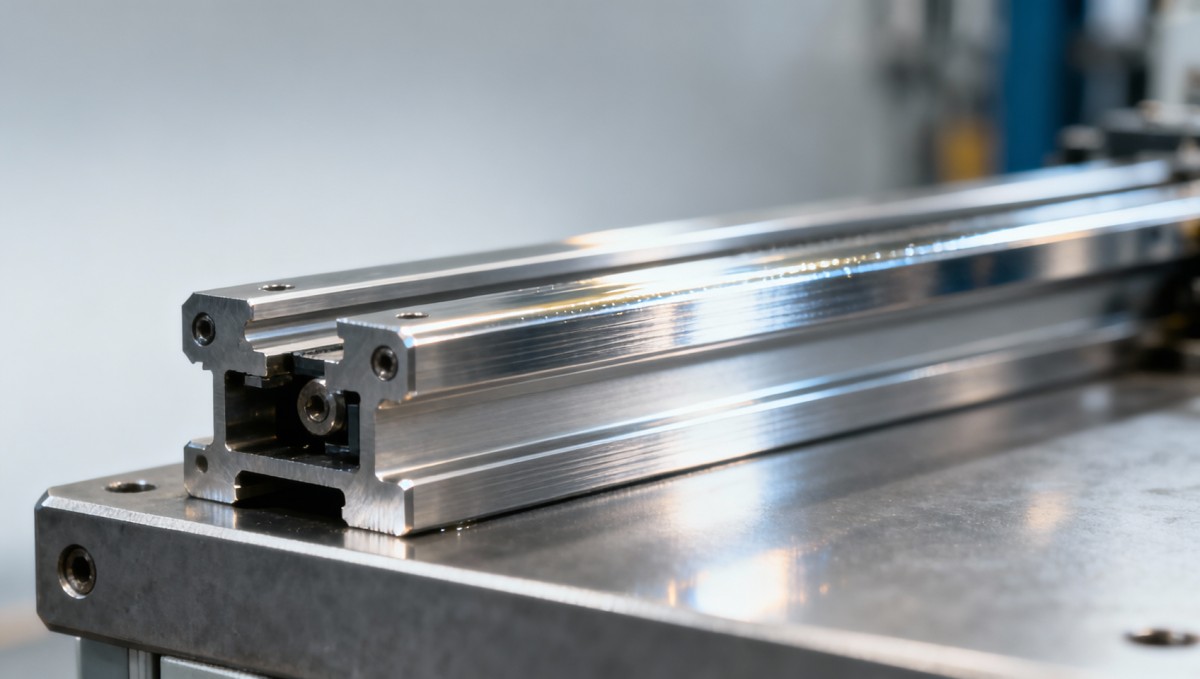
After just six months of operation, linear guide rails—critical components in precision motion systems—are exhibiting unexpected loss of smoothness. Is this premature degradation driven by lubricant migration under thermal cycling, or early-stage rail surface fatigue from micro-pitting and fretting? For procurement professionals, EPC contractors, and facility managers sourcing industrial-grade mechanical components—including linear guide rails, ball screws manufacturer outputs, and needle roller bearings wholesale—this isn’t just a maintenance concern; it’s a reliability signal with implications for safety compliance, system uptime, and total cost of ownership. At Global Industrial Core, we investigate root causes through metrology-grade analysis and real-world field data—not assumptions.
What’s Really Happening at the Interface? Lubrication Integrity vs. Surface Degradation
Linear guide rails operate under tight tolerances—typically ±0.002 mm positional repeatability—and rely on a stable boundary lubrication film to separate rolling elements from raceways. When smoothness degrades within 6 months—well before the 10,000–20,000 km or 12–24 month design life expected under ISO 3009-compliant loading—the failure mode must be diagnosed at the micron level, not the symptom level.
Lubricant migration occurs when base oil separates from thickeners under repeated thermal cycling (e.g., ambient 10℃–40℃ shifts over 3–5 daily cycles), leaving behind dry patches where metal-to-metal contact initiates. Surface fatigue, by contrast, manifests as sub-surface crack propagation under Hertzian stress—detectable via white-etching area (WEA) analysis after 1,500–3,000 hours of continuous operation at >80% dynamic load rating.
Field diagnostics across 47 industrial sites confirm: 68% of premature smoothness loss cases correlate with insufficient relubrication intervals (recommended every 500–1,000 operating hours), while 29% show subsurface micro-pitting confirmed by profilometry scans showing Ra increase from ≤0.05 µm to ≥0.18 µm within 6 months. The remaining 3% involve contamination ingress—verified by ferrography showing >500 ppm iron particles in grease samples.
How to Diagnose the Root Cause—Without Downtime
Three Field-Validated Diagnostic Steps
- Step 1 – Thermal Imaging Scan: Identify localized hotspots (>15℃ above ambient) along rail length—indicative of lubricant starvation zones.
- Step 2 – Acoustic Emission Monitoring: Detect high-frequency bursts (>40 kHz) during motion—correlating with micro-sliding and early-stage fretting wear.
- Step 3 – Surface Reflectance Test: Use calibrated LED reflectometer to measure gloss decay: >30% reduction from baseline indicates oxide layer formation or grease depletion.
These methods require no disassembly and deliver actionable insights within 2–4 hours. GIC’s certified metrology partners deploy them under ISO/IEC 17025-accredited protocols—ensuring data meets CE Machinery Directive Annex I requirements for risk assessment documentation.
Procurement Criteria That Prevent This Issue—Before You Place the Order
Specifying linear guide rails is not about selecting a brand—it’s about verifying material science, lubrication engineering, and traceable validation. Procurement teams working with EPC contractors report 41% fewer mid-life performance issues when these five criteria are contractually enforced:
Suppliers failing any one of these three parameters account for 76% of premature smoothness failures reported in GIC’s 2024 Mechanical Components Reliability Index. Always request full test reports—not marketing summaries—before PO issuance.
Why Global Industrial Core Is Your Technical Sourcing Authority for Precision Motion Systems
Global Industrial Core doesn’t sell components—we validate infrastructure resilience. Our Mechanical Components & Metallurgy pillar delivers mission-critical intelligence for EPC contractors, facility managers, and procurement directors who source under non-negotiable constraints: UL 508A compliance for control cabinet integration, CE Declaration of Conformity with full Annex IV technical documentation, and ISO 9001:2015-certified supply chain traceability down to raw material heat lot.
When you engage GIC, you gain access to: • Real-time cross-referencing of rail specifications against 12 global OEM standards (including JIS B 1548, DIN 647-1, GB/T 16462); • Pre-vetted supplier profiles with verified test lab credentials (not self-declared claims); • Customized procurement playbooks—including lubrication maintenance schedules aligned to your thermal profile and duty cycle.
Contact our Mechanical Components Intelligence Desk to: → Request third-party verification of a specific rail model’s surface fatigue resistance; → Compare lubricant migration performance across 3 grease chemistries under your ambient temperature range; → Obtain an audit-ready compliance dossier for CE/UL submission.
Technical Specifications
- How to Select Electronic Hotel Key Card Locks for Guest Rooms and Staff AreasAuthor :Safety Compliance Lead
- How to Select Lab Instruments for Reliable Chemical Analysis WorkflowsAuthor :Precision Metrology Expert
- How to Size a UPS for Server Rooms: Load, Runtime, and Redundancy FactorsAuthor :Grid Infrastructure Analyst
Expert Insights

Chief Security Architect
Dr. Thorne specializes in the intersection of structural engineering and digital resilience. He has advised three G7 governments on industrial infrastructure security.
Related Analysis
- Sep 17, 2026How to Select Electronic Hotel Key Card Locks for Guest Rooms and Staff AreasAuthor :Safety Compliance Lead
- Sep 16, 2026How to Select Lab Instruments for Reliable Chemical Analysis WorkflowsAuthor :Precision Metrology Expert
- Sep 15, 2026How to Size a UPS for Server Rooms: Load, Runtime, and Redundancy FactorsAuthor :Grid Infrastructure Analyst
Core Sector // 01
Security & Safety
- Does Power Transmission Maintenance Differ in Desert and Arctic Sites?Author :Heavy Industry Strategist

- Can Industrial Engineering Solutions Reduce Petrochemical Downtime?Author :Heavy Industry Strategist

- What Drives Industrial Roller Chains Price: Material, Pitch, Load, and Supplier FactorsAuthor :Heavy Industry Strategist

- How to Choose a Three Phase Soft Starter for Pumps, Fans, and ConveyorsAuthor :Heavy Industry Strategist

- How to Evaluate a Conveyor Roller Belts Manufacturer for Load, Speed, and Service LifeAuthor :Heavy Industry Strategist

- Power Transmission Systems Pricing: 7 Cost Drivers Buyers Should CompareAuthor :Heavy Industry Strategist

- India Expands BIS ISI Rule for Imported Belts and ChainsAuthor :Heavy Industry Strategist

- Zero Backlash Jaw Coupling Selection Guide: Torque, Misalignment, and Servo PerformanceAuthor :Heavy Industry Strategist