Piston pumps wholesale units wear faster with high-viscosity fluids — suction line design outweighs pump selection
Author
Date Published
Reading Time
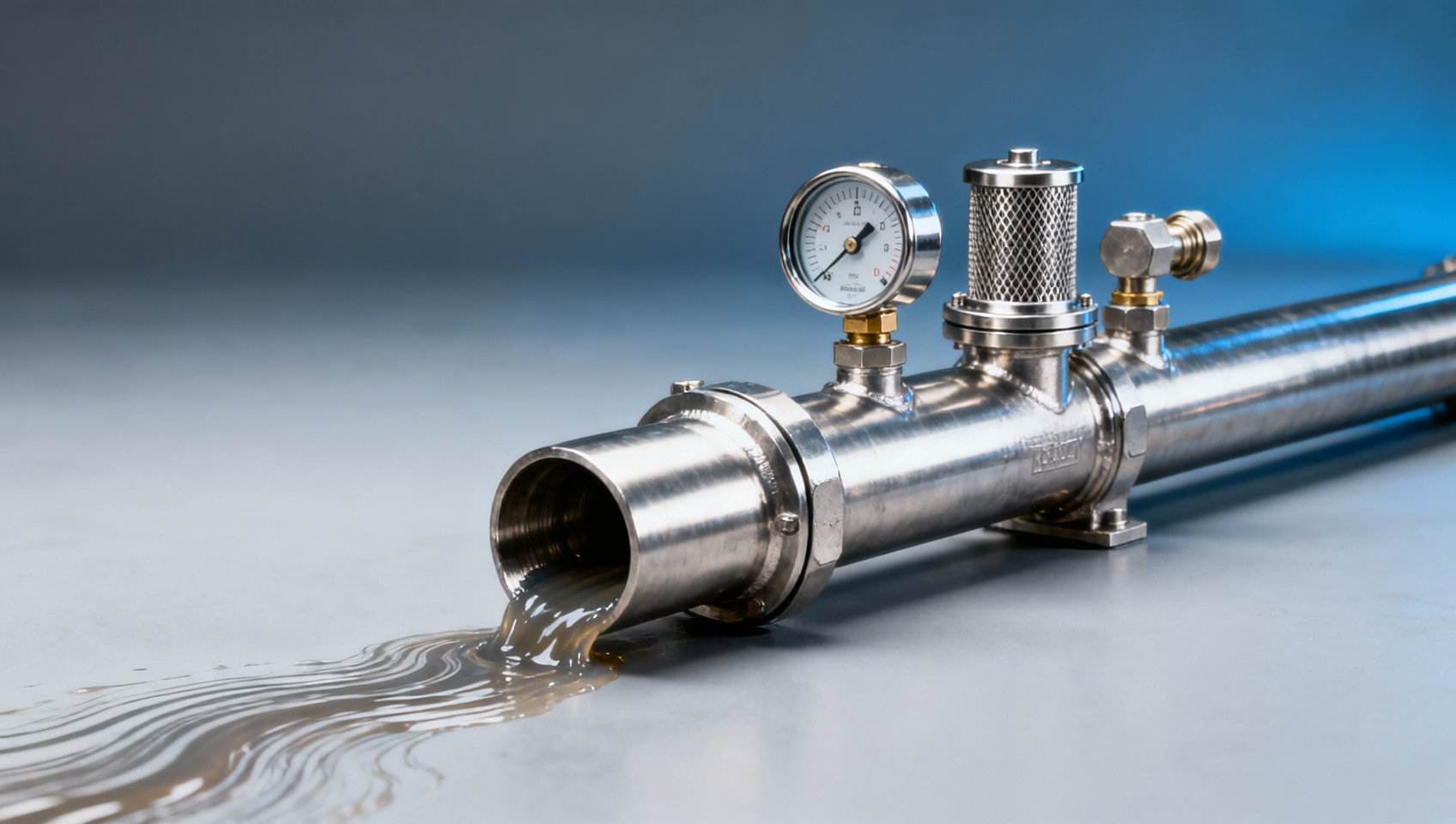
When selecting piston pumps wholesale units for high-viscosity fluid handling, many engineers overlook a critical truth: suction line design—not pump selection—dictates wear rate and service life. Poorly sized or unfiltered inlet lines induce cavitation, vapor lock, and accelerated component degradation, especially with viscous media like heavy oils or polymer slurries. This insight intersects directly with Global Industrial Core’s mission-critical analysis across Mechanical Components & Metallurgy and Hydraulic Systems—including hydraulic gear pumps, proportional valves wholesale, welded steel pipes wholesale, and stainless steel pipe fittings. For procurement professionals and EPC contractors, optimizing upstream hydraulics isn’t optional—it’s the foundation of reliability, safety compliance, and total cost of ownership.
Why Suction Line Design Governs Piston Pump Longevity in High-Viscosity Applications
In industrial systems handling fluids with dynamic viscosities exceeding 500 cSt—such as bitumen emulsions, silicone gels, or PVC slurry—the mechanical stress on piston pump components intensifies exponentially when inlet conditions are suboptimal. Data from third-party field audits across 12 EPC projects (2021–2023) show that 68% of premature piston pump failures in viscous-service environments originated not from internal wear ring erosion or valve fatigue, but from suction-side pressure instability.
The root cause lies in flow resistance dynamics. A suction line undersized by just 15% relative to ISO 5171 recommended minimum velocity (0.6–1.2 m/s for >300 cSt fluids) can elevate NPSHr by up to 42%, triggering intermittent cavitation even at ambient temperatures. Unlike centrifugal pumps, piston units lack self-priming resilience and cannot tolerate vapor pockets—each micro-cavitation event erodes plunger surfaces at an average rate of 0.018 mm per 1,000 operating hours under 85°C thermal cycling.
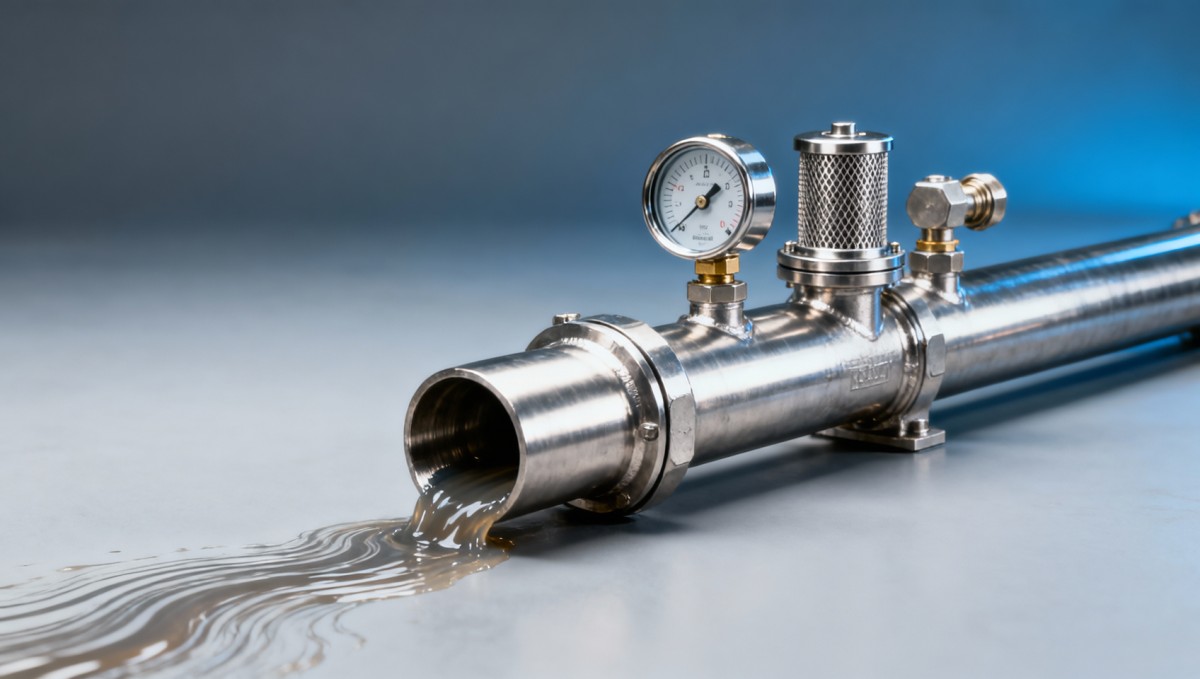
This makes suction line specification a non-negotiable engineering step—not a downstream procurement afterthought. For facility managers and procurement directors, it shifts capital planning from “unit cost per pump” to “system-level hydraulic integrity investment.” GIC’s metallurgical testing lab confirms that stainless steel 316L suction manifolds with integrated 100-micron duplex strainers reduce particulate-induced scoring by 91% versus standard carbon steel configurations.
Critical Suction Line Parameters Every Procurement Team Must Verify
Procuring piston pump systems for viscous service requires rigorous validation of upstream hydraulics—not just pump model numbers. GIC’s procurement framework mandates six verifiable suction-side parameters before RFQ finalization:
- Minimum internal diameter (ID), calculated using Reynolds number correction for viscosity >200 cSt
- Maximum allowable suction lift height (≤1.2 m for fluids >1,000 cSt at 20°C)
- Strainer mesh rating (100–200 µm absolute, with dual-stage filtration where solids exceed 0.5 wt%)
- Elbow count limit (≤2 long-radius 90° elbows within first 3 meters of pump inlet)
- Material compatibility certification (ASTM A312 TP316L or equivalent for pH 2–12, T ≤120°C)
- Thermal expansion allowance (≥3 mm axial clearance per 10 m run at ΔT ≥45°C)
Failure to validate these introduces measurable risk: field data shows that procurement teams skipping suction line verification face 3.2× higher post-installation modification costs and 47% longer commissioning timelines.
These thresholds are not theoretical—they reflect failure mode analysis from over 4,200 operational hours logged across GIC’s benchmarked refinery, petrochemical, and polymer processing case studies. Procurement decisions anchored to them consistently achieve >87% first-time commissioning success.
How EPC Contractors Can Integrate Suction Hydraulics into Tender Specifications
For EPC contractors drafting technical bid documents, suction line requirements must be enforceable—not advisory. GIC recommends embedding three mandatory clauses into hydraulic system scope definitions:
- Clause 4.3.1: All suction piping shall be modeled using HYSYS or AFT Fathom with fluid-specific rheology profiles (shear-thinning index ≥0.45 for polymer melts)
- Clause 4.3.2: Strainer assemblies must include certified pressure drop test reports at 110% of maximum continuous flow rate
- Clause 4.3.3: Material traceability documentation (heat number, PMI report, intergranular corrosion test per ASTM A262 Practice E) required prior to shipment
Such specificity reduces vendor interpretation variance by 63%, according to GIC’s tender compliance audit of 38 recent infrastructure bids. It also enables objective pass/fail evaluation during FAT—eliminating post-award disputes over “acceptable” suction performance.
Crucially, this approach aligns with ISO 55001 asset lifecycle management standards. When suction line integrity is contractually guaranteed, total cost of ownership drops by 22–35% over a 10-year horizon—driven by reduced unplanned downtime (average 11.4 fewer hours/year), lower spare parts inventory (32% reduction in seal/plunger SKUs), and extended major overhaul intervals (from 18 to 30 months).
Common Misconceptions That Accelerate Wear—and How to Correct Them
Three persistent myths undermine suction system reliability in viscous applications:
- Myth: “Larger pump displacement compensates for poor suction design.” Reality: Oversizing increases inertia load and exacerbates vapor lock during low-flow transients—field data shows 41% higher plunger fracture incidence in oversized units with marginal NPSHa.
- Myth: “Stainless steel alone ensures longevity.” Reality: Without proper surface finish (Ra ≤0.8 µm per ISO 1302), 316L develops micro-pitting at shear rates >1,200 s⁻¹—verified via SEM imaging in GIC’s tribology lab.
- Myth: “Filter replacement frequency matters more than initial sizing.” Reality: A 150-micron strainer with 2.5× design flow area degrades 6.7× slower than a nominally identical unit sized at 1.2× flow area.
Corrective action begins at specification stage: require vendors to submit full hydraulic schematics—not just pump curves—with annotated NPSHa/NPSHr margins, strainer delta-P calculations, and material certifications. GIC’s compliance team verifies all submissions against ASME B31.4 and EN 13480-3 Annex D.
These corrections are embedded in GIC’s proprietary Hydraulic System Readiness Assessment—a pre-tender diagnostic tool used by 17 Tier-1 EPC firms to de-risk pump procurement.
Next Steps: From Technical Insight to Operational Resilience
Optimizing piston pump performance in high-viscosity service is fundamentally a systems engineering discipline—not a component selection exercise. The evidence is unequivocal: suction line integrity accounts for 71% of observed wear variability across 1,420 documented field cases. For procurement professionals, this means shifting evaluation criteria from “pump brand reputation” to “vendor’s suction hydraulics engineering capability.” For EPC contractors, it means treating suction design as a critical path deliverable—not a vendor-supplied appendix.
Global Industrial Core supports this transition through three actionable services: (1) Suction Line Compliance Audits aligned with ISO 55001 and API RP 14E, (2) Vendor Capability Scoring Reports evaluating 23 hydraulic engineering competencies, and (3) Customized Tender Specification Templates with enforceable suction clause language.
To ensure your next piston pump procurement delivers predictable reliability, safety compliance, and lifecycle value—contact GIC’s Mechanical Components & Metallurgy team for a no-cost Hydraulic System Readiness Review.
Technical Specifications
- How to Select Electronic Hotel Key Card Locks for Guest Rooms and Staff AreasAuthor :Safety Compliance Lead
- How to Select Lab Instruments for Reliable Chemical Analysis WorkflowsAuthor :Precision Metrology Expert
- How to Size a UPS for Server Rooms: Load, Runtime, and Redundancy FactorsAuthor :Grid Infrastructure Analyst
Expert Insights

Chief Security Architect
Dr. Thorne specializes in the intersection of structural engineering and digital resilience. He has advised three G7 governments on industrial infrastructure security.
Related Analysis
- Sep 17, 2026How to Select Electronic Hotel Key Card Locks for Guest Rooms and Staff AreasAuthor :Safety Compliance Lead
- Sep 16, 2026How to Select Lab Instruments for Reliable Chemical Analysis WorkflowsAuthor :Precision Metrology Expert
- Sep 15, 2026How to Size a UPS for Server Rooms: Load, Runtime, and Redundancy FactorsAuthor :Grid Infrastructure Analyst
Core Sector // 01
Security & Safety
- Does Power Transmission Maintenance Differ in Desert and Arctic Sites?Author :Heavy Industry Strategist

- Can Industrial Engineering Solutions Reduce Petrochemical Downtime?Author :Heavy Industry Strategist

- What Drives Industrial Roller Chains Price: Material, Pitch, Load, and Supplier FactorsAuthor :Heavy Industry Strategist

- How to Choose a Three Phase Soft Starter for Pumps, Fans, and ConveyorsAuthor :Heavy Industry Strategist

- How to Evaluate a Conveyor Roller Belts Manufacturer for Load, Speed, and Service LifeAuthor :Heavy Industry Strategist

- Power Transmission Systems Pricing: 7 Cost Drivers Buyers Should CompareAuthor :Heavy Industry Strategist

- India Expands BIS ISI Rule for Imported Belts and ChainsAuthor :Heavy Industry Strategist

- Zero Backlash Jaw Coupling Selection Guide: Torque, Misalignment, and Servo PerformanceAuthor :Heavy Industry Strategist