Classical V Belts Explained: Types, Profiles, and How to Choose the Right Size
Author
Date Published
Reading Time

Classical V-belts remain a practical choice in industrial power transmission because they balance simplicity, availability, and proven performance across fans, pumps, compressors, conveyors, and machine tools.
For evaluation work, the real question is not whether v belts classical are old technology. It is whether the selected profile, length, and duty rating truly match the drive, load pattern, and operating environment.
That matters more today as maintenance teams push for longer service intervals, while EPC and industrial sourcing decisions face tighter compliance, uptime, and lifecycle cost expectations.
In the editorial framework used by Global Industrial Core, even a familiar component like a belt deserves disciplined review, because minor sizing errors can lead to slippage, heat buildup, premature bearing load, and unplanned shutdowns.
What classical V-belts are really designed to do

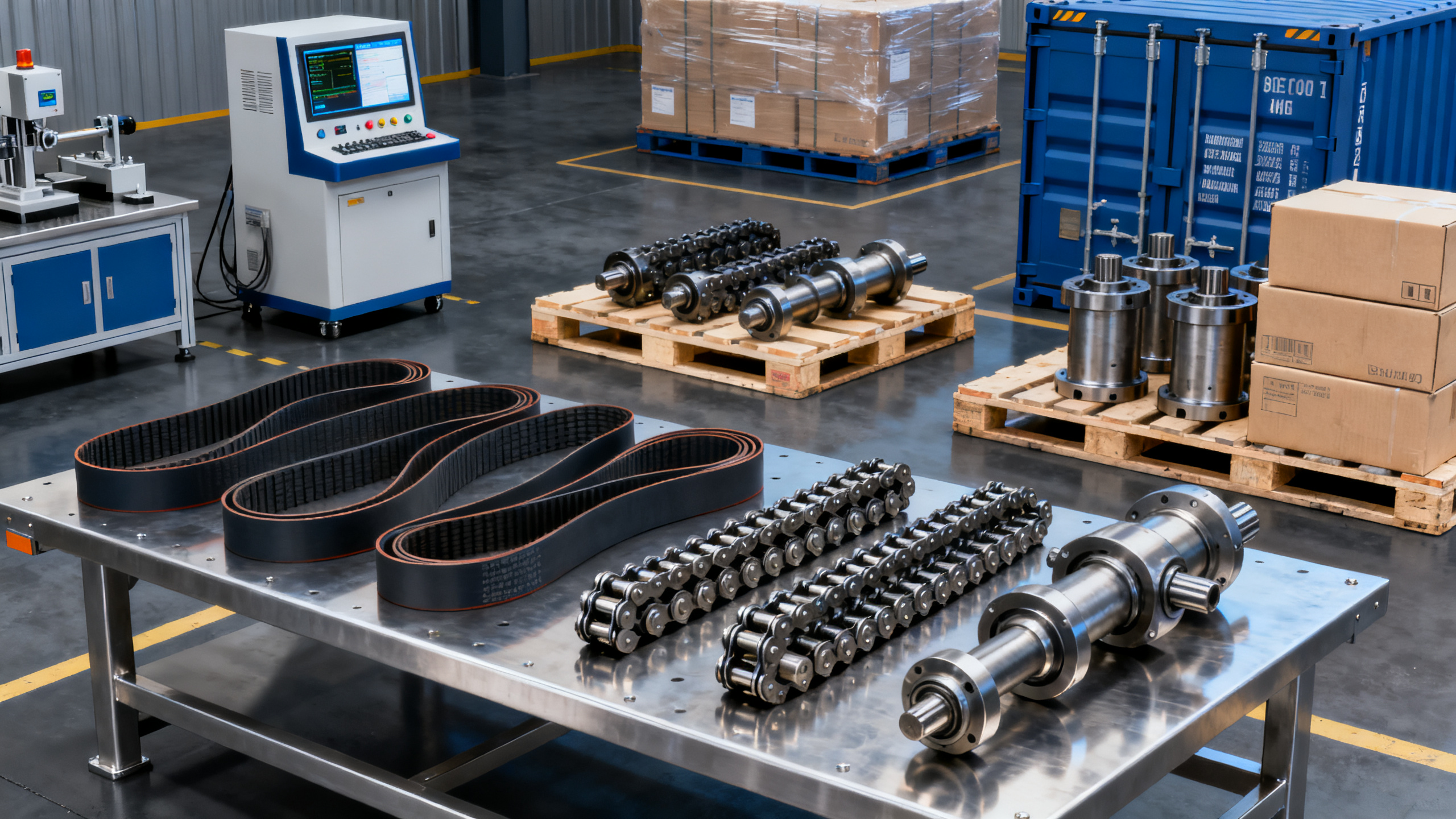
The image above fits the core idea: wedge action inside a pulley groove creates frictional grip, allowing torque transfer without the direct tooth engagement seen in synchronous belts.
A classical V-belt has a trapezoidal cross-section. As tension increases, the belt sidewalls press into the sheave groove, producing the holding force needed for rotation.
This design gives v belts classical three advantages that still matter in mixed industrial settings: tolerance for shock loads, relatively quiet operation, and broad replacement availability.
At the same time, they are not universal. Belt speed, arc of contact, pulley diameter, ambient heat, oil exposure, and alignment quality all shape real performance.
Profiles, sections, and naming conventions
When people refer to v belts classical, they usually mean the long-established sections such as Z, A, B, C, D, and E, or regional equivalents.
Each section defines the top width and height of the belt. Those dimensions determine groove fit, power capacity, and the minimum recommended pulley diameter.
A belt marked too narrow for the sheave may sink too deeply. One that is too wide may ride high, changing effective diameter and reducing load stability.
Typical classical profiles
Designation systems vary by market, so cross-reference charts are important. A local stock code can resemble a standard size while still differing in datum length or pitch basis.
Why sizing mistakes create expensive problems
A V-belt may appear simple, but sizing errors often remain hidden until the drive is under real load. Then the symptoms show up as noise, dust, temperature rise, or unstable speed.
The most common mistake is focusing only on nominal length. For v belts classical, section fit and pulley compatibility are just as important as belt circumference.
- A mismatched profile reduces sidewall contact and accelerates slip.
- Excessive tension can overload bearings and shorten motor life.
- Insufficient tension causes heat, glazing, and poor torque transfer.
- A belt too short limits installation and adjustment travel.
- A belt too long may sit outside the intended tensioning range.
In critical infrastructure, these are not minor issues. They affect maintenance frequency, spare-part planning, and confidence in equipment availability.
How to choose the right size with fewer assumptions
A solid evaluation starts with the drive data, not the old belt label. Installed belts are sometimes replacements of replacements, and the marked size may not reflect the original design intent.
Key inputs to verify
- Motor power, driven load, and starting characteristics.
- Driver and driven pulley diameters.
- Center distance and adjustment range.
- Pulley groove standard and wear condition.
- Operating hours, ambient temperature, and contamination exposure.
- Single-belt or multi-belt arrangement.
A practical sizing sequence
Start by confirming the belt section required by the sheave groove. Then check power rating tables for that section at the planned speed and small pulley diameter.
Next, determine the correct effective or datum length according to the standard used by the manufacturer. After that, apply service factors for shock, duty cycle, and environment.
If multiple belts are used, matched sets matter. Mixing individual belts with slightly different lengths often causes unequal load sharing and early failure.
Where classical belts still make sense
Classical V-belt drives continue to fit many industrial environments because they are easy to source, straightforward to install, and forgiving in applications that do not require precise timing.
They are especially common in retrofit situations, legacy plant assets, and mixed fleets where standardization and fast maintenance carry more value than maximum transmission efficiency.
From a sourcing perspective, v belts classical also support replacement continuity across regions, which is useful for multinational facilities managing varied equipment histories.
That said, compact high-power drives may point toward narrow wedge belts, while exact indexing tasks may require synchronous alternatives. The right answer depends on the operating objective.
What to examine beyond the belt code
A belt designation alone does not confirm system health. In field reviews, the surrounding hardware often explains why repeated replacements fail.
- Check pulley groove wear with gauges, not visual estimates only.
- Inspect alignment across shafts and grooves.
- Review guard ventilation where heat accumulation is likely.
- Confirm chemical resistance if oil, dust, or ozone exposure exists.
- Verify compliance documentation when site standards require CE, UL, or ISO-linked sourcing controls.
This broader view reflects the way GIC approaches industrial components: not as isolated parts, but as reliability elements embedded in safety, power, and maintenance systems.
A clear basis for the next decision
Choosing among v belts classical becomes easier when the decision is anchored to measured drive data, verified groove standards, and service conditions rather than habit or visual similarity.
A useful next step is to build a short comparison sheet covering profile, effective length, pulley condition, service factor, and replacement interval history for each critical drive.
That approach turns belt selection from a routine spare purchase into a controlled reliability decision, which is exactly where industrial value is usually gained.
When the application is important enough to affect uptime, safety, or maintenance planning, classical V-belt sizing deserves the same disciplined review as any other core mechanical component.
Technical Specifications
- How to Select Electronic Hotel Key Card Locks for Guest Rooms and Staff AreasAuthor :Safety Compliance Lead
- How to Select Lab Instruments for Reliable Chemical Analysis WorkflowsAuthor :Precision Metrology Expert
- How to Size a UPS for Server Rooms: Load, Runtime, and Redundancy FactorsAuthor :Grid Infrastructure Analyst
Expert Insights

Chief Security Architect
Dr. Thorne specializes in the intersection of structural engineering and digital resilience. He has advised three G7 governments on industrial infrastructure security.
Related Analysis
- Sep 17, 2026How to Select Electronic Hotel Key Card Locks for Guest Rooms and Staff AreasAuthor :Safety Compliance Lead
- Sep 16, 2026How to Select Lab Instruments for Reliable Chemical Analysis WorkflowsAuthor :Precision Metrology Expert
- Sep 15, 2026How to Size a UPS for Server Rooms: Load, Runtime, and Redundancy FactorsAuthor :Grid Infrastructure Analyst
Core Sector // 01
Security & Safety
- Does Power Transmission Maintenance Differ in Desert and Arctic Sites?Author :Heavy Industry Strategist

- Can Industrial Engineering Solutions Reduce Petrochemical Downtime?Author :Heavy Industry Strategist

- What Drives Industrial Roller Chains Price: Material, Pitch, Load, and Supplier FactorsAuthor :Heavy Industry Strategist

- How to Choose a Three Phase Soft Starter for Pumps, Fans, and ConveyorsAuthor :Heavy Industry Strategist

- How to Evaluate a Conveyor Roller Belts Manufacturer for Load, Speed, and Service LifeAuthor :Heavy Industry Strategist

- Power Transmission Systems Pricing: 7 Cost Drivers Buyers Should CompareAuthor :Heavy Industry Strategist

- India Expands BIS ISI Rule for Imported Belts and ChainsAuthor :Heavy Industry Strategist

- Zero Backlash Jaw Coupling Selection Guide: Torque, Misalignment, and Servo PerformanceAuthor :Heavy Industry Strategist