G7 Paris Pact Targets Critical Minerals Supply Chains
Author
Date Published
Reading Time
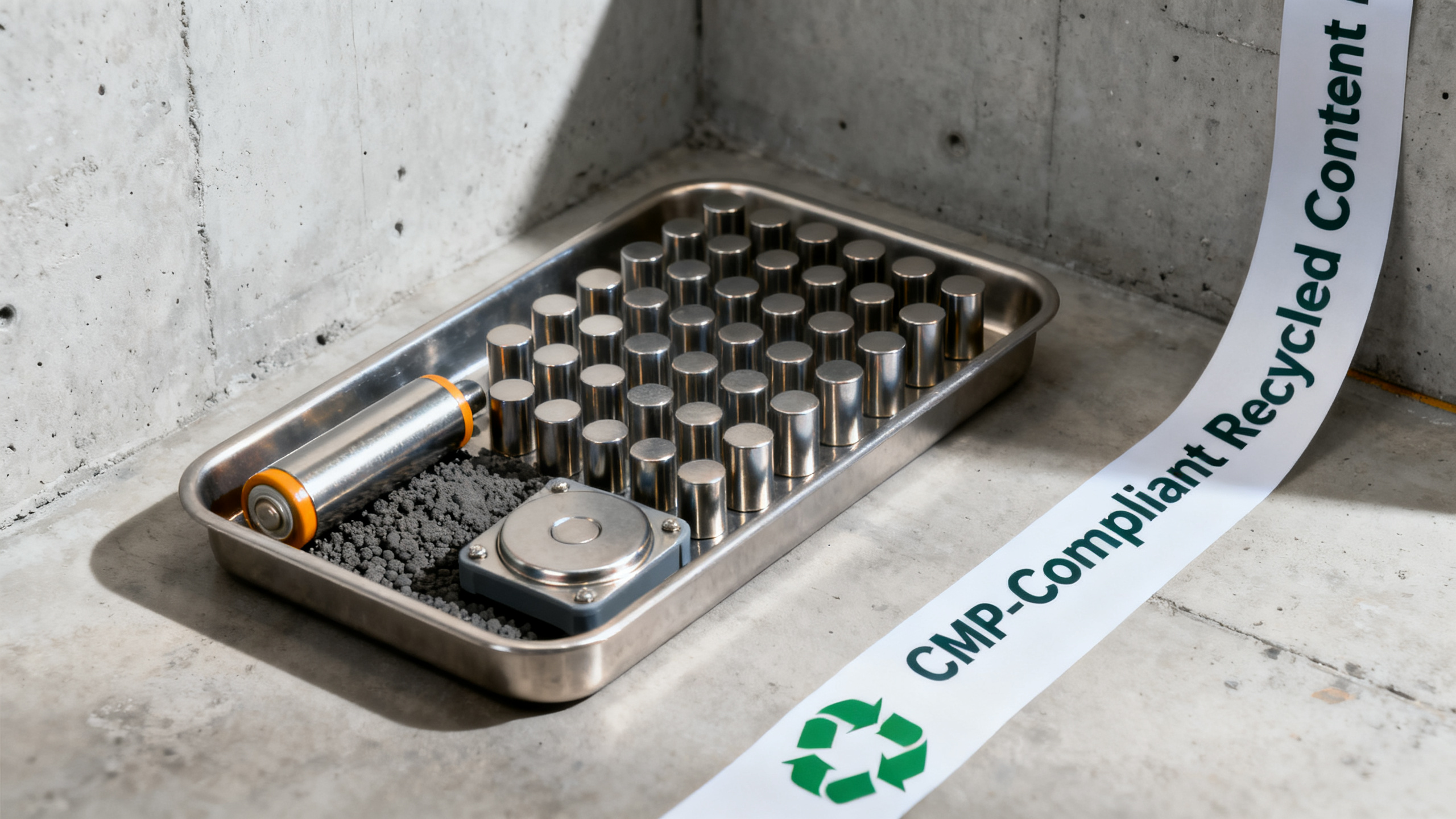
G7 energy ministers convened in Paris on May 19, 2026, to address growing concerns over geopolitical concentration in critical mineral supply chains. The agreement — formally titled the ‘Critical Minerals Partnership’ (CMP) — signals a coordinated shift toward strategic resilience in cobalt, nickel, lithium, and neodymium-iron-boron (NdFeB) recycling. Its implications extend across global industrial sectors reliant on permanent magnets, battery management systems, and rare-earth-based optical materials — prompting recalibration among suppliers, buyers, and service providers with ties to China’s upstream and midstream capabilities.
Event Overview
On May 19, 2026, G7 energy ministers finalized an agreement in Paris establishing the Critical Minerals Partnership (CMP). The initiative prioritizes standardization of recycling technologies for cobalt, nickel, lithium, and NdFeB magnets, as well as joint procurement frameworks. The text explicitly avoids export restrictions on Chinese-sourced materials but affirms intent to diversify sourcing and accelerate domestic or allied alternatives.
Industries Affected
Direct trade enterprises: Export-oriented firms engaged in cross-border shipments of NdFeB magnets, industrial battery components, or rare-earth polishing powders face heightened scrutiny on origin tracing and environmental compliance documentation. While no tariffs or bans are introduced, customs pre-clearance requirements for ESG-aligned certifications (e.g., IRMA, RMI) are expected to rise in CMP-aligned markets — increasing administrative lead time and verification costs.
Raw material procurement enterprises: Companies sourcing cobalt, lithium, or rare earths for downstream manufacturing must now evaluate dual-track procurement strategies — balancing cost-effective Chinese supply against growing demand for auditable, low-carbon, and geopolitically diversified streams. Long-term contracts may increasingly include clauses referencing CMP-aligned traceability standards.
Processing and manufacturing enterprises: Producers of permanent magnet motors (power transmission), industrial battery management systems (breakers & relays), and rare-earth polishing compounds (industrial optics) face accelerated validation timelines for non-Chinese material substitution. Testing cycles for alternative feedstocks — especially recycled NdFeB or lithium-ion cathode materials — are likely to be prioritized by EU and US regulators under new CMP-funded pilot programs.
Supply chain service enterprises: Logistics providers, certification bodies, and circular economy platforms specializing in battery or magnet recycling will see increased tender opportunities linked to CMP-funded infrastructure grants. However, interoperability between national recycling standards (e.g., EU Battery Regulation vs. U.S. Inflation Reduction Act reporting rules) remains fragmented — creating complexity for multi-jurisdictional service models.
Key Focus Areas and Response Measures
Strengthen ESG disclosure aligned with international mining standards
Firms supplying into CMP markets should prioritize third-party verification against frameworks such as the Initiative for Responsible Mining Assurance (IRMA) or the Responsible Minerals Initiative (RMI), particularly for cobalt and lithium sourced from complex supply chains.
Accelerate closed-loop recycling capability for NdFeB and lithium-ion systems
Given CMP’s emphasis on standardized recycling tech, manufacturers should allocate R&D resources toward scalable magnet demagnetization and cathode reclamation processes — not only to meet future compliance expectations but also to capture value from end-of-life asset recovery.
Engage early with CMP-aligned pilot procurement consortia
Participation in joint procurement pilots — especially those focused on recycled content thresholds — offers access to technical support, data-sharing platforms, and potential co-funding. Eligibility may hinge on demonstrated traceability architecture and lifecycle assessment reporting capacity.
Editorial Perspective / Industry Observation
Observably, the CMP is less a containment mechanism than a structural nudge toward parallel supply ecosystems. Analysis shows that its real leverage lies not in restricting Chinese exports, but in reshaping demand-side incentives — particularly through public-sector procurement preferences and regulatory alignment on recycled content. From an industry perspective, this shifts competitive advantage toward firms with modular, auditable material flows rather than lowest-cost extraction alone. Current more noteworthy than immediate trade barriers is the accelerating pace at which sustainability and sovereignty criteria converge in procurement decisions.
Conclusion
The Paris CMP marks a maturation point in how advanced economies define resource security — moving beyond stockpiling or sanctions toward systemic coordination on standards, recycling, and transparency. For global industrial suppliers, it underscores that compliance is no longer just about meeting product specs, but demonstrating verifiable stewardship across the full material lifecycle. A rational interpretation is that resilience is increasingly measured in data fidelity and circular readiness — not just geographic dispersion.
Source Attribution
Official communiqué issued by the G7 Secretariat, May 19, 2026; supporting technical annexes published jointly by the International Energy Agency (IEA) and the European Commission Joint Research Centre (JRC). Ongoing implementation details — including CMP funding allocations, pilot timelines, and sector-specific certification roadmaps — remain subject to national regulatory adoption and are under active monitoring.
Technical Specifications
- How to Select Electronic Hotel Key Card Locks for Guest Rooms and Staff AreasAuthor :Safety Compliance Lead
- How to Select Lab Instruments for Reliable Chemical Analysis WorkflowsAuthor :Precision Metrology Expert
- How to Size a UPS for Server Rooms: Load, Runtime, and Redundancy FactorsAuthor :Grid Infrastructure Analyst
Expert Insights

Chief Security Architect
Dr. Thorne specializes in the intersection of structural engineering and digital resilience. He has advised three G7 governments on industrial infrastructure security.
Related Analysis
- Sep 17, 2026How to Select Electronic Hotel Key Card Locks for Guest Rooms and Staff AreasAuthor :Safety Compliance Lead
- Sep 16, 2026How to Select Lab Instruments for Reliable Chemical Analysis WorkflowsAuthor :Precision Metrology Expert
- Sep 15, 2026How to Size a UPS for Server Rooms: Load, Runtime, and Redundancy FactorsAuthor :Grid Infrastructure Analyst
Core Sector // 01
Security & Safety
- Does Power Transmission Maintenance Differ in Desert and Arctic Sites?Author :Heavy Industry Strategist

- Can Industrial Engineering Solutions Reduce Petrochemical Downtime?Author :Heavy Industry Strategist

- What Drives Industrial Roller Chains Price: Material, Pitch, Load, and Supplier FactorsAuthor :Heavy Industry Strategist

- How to Choose a Three Phase Soft Starter for Pumps, Fans, and ConveyorsAuthor :Heavy Industry Strategist

- How to Evaluate a Conveyor Roller Belts Manufacturer for Load, Speed, and Service LifeAuthor :Heavy Industry Strategist

- Power Transmission Systems Pricing: 7 Cost Drivers Buyers Should CompareAuthor :Heavy Industry Strategist

- India Expands BIS ISI Rule for Imported Belts and ChainsAuthor :Heavy Industry Strategist

- Zero Backlash Jaw Coupling Selection Guide: Torque, Misalignment, and Servo PerformanceAuthor :Heavy Industry Strategist