China's April Import of Electromechanical Products Rises 21.7%
Author
Date Published
Reading Time
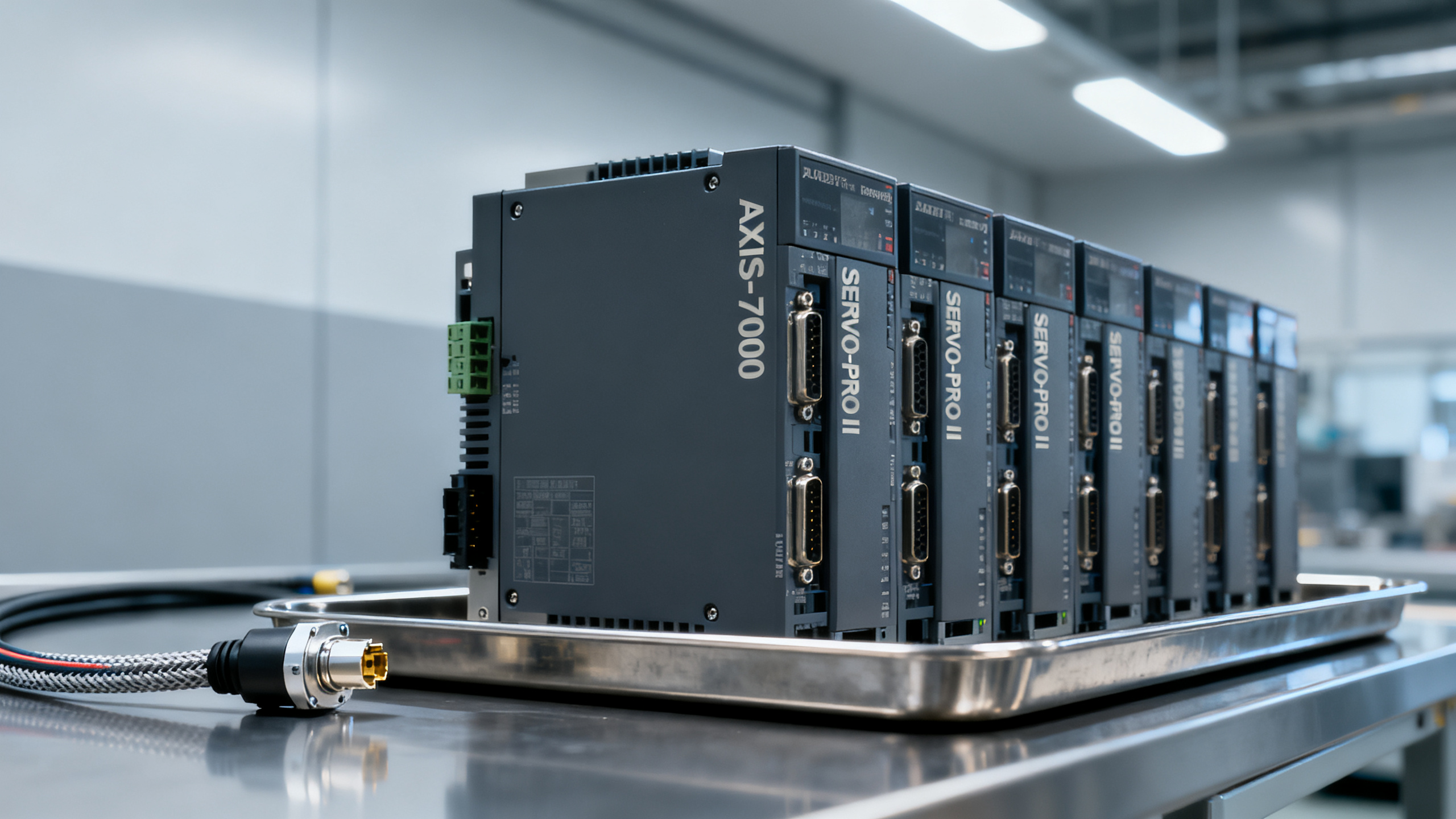
China’s import of electromechanical products surged 21.7% year-on-year in April 2026, according to invoice data released by the State Taxation Administration on May 19, 2026. This growth reflects accelerating domestic upgrading in high-end manufacturing — particularly in industrial automation — with ripple effects across export competitiveness, system integration capability, and emerging-market project delivery.
Event Overview
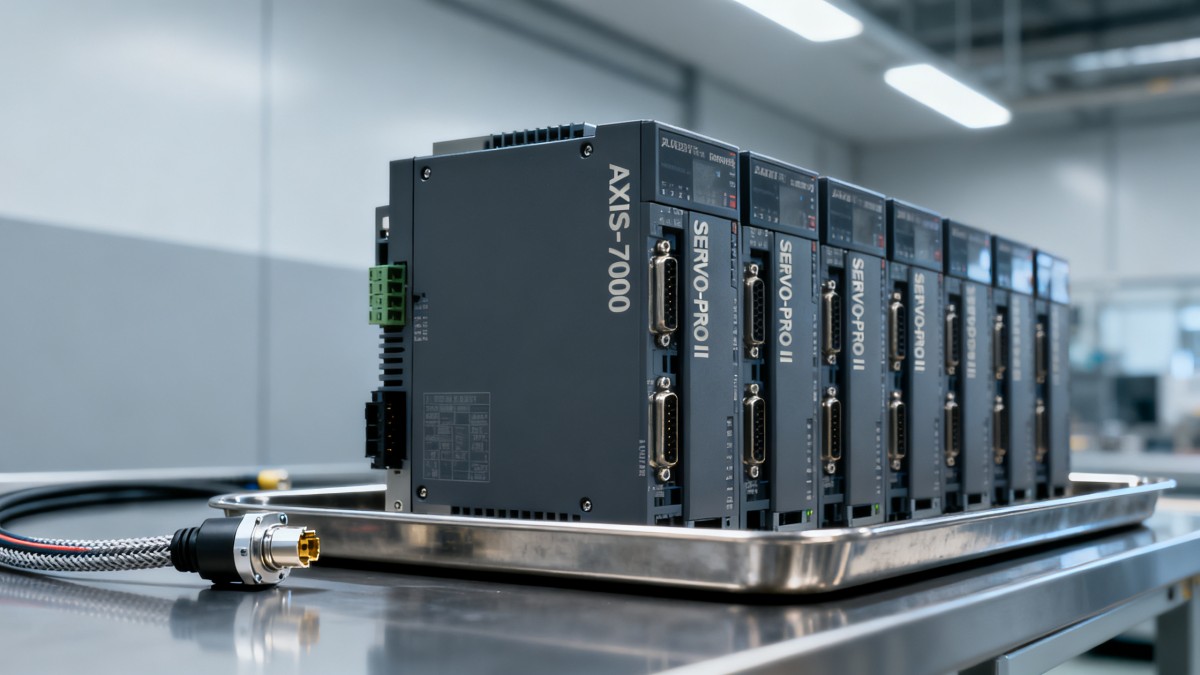
According to official tax invoice data published by the State Taxation Administration on May 19, 2026, China’s electromechanical product imports in April 2026 rose 21.7% year-on-year. Within this category, imports of PLC controllers, servo drives, and industrial vision sensors increased sharply by 34% year-on-year.
Industries Affected
Direct trading enterprises face heightened demand for customs clearance, foreign exchange settlement, and compliance verification related to high-value automation components. The surge in unit-level imports (e.g., individual servo drives or vision sensors) increases documentation complexity and classification scrutiny under HS Code 8537 and 8543, raising operational overhead for importers without dedicated technical trade teams.
Raw material procurement enterprises — especially those sourcing semiconductor substrates, precision enclosures, or optical lenses used in imported automation hardware — are seeing upstream price pressure and lead-time volatility. Increased import volumes signal stronger downstream absorption capacity, yet also tighten global supply allocations for niche components, prompting earlier forecasting and dual-sourcing strategies.
Contract manufacturing and system integration enterprises benefit from improved access to advanced control and sensing modules, enabling faster prototyping and higher-specification OEM/ODM deliveries. However, integration complexity rises as imported PLCs and vision systems often require firmware adaptation, cybersecurity validation, and interoperability testing against domestic HMI or SCADA platforms — extending time-to-market unless engineering bandwidth is scaled accordingly.
Supply chain service providers, including logistics integrators and technical compliance consultants, observe growing demand for value-added services: pre-shipment technical audits, CE/UL conformity support for re-exported subsystems, and tariff engineering advice for hybrid assemblies (e.g., combining imported controllers with domestically fabricated cabinets). Margins remain stable, but service differentiation now hinges on domain-specific automation expertise rather than generic freight or documentation handling.
Key Focus Areas and Recommended Actions
Review import classification and preferential tariff eligibility
Enterprises importing PLCs or servo drives should reassess Harmonized System (HS) code assignments and verify eligibility under bilateral trade facilitation arrangements (e.g., ASEAN-China FTA or RCEP origin rules), especially where final assembly occurs domestically before re-export.
Strengthen cross-functional engineering alignment
Procurement, R&D, and after-sales teams must jointly map compatibility requirements between imported automation components and existing platform architectures — particularly regarding communication protocols (EtherCAT, PROFINET), firmware update cycles, and cybersecurity certificate validity — to avoid integration delays in EPC projects.
Monitor domestic substitution timelines
While imports are rising, domestic PLC and vision sensor vendors (e.g., HollySys, Inovance, Hikrobot) are scaling production capacity and certification pipelines. Procurement managers should track their roadmap alignment with current import-dependent use cases — especially for Tier-2 suppliers serving solar farm automation or smart port infrastructure.
Editorial Perspective / Industry Observation
Observably, the 34% jump in high-precision automation component imports is not merely a cyclical inventory restock. It correlates closely with announced capital expenditure plans in new-energy equipment manufacturing, battery gigafactories, and AI-driven logistics hubs — all requiring sub-millisecond motion control and real-time defect detection. Analysis shows this trend signals a structural shift: Chinese manufacturers are no longer importing automation gear solely for cost arbitrage, but for functional capability gaps that domestic alternatives have not yet closed at scale. That said, the pace of domestic vendor advancement — particularly in deterministic real-time OS integration and certified functional safety stacks — remains the critical variable determining how long this import intensity persists.
Conclusion
This import acceleration is best understood not as a sign of dependency, but as an inflection point in capability layering: imported core components are enabling faster deployment of integrated solutions abroad, while simultaneously feeding technical knowledge back into domestic R&D pipelines. For the industry, the strategic implication is clear — competitive advantage increasingly resides not in standalone hardware, but in the speed and reliability of solution orchestration across global component ecosystems.
Source Attribution
Official invoice data from the State Taxation Administration of the People’s Republic of China, published May 19, 2026. Data covers aggregated import declarations filed through the national electronic tax platform for April 2026. Note: Customs statistics (GACC) and MIIT industrial output reports for Q2 2026 are pending release; further validation of downstream integration impact will be possible upon their publication.
Technical Specifications
- How to Select Electronic Hotel Key Card Locks for Guest Rooms and Staff AreasAuthor :Safety Compliance Lead
- How to Select Lab Instruments for Reliable Chemical Analysis WorkflowsAuthor :Precision Metrology Expert
- How to Size a UPS for Server Rooms: Load, Runtime, and Redundancy FactorsAuthor :Grid Infrastructure Analyst
Expert Insights

Chief Security Architect
Dr. Thorne specializes in the intersection of structural engineering and digital resilience. He has advised three G7 governments on industrial infrastructure security.
Related Analysis
- Sep 17, 2026How to Select Electronic Hotel Key Card Locks for Guest Rooms and Staff AreasAuthor :Safety Compliance Lead
- Sep 16, 2026How to Select Lab Instruments for Reliable Chemical Analysis WorkflowsAuthor :Precision Metrology Expert
- Sep 15, 2026How to Size a UPS for Server Rooms: Load, Runtime, and Redundancy FactorsAuthor :Grid Infrastructure Analyst
Core Sector // 01
Security & Safety
- Does Power Transmission Maintenance Differ in Desert and Arctic Sites?Author :Heavy Industry Strategist

- Can Industrial Engineering Solutions Reduce Petrochemical Downtime?Author :Heavy Industry Strategist

- What Drives Industrial Roller Chains Price: Material, Pitch, Load, and Supplier FactorsAuthor :Heavy Industry Strategist

- How to Choose a Three Phase Soft Starter for Pumps, Fans, and ConveyorsAuthor :Heavy Industry Strategist

- How to Evaluate a Conveyor Roller Belts Manufacturer for Load, Speed, and Service LifeAuthor :Heavy Industry Strategist

- Power Transmission Systems Pricing: 7 Cost Drivers Buyers Should CompareAuthor :Heavy Industry Strategist

- India Expands BIS ISI Rule for Imported Belts and ChainsAuthor :Heavy Industry Strategist

- Zero Backlash Jaw Coupling Selection Guide: Torque, Misalignment, and Servo PerformanceAuthor :Heavy Industry Strategist