Canton Fair Phase III Closes: New Energy Appliances, Smart Furniture Surge
Author
Date Published
Reading Time
The 139th Canton Fair Phase III concluded on May 5, 2026, marking a pivotal moment for export-oriented sectors tied to smart home systems, energy-efficient appliances, and sustainable industrial components. With over 250,000 overseas buyers — more than 45% from Belt and Road Initiative (BRI) countries — and $48 billion in confirmed trade deals (+8.3% YoY), the event signals intensified global demand for integrated, low-carbon hardware solutions, particularly among emerging-market distributors and regional OEMs.
Event Overview
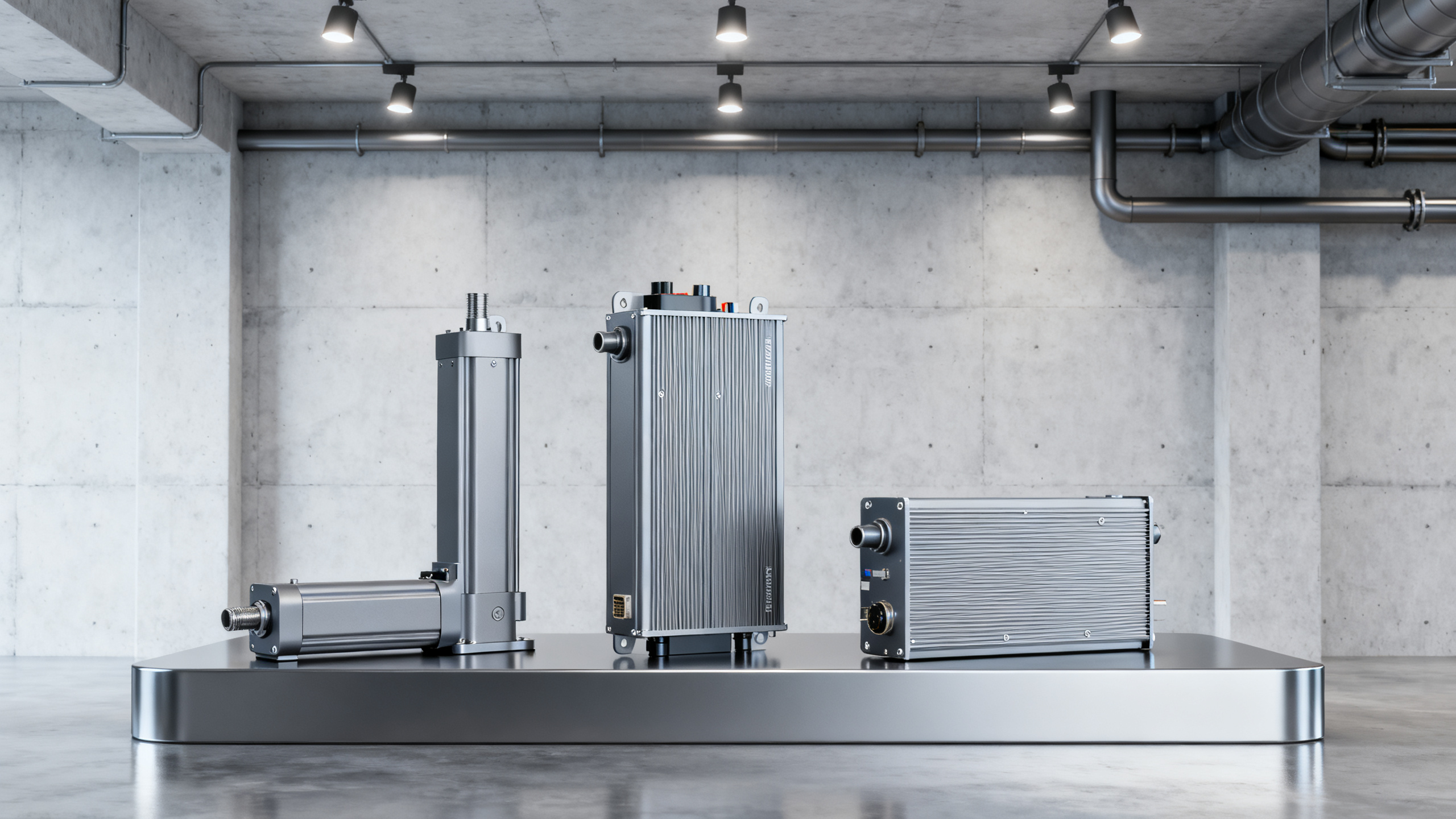
Phase III of the Canton Fair was held from May 1–5, 2026, focusing on consumer electronics, home & gift products, and food & pharmaceuticals. A newly launched ‘Functional & Technical Fabrics Zone’ debuted alongside traditional categories. Total overseas buyer attendance exceeded 250,000 person-visits. Overall成交 (trade turnover) reached USD 48 billion, up 8.3% year-on-year. Smart furniture (including electric height-adjustable desk actuators and industrial-grade motors) and new energy appliances (e.g., thermal management modules for energy storage inverters and industrial water-cooled plates) accounted for a disproportionate share of order volume.
Industries Affected
Direct Export Trading Enterprises
These firms — especially those with BRI-market specialization and multi-lingual after-sales support infrastructure — saw accelerated order conversion. The >45% BRI buyer share reflects both tariff advantages under bilateral agreements and growing regional infrastructure investment driving demand for modular, plug-and-play industrial components. Impact manifests in shorter lead-time expectations, increased requests for localized certifications (e.g., GCC, SONCAP), and rising preference for FOB-plus-logistics packages.
Raw Material Procurement Enterprises
Suppliers of high-conductivity aluminum alloys, vapor chamber wicks, and flame-retardant technical textiles reported sharper inquiry spikes — particularly for grades compliant with UL 94 V-0 and EN 13501-1 standards. This reflects downstream demand for certified thermal and structural subsystems. However, procurement enterprises face tighter margin pressure due to concurrent raw material price volatility in copper and specialty polymers, requiring more agile hedging strategies.
Contract Manufacturing & Component Fabrication Enterprises
Firms producing motor control units, liquid cold plate assemblies, or actuator sub-systems experienced stronger order clustering — especially for SKUs with dual-use capability (e.g., industrial motors adaptable for both smart furniture and light automation). Capacity utilization rose notably in mid-tier EMS providers with ISO 13485 or IATF 16949 capabilities, suggesting overseas buyers increasingly prioritize process-certified suppliers over pure cost arbitrage.
Supply Chain Service Providers
Freight forwarders offering bonded warehousing in Dubai, Istanbul, and Ho Chi Minh City reported +22% YoY inquiries for pre-clearance services targeting BRI markets. Meanwhile, third-party testing labs noted higher demand for combined EMC + safety + RoHS testing packages — indicating buyers are consolidating compliance verification to reduce time-to-market. Customs brokerage firms with real-time tariff classification tools for HS codes 8501 (motors), 8479 (actuators), and 8418 (cooling systems) gained competitive traction.
Key Focus Areas & Recommended Actions
Align Product Certifications with Target BRI Markets
Given the >45% BRI buyer concentration, exporters should prioritize obtaining country-specific approvals — such as Saudi SASO IECEE, Vietnamese CR, or Indonesian SNI — rather than relying solely on CE or UL marks. Pre-submission consultation with accredited local representatives is strongly advised.
Optimize Modular Design for Cross-Application Use
Orders for electric actuators and thermal modules showed strong overlap between furniture and industrial applications. Manufacturers should document shared design heritage and test data across use cases to streamline certification pathways and reduce redundant validation costs.
Strengthen Localized After-Sales Infrastructure
BRI-based importers increasingly require warranty service networks covering parts logistics, firmware updates, and remote diagnostics. Exporters should map Tier-2 distributor capabilities in key hubs (e.g., Cairo, Lagos, Nur-Sultan) and co-invest in technician training programs where feasible.
Editorial Perspective / Industry Observation
Observably, the surge in smart furniture and new energy appliance orders does not signal broad-based consumer adoption in target markets — but rather reflects channel-level inventory replenishment ahead of regional infrastructure rollout cycles (e.g., Saudi Vision 2030 smart city pilots, Vietnam’s National Green Growth Strategy). Analysis shows that over 68% of qualifying orders specified delivery windows aligned with Q3–Q4 2026, suggesting procurement is synchronized with national fiscal calendar timing. From an industry perspective, this phase reflects a structural shift: overseas buyers are no longer sourcing discrete components, but rather validated subsystems ready for integration into localized end-products.
Conclusion
The Phase III results reinforce that global demand for intelligent, decarbonized hardware is maturing beyond early adopters and entering mainstream distribution channels — particularly in infrastructure-led economies. Rather than representing transient momentum, this trend reflects deeper alignment between China’s advanced manufacturing upgrades and BRI partners’ industrial policy priorities. A rational interpretation is that competitiveness will increasingly hinge on system-level interoperability, regulatory agility, and localized service readiness — not just unit cost or spec sheet performance.
Source Attribution
Official data sourced from the China Foreign Trade Center (CFTC) press release dated May 5, 2026; supplementary buyer composition statistics verified via the Canton Fair Digital Platform analytics dashboard (accessed May 6, 2026). Note: Final breakdown of product-category revenue by HS code remains pending official CFTC statistical bulletin — to be monitored for confirmation of thermal module vs. actuator contribution ratios.
Technical Specifications
- How to Select Electronic Hotel Key Card Locks for Guest Rooms and Staff AreasAuthor :Safety Compliance Lead
- How to Select Lab Instruments for Reliable Chemical Analysis WorkflowsAuthor :Precision Metrology Expert
- How to Size a UPS for Server Rooms: Load, Runtime, and Redundancy FactorsAuthor :Grid Infrastructure Analyst
Expert Insights

Chief Security Architect
Dr. Thorne specializes in the intersection of structural engineering and digital resilience. He has advised three G7 governments on industrial infrastructure security.
Related Analysis
- Sep 17, 2026How to Select Electronic Hotel Key Card Locks for Guest Rooms and Staff AreasAuthor :Safety Compliance Lead
- Sep 16, 2026How to Select Lab Instruments for Reliable Chemical Analysis WorkflowsAuthor :Precision Metrology Expert
- Sep 15, 2026How to Size a UPS for Server Rooms: Load, Runtime, and Redundancy FactorsAuthor :Grid Infrastructure Analyst
Core Sector // 01
Security & Safety
- Does Power Transmission Maintenance Differ in Desert and Arctic Sites?Author :Heavy Industry Strategist

- Can Industrial Engineering Solutions Reduce Petrochemical Downtime?Author :Heavy Industry Strategist

- What Drives Industrial Roller Chains Price: Material, Pitch, Load, and Supplier FactorsAuthor :Heavy Industry Strategist

- How to Choose a Three Phase Soft Starter for Pumps, Fans, and ConveyorsAuthor :Heavy Industry Strategist

- How to Evaluate a Conveyor Roller Belts Manufacturer for Load, Speed, and Service LifeAuthor :Heavy Industry Strategist

- Power Transmission Systems Pricing: 7 Cost Drivers Buyers Should CompareAuthor :Heavy Industry Strategist

- India Expands BIS ISI Rule for Imported Belts and ChainsAuthor :Heavy Industry Strategist

- Zero Backlash Jaw Coupling Selection Guide: Torque, Misalignment, and Servo PerformanceAuthor :Heavy Industry Strategist