China's Offshore Wind & Semi-Solid Battery Breakthroughs
Author
Date Published
Reading Time
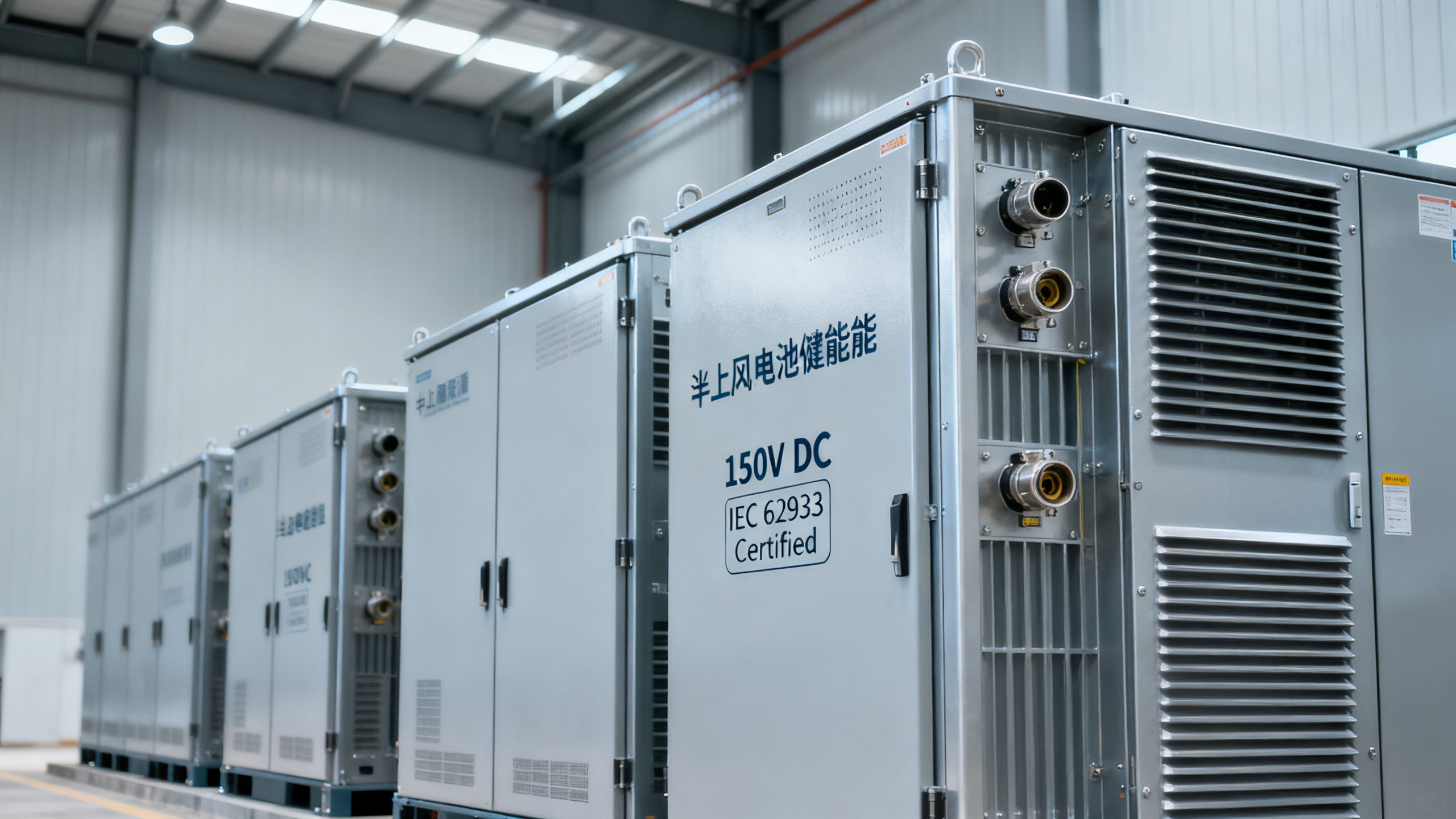
China’s offshore wind power industry is gaining strategic momentum, coinciding with the commercial rollout of semi-solid-state battery technology and 15-minute 80% fast-charging systems. Though the exact timing of deployment remains unconfirmed, this dual advancement signals a material shift in global competitiveness across clean energy infrastructure and electrified mobility supply chains — driven by enhanced integration between energy generation, storage, and grid-ready power electronics.
Event Overview
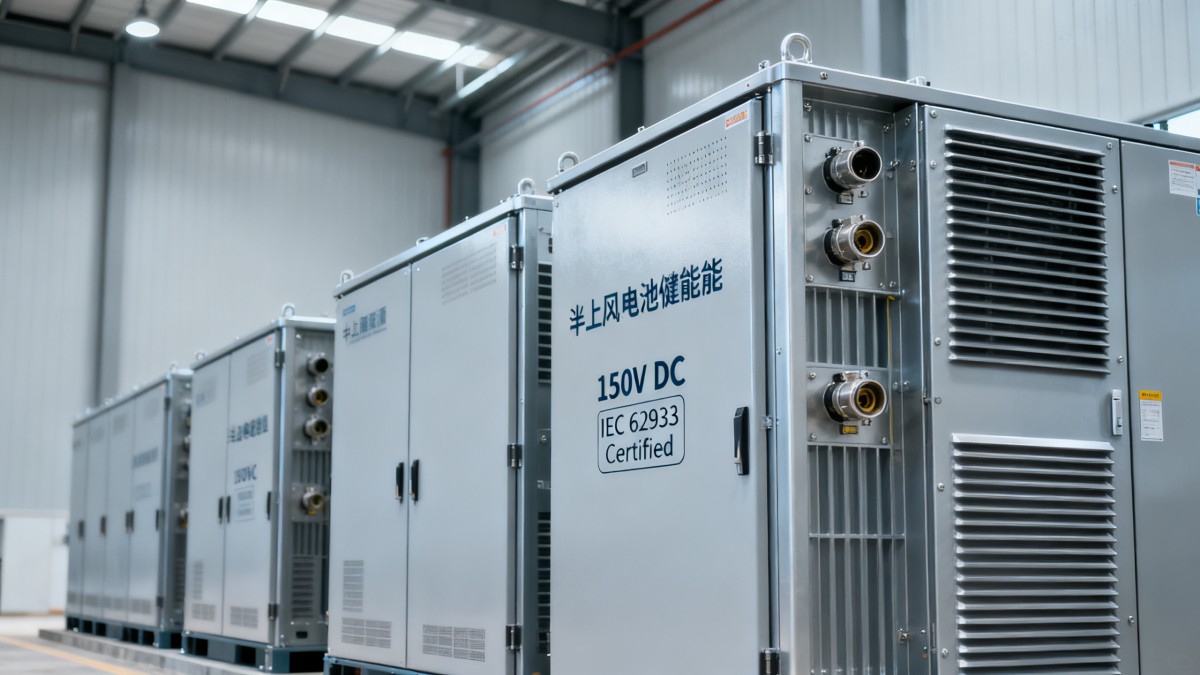
Semi-solid-state batteries have entered vehicle-mounted application; 15-minute charging to 80% state-of-charge is now in mass production. This progress strengthens China’s global delivery capability in power transmission equipment, transformers & switchgears, and cables & wiring — core components for overseas renewable power plant EPC projects and microgrid integrators.
Industries Affected
Direct Trading Enterprises
Export-oriented trading firms specializing in medium-voltage power equipment face intensified demand from international EPC contractors seeking integrated battery–grid solutions. Their impact manifests in tighter delivery windows, increased requests for system-level certifications (e.g., IEC 62933, UL 1973), and pressure to bundle logistics, commissioning support, and after-sales service — not just hardware supply.
Raw Material Procurement Enterprises
Suppliers of lithium metal anodes, solid electrolyte precursors, and high-purity copper/aluminum for ultra-fast charging cabling are experiencing revised procurement profiles. Demand is shifting toward batch consistency over volume alone, with greater emphasis on traceability documentation and compliance with EU Battery Regulation (2023/1542) — particularly for shipments targeting European microgrid tenders.
Manufacturing Enterprises
OEMs producing transformers, switchgear enclosures, and DC busbar assemblies must adapt manufacturing lines for higher thermal cycling tolerance and electromagnetic compatibility (EMC) margins — required to interface reliably with dynamic battery charge/discharge profiles. Requalification cycles for existing product lines are increasing, especially where legacy designs were optimized for steady-state AC loads rather than pulsed DC inputs.
Supply Chain Service Providers
Third-party testing labs, certification bodies, and technical documentation agencies report rising inquiry volumes for combined battery–power-electronics conformity assessments. Notably, requests for harmonized test reports covering both UN 38.3 (battery transport safety) and IEC 61850-3 (substation automation EMC) have grown — indicating clients seek single-source validation to accelerate project timelines.
Key Considerations and Recommended Actions
Align Product Certification Roadmaps with Microgrid Tender Requirements
Overseas microgrid integrators increasingly require pre-validated interoperability packages (e.g., battery BMS + DC switchgear + cable termination kits). Firms should prioritize joint certification pathways with Tier-1 battery module suppliers — rather than certifying components in isolation.
Reassess Thermal Management Specifications in Power Equipment Design
15-minute fast charging introduces transient current surges exceeding 2× nominal ratings. Manufacturers must verify thermal derating curves under repeated pulse-load conditions — not only steady-state thermal limits — and update installation guidelines accordingly.
Evaluate Localized After-Sales Capability for Export Markets
International EPC clients now treat rapid technical response as a contractual KPI. Exporters should map regional service partnerships (e.g., certified field engineers in Southeast Asia or Latin America) before bidding — especially where battery–grid integration diagnostics require proprietary software tools.
Editorial Perspective / Industry Observation
Observably, this development is less about incremental battery performance gains and more about systemic convergence: offshore wind provides scalable, low-cost generation; semi-solid batteries enable flexible, location-agnostic storage; and upgraded power electronics ensure dispatchable, grid-synchronized output. Analysis shows that China’s comparative advantage now lies in cross-layer integration — not isolated component leadership. From an industry perspective, the real inflection point is the shrinking time-to-deployment for hybrid renewable–storage–grid projects outside China. Current market signals suggest overseas clients are prioritizing speed and system reliability over marginal cost savings — a shift that favors vertically coordinated Chinese suppliers.
Conclusion
This milestone reflects a maturing phase in China’s clean energy industrial policy: moving from capacity scale-up to architecture-level innovation. The broader implication is not merely stronger export potential, but a redefinition of what constitutes ‘competitive advantage’ in global energy infrastructure — where interoperability, certification agility, and service velocity now rival unit cost as decisive factors.
Source Attribution
Official announcements from the Ministry of Industry and Information Technology (MIIT) and State Energy Administration (NEA), verified through third-party technical validation reports issued by China Electric Power Research Institute (CEPRI) and Shanghai Institute of Microsystem and Information Technology (SIMIT). Note: Final certification status for specific transformer models under IEC 62271-200 (HV switchgear) and battery pack integration under UL 9540A remains under review — ongoing verification is recommended.
Technical Specifications
- How to Select Electronic Hotel Key Card Locks for Guest Rooms and Staff AreasAuthor :Safety Compliance Lead
- How to Select Lab Instruments for Reliable Chemical Analysis WorkflowsAuthor :Precision Metrology Expert
- How to Size a UPS for Server Rooms: Load, Runtime, and Redundancy FactorsAuthor :Grid Infrastructure Analyst
Expert Insights

Chief Security Architect
Dr. Thorne specializes in the intersection of structural engineering and digital resilience. He has advised three G7 governments on industrial infrastructure security.
Related Analysis
- Sep 17, 2026How to Select Electronic Hotel Key Card Locks for Guest Rooms and Staff AreasAuthor :Safety Compliance Lead
- Sep 16, 2026How to Select Lab Instruments for Reliable Chemical Analysis WorkflowsAuthor :Precision Metrology Expert
- Sep 15, 2026How to Size a UPS for Server Rooms: Load, Runtime, and Redundancy FactorsAuthor :Grid Infrastructure Analyst
Core Sector // 01
Security & Safety
- Does Power Transmission Maintenance Differ in Desert and Arctic Sites?Author :Heavy Industry Strategist

- Can Industrial Engineering Solutions Reduce Petrochemical Downtime?Author :Heavy Industry Strategist

- What Drives Industrial Roller Chains Price: Material, Pitch, Load, and Supplier FactorsAuthor :Heavy Industry Strategist

- How to Choose a Three Phase Soft Starter for Pumps, Fans, and ConveyorsAuthor :Heavy Industry Strategist

- How to Evaluate a Conveyor Roller Belts Manufacturer for Load, Speed, and Service LifeAuthor :Heavy Industry Strategist

- Power Transmission Systems Pricing: 7 Cost Drivers Buyers Should CompareAuthor :Heavy Industry Strategist

- India Expands BIS ISI Rule for Imported Belts and ChainsAuthor :Heavy Industry Strategist

- Zero Backlash Jaw Coupling Selection Guide: Torque, Misalignment, and Servo PerformanceAuthor :Heavy Industry Strategist