What Specifications Matter for High-Temperature Steel Furnace Linings?
Author
Date Published
Reading Time
What Specifications Matter for High-Temperature Steel Furnace Linings?
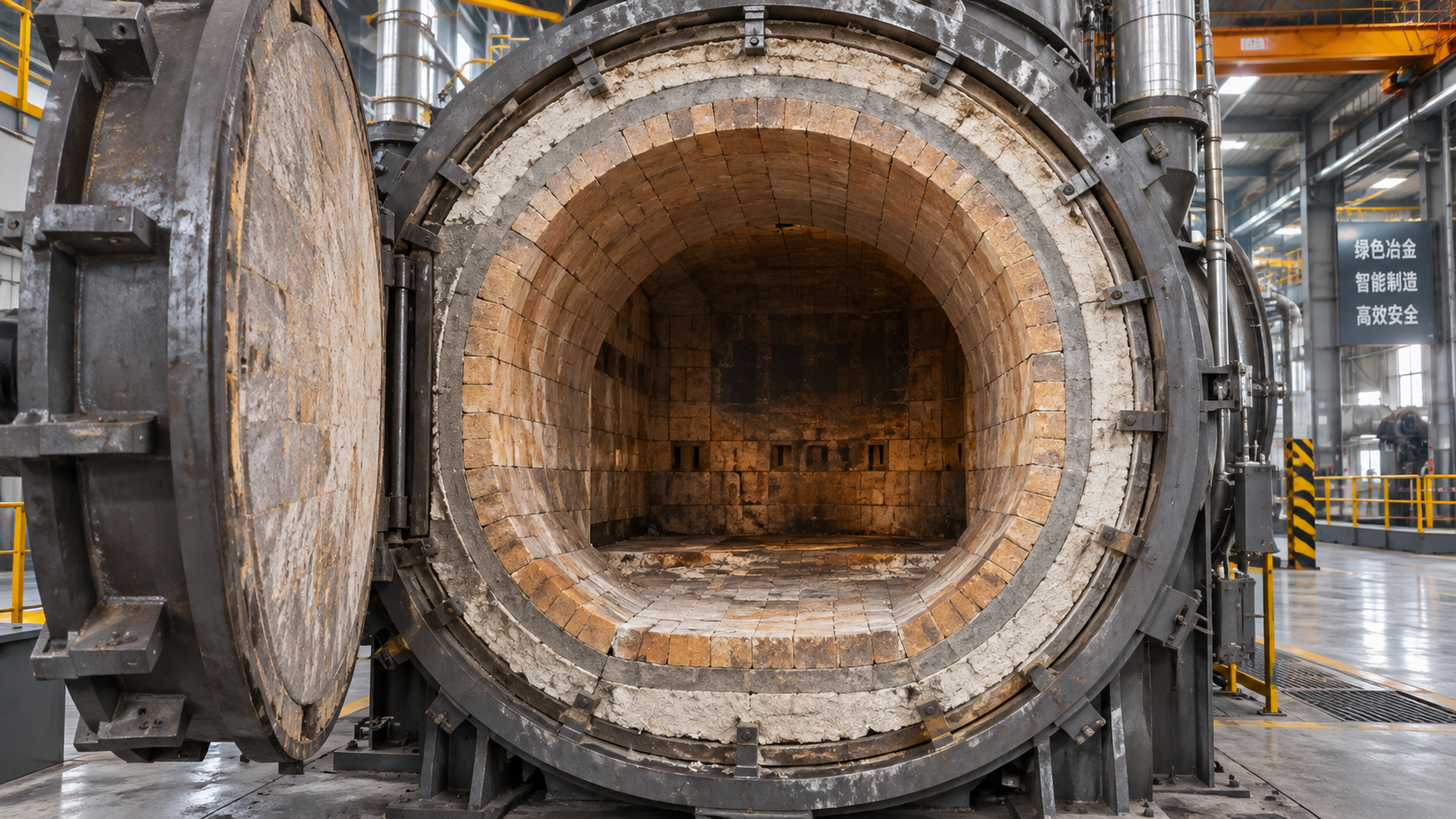
For procurement teams reviewing metallurgical engineering high temp furnace linings specifications, maximum temperature ratings are only the starting point. Steel furnace refractories must withstand aggressive slag chemistry, thermal cycling, mechanical wear, and sustained operating loads without compromising containment or production uptime. A material that survives a laboratory temperature test can still fail early in service if its chemistry, installation, or expansion behavior does not match the furnace.
The useful question is not simply, “How hot can this refractory get?” It is, “What will this lining encounter, where will it encounter it, and what evidence shows it can cope?” That shifts purchasing decisions away from a single headline rating toward a defensible, zone-specific specification.
Start with the furnace zone, not the material catalog
“Steel furnace lining” covers very different duties. An electric arc furnace slag line, a ladle impact pad, and a reheating furnace roof do not face the same failure mechanisms. Selecting one refractory family for all three because it has a high service-temperature rating is a poor starting point.
In an electric arc furnace, arc exposure, scrap impact, oxygen lancing, and slag attack can dominate different areas. In a ladle, slag-line corrosion may control campaign life while the bottom needs resistance to tapping impact and erosion. A reheating furnace introduces different concerns: burner hot spots, scale attack, atmosphere, and repeated heating and cooling.
Before requesting quotations, document the normal operating temperature, credible peaks and their duration, slag composition, furnace atmosphere, charging practice, and shutdown frequency. Include existing wear maps and repair records if available. A supplier should explain its recommendation against these conditions, rather than offer its highest-grade product everywhere.
This is also where selective spending makes sense. A premium working lining may be justified at the slag line without being necessary in every lower-wear zone.
Temperature ratings need load, time, and atmosphere attached
Refractoriness, recommended service temperature, and refractoriness under load describe different things. A refractoriness value does not establish how an installed lining will behave while supporting weight, containing molten material, or enduring a long soak. Ask suppliers to identify the test method and explain how their stated service limit applies to the proposed installation.
Refractoriness under load helps assess deformation under specified heating and loading conditions. For sustained hot service, creep data may be more informative because deformation develops over time. Roofs, supporting sections, and constrained assemblies deserve particular attention: a refractory can remain chemically intact yet deform enough to disrupt joints or reduce structural stability.
Permanent linear change after heating is another practical specification. Excessive residual shrinkage can open joints; excessive growth can generate damaging stresses. Neither should be confused with reversible thermal expansion during operation. Request both where dimensional stability affects the design, with test temperatures and holding times clearly stated.
Avoid choosing a universal temperature allowance above normal operation. The appropriate margin depends on local hot spots, exposure duration, atmosphere, and the lining system—not a fixed purchasing rule.
Chemistry determines whether the lining and slag can coexist
Bulk oxide composition is necessary, but it does not tell the whole corrosion story. Mineral phases, grain quality, bonding system, impurities, and pore structure influence how slag wets, penetrates, and dissolves a refractory. Two products with similar headline alumina or magnesia content may behave differently.
Magnesia-carbon bricks are widely used in demanding steelmaking zones because their properties can suit basic slags and thermal cycling. Their carbon content also introduces oxidation sensitivity. That trade-off matters in oxygen-rich exposure and during operating practices that accelerate carbon loss. High-alumina and alumina-spinel materials serve other duties, but they are not interchangeable substitutes for every basic refractory application.
Ask for corrosion testing against slag representative of the plant’s operating range. Slag basicity alone is not enough: iron oxides, manganese oxides, and other constituents can change attack mechanisms. A static crucible test may support screening, but it does not reproduce flowing slag, stirring, or mechanical erosion. Treat laboratory results as comparative evidence, not a guaranteed campaign prediction.
Where steel cleanliness matters, also review potential refractory–metal reactions and inclusion risks. The best corrosion-resistant lining is not necessarily the best choice if it introduces an unacceptable metallurgical consequence.
Read strength, porosity, and thermal shock results together
Cold crushing strength is easy to compare on a quotation sheet. It is useful for handling and quality control, but it is not a direct measure of hot-face performance. Hot modulus of rupture, erosion resistance, and thermal cycling behavior may be more relevant to the actual failure mechanism.
Apparent porosity helps characterize accessible pore space. Lower porosity can restrict slag penetration, but it does not automatically mean longer life. Pore size distribution, connectivity, wettability, and cracking also matter. A dense material that spalls during routine shutdowns may perform worse than a more thermally tolerant alternative.
Thermal shock claims need especially careful reading. “Excellent thermal shock resistance” is not an acceptance criterion. Request the specimen preparation, heating and cooling conditions, number of cycles, and measured endpoint, such as retained strength. Results from different test procedures should not be ranked as though they were directly comparable.
- For scrap-impact areas, prioritize impact tolerance and installation integrity alongside strength.
- For flowing metal or slag, seek erosion evidence that reflects the relevant exposure.
- For frequent starts and stops, examine crack development and retained properties after cycling.
- For continuously loaded sections, assess hot deformation rather than relying on cold strength.
Specify the lining assembly, including the layers you cannot see
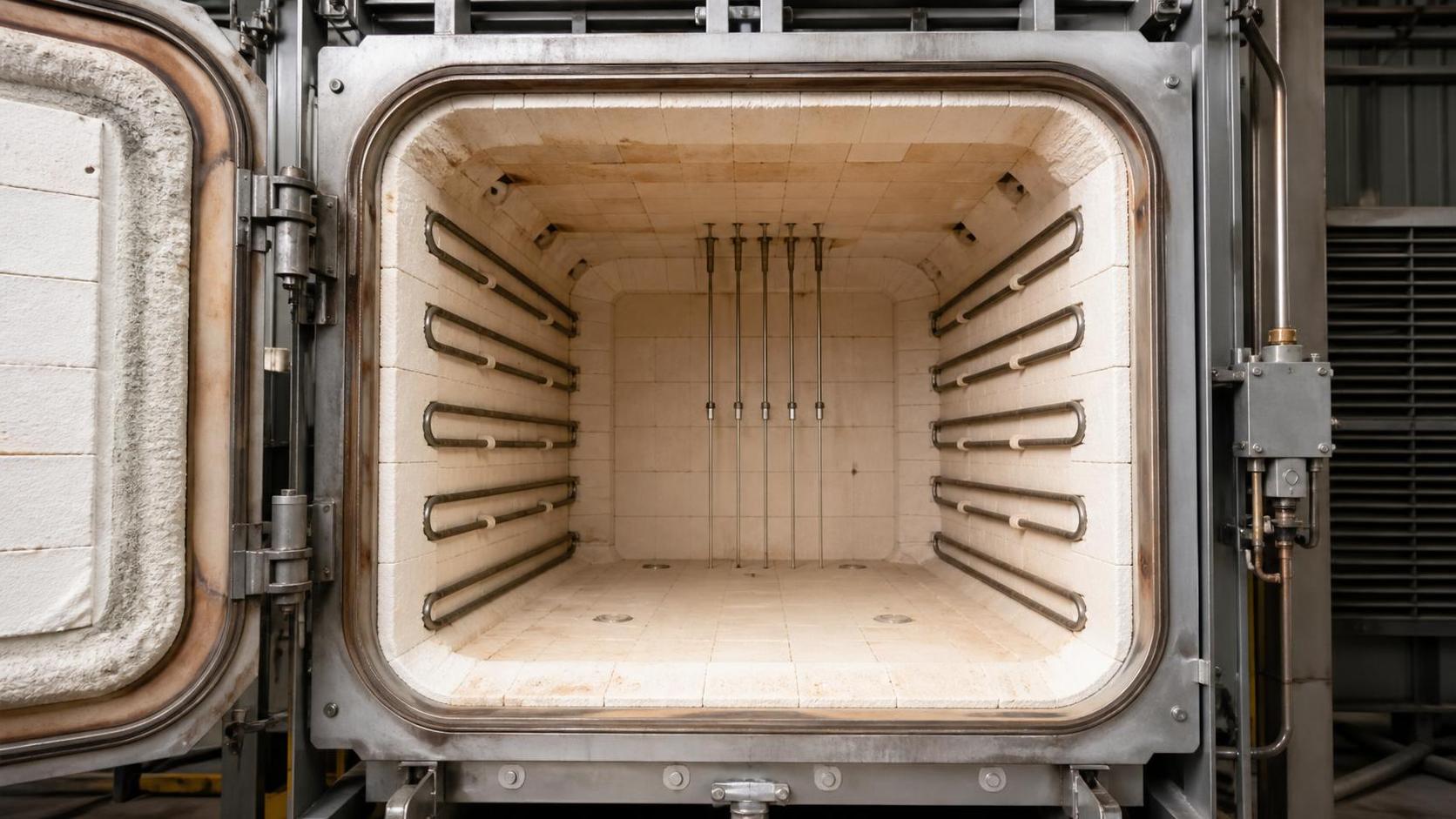
The working lining is only part of the thermal design. Safety lining, backup insulation, joints, anchors, and shell conditions affect containment and service life. Improving one layer without reviewing the others can move the problem rather than solve it.
For example, adding insulation can reduce outward heat flow while increasing temperatures within parts of the refractory assembly. That may alter the suitability of backup materials or anchors. Conversely, a more conductive working lining may support a particular furnace cooling strategy but increase heat loss in another application. Thermal conductivity is a design input, not a property to minimize automatically.
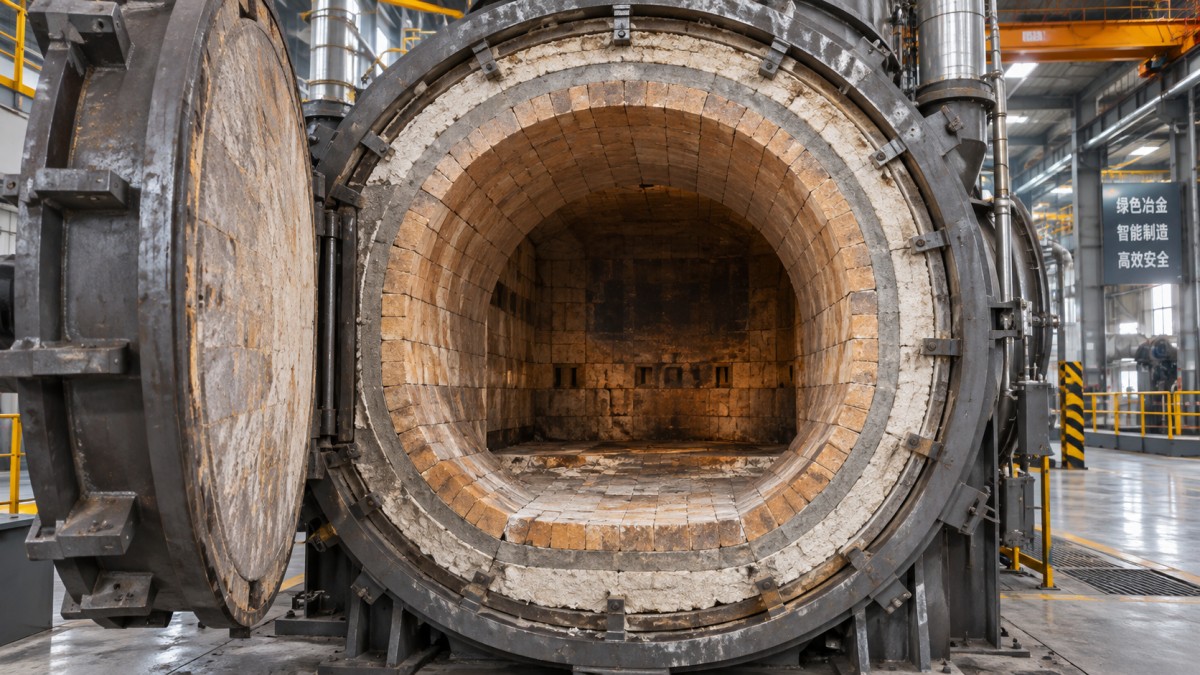
Request a cross-section showing layer thicknesses, interfaces, expansion allowances, and calculated temperature profiles under defined conditions. Conductivity values should cover relevant temperatures rather than appear as a single unexplained number. For anchored monolithic linings, anchor material, geometry, spacing, and temperature exposure need an engineering review.
A shell-temperature target should likewise come from the furnace design and site safety requirements. A generic “safe shell temperature” cannot replace that assessment.
Installation and dry-out belong in the purchase specification
A castable’s published properties depend on how it was mixed, placed, cured, and fired. If those conditions are missing, the data sheet describes a laboratory specimen more clearly than it describes the lining the plant will receive.
Specify the permitted installation method and water-addition range, together with mixing requirements, ambient limitations, curing conditions, and inspection responsibilities. For brickwork, dimensional tolerances, joint design, mortar compatibility, and expansion provisions need equivalent attention. Clarify whether reported properties refer to dried, fired, or otherwise conditioned specimens.
Dry-out is a safety-critical activity for water-containing monolithic systems. Inadequate moisture removal can cause pressure buildup and explosive spalling. Do not substitute a generic heating schedule for one approved for the actual material, thickness, geometry, and site conditions. Instrument locations, hold criteria, and responsibility for authorizing heat-up should be agreed before installation begins.
Also check shelf life and storage requirements. Material delivered early but stored in unsuitable conditions may create more risk than a slightly longer, controlled supply schedule.
Ask for evidence that makes competing offers comparable
A credible technical submission distinguishes typical values from guaranteed acceptance limits. It identifies test methods, specimen conditioning, and production traceability. “Meets international standards” is too vague to resolve a technical disagreement.
Recognized methods can provide a common basis where applicable. ASTM C133 addresses cold crushing strength and modulus of rupture of refractories, while ASTM C20 covers properties including apparent porosity for burned refractory brick and shapes. Applicability matters: the method must suit the product, and the contract should identify the agreed edition and any deviations.
A management-system certificate does not establish suitability for a particular slag line. Likewise, broad references to CE, UL, or ISO should not replace product-specific evidence or a review of applicable requirements. Global Industrial Core’s cross-disciplinary sourcing perspective is useful here: metallurgy, thermal design, installation safety, and procurement assurance need to be assessed together.
Before approval, request the proposed zone-by-zone lining schedule, supporting test reports, batch acceptance plan, installation procedure, and a clear process for substitutions. Comparable service references can help, provided their operating conditions are disclosed. Campaign-life claims without slag chemistry, repair practice, and operating duty offer little basis for comparison.
Resolve the likely failure mode before negotiating the final price
The strongest specification targets the mechanism that actually limits service life. If the previous lining suffered slag penetration, buying higher cold strength may miss the issue. If it cracked after shutdowns, increasing density without checking thermal behavior could repeat the failure.
Compare installed cost, repair access, dry-out time, and expected operating constraints—not just price per tonne. Where uncertainty remains, consider a controlled trial in an engineering-approved zone, with baseline wear measurements and agreed inspection intervals. Before signing, ask one final question: what evidence would show that this lining is unsuitable for this duty? A supplier willing to define those limits is easier to evaluate than one promising universal performance.
Technical Specifications
- Choosing Contact Temperature Instruments: Accuracy, Range, and Response TimeAuthor :Precision Metrology Expert
- Nucor Raises Hot-Rolled Coil Spot Price by $15 to $1,270 per Short TonAuthor :
- Choosing an Industrial Electrical Infrastructure Supplier: Compliance and Lead TimesAuthor :Grid Infrastructure Analyst
Expert Insights

Chief Security Architect
Dr. Thorne specializes in the intersection of structural engineering and digital resilience. He has advised three G7 governments on industrial infrastructure security.
Related Analysis
- Oct 28, 2026Choosing Contact Temperature Instruments: Accuracy, Range, and Response TimeAuthor :Precision Metrology Expert
- Oct 27, 2026Nucor Raises Hot-Rolled Coil Spot Price by $15 to $1,270 per Short TonAuthor :
- Oct 27, 2026Choosing an Industrial Electrical Infrastructure Supplier: Compliance and Lead TimesAuthor :Grid Infrastructure Analyst
Core Sector // 01
Security & Safety
- US Commerce Opens Changed Circumstances Review of Mexican Heavy-Walled Rectangular Welded Carbon Steel PipeAuthor :Heavy Industry Strategist

- What Specifications Matter for High-Temperature Steel Furnace Linings?Author :Heavy Industry Strategist

- How to Specify Steel Heavy-Duty Corner Guards for Loading Bays and High-Traffic AreasAuthor :Heavy Industry Strategist

- Selecting Non-Ferrous Metal Plates for Corrosion, Weight, and Formability RequirementsAuthor :Heavy Industry Strategist

- Stainless Steel Welded Tube Applications: Matching Tube Supply to Fabrication NeedsAuthor :Heavy Industry Strategist

- What Maintenance Do Furnace Components Need After 18 Months?Author :Heavy Industry Strategist

- How to Assess Metal Materials for Thermal Cycling in Power BoilersAuthor :Heavy Industry Strategist

- How to Evaluate Aluminum Extrusion Suppliers for Tight-Tolerance Components?Author :Heavy Industry Strategist