How to Evaluate Industrial Metallurgy Process Solutions for Yield, Quality, and Cost?
Author
Date Published
Reading Time
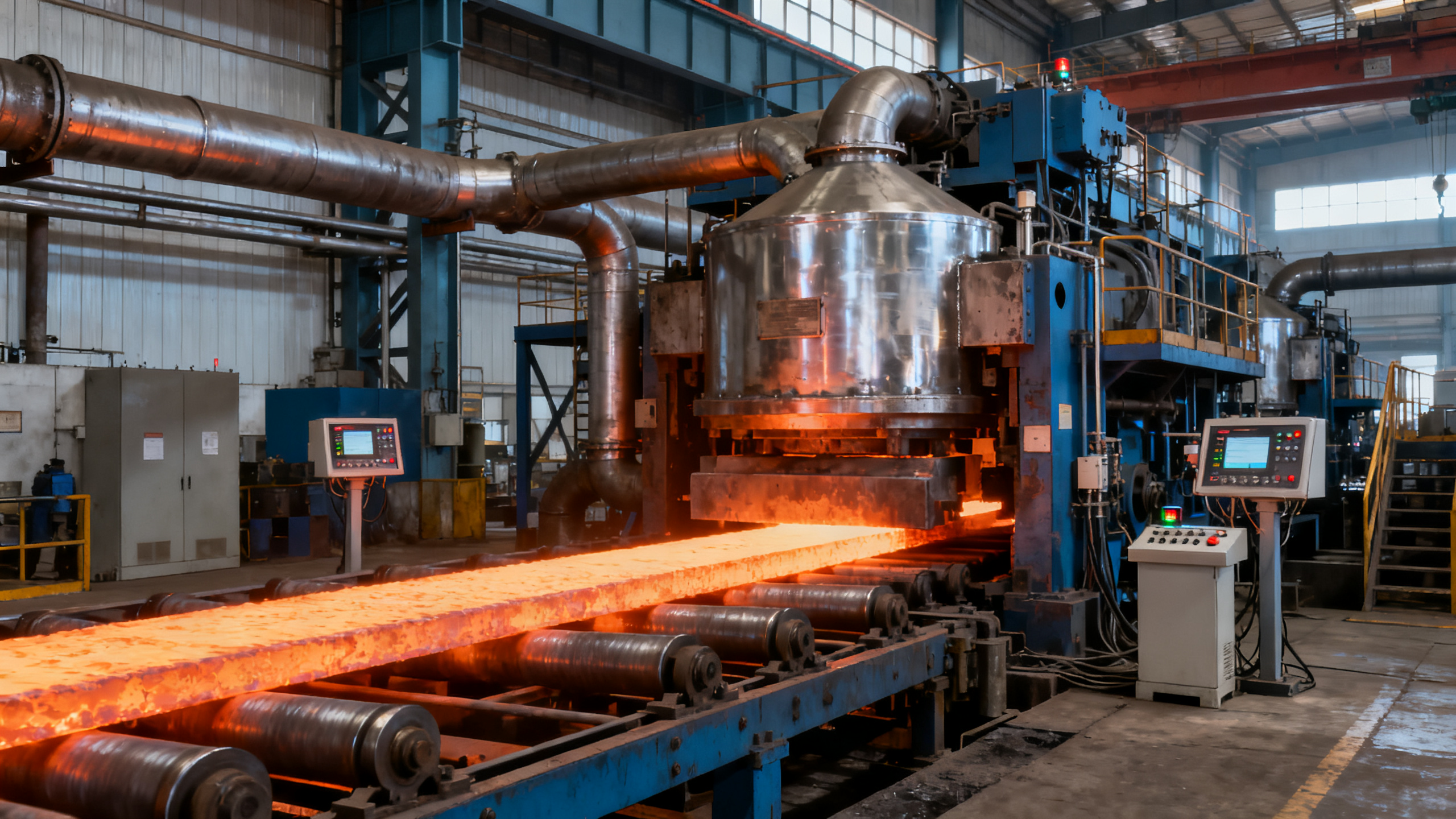
What technical evaluators are really judging in industrial metallurgy process solutions
Selecting the right industrial metallurgy process solutions is rarely about finding the most advanced technology on paper. In practice, the decision sits at the intersection of metallurgical behavior, plant constraints, cost structure, and the level of process control a site can actually sustain. Two solutions may promise similar throughput or chemistry targets, yet produce very different outcomes once feed variability, operator discipline, maintenance access, energy pricing, and downstream quality requirements enter the picture.
That is why technical evaluation should start by correcting a common misunderstanding: a metallurgy process solution is not just a furnace, mill, separator, casting route, heat-treatment line, or refining step viewed in isolation. It is the combination of equipment, control logic, material handling, process windows, utility demand, and quality assurance methods that together determine whether metal leaves the system as saleable product or as scrap, rework, off-grade stock, or hidden operating loss.
For decision-makers comparing options, three questions matter more than vendor claims. What yield can this route consistently achieve with the actual feedstock range? What level of metallurgical quality can it hold under normal production disturbance? And what does that stability cost over the life of the system, not just at commissioning?
Yield is more than recovery percentage
Yield is often treated too narrowly. In many evaluations, teams focus on nominal metal recovery, melt loss, or conversion rate. Those are necessary figures, but they are only part of the picture. A process may post attractive recovery in controlled trials while losing value through excessive trimming, oxidation, inclusions, rejected heats, dimensional nonconformance, or long stabilization time after grade changeovers.
A better way to frame yield is saleable output divided by total material input, adjusted for the product specification the customer will actually accept. This matters especially in facilities handling multiple alloys or inconsistent raw material streams. If the feed contains tramp elements, moisture variation, particle-size inconsistency, or fluctuating chemistry, the process solution must show how it responds without pushing losses into another stage.
For example, a route that depends on very tight feed preparation may look efficient in a proposal but become fragile in a plant where upstream segregation is imperfect. In that case, apparent process efficiency is masking a system dependency. Evaluators should ask where the losses go: into slag, dust collection, scale, crop ends, rejected batches, downgraded product, or additional remelting. That answer says more than a headline recovery number.
Useful yield questions include:
- What is the expected mass balance under normal feed variation, not ideal feed?
- How much off-grade material is typically generated during start-up, shutdown, and alloy change?
- What assumptions were used for oxidation loss, dross formation, scale, or filtration discard?
- Can internal scrap be returned without degrading chemistry, cleanliness, or cycle time?
If those answers are vague, the yield model is probably incomplete.
Quality must be evaluated at the defect mechanism level
Quality in metallurgy is easy to oversimplify because it is often reduced to final chemistry or hardness. Real production quality is broader. Depending on the process, it may involve grain structure, inclusion control, porosity, segregation, decarburization, surface condition, dimensional stability, tensile properties, fatigue behavior, corrosion resistance, or weldability. A solution should be judged by how well it controls the defect mechanisms that threaten those outcomes.
This is where many selection exercises become too equipment-centric. A technically impressive unit does not guarantee process capability if temperature uniformity is weak, atmosphere control is unstable, residence time distribution is poor, quench conditions drift, or instrumentation cannot detect meaningful excursions. In other words, quality is often the result of control architecture as much as metallurgy hardware.
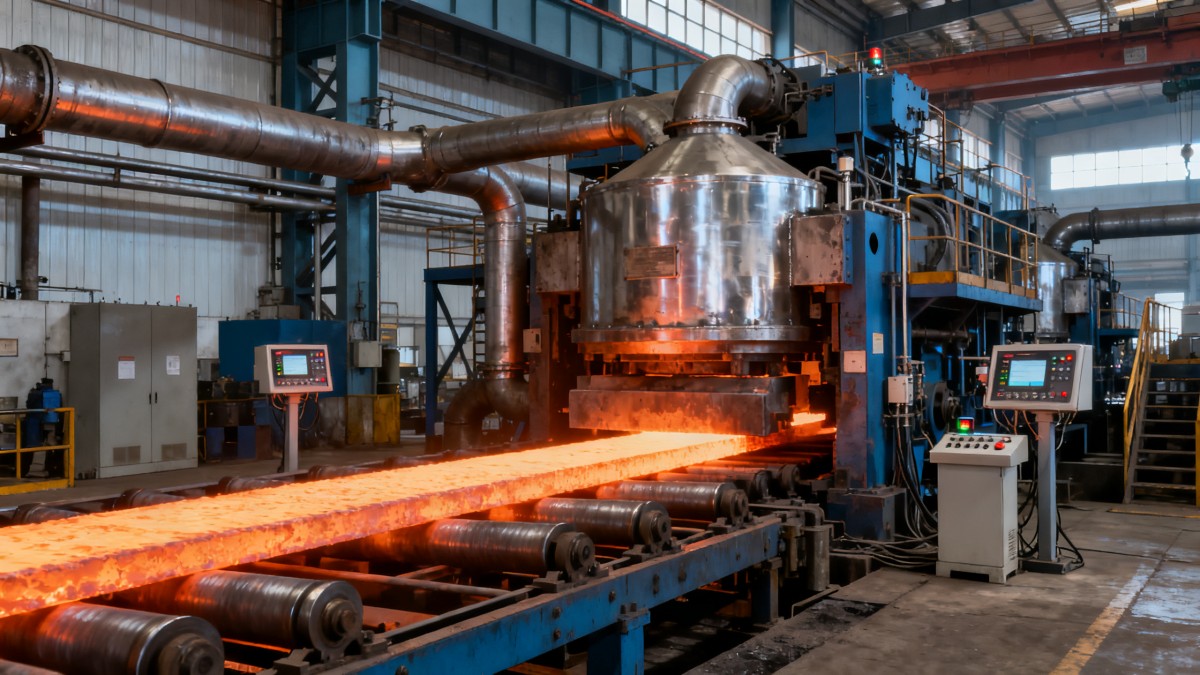
Evaluators should map each candidate solution against the quality risks that matter in their own product family. For cast products, that may mean melt cleanliness, gas pickup, mold filling behavior, and solidification control. For rolled or forged materials, deformation history, reheating consistency, and downstream heat treatment may dominate. For powder or specialty processes, contamination control and particle morphology may be decisive. The point is simple: quality cannot be judged as a generic promise. It has to be tied to failure modes.
A practical indicator is whether the supplier can explain which variables are critical to quality, how they are measured, what the acceptable operating window looks like, and what the process does when it begins to drift. Mature solutions usually have a clear answer here. Less mature ones often fall back on broad statements about precision, automation, or advanced design without connecting them to measurable metallurgical outcomes.
Cost comparison fails when it ignores process stability
Upfront price is the easiest number to compare and one of the least reliable indicators of long-term value. Industrial metallurgy process solutions should be evaluated through total process cost, which includes energy consumption, consumables, refractory or wear-part life, maintenance labor, utilities, process gases, environmental control burden, internal scrap handling, planned downtime, and quality loss.
Energy alone can distort decisions if looked at carelessly. A system with lower specific energy use may still cost more overall if it requires higher-grade feed preparation, more expensive atmosphere control, or longer nonproductive transition time. Likewise, a lower-capex process can become expensive if its control tolerance is narrow and every disturbance creates rework or unscheduled stoppage.
Technical evaluators should be cautious with any cost model built around nominal full-load operation. Metallurgical systems seldom live there. They operate through ramp-up periods, maintenance intervals, shift variation, utility fluctuations, and changing order mix. The more sensitive the process is to those realities, the less meaningful a best-case cost figure becomes.
Process fit matters more than process reputation
Some metallurgy routes earn a strong reputation in the market and still underperform when transplanted into the wrong production context. A solution that is excellent for high-volume, tightly specified product may be a poor fit for mixed-batch manufacturing. A route optimized for clean primary feed may struggle economically where recycled or variable secondary material dominates. The strongest option is not the one with the most impressive reference list; it is the one whose operating assumptions match the plant’s actual condition.
This is especially relevant for EPC teams and procurement leaders evaluating systems across regions. Utility reliability, local maintenance capability, environmental permitting, spare-part lead times, and operator training depth all shape process performance. An elegant solution that depends on specialist support or narrow consumable availability can become a risk in remote or fast-scaling industrial environments.
One useful discipline is to separate “can this process work?” from “can this site run it consistently?” Those are different questions, and many selection errors come from treating them as the same.
Where standards, instrumentation, and compliance enter the decision
In industrial metallurgy, compliance is not an administrative layer added after technical selection. It shapes the selection itself. Depending on jurisdiction and plant type, evaluators may need to consider machinery safety, electrical conformity, pressure systems, emissions control, hazardous area requirements, and quality-system alignment. CE, UL, and ISO references are often part of this conversation, but their relevance depends on the equipment scope, destination market, and project delivery model. The key is not to collect acronyms; it is to verify that the proposed solution can be integrated into the required compliance path without costly redesign.
Instrumentation is equally decisive. Metallurgical quality depends on what the process can measure in time to correct. Temperature, atmosphere, pressure, flow, chemistry, vibration, energy use, and dimensional feedback are not just monitoring points. They define whether the operation can hold a stable process window. When a supplier describes performance, evaluators should ask what instrumentation is standard, what is optional, what must be calibrated routinely, and where blind spots remain.
Common mistakes in metallurgy solution evaluation
Several patterns appear repeatedly in selection work. One is comparing technologies without normalizing the feedstock assumption. Another is accepting throughput numbers without checking whether they apply to the target alloy, section size, or quality grade. A third is treating automation level as a substitute for process understanding. More software and more screens do not automatically mean better control if the process model underneath is weak or poorly tuned.
There is also a tendency to separate metallurgy from maintenance. That split causes trouble. Wear, lining condition, nozzle performance, burner behavior, filter loading, and cooling-system cleanliness can all shift metallurgical output long before a catastrophic failure occurs. If the process solution is maintenance-sensitive, that sensitivity belongs in the technical evaluation, not in a later service discussion.
Another mistake is relying too heavily on generic pilot or demonstration results. Those can be useful, but only if the test conditions resemble the intended industrial reality. Scale-up effects, residence time changes, heat-transfer differences, and operator interaction often reshape performance. Any result that looks unusually clean should be examined for the assumptions behind it.
A practical decision framework
For most technical evaluators, the best approach is to score candidate industrial metallurgy process solutions across five linked dimensions: feed tolerance, yield realism, quality control capability, operating cost resilience, and compliance readiness. That framework forces the conversation away from brochure-level performance and toward plant behavior.
In practical terms, ask each supplier to define the boundaries of acceptable input, the main causes of metallurgical loss, the variables that control final quality, the maintenance points most likely to affect process stability, and the assumptions behind the operating-cost model. Then compare not only the answers, but the confidence and specificity with which those answers are given. Strong process partners usually understand failure modes in detail. Weak ones tend to speak only in averages.
A sound evaluation does not chase the lowest quoted price or the most sophisticated technology label. It identifies the process route that can repeatedly convert real plant inputs into specification-compliant output with manageable cost, measurable control, and acceptable operational risk. That is the standard worth using when the stakes include yield, quality, and long-term production reliability.
Technical Specifications
- How to Select Electronic Hotel Key Card Locks for Guest Rooms and Staff AreasAuthor :Safety Compliance Lead
- How to Select Lab Instruments for Reliable Chemical Analysis WorkflowsAuthor :Precision Metrology Expert
- How to Size a UPS for Server Rooms: Load, Runtime, and Redundancy FactorsAuthor :Grid Infrastructure Analyst
Expert Insights

Chief Security Architect
Dr. Thorne specializes in the intersection of structural engineering and digital resilience. He has advised three G7 governments on industrial infrastructure security.
Related Analysis
- Sep 17, 2026How to Select Electronic Hotel Key Card Locks for Guest Rooms and Staff AreasAuthor :Safety Compliance Lead
- Sep 16, 2026How to Select Lab Instruments for Reliable Chemical Analysis WorkflowsAuthor :Precision Metrology Expert
- Sep 15, 2026How to Size a UPS for Server Rooms: Load, Runtime, and Redundancy FactorsAuthor :Grid Infrastructure Analyst
Core Sector // 01
Security & Safety
- Stainless Steel Welded Tube Applications: Matching Tube Supply to Fabrication NeedsAuthor :Heavy Industry Strategist

- What Maintenance Do Furnace Components Need After 18 Months?Author :Heavy Industry Strategist

- How to Assess Metal Materials for Thermal Cycling in Power BoilersAuthor :Heavy Industry Strategist

- How to Evaluate Aluminum Extrusion Suppliers for Tight-Tolerance Components?Author :Heavy Industry Strategist

- How to Evaluate a Weld Neck Flange Manufacturer for High-Pressure Pipe ProjectsAuthor :Heavy Industry Strategist

- EU REACH Ban Hits Cr(VI)-Coated Steel ImportsAuthor :Heavy Industry Strategist
-Coated Steel Imports")
- How to Evaluate a Heat Sink Aluminum Profile Supplier for Custom Thermal ProjectsAuthor :Heavy Industry Strategist

- Industrial Metal Fabrication Components Price: What Drives Cost and How to Compare QuotesAuthor :Heavy Industry Strategist