Selecting Non-Ferrous Metal Plates for Corrosion, Weight, and Formability Requirements
Author
Date Published
Reading Time
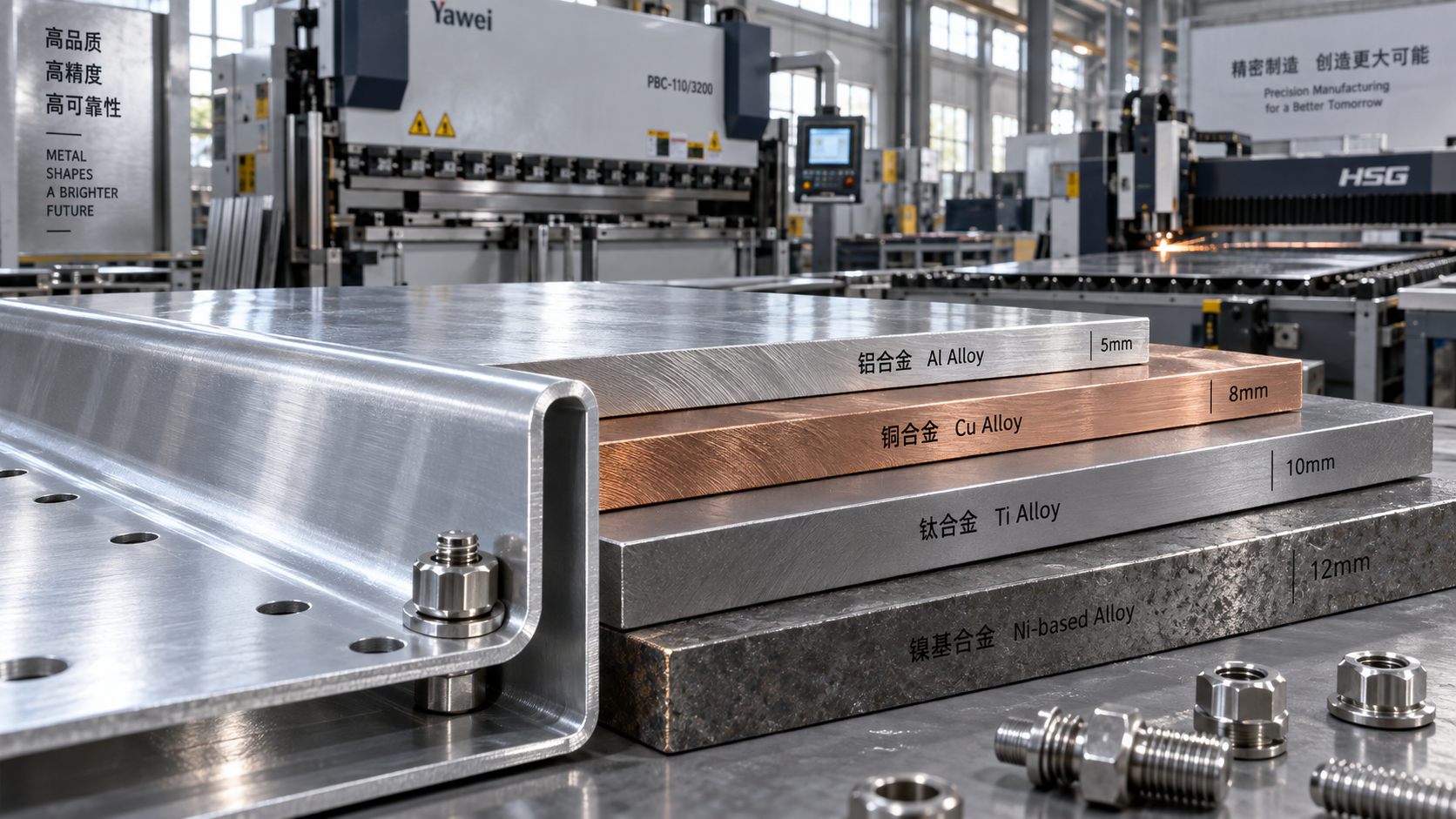
Selecting non ferrous metal plates is rarely a matter of choosing the material with the highest corrosion resistance or the lowest density. A plate can perform well in isolation yet fail after forming, welding, fastening, or exposure to a chemical environment that was not fully defined during procurement. The practical decision is to identify which property is non-negotiable, which properties can be managed through design, and which fabrication steps may change the material’s behavior.
For most industrial specifications, the first decision should be made in this order: define the exposure environment, set the allowable weight and stiffness limits, then confirm that the selected plate can be formed and joined without creating unacceptable defects. Aluminum, copper alloys, titanium, and nickel-based alloys all offer useful combinations of these properties, but their value depends on the duty cycle, geometry, and downstream process.
Start with the actual corrosion mechanism
“Corrosion resistant” is too broad to support a purchase decision. The relevant question is what the plate will contact, at what temperature, for how long, and whether moisture, deposits, crevices, or dissimilar-metal connections are present. A material that performs well in dry outdoor service may be unsuitable in a chloride-bearing washdown area. A plate that resists a process fluid may still suffer at welded edges or beneath gaskets where liquid remains trapped.
Aluminum plates are often a strong starting point where low mass and ordinary atmospheric corrosion resistance are needed. Their protective oxide layer performs well in many outdoor and industrial conditions. However, aluminum is not a universal answer for aggressive chemical exposure, sustained contact with certain alkaline environments, or assemblies that create galvanic coupling with more noble metals. The alloy family, temper, surface finish, and drainage design all affect the result.
Copper and copper alloys are useful where electrical or thermal conductivity matters alongside corrosion performance. Copper plate develops a surface film in many environments, which can be protective in some applications but may be undesirable where appearance, contamination, or contact resistance must remain controlled. Brass offers good machinability and formability in appropriate grades, but its suitability depends heavily on the fluid and atmosphere. Certain conditions can selectively remove zinc from brass, weakening the material even when the external surface does not initially appear severe.
Titanium plate is considered when corrosion exposure is demanding and component failure carries a high operational consequence. It is particularly valuable where chloride-containing media, wet service, or long-term durability makes ordinary light alloys difficult to justify. The tradeoff is not simply higher purchase cost. Titanium also requires deliberate planning for fabrication, tooling, welding procedures, and material availability. It is rarely the economical choice for a lightly loaded, replaceable cover plate in a mild environment, but it can be justified where maintenance access is difficult or corrosion-related downtime is unacceptable.
Nickel-based plate materials occupy a different category. They are commonly evaluated when the process environment is too aggressive, too hot, or too variable for conventional aluminum, copper alloys, or standard stainless solutions. Their selection should be tied to a defined corrosion mechanism rather than a general assumption that a nickel-rich alloy is suitable for every chemical service. Localized attack, reducing or oxidizing conditions, and thermal cycling can lead to different material choices.
Do not evaluate the plate without the assembly
Many corrosion problems originate at interfaces rather than on the open plate surface. Fasteners, welded brackets, conductive gaskets, trapped moisture, and mixed-metal joints can alter the local electrochemical condition. When two unlike metals are electrically connected in an electrolyte, the less noble material may corrode faster. The risk rises where the smaller material is exposed alongside a larger opposing surface, because the corrosion current becomes concentrated.
Material selection should therefore include the fastening method, isolating washers or coatings where appropriate, edge sealing requirements, and the direction of water or condensate flow. A plate grade cannot compensate for a design that holds contaminated moisture in crevices.
Weight decisions require more than comparing density
Aluminum is usually the leading candidate when reducing component mass is a central requirement. Yet a lower-density plate often needs additional thickness, ribs, folds, or support spacing to meet stiffness and deflection limits. A direct thickness-for-thickness comparison with copper, titanium, or nickel alloy is not useful. The correct comparison is between finished parts that satisfy the same load, deflection, vibration, and attachment requirements.
For a flat panel, stiffness is strongly influenced by section geometry. Increasing thickness can improve rigidity substantially, but a formed return flange, bead, or shallow channel may achieve the required stiffness with less material than a simple thicker sheet. This creates a link between material choice and formability: a lighter alloy may only deliver the intended mass saving if it can be shaped into an efficient structure.
Weight can also influence installation safety, handling equipment, transport limits, and support frame design. These costs may outweigh a modest difference in plate price. Conversely, a plate chosen only for low mass can create a more expensive design if it requires extensive reinforcement or close support spacing. The best lightweight option is the one that reduces whole-assembly burden without creating an impractical fabrication route.
Formability is governed by alloy condition, not material name alone
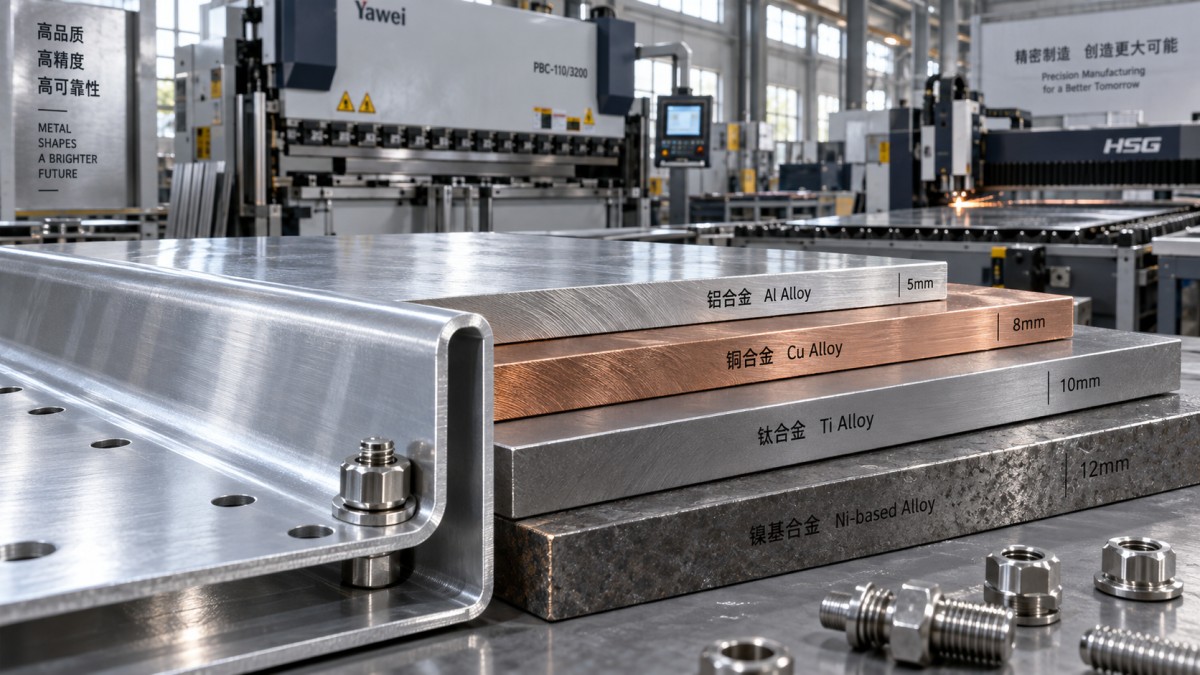
“Aluminum plate,” “brass plate,” and “titanium plate” each describe a broad group of materials with very different forming behavior. The alloy chemistry and the supplied temper determine how readily the plate can be bent, drawn, rolled, stamped, or flanged. A grade selected for high strength may have limited bendability. A softer condition may form cleanly but be unsuitable for a load-bearing surface after fabrication.
For aluminum, heat-treatable and non-heat-treatable families behave differently during fabrication. Some are well suited to bending and welded construction, while others are chosen for higher strength but require greater bend radii or more controlled forming. The direction of rolling also matters. Tight bends made across the rolling direction may behave differently from bends made parallel to it, especially in thicker plate or harder tempers.
Brass can be attractive for formed parts because many compositions offer good ductility and a clean finish. But a plate that forms well may not be the correct answer if corrosion exposure, stress-relief requirements, or service temperature is demanding. Copper is highly formable in suitable conditions, though its softness and weight may limit its use in structural panels.
Titanium presents a more disciplined fabrication decision. It can be formed successfully, but springback, surface condition, tool cleanliness, and bend design deserve more attention than with common sheet metals. Contamination during thermal work or welding can impair performance. If the part involves deep drawing, sharp flanges, or repeated formed details, prototype trials are more valuable than relying on a generic material description.
Nickel-based alloys can be formable, but they often have higher forming loads and stronger springback than conventional alloys. The fabrication shop needs to confirm that press capacity, dies, forming sequence, and heat-treatment capability are suitable. Choosing an alloy that survives the process fluid but cannot be produced consistently is not a sound specification.
Use a property hierarchy instead of a generic shortlist
A practical specification becomes easier when requirements are ranked. One useful method is to classify each criterion as a service requirement, a fabrication requirement, or a commercial control. Service requirements decide whether the material can remain in operation. Fabrication requirements decide whether the proposed geometry can be made consistently. Commercial controls address availability, inspection, traceability, yield, and replacement lead time.
- Service environment: Identify fluids, cleaning agents, humidity, salt exposure, deposits, temperature range, pressure, and exposure duration.
- Mechanical duty: Define static loads, vibration, impact risk, allowable deflection, fatigue concerns, and support spacing.
- Fabrication route: List cutting, bending, rolling, machining, welding, brazing, coating, and any post-forming heat treatment.
- Interfaces: Record fasteners, adjacent metals, electrical bonding needs, insulation layers, seals, and drainage features.
- Quality controls: Set plate thickness tolerance, flatness, surface condition, material certification, identification, and inspection needs.
This sequence prevents a common mistake: selecting a material from a corrosion-resistance chart before defining how the part will be fabricated and assembled. A nominally suitable plate may become unsuitable after welding changes its local properties, after forming creates a too-small bend radius, or after a coating process introduces a trapped-moisture interface.
When each material family is a reasonable first candidate
Choose aluminum as an early option when mass reduction, workable corrosion resistance, and economical fabrication are all important. It is often well suited to enclosures, access panels, fabricated structures, and components where shape can compensate for lower modulus. It becomes less attractive where chemical exposure is severe, where galvanic contact cannot be managed, or where the design needs high stiffness in a very thin unsupported plate.
Consider copper or brass when conductivity, thermal transfer, joining behavior, or a specific formed appearance has a functional role. Copper is not a substitute for aluminum merely because both resist common atmospheric exposure. Its mass, softness, and cost structure can alter the design substantially. Brass should be selected by alloy and environment, especially where process fluids or stagnant water can affect long-term behavior.
Move to titanium when ordinary fabricated metals create an unacceptable corrosion-maintenance burden and the application benefits from a high strength-to-weight ratio. It is a lifecycle decision, not a default premium upgrade. The material earns its place where durability, low replacement frequency, or difficult access has measurable engineering value.
Evaluate nickel-based plate when heat, chemical severity, or changing process conditions exceed the capability of more common non-ferrous options. This route requires a well-defined service description because alloy selection within the nickel family is highly dependent on the environment. Broad specifications can cause unnecessary cost or leave a critical corrosion mechanism unaddressed.
Request evidence that matches the risk
For non-critical fabricated parts, a clear grade designation, dimensional requirements, and basic material documentation may be sufficient. For infrastructure equipment, pressure boundaries, safety-related assemblies, or chemically aggressive installations, the purchase package should also define the verification route. That can include required material certificates, traceability through cutting and fabrication, approved welding procedures where relevant, inspection acceptance criteria, and controls for substitution.
Certification should support the engineering requirement, not replace it. A compliant plate can still be the wrong grade, temper, thickness, or finish for the installation. Likewise, a technically good material can underperform if the supplier cannot maintain identity between incoming plate, cut blanks, and completed assemblies.
Global Industrial Core approaches material evaluation as part of the broader reliability chain: material properties, fabrication capability, installation interfaces, and documentation should agree with the operational risk. That perspective is useful when a plate is being selected for infrastructure equipment rather than a standalone commodity purchase.
Before releasing the specification
Reduce the decision to a small number of candidate materials, then test each candidate against the full part definition. Confirm the environment, including cleaning and upset conditions. Check the required thickness against stiffness and support design. Review the minimum bend radii, weld locations, and tooling constraints with the fabricator. Examine every mixed-metal interface. Finally, make the specification precise enough that the delivered plate has the intended alloy, condition, dimensions, and traceability.
The most reliable selection is usually not the plate with the most impressive data sheet. It is the one whose corrosion behavior, structural role, forming limits, joining method, and inspection requirements all remain compatible after the component leaves the drawing board.
Technical Specifications
- How to Select a Twin Shaft Shredder for Bulky Waste, Scrap Metal, and PlasticsAuthor :Environmental Engineering Director
- Selecting EPC Procurement Support Tools to Reduce Vendor and Delivery DelaysAuthor :Safety Compliance Lead
- How to Evaluate a Precision Measurement Equipment Manufacturer for Critical TolerancesAuthor :Precision Metrology Expert
Expert Insights

Chief Security Architect
Dr. Thorne specializes in the intersection of structural engineering and digital resilience. He has advised three G7 governments on industrial infrastructure security.
Related Analysis
- Sep 28, 2026How to Select a Twin Shaft Shredder for Bulky Waste, Scrap Metal, and PlasticsAuthor :Environmental Engineering Director
- Sep 27, 2026Selecting EPC Procurement Support Tools to Reduce Vendor and Delivery DelaysAuthor :Safety Compliance Lead
- Sep 26, 2026How to Evaluate a Precision Measurement Equipment Manufacturer for Critical TolerancesAuthor :Precision Metrology Expert
Core Sector // 01
Security & Safety
- Selecting Non-Ferrous Metal Plates for Corrosion, Weight, and Formability RequirementsAuthor :Heavy Industry Strategist

- Stainless Steel Welded Tube Applications: Matching Tube Supply to Fabrication NeedsAuthor :Heavy Industry Strategist

- What Maintenance Do Furnace Components Need After 18 Months?Author :Heavy Industry Strategist

- How to Assess Metal Materials for Thermal Cycling in Power BoilersAuthor :Heavy Industry Strategist

- How to Evaluate Aluminum Extrusion Suppliers for Tight-Tolerance Components?Author :Heavy Industry Strategist

- How to Evaluate a Weld Neck Flange Manufacturer for High-Pressure Pipe ProjectsAuthor :Heavy Industry Strategist

- EU REACH Ban Hits Cr(VI)-Coated Steel ImportsAuthor :Heavy Industry Strategist
-Coated Steel Imports")
- How to Evaluate a Heat Sink Aluminum Profile Supplier for Custom Thermal ProjectsAuthor :Heavy Industry Strategist