Heavy Duty Corner Guards: Which Materials and Profiles Work Best for Warehouse Impact Protection?
Author
Date Published
Reading Time
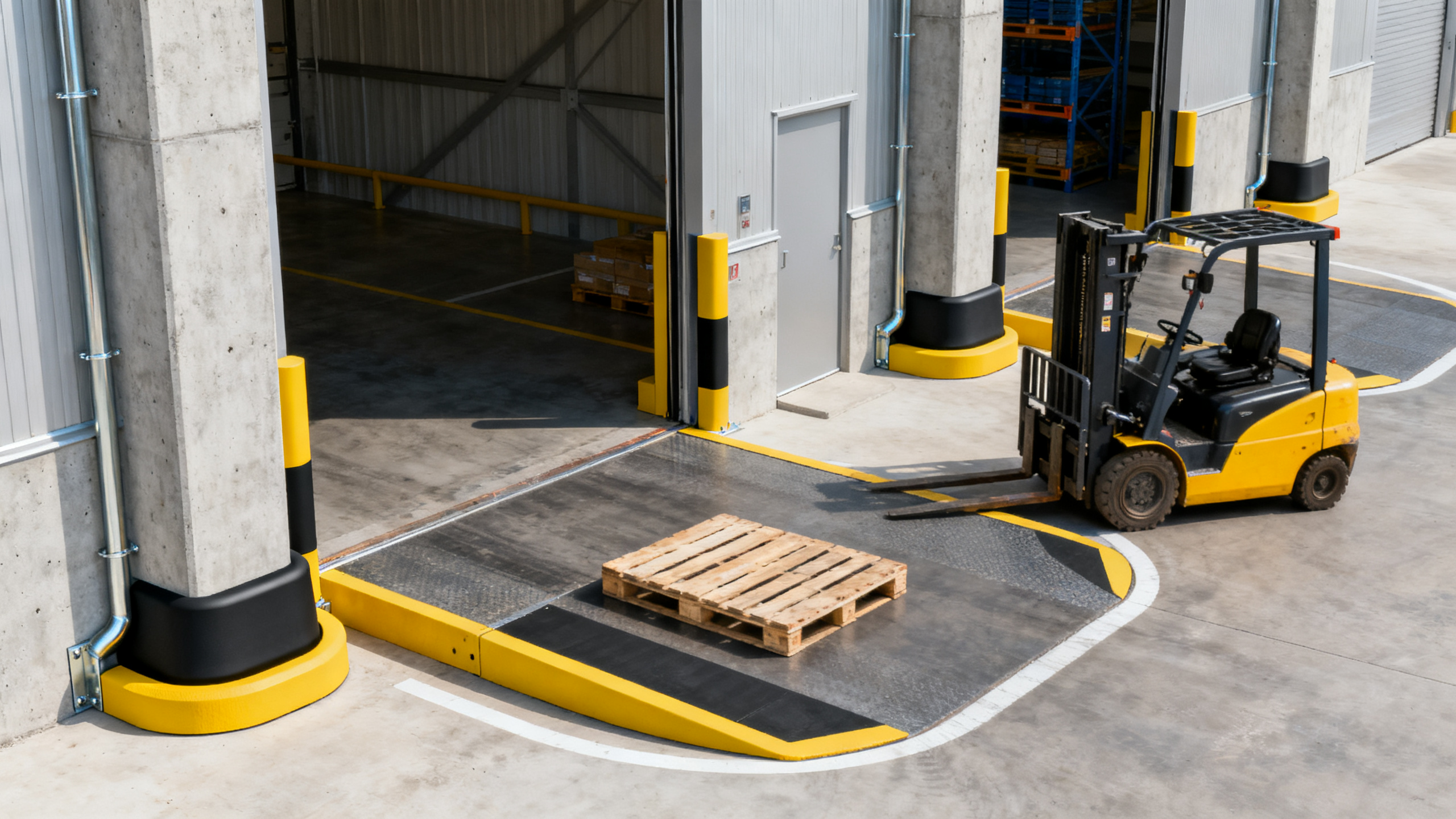
Heavy Duty Corner Guards: Which Materials and Profiles Work Best for Warehouse Impact Protection?
In high-traffic warehouses, heavy duty corner guards do far more than prevent cosmetic damage.
They protect columns, wall edges, door openings, racking interfaces, and inspection-critical structural zones.
That matters when forklifts, pallet jacks, carts, and roll cages move fast under tight turning conditions.
The right choice depends on impact energy, traffic patterns, substrate condition, hygiene needs, and replacement strategy.
In practice, the best heavy duty corner guards balance toughness, visibility, profile geometry, and secure installation.
This is why material selection should start with the operating environment, not with price alone.
Why warehouse impact protection fails
Most failures happen because corner protection is underspecified for real traffic intensity.
Light rubber strips often tear, detach, or compress permanently after repeated glancing hits.
Thin metal angles can resist abrasion but still transfer damaging force into masonry or concrete edges.
Another common issue is choosing the wrong profile depth for forklift counterweights or pallet overhang.
From a risk standpoint, repeated low-level impacts can be more destructive than one visible collision.
That also means heavy duty corner guards should be assessed for cycle durability, not just nominal hardness.
Typical damage points
- Dock approach corners exposed to turning forklifts
- Fire door openings hit by pallet edges
- Column bases near staging lanes
- Cold room entries with hard wheel traffic
- Service corridors with metal cart movement
Which materials work best for heavy duty corner guards
No single material fits every warehouse.
The strongest option on paper may perform poorly if it cracks, corrodes, or transfers shock into the wall.
Steel
Steel heavy duty corner guards deliver high structural strength and excellent abrasion resistance.
They work well at dock doors, loading zones, and exposed concrete columns.
Galvanized or powder-coated finishes improve corrosion performance in humid or washdown-prone areas.
The tradeoff is force transfer.
If the substrate is weak, steel may protect itself while the wall behind it fails.
Stainless steel
Stainless steel suits food processing, pharmaceuticals, and clean industrial environments.
It combines impact resistance with superior corrosion control and easier sanitation.
For general warehouse use, however, it can be more expensive than necessary.
Rubber
Rubber heavy duty corner guards absorb shock better than bare metal profiles.
They are useful where repeated glancing impacts occur and asset preservation matters more than appearance.
High-quality rubber also improves grip and reduces secondary scraping damage.
Still, lower-grade compounds can harden, split, or delaminate over time.
High-density polyethylene and polymer blends
HDPE and engineered polymers are increasingly popular for warehouse impact protection.
They resist moisture, many chemicals, and frequent cleaning cycles.
Some reinforced profiles flex under impact, then recover without permanent deformation.
This makes them a strong choice for mixed-use facilities with moderate to heavy traffic.
Aluminum
Aluminum is lightweight and corrosion resistant, but not always ideal for severe impacts.
It fits lighter-duty corridors, equipment enclosures, and areas where easier installation is important.
Best profile designs for warehouse impact protection
Material alone does not determine performance.
The profile decides how impact loads are received, spread, deflected, or absorbed.
Angle profiles
Standard L-shaped guards are the most common heavy duty corner guards.
They fit wall edges and square columns well.
For light collisions, they perform adequately.
For repeated forklift contact, deeper legs and thicker sections are usually necessary.
Rounded profiles
Rounded or bullnose designs deflect impacts better than sharp-edged profiles.
They reduce snagging and help redirect moving loads away from the corner.
This profile often works well in narrow aisles and high-turn intersections.
Winged profiles
Winged heavy duty corner guards extend coverage beyond the edge line.
That extra width helps when pallet loads swing wider than vehicle wheels.
They are especially useful near dock corners and staging buffers.
Energy-absorbing composite profiles
Composite profiles combine a rigid mounting core with a resilient outer layer.
In real operations, this hybrid approach often gives the best overall warehouse impact protection.
It limits visible damage while reducing stress transfer into the building fabric.
How to match heavy duty corner guards to actual risk
A practical specification starts with traffic behavior, not product catalogs.
Recent facility upgrades show a clear shift toward zone-based protection planning.
That means mapping vehicle type, turning radius, load overhang, speed, and collision frequency by area.
Use this decision framework
- Identify whether impacts are direct, glancing, or repetitive scraping.
- Check if the substrate is concrete, blockwork, steel, insulated panel, or drywall.
- Measure the strike height from wheels, forks, pallets, and counterweights.
- Define hygiene, corrosion, and washdown requirements.
- Choose visible colors where collision avoidance matters.
- Confirm anchor type and replacement access before procurement.
Quick material and profile guide
Installation details that make or break performance
Even the best heavy duty corner guards can fail if the fixing method is weak.
Mechanical anchors usually outperform adhesive-only installation in severe warehouse zones.
Adhesives may still work in light-duty areas with stable surfaces and limited temperature fluctuation.
Another overlooked factor is standoff distance.
If anchors sit too close to the strike zone, repeated loading can enlarge holes and loosen the guard.
Installation checklist
- Verify base material strength before drilling
- Use corrosion-suitable fixings for the environment
- Set protection height to actual strike range
- Avoid sharp exposed fastener heads
- Plan replacement without shutting down the whole lane
Compliance, maintenance, and lifecycle value
Warehouse impact protection also supports broader safety and asset management goals.
Damaged corners can expose sharp edges, compromise hygiene, and create avoidable inspection findings.
For facilities aligning with CE, ISO, or internal EHS standards, documented protection zones improve audit readiness.
Lifecycle cost should include replacement frequency, anchor repair, cleaning labor, and operational downtime.
In many cases, better heavy duty corner guards cost more upfront but reduce recurring maintenance events.
What usually works best
For severe warehouse traffic, steel-backed or composite heavy duty corner guards usually offer the best protection.
For repeated side contact, rounded polymer or rubber-faced profiles often perform better than rigid sharp angles.
For hygienic or wet spaces, stainless steel and corrosion-resistant polymers are the safer long-term choice.
The strongest result comes from matching heavy duty corner guards to traffic energy, profile coverage, and fixing conditions.
Before the next procurement cycle, review impact maps, inspect failure points, and specify protection by zone.
That step turns warehouse impact protection from a reactive repair item into a planned resilience upgrade.
Technical Specifications
- How to Select Electronic Hotel Key Card Locks for Guest Rooms and Staff AreasAuthor :Safety Compliance Lead
- How to Select Lab Instruments for Reliable Chemical Analysis WorkflowsAuthor :Precision Metrology Expert
- How to Size a UPS for Server Rooms: Load, Runtime, and Redundancy FactorsAuthor :Grid Infrastructure Analyst
Expert Insights

Chief Security Architect
Dr. Thorne specializes in the intersection of structural engineering and digital resilience. He has advised three G7 governments on industrial infrastructure security.
Related Analysis
- Sep 17, 2026How to Select Electronic Hotel Key Card Locks for Guest Rooms and Staff AreasAuthor :Safety Compliance Lead
- Sep 16, 2026How to Select Lab Instruments for Reliable Chemical Analysis WorkflowsAuthor :Precision Metrology Expert
- Sep 15, 2026How to Size a UPS for Server Rooms: Load, Runtime, and Redundancy FactorsAuthor :Grid Infrastructure Analyst
Core Sector // 01
Security & Safety
- Stainless Steel Welded Tube Applications: Matching Tube Supply to Fabrication NeedsAuthor :Heavy Industry Strategist

- What Maintenance Do Furnace Components Need After 18 Months?Author :Heavy Industry Strategist

- How to Assess Metal Materials for Thermal Cycling in Power BoilersAuthor :Heavy Industry Strategist

- How to Evaluate Aluminum Extrusion Suppliers for Tight-Tolerance Components?Author :Heavy Industry Strategist

- How to Evaluate a Weld Neck Flange Manufacturer for High-Pressure Pipe ProjectsAuthor :Heavy Industry Strategist

- EU REACH Ban Hits Cr(VI)-Coated Steel ImportsAuthor :Heavy Industry Strategist
-Coated Steel Imports")
- How to Evaluate a Heat Sink Aluminum Profile Supplier for Custom Thermal ProjectsAuthor :Heavy Industry Strategist

- Industrial Metal Fabrication Components Price: What Drives Cost and How to Compare QuotesAuthor :Heavy Industry Strategist