EU Steel Tariff Rises to 50% From July, Pressuring Metal Component Exports
Author
Date Published
Reading Time
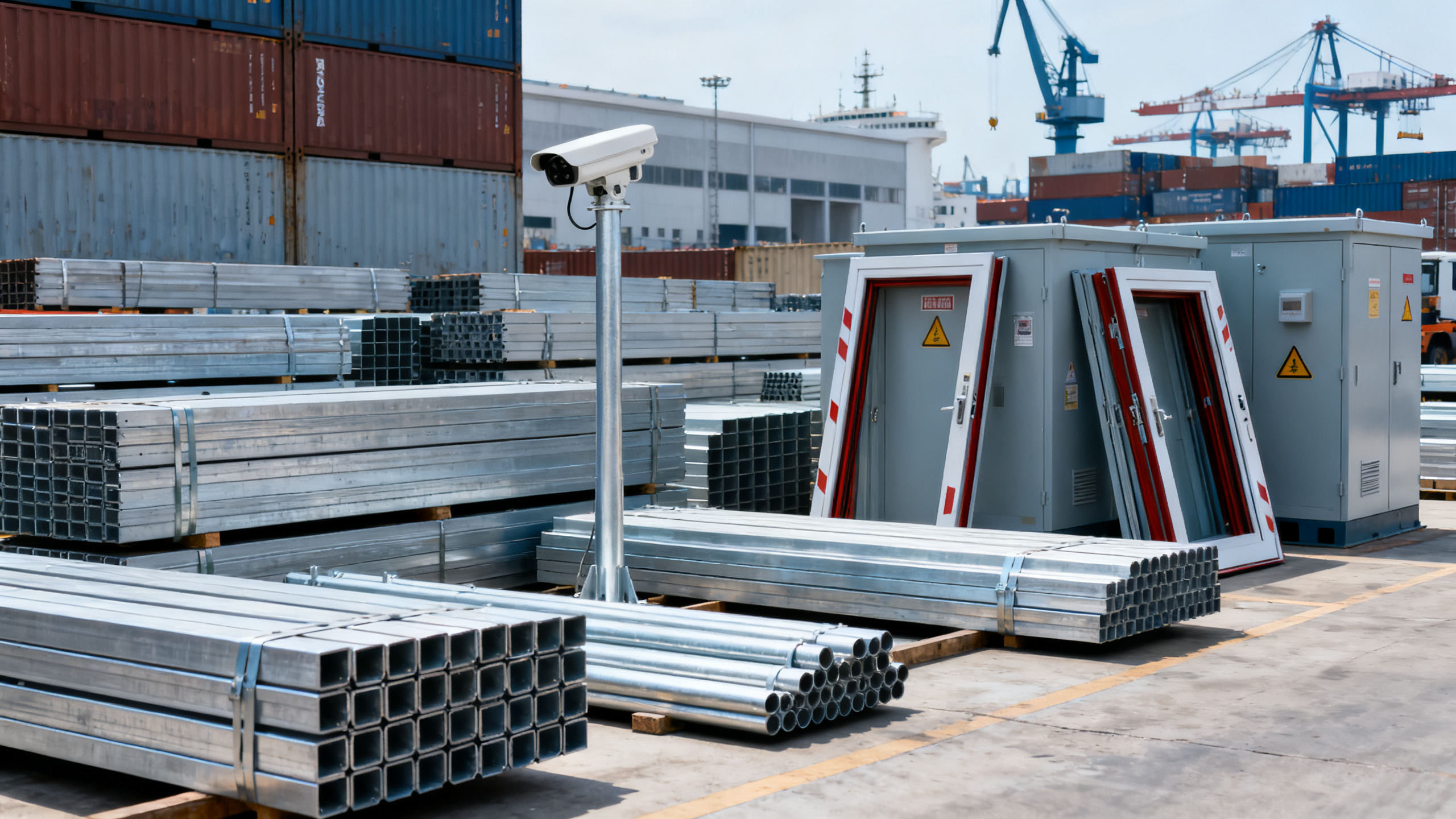
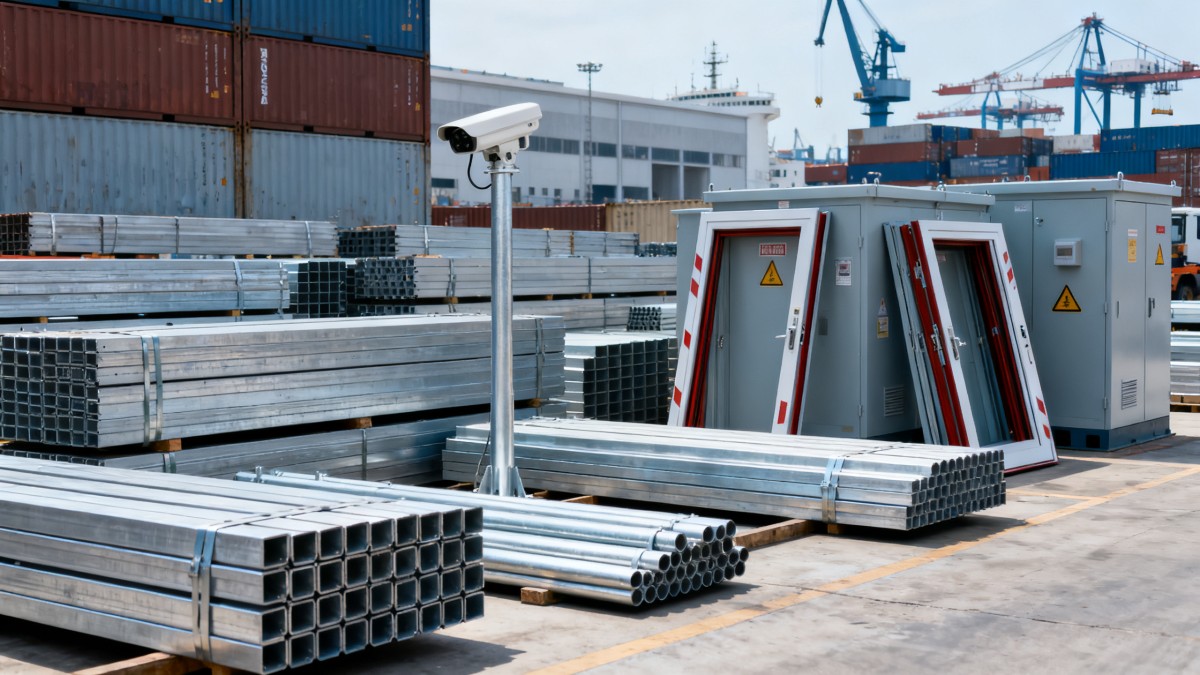
From July 1, 2026, the EU will apply a higher trade barrier to imported steel by raising the base tariff from 25% to 50% and cutting the annual duty-free quota to 18.3 million tonnes. For exporters and buyers involved in Steel & Metal Profiles, steel CCTV poles, fire-rated door frames, transformer enclosures, and other metal-based structural parts entering the EU, this is not only a pricing issue but also a change that may affect procurement timing, delivery planning, and compliance-related transaction arrangements.
What the new tariff change confirms
According to the provided event summary, on May 19, 2026, the European Parliament approved the new measure with 606 votes in favor. The rule takes effect on July 1, 2026.
The confirmed change is twofold: the EU base tariff on steel imports rises from 25% to 50%, and the annual duty-free quota is reduced by 47% to 18.3 million tonnes.
The measure applies to all third countries, including China. The products directly mentioned in the provided information include industrial profiles under Steel & Metal Profiles, steel CCTV poles, fire door frames, transformer enclosures, and other metal-based structural components imported into the EU.
The provided information also makes clear that the change increases compliant delivery costs and is likely to reshape procurement routes for affected products.
Where pressure is most likely to emerge across the chain
Export contracts may face new cost allocation pressure
From an industry perspective, exporters shipping metal structural parts into the EU may be the first to feel the impact because the tariff increase changes the landed-cost calculation directly. The practical pressure point is likely to be contract execution: pricing terms, delivery schedules, and responsibility for tariff-related cost changes may all require closer review. What deserves closer attention is whether existing trade documents, product descriptions, and customs-facing documentation are sufficiently aligned with the goods being delivered.
EU buyers and project procurement teams may reassess sourcing paths
For procurement teams purchasing imported steel-based assemblies or components, the rule change may affect supplier comparison, budget control, and delivery planning. Analysis shows that products such as CCTV poles, fire door frames, and transformer enclosures are not purely commodity steel items in a business sense; they are often tied to project schedules and technical specifications. That means tariff changes can influence sourcing decisions, tender arrangements, and timing of purchase commitments.
Processors and fabricators may need tighter document coordination
Manufacturers and fabricators supplying semi-finished or finished structural parts may need to pay closer attention to how technical files, product naming, and shipment documentation are prepared. Observably, when tariff pressure rises and quota space becomes tighter, the quality and consistency of commercial and technical paperwork can become more important in transaction handling, customs coordination, and customer-side acceptance processes.
Supply chain service providers may see more delivery-side complexity
Logistics, customs, and trade service providers may also be affected because the change can alter shipment timing, routing choices, and importer planning. Analysis shows that the issue is not limited to freight cost movement; it also concerns whether delivery arrangements remain workable under a higher tariff burden and a smaller duty-free quota framework.
What companies should review now
Check whether affected product categories are exposed in current orders
Companies with EU-bound business should first identify whether their current or upcoming orders involve the product groups expressly referenced in the provided information, including industrial metal profiles, steel CCTV poles, fire door frames, transformer enclosures, and related structural parts. This is a basic but necessary step before any pricing or delivery adjustment is discussed.
Revisit commercial documents and technical files
Analysis shows that businesses should review quotations, contracts, product specifications, declarations, and shipment-related documentation to make sure product descriptions and technical materials are internally consistent. The provided information does not include detailed enforcement guidance, so it is more appropriate at this stage to treat documentation review as a precautionary compliance measure rather than as a response to a fully clarified execution framework.
Watch procurement timing and delivery commitments carefully
What deserves closer attention is the interaction between the July 1 effective date, tariff exposure, and delivery planning. Companies may need to review whether project milestones, procurement windows, and customer delivery commitments remain commercially workable under the new cost structure. This is especially relevant where goods are tied to installation schedules or tender-based supply arrangements.
Follow later wording and market-side implementation signals
Because the provided information confirms the rule change but does not include more detailed operational guidance, companies should continue monitoring later official wording, practical trade interpretation, customer purchasing behavior, and any changes in tender or technical documentation requirements. At this stage, that follow-up is part of risk control rather than proof that a uniform market practice has already formed.
How this development is best understood at this stage
Analysis shows that this development should be read first as a concrete trade-rule change with near-term operational relevance, not merely as a political headline. The effective date is defined, the tariff level is higher, and the quota is smaller, so the signal to the market is immediate.
At the same time, it is also more appropriate to understand this as an execution-stage signal that still requires observation. The provided information confirms the rule shift itself, but it does not yet provide full detail on how all affected market participants will interpret and apply it in contracts, procurement practice, or delivery management.
From an industry perspective, the most important follow-up issue is not abstract policy debate but whether downstream procurement documents, compliance review practices, and order execution terms begin to change in response.
Why the market should keep this on the watchlist
For the metal-based security and industrial component trade, the significance of this event lies in the fact that a tariff adjustment is directly intersecting with project supply, product documentation, and procurement execution. The confirmed rule change is already defined in timing and scope, but the full commercial effect will depend on how buyers, suppliers, and service providers translate it into actual orders and delivery arrangements.
In that sense, this is best understood as an already landed policy change with practical trade consequences, while its detailed market impact still needs continued observation. A careful reading should focus less on headline reaction and more on document readiness, sourcing decisions, and the evolution of execution practice after July 1, 2026.
Basis of this article and what still needs verification
This article is generated from the user-provided news title, event date, and event summary. For developments of this type, commonly relevant source categories may include official announcements, releases from regulatory bodies, customs or trade authority information, industry association updates, standards-related documents, and reporting by established media outlets.
No specific official source link was provided in the input, so the underlying official text and later implementation wording still require ongoing verification. What should continue to be monitored includes detailed policy language, compliance interpretation, tender document changes, market feedback, and how companies actually adjust procurement and delivery execution.
Technical Specifications
- How to Select Electronic Hotel Key Card Locks for Guest Rooms and Staff AreasAuthor :Safety Compliance Lead
- How to Select Lab Instruments for Reliable Chemical Analysis WorkflowsAuthor :Precision Metrology Expert
- How to Size a UPS for Server Rooms: Load, Runtime, and Redundancy FactorsAuthor :Grid Infrastructure Analyst
Expert Insights

Chief Security Architect
Dr. Thorne specializes in the intersection of structural engineering and digital resilience. He has advised three G7 governments on industrial infrastructure security.
Related Analysis
- Sep 17, 2026How to Select Electronic Hotel Key Card Locks for Guest Rooms and Staff AreasAuthor :Safety Compliance Lead
- Sep 16, 2026How to Select Lab Instruments for Reliable Chemical Analysis WorkflowsAuthor :Precision Metrology Expert
- Sep 15, 2026How to Size a UPS for Server Rooms: Load, Runtime, and Redundancy FactorsAuthor :Grid Infrastructure Analyst
Core Sector // 01
Security & Safety
- Stainless Steel Welded Tube Applications: Matching Tube Supply to Fabrication NeedsAuthor :Heavy Industry Strategist

- What Maintenance Do Furnace Components Need After 18 Months?Author :Heavy Industry Strategist

- How to Assess Metal Materials for Thermal Cycling in Power BoilersAuthor :Heavy Industry Strategist

- How to Evaluate Aluminum Extrusion Suppliers for Tight-Tolerance Components?Author :Heavy Industry Strategist

- How to Evaluate a Weld Neck Flange Manufacturer for High-Pressure Pipe ProjectsAuthor :Heavy Industry Strategist

- EU REACH Ban Hits Cr(VI)-Coated Steel ImportsAuthor :Heavy Industry Strategist
-Coated Steel Imports")
- How to Evaluate a Heat Sink Aluminum Profile Supplier for Custom Thermal ProjectsAuthor :Heavy Industry Strategist

- Industrial Metal Fabrication Components Price: What Drives Cost and How to Compare QuotesAuthor :Heavy Industry Strategist