What buyers often miss when sourcing Components & Metals
Author
Date Published
Reading Time
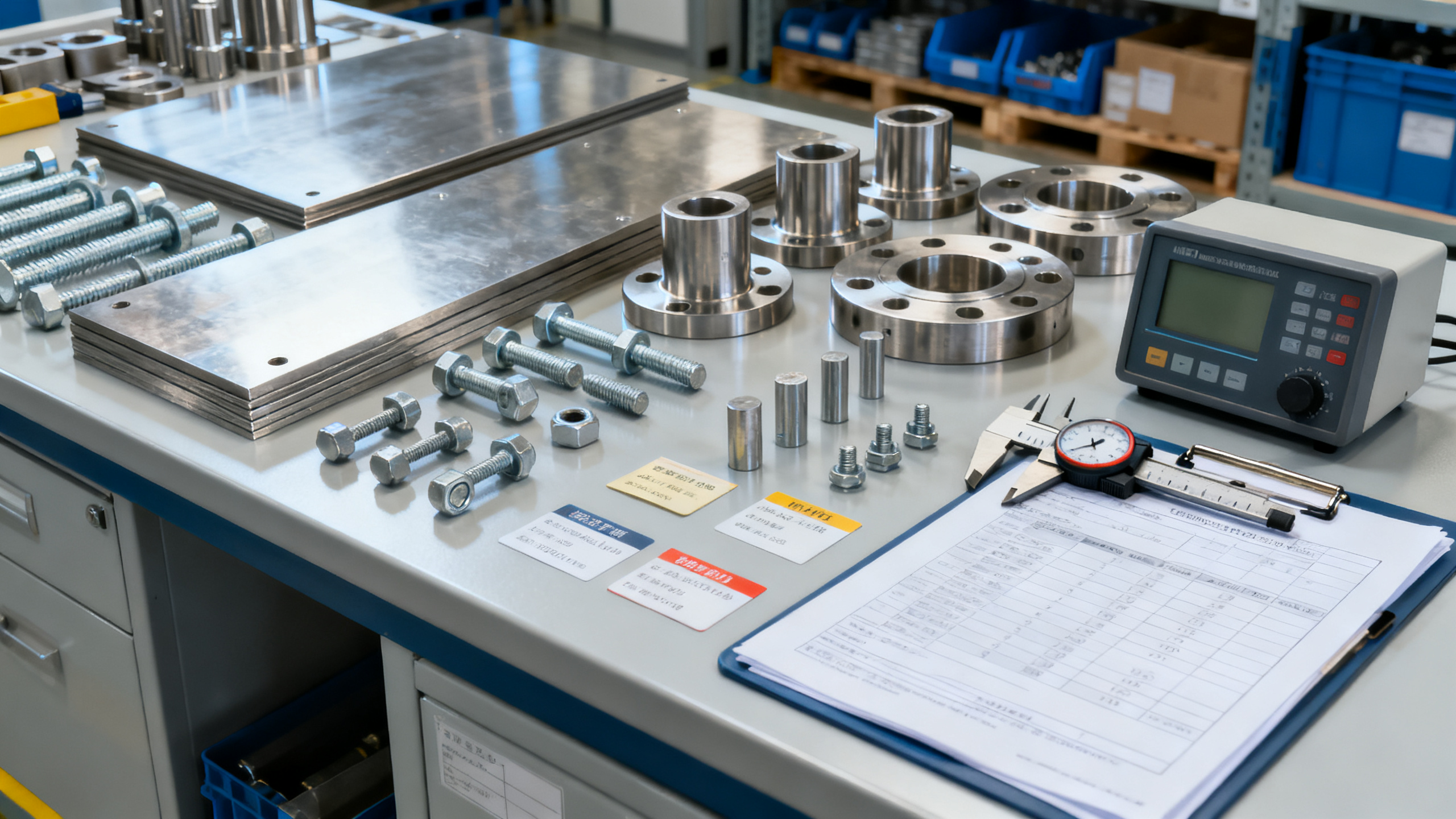
When sourcing Components & Metals, many buyers focus on price and lead time but overlook the hidden factors that determine long-term performance, compliance, and supply stability. For distributors, agents, and industrial channel partners, missing these details can lead to costly project delays, quality disputes, and reputational risk. This article highlights the critical blind spots that often separate a successful sourcing decision from an expensive mistake.
Why do buyers underestimate risk when sourcing Components & Metals?
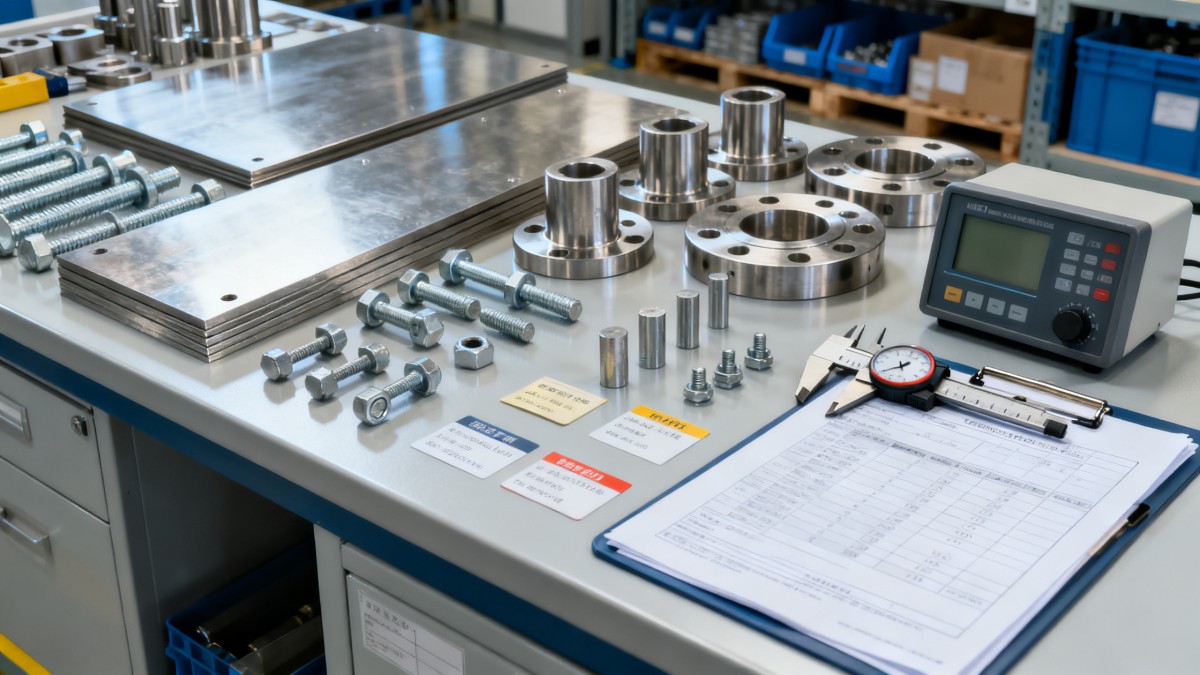
In industrial supply, Components & Metals are rarely simple commodities. A bolt, casting, fitting, sheet, or machined part may look interchangeable on paper, yet small differences in metallurgy, tolerance control, surface treatment, traceability, or certification can reshape the total project outcome.
Distributors and agents often work under pressure from EPC contractors, plant owners, and maintenance teams. They must secure acceptable cost, preserve margin, and still protect delivery schedules. In that environment, sourcing decisions are frequently driven by visible indicators while hidden technical risks stay unchallenged.
The most common blind spots usually include the following:
- Assuming equivalent dimensions mean equivalent service life, even when raw material grade and heat treatment differ.
- Accepting certificates at face value without checking batch linkage, issuing body, or scope of testing.
- Comparing only unit price instead of landed cost, replacement frequency, inspection burden, and downtime exposure.
- Overlooking regional compliance requirements that affect import clearance, site approval, and final customer acceptance.
This is where a structured sourcing approach matters. Global Industrial Core supports industrial buyers with data-led evaluation across mechanical components, metallurgy, safety expectations, and supply reliability. That perspective helps channel partners reduce guesswork before a quotation becomes a liability.
What hidden evaluation factors matter most in Components & Metals procurement?
Before placing an order, buyers should move beyond catalog descriptions and ask what will actually determine field performance. In cross-border and project-driven procurement, the answer usually lies in a mix of material integrity, process capability, documentation quality, and supplier consistency.
The table below shows the evaluation factors that experienced distributors use when sourcing Components & Metals for industrial applications.
These factors are not theoretical. They affect whether a distributor can promise stable delivery to downstream customers and whether an agent can defend a quote during technical review. When supply chains tighten, strong documentation and process visibility become as valuable as price.
Material specification is not the same as application suitability
A stainless steel part may still fail in chloride-rich coastal environments. A carbon steel component may meet strength targets but underperform in cyclic loading. Buyers need to match alloy, hardness, coating, and fabrication method to operating conditions, not just nominal grade descriptions.
Manufacturing route changes performance
Cast, forged, stamped, extruded, and machined parts behave differently under stress and wear. Two products with similar external dimensions can have very different grain structure, residual stress profile, and fatigue resistance. That matters in pumps, enclosures, brackets, fasteners, supports, valves, and rotating assemblies.
How should distributors compare suppliers of Components & Metals?
Supplier comparison should be disciplined. A lower quote may come from thinner coatings, broader tolerances, mixed batches, or incomplete inspection scope. The right comparison model helps channel partners avoid false savings that later erode customer trust.
Use a weighted comparison instead of a price-only review. The matrix below is especially useful when sourcing Components & Metals for industrial projects with strict delivery and compliance requirements.
For distributors, this comparison method strengthens negotiation. It also helps explain to end customers why one source is safer, even if its initial quote is not the lowest. Margin protection often comes from avoiding claims, returns, and emergency replacement orders.
A practical supplier screening checklist
- Ask for material test reports that match the offered batch, not sample documents from a previous order.
- Confirm whether dimensions are controlled by internal drawings, international standards, or customer-specific tolerances.
- Check if subcontracted processes such as plating, heat treatment, or non-destructive testing are controlled and recorded.
- Review packing method for moisture exposure, deformation risk, and mixed-lot contamination during export transit.
Which compliance and certification issues are often missed?
Industrial buyers often say they need compliant Components & Metals, yet the real problem is not the absence of certificates. It is the mismatch between certificate type, project requirement, and actual product scope. A declaration that satisfies one market may be insufficient for another.
The table below summarizes common compliance checkpoints that should be reviewed before order confirmation.
Not every order needs every document. The key is to identify the compliance path early. Global Industrial Core helps buyers interpret standards in context, especially where mechanical parts, electrical enclosures, safety hardware, or plant equipment cross multiple requirement sets.
Documentation should match the transaction, not just the brochure
A polished supplier profile is not enough. Agents should request order-level evidence: batch-linked reports, coating records, dimensional inspection summaries, and packaging lists. This reduces disputes when products are delivered into regulated industrial environments.
How do application scenarios change the right sourcing decision?
Components & Metals must be evaluated according to actual service conditions. A suitable choice for a dry indoor panel room may fail in a wastewater plant, coastal substation, mining conveyor, or high-vibration process skid. Application context determines the real procurement standard.
Common industrial scenarios
- Power and electrical infrastructure: corrosion resistance, conductivity control, dimensional precision, and stable fastening performance are critical.
- Water and environmental systems: metals and mechanical parts must handle moisture, chemical exposure, and maintenance cycles without rapid degradation.
- Safety and protection assemblies: bracket strength, enclosure integrity, and tested hardware compatibility directly affect installation approval.
- General industrial machinery: tolerance stack-up, wear behavior, and lubrication compatibility often matter more than headline material strength.
For channel partners serving different sectors, one supplier qualification process may not be enough. It is often smarter to build a segmented sourcing matrix based on environment, load, certification expectation, and after-sales risk.
What does the real cost of Components & Metals sourcing look like?
True sourcing cost includes more than the invoice. Distributors that win bids with underqualified Components & Metals may later absorb expenses through field replacement, urgent freight, customer compensation, or internal troubleshooting time. Those losses rarely appear in the first quotation review.
Look at total cost, not just purchase price
- Acquisition cost: unit price, tooling, minimum order quantity, and sample charges.
- Verification cost: incoming inspection, third-party testing, documentation review, and engineering clarification.
- Failure cost: rejects, warranty claims, installation delays, and return logistics.
- Opportunity cost: damaged customer confidence, lost repeat orders, and weakened negotiating position.
A slightly higher purchase price can be commercially better when it reduces inspection effort, improves schedule predictability, and lowers replacement frequency. This is especially important for distributors managing broad inventories across multiple industrial categories.
FAQ: what do buyers ask most about Components & Metals?
How can I tell if two Components & Metals offers are truly equivalent?
Compare the full specification set: material grade, manufacturing route, tolerance, coating, inspection scope, traceability, packaging, and certificate type. If even one of these elements is missing, the offers may not be commercially or technically equivalent.
What should distributors prioritize when lead time is very tight?
Prioritize stock transparency, process visibility, and documentation readiness. A fast promise without confirmed raw material, subcontract process slots, or inspection records often leads to partial delivery or quality compromise. Ask for milestone dates, not only a final shipping estimate.
Are generic certificates enough for resale?
Sometimes they are enough for low-risk commercial transactions, but they are often insufficient for project work, regulated sites, or owner-approved vendor lists. When Components & Metals enter critical systems, batch-linked and order-specific records are safer.
When is a lower-cost substitute acceptable?
A substitute may be acceptable when operating conditions, dimensional requirements, and compliance expectations remain fully covered. It should be validated against corrosion exposure, mechanical duty, installation interface, and customer documentation needs before quotation release.
Why work with Global Industrial Core on sourcing decisions?
Global Industrial Core supports industrial buyers who cannot afford weak assumptions in Components & Metals procurement. Our focus spans foundational sectors where safety, measurement accuracy, power reliability, environmental performance, and mechanical integrity all intersect with sourcing decisions.
For distributors, agents, and channel partners, that means practical support where it matters most:
- Parameter confirmation for materials, tolerance, coating, and operating conditions before RFQ release.
- Supplier-side evaluation logic that helps compare offers beyond price and protect downstream reputation.
- Guidance on delivery cycle risks, documentation expectations, and application-specific compliance checkpoints.
- Support for product selection, alternative options, sample review, and quote alignment with end-customer requirements.
If you are reviewing Components & Metals for a current project, you can consult us on specification matching, substitution feasibility, lead-time planning, certification requirements, sample support, and quotation communication. A better sourcing decision usually starts with better questions, asked early enough to prevent expensive corrections later.
Technical Specifications
- How to Select Electronic Hotel Key Card Locks for Guest Rooms and Staff AreasAuthor :Safety Compliance Lead
- How to Select Lab Instruments for Reliable Chemical Analysis WorkflowsAuthor :Precision Metrology Expert
- How to Size a UPS for Server Rooms: Load, Runtime, and Redundancy FactorsAuthor :Grid Infrastructure Analyst
Expert Insights

Chief Security Architect
Dr. Thorne specializes in the intersection of structural engineering and digital resilience. He has advised three G7 governments on industrial infrastructure security.
Related Analysis
- Sep 17, 2026How to Select Electronic Hotel Key Card Locks for Guest Rooms and Staff AreasAuthor :Safety Compliance Lead
- Sep 16, 2026How to Select Lab Instruments for Reliable Chemical Analysis WorkflowsAuthor :Precision Metrology Expert
- Sep 15, 2026How to Size a UPS for Server Rooms: Load, Runtime, and Redundancy FactorsAuthor :Grid Infrastructure Analyst
Core Sector // 01
Security & Safety
- Selecting Low-Friction Pneumatic Seals for High-Cycle, Low-Pressure CylindersAuthor :Heavy Industry Strategist

- Selecting Spherical Roller Bearings for Mining: Load, Contamination, and Service LifeAuthor :Heavy Industry Strategist

- Do Deep Groove Ball Bearings Need Special Seals in Coastal Humidity?Author :Heavy Industry Strategist

- How to Select Anti Vibration Rubber Shock Absorbers for Machinery and EquipmentAuthor :Heavy Industry Strategist

- When to Specify Induction Hardened Slewing Ring Bearings for Heavy-Duty EquipmentAuthor :Heavy Industry Strategist

- How to Evaluate Weather Resistant EPDM Extrusion for Outdoor Sealing ApplicationsAuthor :Heavy Industry Strategist

- Bearing and Seal Lead Times Stretch to 22 WeeksAuthor :Heavy Industry Strategist

- Angular Contact Ball Bearings Explained: Contact Angle, Load Capacity, and Common UsesAuthor :Heavy Industry Strategist