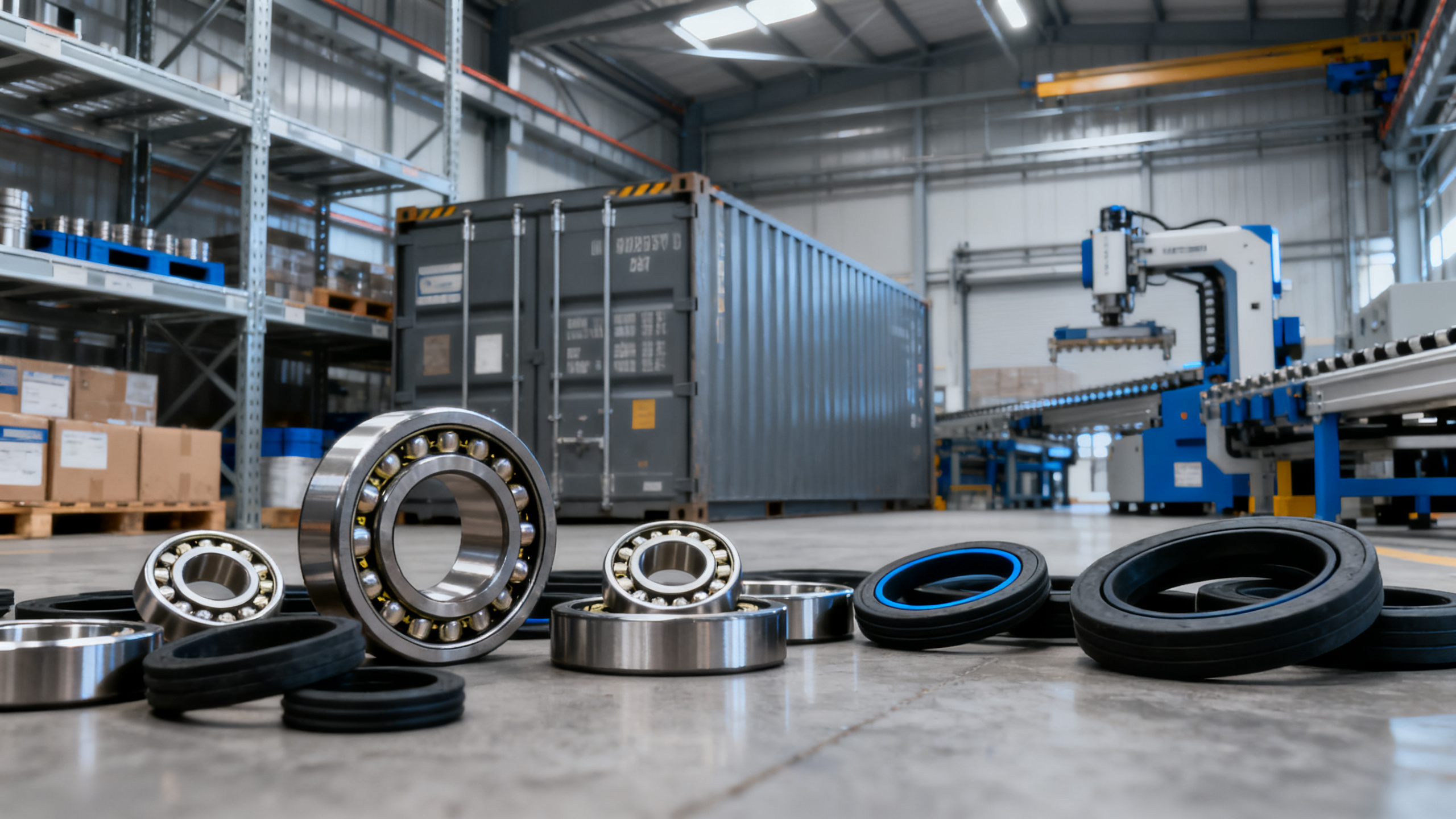
How to source Components & Metals without quality surprises
Author
Date Published
Reading Time

Sourcing Components & Metals at scale should never mean gambling on quality, compliance, or delivery. For distributors, agents, and industrial channel partners, the real advantage lies in choosing suppliers with verified standards, traceable materials, and consistent production controls.
This guide explains how to reduce risk, avoid costly surprises, and build a more reliable sourcing strategy in competitive global markets. The core lesson is simple: quality problems rarely begin at incoming inspection; they usually begin during supplier selection.
What buyers are really trying to avoid when sourcing Components & Metals
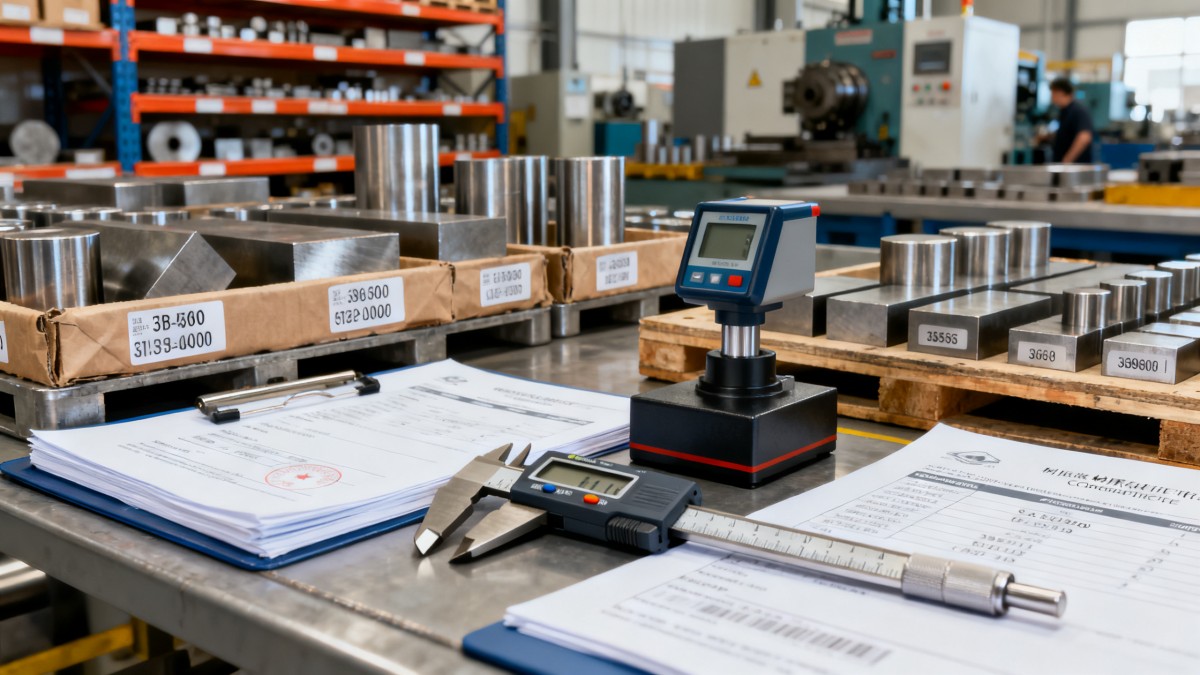
When distributors source Components & Metals, the biggest fear is not a slightly higher unit price. It is the hidden downstream cost of inconsistency, claims, shipment delays, and damaged customer trust.
Search intent behind this topic is highly practical. Buyers want a clear way to identify reliable suppliers before placing orders, especially when products must meet specifications, certifications, and repeatability across multiple batches.
For channel partners, a bad sourcing decision creates more than one problem. It can trigger returns, rework, site rejection, delayed projects, warranty disputes, and long-term pressure on margins.
That is why the right sourcing strategy must focus less on quotations alone and more on process control, traceability, testing discipline, and supplier transparency. Those are the real signals that help prevent quality surprises.
Why quality surprises happen even when samples look acceptable
Many supply issues begin with a false sense of security. A supplier sends a good sample, a clean certificate, and a competitive quote, but production conditions later differ from what was presented initially.
In Components & Metals sourcing, sample approval is only one small checkpoint. It does not guarantee raw material consistency, machining tolerance stability, plating quality, heat treatment results, or packaging protection during export.
Another common issue is uncontrolled subcontracting. A supplier may outsource casting, forging, surface treatment, or final finishing without clear disclosure. That weakens process visibility and introduces quality variation between shipments.
Documentation can also be misleading when buyers review it too quickly. A mill test certificate may exist, but the traceability chain to the delivered lot may be incomplete or poorly maintained.
For distributors and agents, the solution is to verify the production system behind the quote. If the supplier cannot clearly explain material sourcing, inspection points, and nonconformance handling, risk is already present.
How to qualify a supplier beyond price and presentation
Strong supplier qualification starts with evidence, not promises. Buyers should examine whether the supplier has documented quality systems, defined process routes, inspection records, and a stable history serving industrial customers with similar requirements.
Ask how incoming raw materials are approved. A capable supplier should explain supplier controls, material identification methods, batch segregation, and what happens when chemistry or mechanical values fall outside specification.
Review manufacturing capability in detail. For components, this may include machining centers, calibration status, fixture control, dimensional inspection, and statistical process methods. For metals, it may include melting route, forming process, and heat treatment control.
It is also important to confirm production capacity and planning discipline. Some quality failures are really schedule failures, where overloaded factories rush jobs, skip inspections, or mix lots to meet deadlines.
Channel partners should request examples of customer-specific quality plans, first article reports, corrective action reports, and retained inspection data. These reveal whether quality management is active or only decorative.
Finally, check communication quality. Suppliers that answer technical questions directly, provide revision-controlled documents, and acknowledge process limits honestly are usually safer than those who answer every request with automatic confidence.
The certifications and documents that actually matter
Not every certificate provides the same value. Buyers of Components & Metals should focus on documents that connect directly to compliance, traceability, and product suitability for the intended market and application.
At the management-system level, ISO 9001 is a useful baseline because it shows process structure. For more regulated or critical sectors, buyers may also look for industry-specific certifications where applicable.
At the product level, the key question is whether the supplier can produce material certificates, dimensional records, coating reports, hardness data, and performance tests linked to the actual shipment lot.
For metals, EN 10204 inspection documents are especially important in many industrial transactions. Buyers should know the difference between basic declarations and independently validated certification forms.
For finished components, drawing revision control matters as much as formal certification. A part can be made well and still be wrong if the supplier used an outdated revision, obsolete tolerance, or superseded material grade.
Distributors should also check whether declarations such as RoHS, REACH, CE-related support files, or UL-related material records are relevant to the product and destination market. Generic claims are not enough.
Traceability is the fastest way to separate serious suppliers from risky ones
Traceability is often treated as a paperwork issue, but it is really a risk-control system. When a complaint appears, traceability determines whether a supplier can isolate the affected lot quickly and prove what happened.
For metals, traceability should link heat number, batch, or coil identification to test results, storage condition, and shipment records. For components, it should connect raw material source, process steps, inspection points, and packing date.
If a supplier cannot show lot identification practices, label controls, and record retention rules, then any later problem becomes expensive to investigate. That uncertainty increases the buyer’s operational exposure.
Good traceability also protects honest suppliers. If only one lot is affected, the issue can be contained without broad recalls, unnecessary claims, or blanket rejection of otherwise conforming material.
For distributors serving multiple end users, traceability is especially valuable because it supports customer confidence, speeds claim resolution, and strengthens the distributor’s own reputation as a dependable sourcing partner.
Questions distributors should ask before placing a trial order
A trial order should be used to test the supplier’s system, not just the product. Buyers should ask structured questions that reveal how the supplier performs under real commercial conditions.
Start with material control. Ask where the raw metal comes from, how batches are identified, and whether substitutes ever occur without customer approval. Hidden substitutions are a major source of future claims.
Move to process discipline. Ask which dimensions are checked in-process, what gauges are used, how calibration is maintained, and whether final inspection is one hundred percent or sampling-based.
Ask about special processes such as plating, welding, passivation, heat treatment, or coating. These often generate failures that are not visible on first review but appear later in service.
Discuss packaging and logistics. Good parts can arrive damaged if export packaging is weak, rust protection is inadequate, or cartons do not preserve lot identity during cross-border handling.
Finally, ask how complaints are managed. A mature supplier should describe containment, root-cause analysis, corrective action timing, and how they prevent recurrence across future orders.
How to reduce sourcing risk with a practical approval workflow
Distributors do not need a complicated enterprise system to improve sourcing outcomes. A disciplined approval workflow can remove many avoidable surprises before a supplier enters the active vendor list.
Begin with document screening. Review company profile, quality certification, customer references, sample certificates, process capability summary, and export experience relevant to your target markets.
Next, perform technical alignment. Confirm drawing, standard, alloy grade, tolerance, surface finish, inspection scope, packaging requirements, and destination compliance expectations before commercial negotiation advances.
Then run a controlled sample or pilot order. This should include dimensional verification, material validation if necessary, packaging review, label review, and evaluation of documentation accuracy.
After the pilot, score the supplier across quality, responsiveness, lead time reliability, document quality, and issue handling. Price should be one factor, but not the only factor.
For higher-risk categories, periodic audits or remote process reviews are worthwhile. Even a structured video audit can reveal layout discipline, material segregation, machine condition, and general housekeeping standards.
Balancing cost pressure with reliability in competitive markets
Every distributor faces margin pressure, especially in global categories where many suppliers appear interchangeable. But the cheapest source often becomes the most expensive once hidden quality and service failures are counted.
Reliable sourcing of Components & Metals should be measured by total supply performance. That includes reject rate, claim frequency, replacement cost, emergency freight, project delay risk, and account retention.
A supplier with slightly higher pricing but stable conformance can protect sales teams from disputes and help channel partners win repeat business. That commercial stability usually matters more than a narrow purchase saving.
In practice, buyers should segment suppliers by criticality. High-impact parts, regulated items, or metals used in demanding environments deserve tighter qualification and more conservative source selection than low-risk consumables.
This category-based approach allows procurement teams to stay cost-aware without applying the same low-bar screening logic to every item in the portfolio.
Signs you may need to change or diversify suppliers
Some warning signs should not be ignored. Repeated delivery excuses, inconsistent documents, unexplained batch variation, delayed responses to technical questions, and frequent personnel changes can indicate deeper control issues.
Another red flag is when a supplier resists transparency. If they avoid audit discussions, refuse process photos, or cannot explain how nonconforming material is controlled, trust should decrease immediately.
Distributors should also watch for concentration risk. Even a good supplier can become a vulnerability if too much volume depends on one factory, one country, or one material route.
Dual sourcing or regional diversification is not always necessary, but in volatile markets it can improve resilience. The goal is not to replace good suppliers; it is to reduce exposure to single-point failure.
Conclusion: source for repeatability, not just availability
To source Components & Metals without quality surprises, buyers must look beyond visible samples and headline pricing. The safest decisions come from verified systems, traceable materials, disciplined processes, and responsive quality management.
For distributors, agents, and industrial channel partners, the real competitive edge is repeatability. When a supplier can deliver the same quality, documents, and lead-time performance batch after batch, risk falls and customer confidence rises.
In today’s market, dependable sourcing is not only a procurement task. It is a business protection strategy. Choose partners that can prove control, not just promise it, and quality surprises become far less likely.
Technical Specifications
- How to Select Electronic Hotel Key Card Locks for Guest Rooms and Staff AreasAuthor :Safety Compliance Lead
- How to Select Lab Instruments for Reliable Chemical Analysis WorkflowsAuthor :Precision Metrology Expert
- How to Size a UPS for Server Rooms: Load, Runtime, and Redundancy FactorsAuthor :Grid Infrastructure Analyst
Expert Insights

Chief Security Architect
Dr. Thorne specializes in the intersection of structural engineering and digital resilience. He has advised three G7 governments on industrial infrastructure security.
Related Analysis
- Sep 17, 2026How to Select Electronic Hotel Key Card Locks for Guest Rooms and Staff AreasAuthor :Safety Compliance Lead
- Sep 16, 2026How to Select Lab Instruments for Reliable Chemical Analysis WorkflowsAuthor :Precision Metrology Expert
- Sep 15, 2026How to Size a UPS for Server Rooms: Load, Runtime, and Redundancy FactorsAuthor :Grid Infrastructure Analyst
Core Sector // 01
Security & Safety
- Selecting Low-Friction Pneumatic Seals for High-Cycle, Low-Pressure CylindersAuthor :Heavy Industry Strategist

- Selecting Spherical Roller Bearings for Mining: Load, Contamination, and Service LifeAuthor :Heavy Industry Strategist

- Do Deep Groove Ball Bearings Need Special Seals in Coastal Humidity?Author :Heavy Industry Strategist

- How to Select Anti Vibration Rubber Shock Absorbers for Machinery and EquipmentAuthor :Heavy Industry Strategist

- When to Specify Induction Hardened Slewing Ring Bearings for Heavy-Duty EquipmentAuthor :Heavy Industry Strategist

- How to Evaluate Weather Resistant EPDM Extrusion for Outdoor Sealing ApplicationsAuthor :Heavy Industry Strategist

- Bearing and Seal Lead Times Stretch to 22 WeeksAuthor :Heavy Industry Strategist

- Angular Contact Ball Bearings Explained: Contact Angle, Load Capacity, and Common UsesAuthor :Heavy Industry Strategist