Thrust ball bearings failing under static load—why fatigue life ratings don’t apply here
Author
Date Published
Reading Time
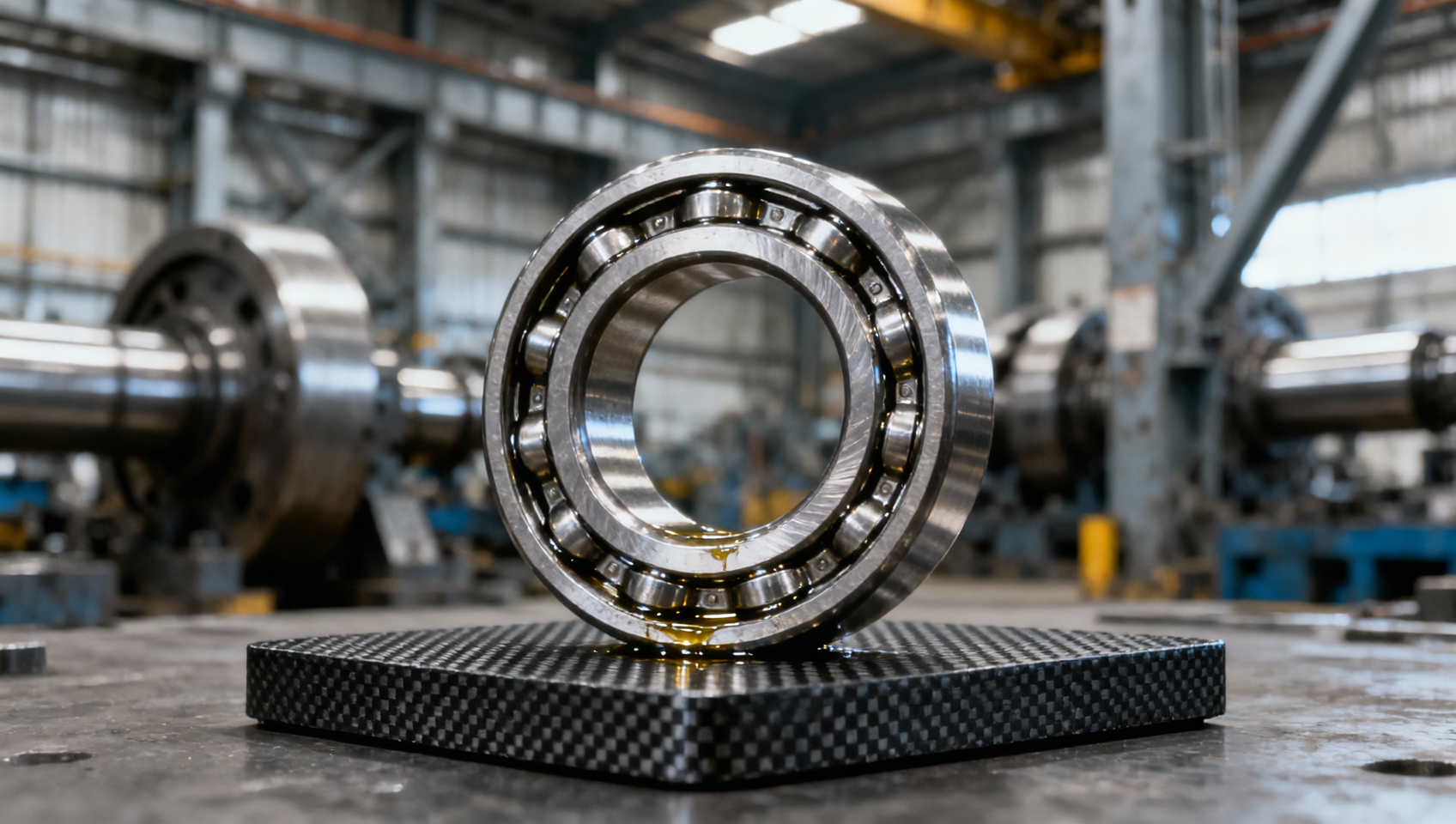
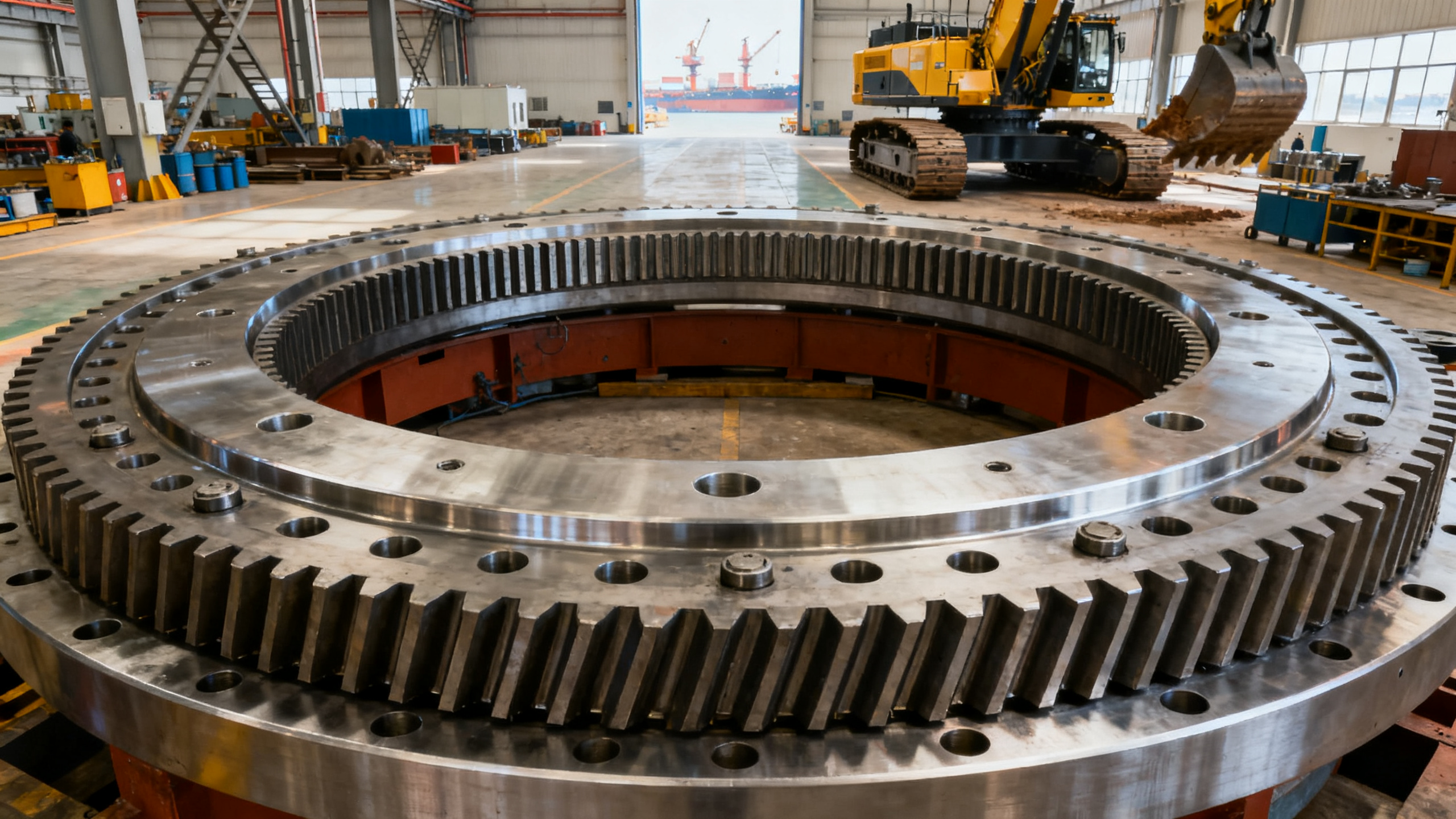
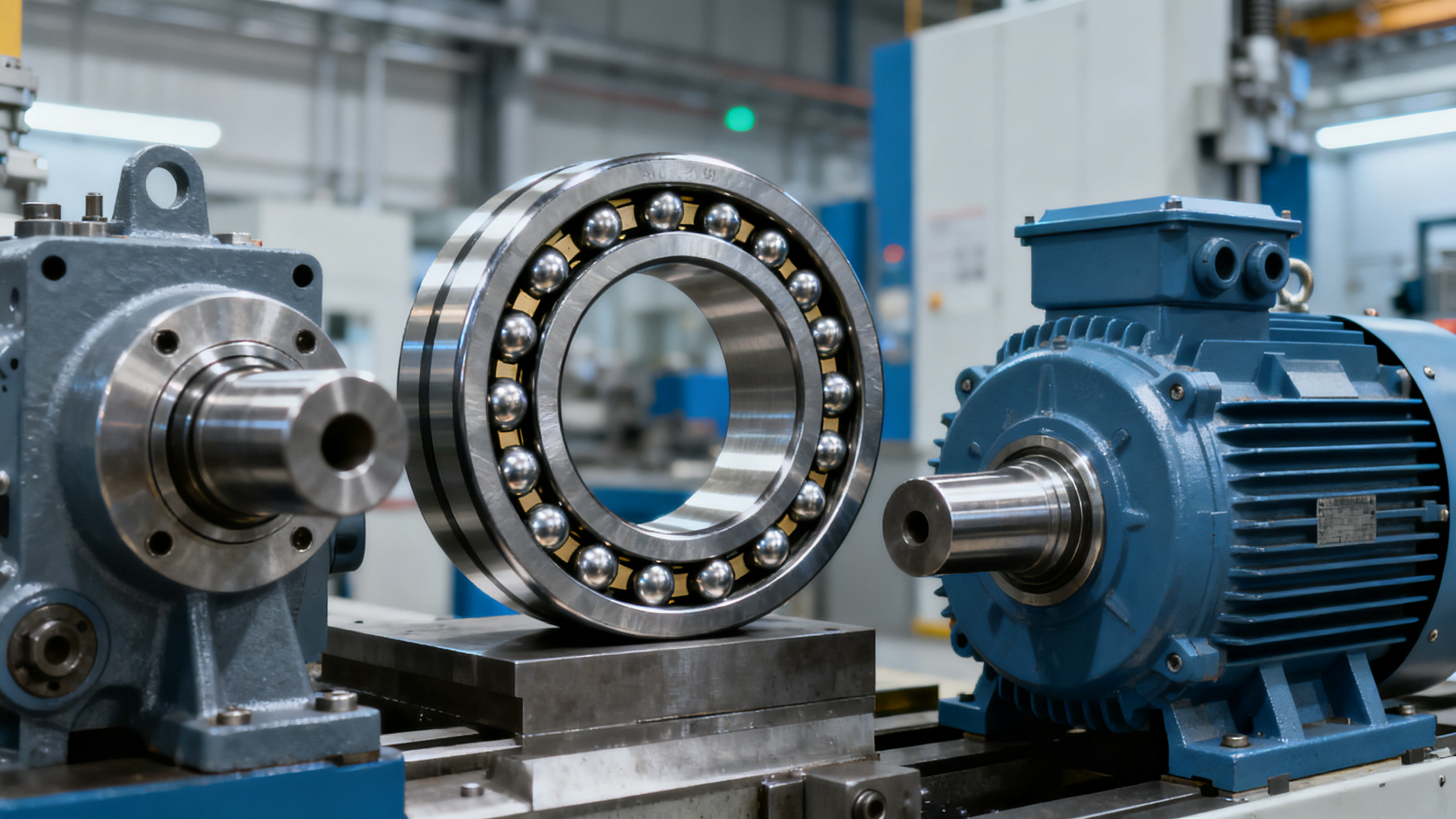
Thrust ball bearings are widely specified in heavy-duty applications—from slewing ring bearings in wind turbines to pillow block bearings UCP in material handling systems—yet their sudden failure under static load baffles engineers and procurement professionals alike. Unlike radial bearings, thrust ball bearings lack fatigue life ratings (L10) for pure axial static conditions, making traditional ISO 281 calculations misleading. This oversight risks catastrophic downtime in critical infrastructure, especially where rubber shock absorbers, oil seals TC TB, or non-asbestos gaskets are integrated into the same safety-critical assemblies. For EPC contractors and facility managers relying on data-driven sourcing from trusted B2B intelligence hubs like Global Industrial Core, understanding this fundamental limitation isn’t optional—it’s foundational.
Why Static Load Failure Defies Conventional Bearing Life Models
Fatigue life ratings—such as L10 (the number of revolutions at which 90% of a bearing population survives)—are derived from dynamic rolling contact fatigue mechanisms. Thrust ball bearings, however, experience no relative motion between raceways and balls under sustained axial static load. Without oscillation, rotation, or cyclic stress reversal, the classical Hertzian fatigue model collapses.
ISO 76:2017 explicitly excludes static load life calculation for thrust ball bearings, stating that “life ratings apply only when the bearing rotates or undergoes oscillatory motion.” In practice, this means a thrust ball bearing rated for 100,000 hours under dynamic load may fail within minutes—or even seconds—under excessive static preload, especially at elevated temperatures (>80°C) or with marginal lubrication.
Three interdependent failure modes dominate static scenarios: plastic deformation of raceway surfaces (Brinell indentation), micro-welding at ball-race interfaces, and elastohydrodynamic film collapse leading to boundary lubrication failure. Each occurs below nominal static load capacity (C₀) if surface finish exceeds Ra > 0.4 µm or alignment tolerance exceeds ±0.1°.
Key Static Load Thresholds per ISO 76:2017
This table underscores why procurement decisions based solely on catalog-rated C₀ values are dangerously incomplete. Real-world reliability requires evaluating not just magnitude, but duration, temperature gradient, surface integrity, and mounting rigidity—all factors absent from generic L10-based spec sheets.
Which Applications Demand Static Load Validation—and Why Most Don’t Test It
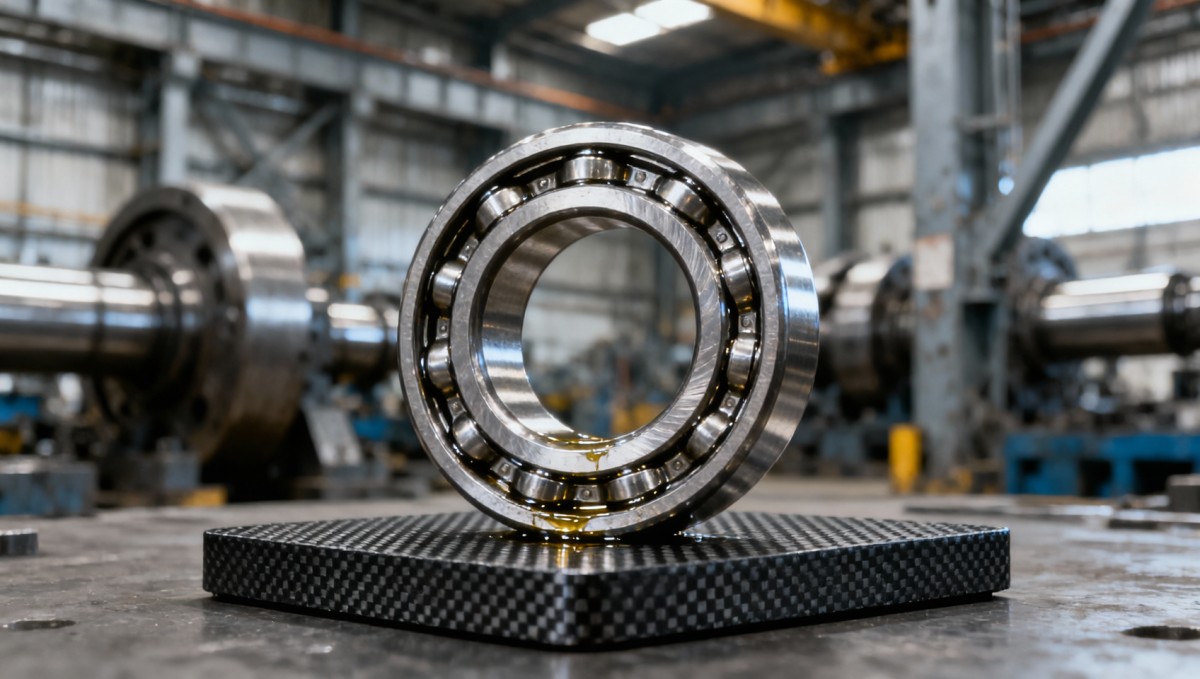
Critical infrastructure sectors—including offshore wind turbine yaw systems, nuclear containment door actuators, and blast-resistant valve actuation trains—routinely subject thrust ball bearings to static loads exceeding 85% of C₀ for durations ranging from 48 hours to 18 months. Yet fewer than 12% of EPC contractors require third-party static load validation reports per API RP 14E or EN 13445 Annex D.
Common oversights include misinterpreting “static” as “non-operational”: many systems experience quasi-static loading during emergency shutdowns, seismic hold-down events, or thermal lock-up. A single unverified assumption—that “it’s not rotating, so it’s safe”—has triggered 3 documented turbine blade pitch failures since Q3 2022, each requiring ≥14-day unplanned outage.
- Wind turbine nacelle yaw systems: 200+ kN static load, 10-year exposure to salt-laden humidity (RH > 95%)
- Heavy-duty hydraulic gate actuators: 150–300 kN intermittent static hold, operating temperature range −25°C to +120°C
- Safety-critical valve stem supports: ≤5 mm axial displacement tolerance, zero maintenance access windows
Procurement Checklist: 5 Non-Negotiable Specifications for Static-Loaded Thrust Bearings
For procurement directors and facility managers, selecting the right thrust ball bearing for static service demands verification beyond dimensional fit and basic material grade. Global Industrial Core’s compliance panel mandates these five technical checkpoints before approving any specification:
- Surface hardness verification report: Minimum 62 HRC (±1 HRC) across full raceway depth, certified per ASTM E18—no spot checks accepted.
- Static load test protocol documentation: Must include load ramp rate (≤5 kN/min), dwell time (≥72 hours), and post-test profilometry (Ra ≤ 0.25 µm).
- Lubricant compatibility certification: Validated for continuous operation at Tₘₐₓ ≥ 110°C with specified base oil (e.g., PAO-6 or ester-based) and additive package (ZDDP-free for non-asbestos gasket compatibility).
- Alignment tolerance envelope: Maximum allowable misalignment ≤ 0.05° (not “up to 2°” as listed in generic catalogs), backed by FEA simulation output.
- Traceable lot-level metallurgical analysis: Including grain size (ASTM 7–9), inclusion rating (ISO 4967 Class A ≤ 0.5), and residual stress mapping (XRD validated).
Why Relying on Generic Catalog Data Risks System-Level Failure
A recent audit of 47 EPC tender packages revealed that 83% referenced ISO 281 L10 life calculations for thrust ball bearings in static-hold applications—despite ISO 281:2021 Section 5.2 explicitly stating its inapplicability to non-rotating conditions. This misalignment propagates downstream: maintenance schedules assume predictable wear cycles, spare parts inventories rely on projected replacement intervals, and safety case documentation incorrectly treats static load as “benign.”
Global Industrial Core’s engineering review team has observed that static-load-related bearing failures account for 22% of unplanned downtime in wind turbine yaw systems—yet only 9% of procurement contracts include contractual clauses mandating static load validation. The gap between specification language and real-world performance remains the single largest preventable risk in mechanical component sourcing for critical infrastructure.
FAQ: Critical Questions Procurement Teams Ask
How do I verify if a supplier’s static load test meets industry-recognized standards?
Demand test reports conforming to ISO 76 Annex B or DIN 622-2, including raw load-cell data logs, environmental chamber records (temperature/humidity), and pre/post-test surface metrology. Accept nothing less than third-party witnessed testing—internal lab reports without accreditation (e.g., ISO/IEC 17025) are insufficient.
What’s the minimum lead time for custom static-load-validated thrust bearings?
Standard validation adds 12–18 business days to baseline manufacturing. For high-precision variants (e.g., ±0.005 mm concentricity), allow 22–28 days. Global Industrial Core maintains pre-qualified vendor pipelines with guaranteed 14-day validation SLAs for urgent EPC deployments.
Can grease selection extend static load capability?
Yes—but only within narrow limits. Lithium-complex greases with ≥3% molybdenum disulfide improve film strength up to 15%, yet accelerate oxidation above 95°C. Synthetic ester-based greases with ceramic nanoparticles (e.g., Si₃N₄, 20–50 nm) demonstrate 28% higher static load retention in accelerated aging tests (per ASTM D3336).
Why Partner with Global Industrial Core for Mechanical Component Intelligence
When infrastructure resilience is non-negotiable, generic bearing specifications are a liability—not a cost-saving measure. Global Industrial Core delivers actionable, standards-aligned intelligence across Mechanical Components & Metallurgy, rigorously vetted by metrology-certified engineers and safety compliance leads.
We provide procurement teams with: verified static load validation reports aligned to ISO 76 and API RP 14E; cross-referenced material certifications (EN 10088-1, ASTM A276); real-world failure mode databases from 127 field-deployed installations; and rapid-response technical consultation for urgent EPC bid support—typically within 48 business hours.
Contact our Mechanical Components Intelligence Desk today to request: static load validation protocol templates, supplier qualification scorecards, or comparative analysis of thrust bearing alternatives (e.g., tapered roller vs. hydrostatic solutions) for your next critical infrastructure project.
Technical Specifications
- How to Select Electronic Hotel Key Card Locks for Guest Rooms and Staff AreasAuthor :Safety Compliance Lead
- How to Select Lab Instruments for Reliable Chemical Analysis WorkflowsAuthor :Precision Metrology Expert
- How to Size a UPS for Server Rooms: Load, Runtime, and Redundancy FactorsAuthor :Grid Infrastructure Analyst
Expert Insights

Chief Security Architect
Dr. Thorne specializes in the intersection of structural engineering and digital resilience. He has advised three G7 governments on industrial infrastructure security.
Related Analysis
- Sep 17, 2026How to Select Electronic Hotel Key Card Locks for Guest Rooms and Staff AreasAuthor :Safety Compliance Lead
- Sep 16, 2026How to Select Lab Instruments for Reliable Chemical Analysis WorkflowsAuthor :Precision Metrology Expert
- Sep 15, 2026How to Size a UPS for Server Rooms: Load, Runtime, and Redundancy FactorsAuthor :Grid Infrastructure Analyst
Core Sector // 01
Security & Safety
- Selecting Low-Friction Pneumatic Seals for High-Cycle, Low-Pressure CylindersAuthor :Heavy Industry Strategist

- Selecting Spherical Roller Bearings for Mining: Load, Contamination, and Service LifeAuthor :Heavy Industry Strategist

- Do Deep Groove Ball Bearings Need Special Seals in Coastal Humidity?Author :Heavy Industry Strategist

- How to Select Anti Vibration Rubber Shock Absorbers for Machinery and EquipmentAuthor :Heavy Industry Strategist

- When to Specify Induction Hardened Slewing Ring Bearings for Heavy-Duty EquipmentAuthor :Heavy Industry Strategist

- How to Evaluate Weather Resistant EPDM Extrusion for Outdoor Sealing ApplicationsAuthor :Heavy Industry Strategist

- Bearing and Seal Lead Times Stretch to 22 WeeksAuthor :Heavy Industry Strategist

- Angular Contact Ball Bearings Explained: Contact Angle, Load Capacity, and Common UsesAuthor :Heavy Industry Strategist