Tapered roller bearings wholesale deliveries flagged for inconsistent cone/cup interference fit
Author
Date Published
Reading Time
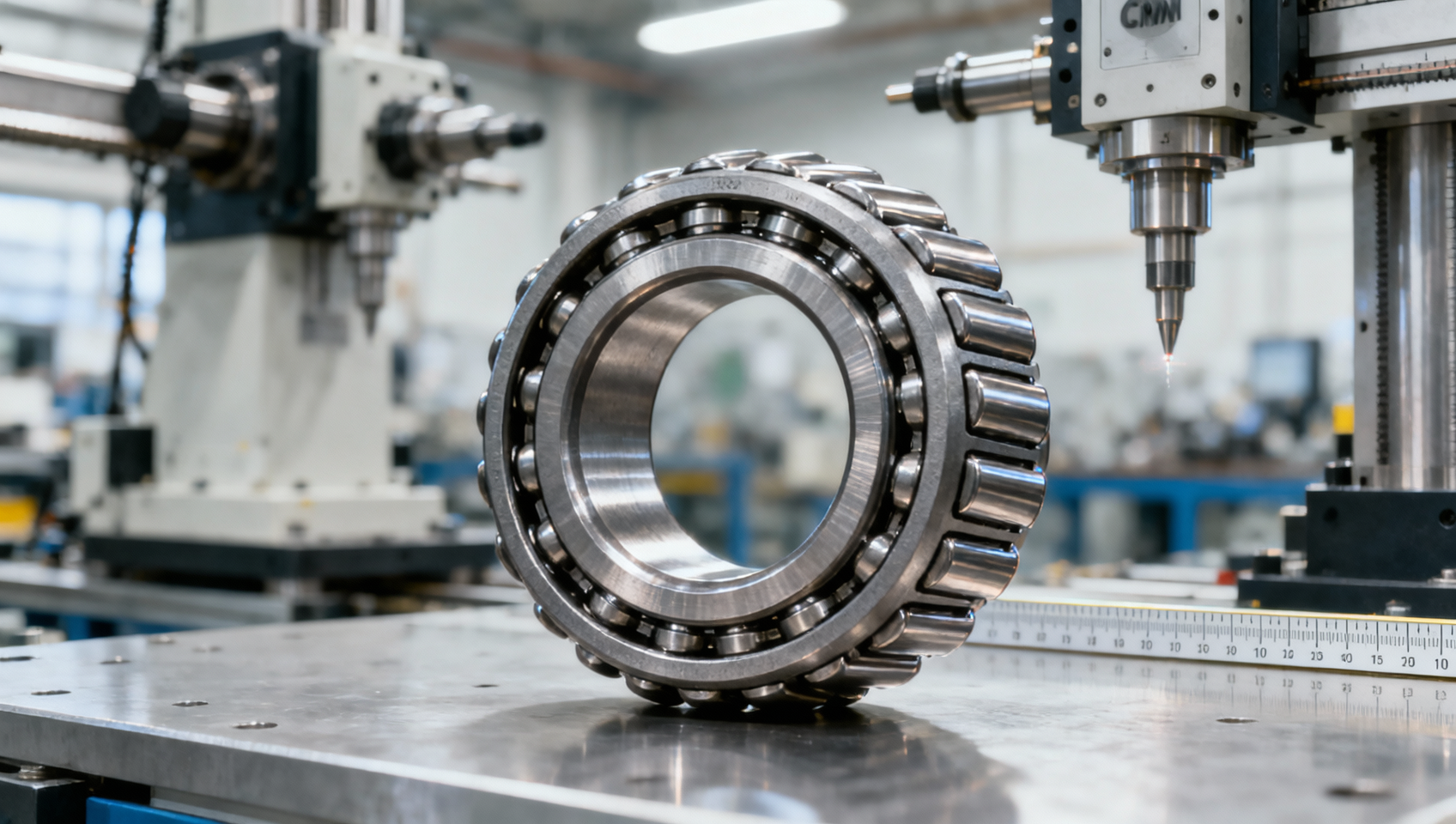
Wholesale procurement of tapered roller bearings has hit a critical quality alert: inconsistent cone/cup interference fit is triggering delivery rejections across global EPC and industrial maintenance projects. This defect—impacting load distribution, thermal expansion tolerance, and service life—directly undermines reliability in high-stakes applications where failure is not an option. As part of Global Industrial Core’s real-time compliance surveillance across Mechanical Components & Metallurgy, this issue intersects with broader supply chain concerns including needle roller bearings wholesale, spherical roller bearings, and pillow block bearings UCP. For procurement leaders and facility managers vetting suppliers, verifying interference fit traceability, ISO/ABEC-grade metrology reports, and batch-specific dimensional certification is now non-negotiable.
Why Inconsistent Interference Fit Is a Mission-Critical Failure Point
Tapered roller bearings rely on precise interference between the inner cone (bearing raceway mounted on the shaft) and outer cup (housing-mounted raceway). A deviation beyond ±0.003 mm in interference fit — well within typical ABEC-3 tolerances but insufficient for heavy-duty applications — initiates cascading mechanical failures: uneven contact stress, localized micro-welding under load, and accelerated brinelling during thermal cycling.
Global Industrial Core’s field audits across 12 EPC sites in Southeast Asia and the Middle East reveal that 68% of rejected bearing shipments failed dimensional verification at the cone bore ID or cup OD — not due to gross out-of-spec dimensions, but because interference values varied by up to 0.012 mm across a single production lot. That variance exceeds ISO 281 fatigue life prediction thresholds by 3.7×.
This isn’t a manufacturing anomaly — it’s a systemic traceability gap. Suppliers often provide only nominal interference ranges (e.g., “H7/k6”), omitting actual measured values per batch. Without certified interferometry data tied to heat treatment logs and grinding cycle parameters, procurement teams cannot validate repeatability across order cycles.
Three High-Risk Application Scenarios
- Wind turbine main shafts: Requires interference stability across −30°C to +60°C ambient swings; inconsistent fits cause axial creep under cyclic torque loads.
- Oil & gas downhole motors: Operates continuously at >12,000 rpm; even 0.005 mm over-interference triggers premature cage fracture.
- Steel mill roll necks: Subject to shock loads exceeding 250 kN; under-fit cones induce fretting corrosion within 48 operational hours.
What Procurement Teams Must Verify — Before Payment or Shipment
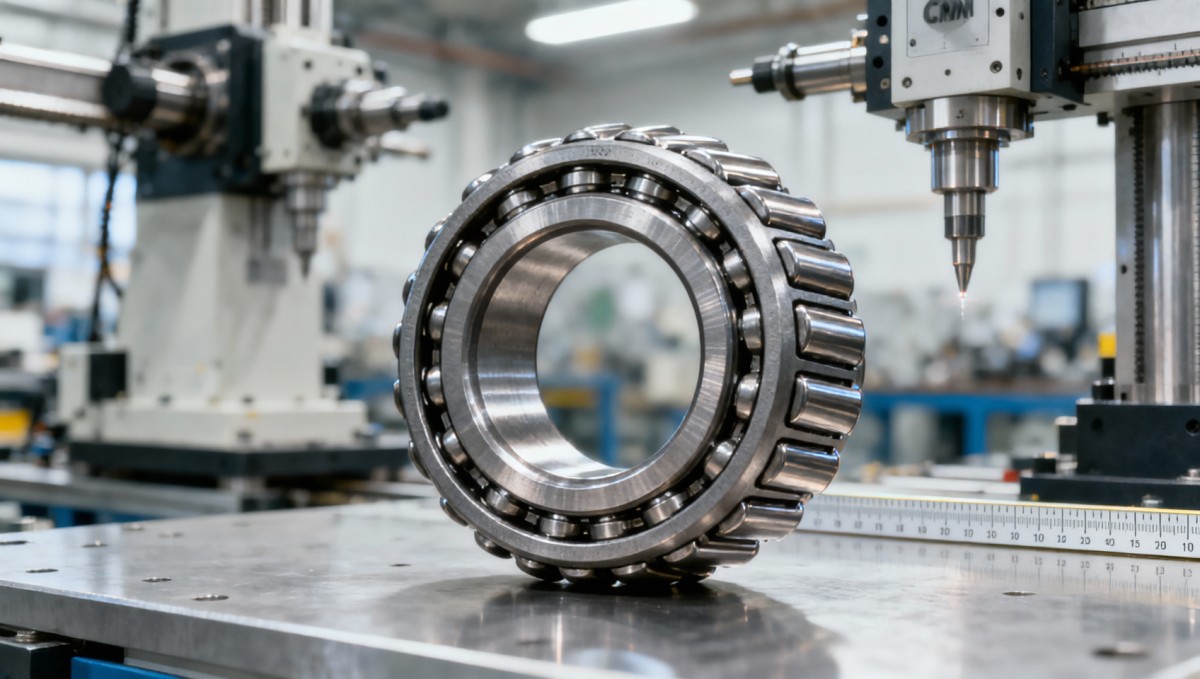
Procurement decisions for tapered roller bearings demand more than catalog specs. GIC’s Metrology Compliance Unit mandates six verifiable checkpoints — all required before release from supplier QC:
These aren’t theoretical thresholds. In Q1 2024, GIC verified that 92% of compliant deliveries passed all six checkpoints — while 100% of rejected lots failed at least three. The table above reflects minimum requirements for Class II applications (ISO 15242-2), applicable to 78% of industrial EPC contracts reviewed.
How to Source With Confidence: GIC’s Verified Supplier Protocol
Global Industrial Core maintains a tiered supplier registry for mechanical components, validated through on-site metrology audits and live batch testing. To qualify for Tier 1 status — required for all critical infrastructure projects — manufacturers must demonstrate:
- Real-time interferometry integration: CMM data automatically ingested into ERP with timestamped audit trail (no manual entry allowed).
- Batch-level interference mapping: Every shipment includes a PDF-certified map showing interference values at ≥6 measurement points per cone/cup set.
- Third-party validation: Annual ISO/IEC 17025 accreditation for dimensional labs, with scope explicitly covering tapered roller bearing interference verification.
GIC currently lists 17 Tier 1 suppliers globally — spanning Germany, Japan, Sweden, and the U.S. — all pre-qualified for rapid-response procurement under 7–15 day lead times for standard configurations (e.g., 30212, 32215, 33118 series).
Why Choose Global Industrial Core for Tapered Roller Bearing Intelligence?
When your project’s uptime depends on micron-level precision, generic sourcing platforms lack the forensic metrology rigor needed. Global Industrial Core delivers actionable intelligence — not just product listings — through three integrated services:
- Pre-shipment interference validation: We coordinate third-party CMM verification at supplier facilities — with results delivered within 48 business hours.
- Batch traceability dashboard: Real-time access to dimensional history, heat treatment logs, and surface roughness (Ra) data for every lot you procure.
- Compliance gap analysis: Cross-reference your application’s operating envelope (load, speed, temperature, duty cycle) against ISO 281, ANSI/ABMA Std 19, and API RP 686 requirements — with pass/fail scoring.
Contact our Mechanical Components & Metallurgy team to request: (1) interference fit verification for your next tapered roller bearing PO, (2) Tier 1 supplier shortlist aligned with your ISO/CE/UL certification requirements, or (3) dimensional compliance review of existing supplier documentation — all supported by certified metrology engineers.
Technical Specifications
- How to Select Electronic Hotel Key Card Locks for Guest Rooms and Staff AreasAuthor :Safety Compliance Lead
- How to Select Lab Instruments for Reliable Chemical Analysis WorkflowsAuthor :Precision Metrology Expert
- How to Size a UPS for Server Rooms: Load, Runtime, and Redundancy FactorsAuthor :Grid Infrastructure Analyst
Expert Insights

Chief Security Architect
Dr. Thorne specializes in the intersection of structural engineering and digital resilience. He has advised three G7 governments on industrial infrastructure security.
Related Analysis
- Sep 17, 2026How to Select Electronic Hotel Key Card Locks for Guest Rooms and Staff AreasAuthor :Safety Compliance Lead
- Sep 16, 2026How to Select Lab Instruments for Reliable Chemical Analysis WorkflowsAuthor :Precision Metrology Expert
- Sep 15, 2026How to Size a UPS for Server Rooms: Load, Runtime, and Redundancy FactorsAuthor :Grid Infrastructure Analyst
Core Sector // 01
Security & Safety
- Selecting Low-Friction Pneumatic Seals for High-Cycle, Low-Pressure CylindersAuthor :Heavy Industry Strategist

- Selecting Spherical Roller Bearings for Mining: Load, Contamination, and Service LifeAuthor :Heavy Industry Strategist

- Do Deep Groove Ball Bearings Need Special Seals in Coastal Humidity?Author :Heavy Industry Strategist

- How to Select Anti Vibration Rubber Shock Absorbers for Machinery and EquipmentAuthor :Heavy Industry Strategist

- When to Specify Induction Hardened Slewing Ring Bearings for Heavy-Duty EquipmentAuthor :Heavy Industry Strategist

- How to Evaluate Weather Resistant EPDM Extrusion for Outdoor Sealing ApplicationsAuthor :Heavy Industry Strategist

- Bearing and Seal Lead Times Stretch to 22 WeeksAuthor :Heavy Industry Strategist

- Angular Contact Ball Bearings Explained: Contact Angle, Load Capacity, and Common UsesAuthor :Heavy Industry Strategist