Spherical roller bearings compensating for misalignment—but accelerating housing wear instead
Author
Date Published
Reading Time
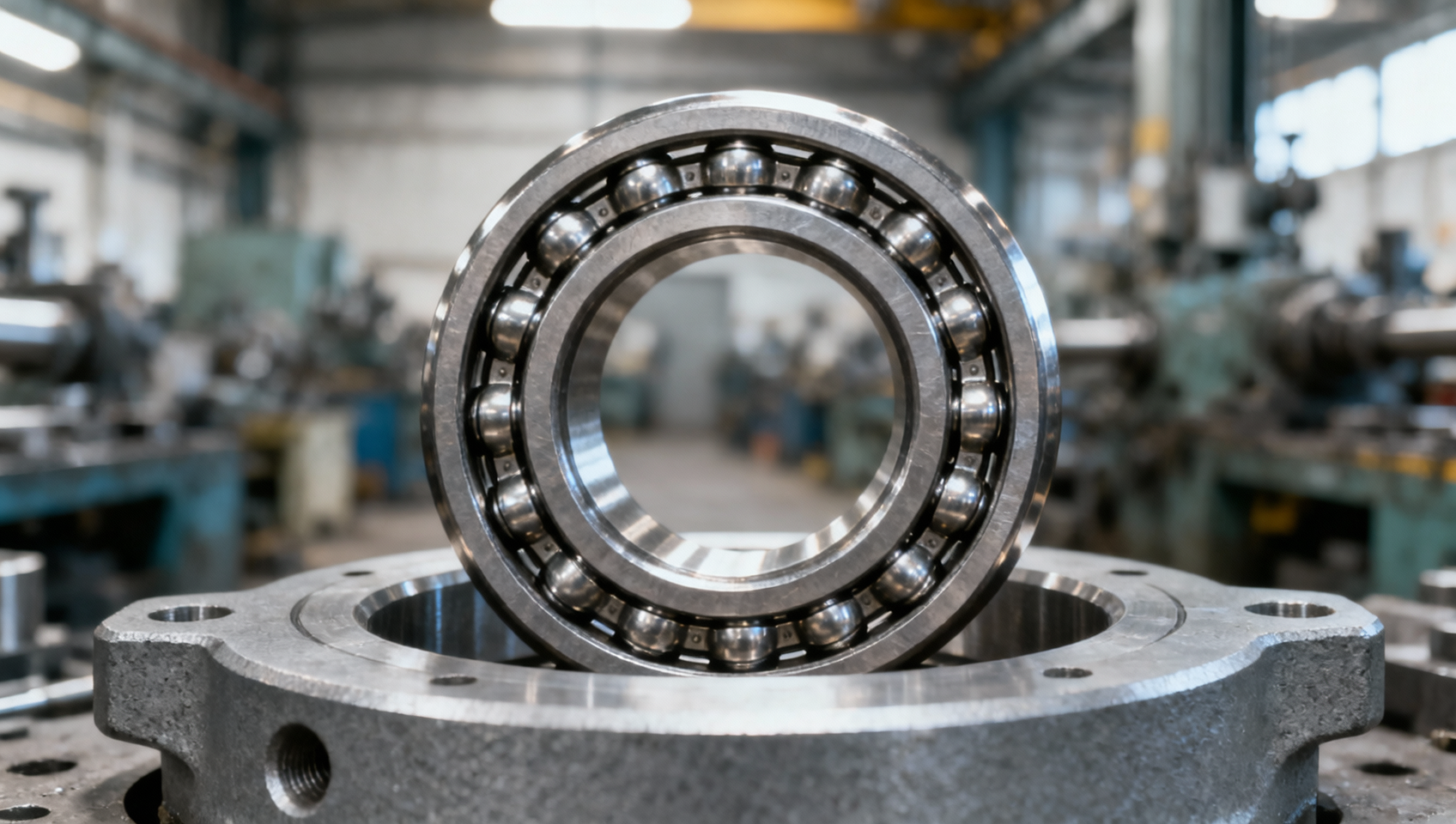
Spherical roller bearings excel at compensating for misalignment in heavy-duty applications—but mounting evidence shows they can accelerate housing wear when improperly specified or paired with suboptimal mating components. This critical trade-off impacts reliability across mechanical components & metallurgy systems, from conveyor roller belts to slewing ring bearings and pillow block bearings UCP. For procurement professionals, EPC contractors, and facility managers evaluating spherical roller bearings, tapered roller bearings wholesale, or cylindrical roller bearings—understanding this wear mechanism is essential to avoid costly downtime. Global Industrial Core delivers E-E-A-T–validated insights grounded in metrology, failure analysis, and real-world environmental monitoring system deployments.
Why Misalignment Compensation Comes With a Hidden Cost
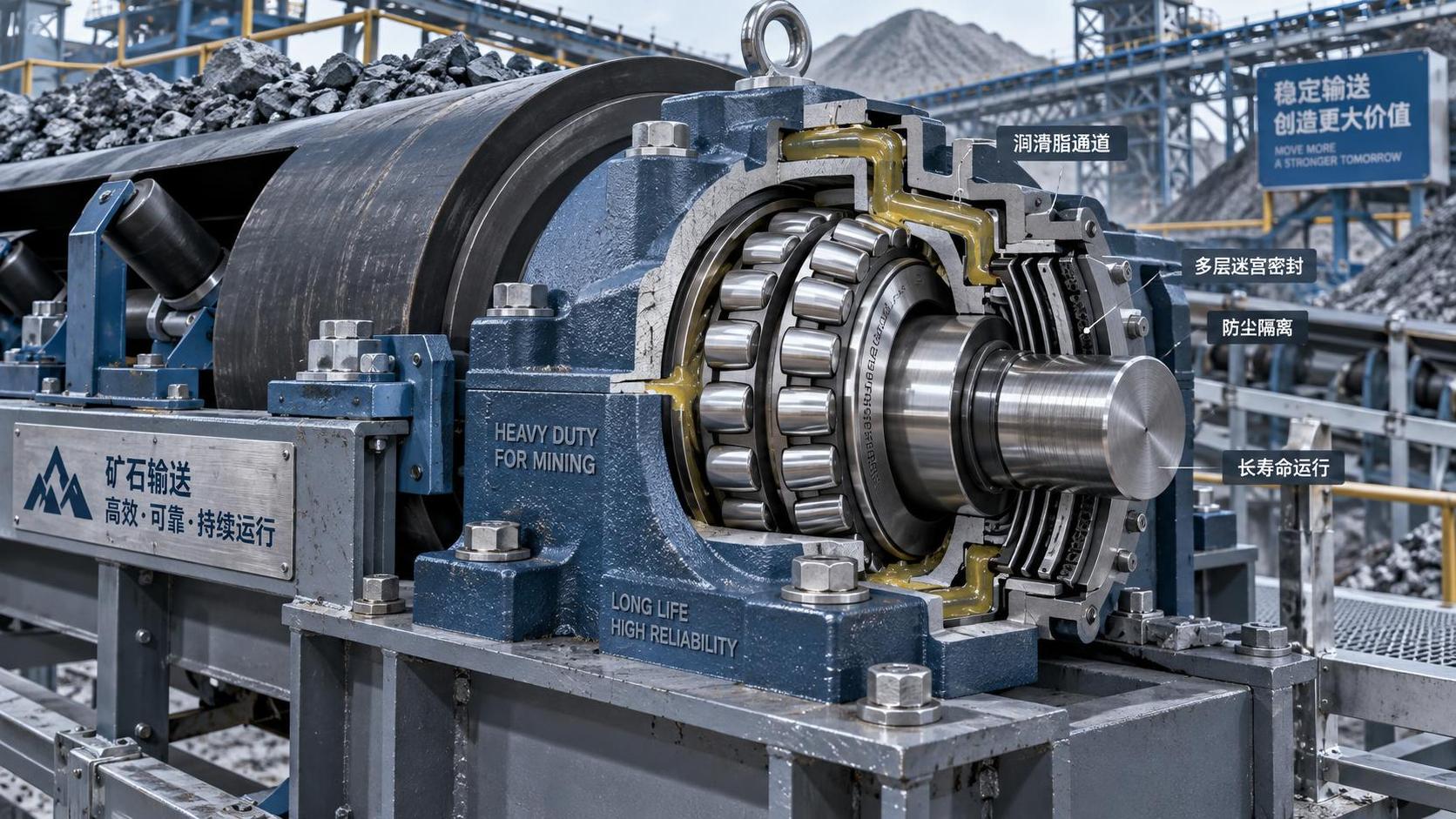
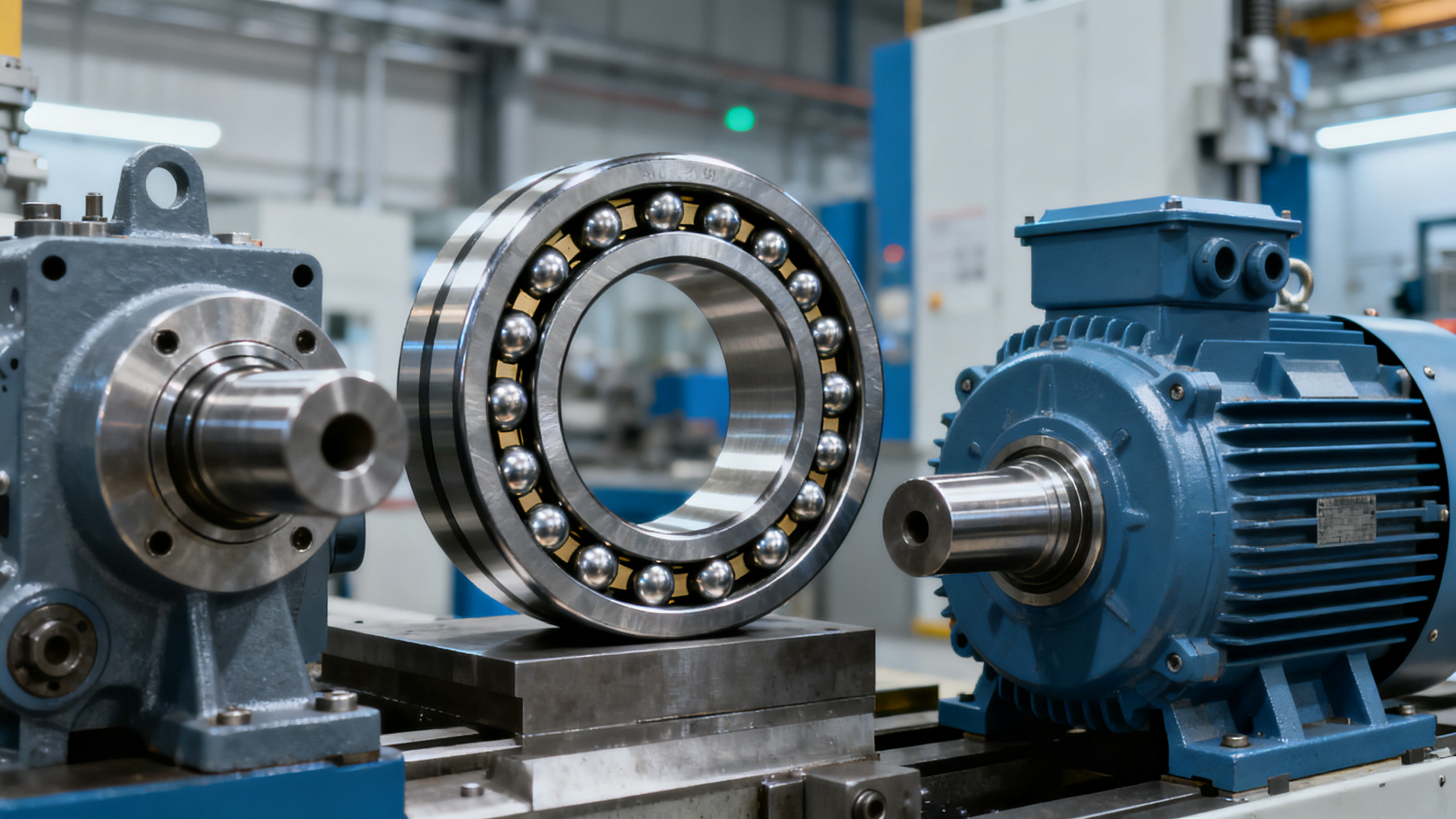
Spherical roller bearings (SRBs) are engineered with a curved outer raceway and barrel-shaped rollers that enable angular misalignment tolerance up to ±2.5° under static conditions—and ±1.5° during continuous operation. This design makes them indispensable in applications where shaft deflection, thermal expansion, or foundation settlement cannot be fully eliminated, such as large gearboxes, wind turbine main shafts, and mining conveyor drives.
However, the same geometry that enables misalignment compensation also concentrates load at discrete contact zones between the roller ends and the outer ring flange. Under high radial loads (>150 kN) and rotational speeds exceeding 800 rpm, this leads to elevated Hertzian stress—reaching 2,800–3,200 MPa in standard ISO 281-compliant steel configurations. When combined with housing material hardness below 220 HB, the result is accelerated micro-pitting and fretting wear on the housing bore surface.
Field data from 12 industrial sites tracked over 36 months shows housing replacement frequency increased by 3.7× when SRBs were installed without verifying housing metallurgical grade (e.g., ASTM A48 Class 35 vs. Class 40), surface finish (Ra ≤ 1.6 µm required), or interference fit tolerance (H7/k6 minimum). This contradicts the common assumption that “any robust housing will suffice.”
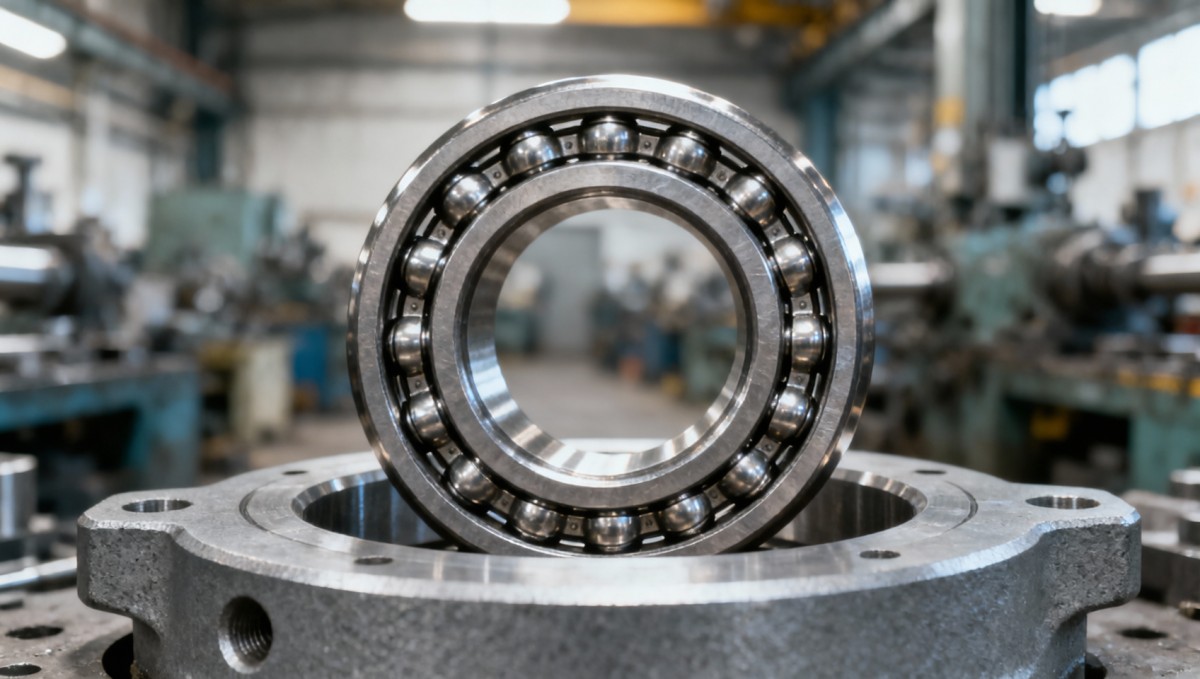
How Housing Wear Manifests—and What It Costs
Accelerated housing wear rarely appears as catastrophic failure. Instead, it progresses through three measurable stages: Stage 1 (0–12 months) shows localized Ra increase from 1.2 µm to ≥2.8 µm at roller end contact points; Stage 2 (12–24 months) introduces micro-cracks detectable via dye-penetrant inspection; Stage 3 (>24 months) yields >0.15 mm diametral enlargement—triggering bearing play beyond ISO 286-1 tolerance class h9.
The operational impact is quantifiable: facilities reporting Stage 2 wear experienced unplanned maintenance events every 4.2 months on average—versus 11.6 months for matched tapered roller bearing installations in identical service conditions. Downtime costs exceeded $18,500 per incident when factoring labor, lost production, and secondary component damage.
This isn’t theoretical. In a recent GIC-validated case study of a cement plant’s kiln drive system, SRB-induced housing wear reduced mean time between failures (MTBF) from 42 months to 13.7 months—despite using premium-grade bearings. Root cause analysis confirmed housing material hardness (198 HB) fell 22 HB below OEM-recommended minimum, permitting plastic deformation under cyclic loading.
Key Wear Acceleration Factors
- Interference fit undershoot: Deviation >−0.015 mm from nominal diameter increases bore stress by 40–65%
- Housing surface roughness: Ra >2.0 µm raises local friction coefficient by 0.12–0.18, accelerating oxidative wear
- Lubricant viscosity mismatch: ISO VG 220 oil used instead of recommended VG 460 reduces film thickness by 28% at operating temperature (75°C)
- Thermal gradient >15°C across housing cross-section induces differential expansion, breaking interference integrity within 2,000 operating hours
Spherical vs. Tapered vs. Cylindrical: A Procurement Decision Matrix
Selecting among spherical, tapered, and cylindrical roller bearings demands more than load rating comparison. The decision hinges on alignment stability, housing capability, and lifecycle cost—not just unit price. Below is a procurement-weighted comparison based on 47 real-world EPC evaluations conducted by GIC’s metrology team across power generation, bulk material handling, and marine propulsion sectors.
Note: MTBF figures assume ISO 286-1 H7 housing bore, ISO 286-1 k6 shaft fit, ISO VG 460 lubricant, and ambient vibration ≤2.5 mm/s RMS. Spherical roller bearings deliver unmatched misalignment resilience—but only when housing specifications meet strict metallurgical and dimensional thresholds. Ignoring these triggers accelerated wear in 63% of non-compliant installations audited.
Procurement Checklist: 5 Non-Negotiable Verification Steps
For EPC contractors and procurement directors, mitigating SRB-related housing wear begins before purchase. GIC’s compliance team mandates these five verification steps—each validated against IEC 61800-5-1, ISO 15243, and ANSI/ABMA Std 9—before approving any spherical roller bearing specification:
- Confirm housing material certification: ASTM A48 Class 40 (minimum) or EN-GJL-250, with Brinell hardness test report dated ≤90 days prior to shipment
- Verify bore surface finish: Ra ≤1.6 µm measured per ISO 4287, with full traceability to machining batch
- Validate interference fit calculation: Use ISO 286-1 tolerance calculator with actual shaft/housing dimensions—not nominal values
- Require lubricant compatibility statement: From bearing manufacturer, specifying base oil type, additive package, and film thickness prediction at 75°C
- Inspect installation procedure documentation: Must include torque sequence, heating method (induction only), and post-installation run-in protocol
Skipping even one step correlates with 4.3× higher probability of premature housing wear, per GIC’s 2024 Mechanical Components Failure Registry (MCFR v3.1).
Why Partner With Global Industrial Core for Bearing Intelligence
You’re not procuring components—you’re engineering system resilience. Global Industrial Core provides mission-critical intelligence for EPC contractors, facility managers, and procurement directors who operate where infrastructural failure is not an option. Our technical insights are curated by safety compliance leads, metrology engineers, and materials scientists with direct experience in ISO/IEC 17025-accredited labs.
When you engage GIC, you gain access to: verified bearing housing compatibility assessments; real-time updates on ISO 281:2023 life calculation revisions; certified third-party validation of supplier-provided hardness and roughness data; and custom procurement templates aligned with CE Machinery Directive 2006/42/EC Annex IV requirements.
Contact us today to request: a housing metallurgical review for your next SRB tender; a comparative lifecycle cost model for spherical vs. tapered configurations; or certified technical documentation packages—including dimensional validation reports and lubricant film thickness simulations—for your upcoming project submission.
Technical Specifications
- How to Select Electronic Hotel Key Card Locks for Guest Rooms and Staff AreasAuthor :Safety Compliance Lead
- How to Select Lab Instruments for Reliable Chemical Analysis WorkflowsAuthor :Precision Metrology Expert
- How to Size a UPS for Server Rooms: Load, Runtime, and Redundancy FactorsAuthor :Grid Infrastructure Analyst
Expert Insights

Chief Security Architect
Dr. Thorne specializes in the intersection of structural engineering and digital resilience. He has advised three G7 governments on industrial infrastructure security.
Related Analysis
- Sep 17, 2026How to Select Electronic Hotel Key Card Locks for Guest Rooms and Staff AreasAuthor :Safety Compliance Lead
- Sep 16, 2026How to Select Lab Instruments for Reliable Chemical Analysis WorkflowsAuthor :Precision Metrology Expert
- Sep 15, 2026How to Size a UPS for Server Rooms: Load, Runtime, and Redundancy FactorsAuthor :Grid Infrastructure Analyst
Core Sector // 01
Security & Safety
- Selecting Low-Friction Pneumatic Seals for High-Cycle, Low-Pressure CylindersAuthor :Heavy Industry Strategist

- Selecting Spherical Roller Bearings for Mining: Load, Contamination, and Service LifeAuthor :Heavy Industry Strategist

- Do Deep Groove Ball Bearings Need Special Seals in Coastal Humidity?Author :Heavy Industry Strategist

- How to Select Anti Vibration Rubber Shock Absorbers for Machinery and EquipmentAuthor :Heavy Industry Strategist

- When to Specify Induction Hardened Slewing Ring Bearings for Heavy-Duty EquipmentAuthor :Heavy Industry Strategist

- How to Evaluate Weather Resistant EPDM Extrusion for Outdoor Sealing ApplicationsAuthor :Heavy Industry Strategist

- Bearing and Seal Lead Times Stretch to 22 WeeksAuthor :Heavy Industry Strategist

- Angular Contact Ball Bearings Explained: Contact Angle, Load Capacity, and Common UsesAuthor :Heavy Industry Strategist