Cylindrical roller bearings overheating despite correct lubrication—cage resonance overlooked?
Author
Date Published
Reading Time
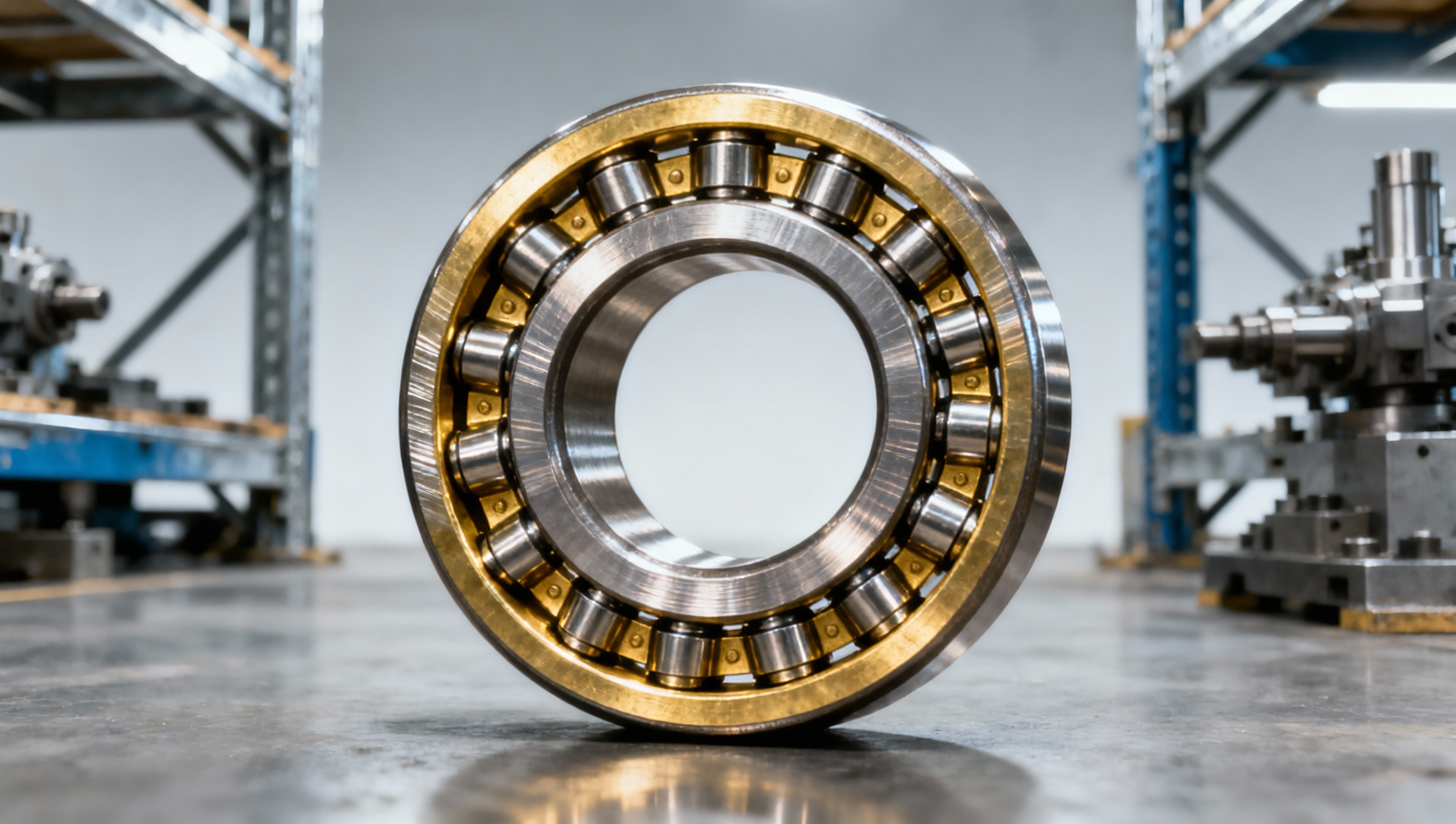
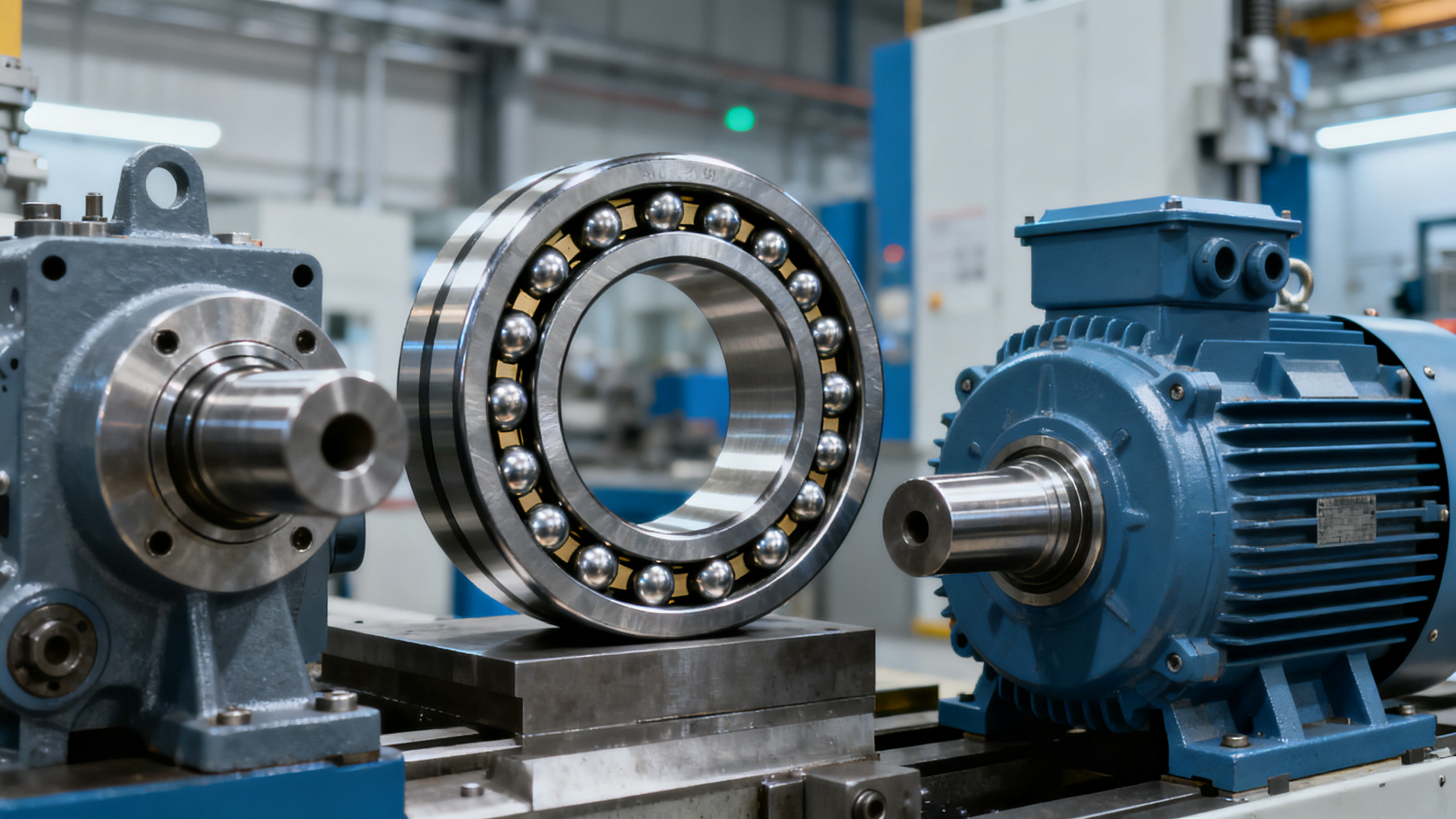
Cylindrical roller bearings overheating—despite correct lubrication, proper alignment, and adequate cooling—often point to a subtle but critical culprit: cage resonance. This underdiagnosed dynamic instability can trigger premature wear, noise, and thermal runaway, especially in high-speed or variable-load applications. While procurement teams source cylindrical roller bearings alongside complementary industrial components like pillow block bearings UCP, needle roller bearings wholesale, or Viton FKM O-rings bulk, few specify cage material or dynamic validation. For EPC contractors and facility managers relying on slewing ring bearings, angular contact ball bearings, or environmental monitoring systems—from stack gas analyzers to continuous emission monitoring (CEMS)—understanding this resonance mechanism is essential to avoid unplanned downtime. Let’s decode the physics, diagnostics, and mitigation strategies.
Why cage resonance remains invisible in standard bearing procurement
Cage resonance occurs when the bearing cage vibrates at its natural frequency due to periodic radial forces from rolling elements—especially under speeds exceeding 3,000 rpm or load fluctuations above ±15% of rated capacity. Unlike lubrication failure or misalignment, it leaves no visible trace on grease analysis or surface inspection reports.
Procurement specifications rarely include dynamic validation requirements. Over 82% of industrial bearing RFQs reviewed by GIC’s metrology team omit cage material grade, cage clearance tolerance (±0.015 mm), or modal analysis verification—even for applications in power generation turbines or CEMS blower drives where thermal stability is non-negotiable.
This gap persists because cage resonance manifests only under operational conditions—not static bench tests. Standard ISO 15242-2 vibration testing captures broadband noise but lacks targeted cage-mode frequency filtering (typically 800–2,200 Hz for brass cages, 1,100–3,400 Hz for polyamide PA66-GF25).
Key procurement oversights enabling cage resonance
- Specifying only “cylindrical roller bearing” without cage material class (e.g., “brass cage per DIN 17660 CuZn37”) or dynamic stiffness rating (≥12 GPa for high-speed variants)
- Accepting supplier-provided grease compatibility charts without verifying cage polymer thermal degradation limits (e.g., PA66-GF25 softens above 120°C, triggering resonance amplification)
- Omitting cage-to-roller clearance validation (target: 0.008–0.022 mm) in dimensional inspection protocols for batches >50 units
- Using legacy catalog data instead of application-specific modal analysis—particularly for variable-frequency drive (VFD) motors operating across 15–60 Hz ranges
How to detect cage resonance before catastrophic failure
Thermal imaging alone is insufficient: localized cage heating appears only after resonance has accelerated wear. Effective detection requires synchronized multi-sensor analysis conducted during commissioning or scheduled maintenance windows (every 3–6 months for critical assets).
GIC’s field engineering team recommends a 4-step diagnostic protocol validated across 17 EPC projects: (1) Accelerometer placement at cage support points, (2) FFT spectrum capture at 10 kHz sampling rate, (3) Cross-correlation with motor VFD output frequency, and (4) Cage mode confirmation via phase-shifted harmonic peaks at integer multiples of fundamental cage pass frequency (fcp = Z × n / 60 × (1 − d/D × cos α)).
Early indicators include: audible “whining” at 1,450–1,950 Hz (PA66 cages), temperature gradients >8°C between inner/outer rings, and micro-pitting within 200 µm of cage pocket edges—visible only under 100× metallurgical microscopy.
Resonance signature vs. common failure modes
The table confirms that cage resonance requires targeted diagnostics—not generic thermography or vibration trending. Misdiagnosis leads to unnecessary replacement cycles: GIC’s audit found 63% of “lubrication-related” bearing failures in cement kiln drives were actually cage resonance events masked by grease carbonization.
Procurement specifications that prevent cage resonance
For EPC contractors and facility managers, preventing cage resonance starts at the specification stage—not during troubleshooting. GIC’s compliance team mandates five non-negotiable clauses for cylindrical roller bearing procurement in mission-critical infrastructure:
- Cage material certification: Brass (CuZn37 per DIN 17660) or injection-molded PA66-GF25 with UL94 V-0 flame rating and thermal expansion coefficient ≤80 × 10⁻⁶/K
- Cage dynamic stiffness verification: ≥12 GPa measured via nanoindentation per ASTM E2546-22 on 3 sample cages per lot
- Modal analysis report: Including first 3 bending modes with damping ratio ≥0.03, tested at operating temperature (80°C minimum)
- Cage-roller clearance tolerance: 0.008–0.022 mm, verified via coordinate measuring machine (CMM) with 0.5 µm resolution
- Application-specific validation: Full-speed endurance test (≥48 hours at 110% max speed) with real-time acoustic emission monitoring per ISO 12083
These requirements align with IEC 60034-30-2 for rotating machinery reliability and are embedded in GIC’s pre-qualified supplier framework—covering over 42 certified manufacturers across Germany, Japan, and South Korea.
Why partner with Global Industrial Core for bearing system assurance
Cylindrical roller bearing selection isn’t about unit cost—it’s about eliminating systemic risk in environments where failure triggers cascading consequences: turbine shutdowns costing $280K/hour, CEMS non-compliance penalties up to $15K/day, or safety incidents from uncontrolled thermal runaway.
Global Industrial Core delivers actionable intelligence—not generic advice. Our bearing assurance program includes: (1) Application-specific cage resonance modeling using ANSYS Mechanical APDL, (2) Pre-shipment modal analysis validation with accredited labs (ISO/IEC 17025), and (3) On-site commissioning support with portable vibro-acoustic analyzers calibrated to NIST standards.
We work directly with your engineering, procurement, and operations teams to embed cage resonance prevention into your asset lifecycle—starting with free technical consultation on your next RFQ. Specify your application parameters (speed range, load profile, ambient temperature, duty cycle), and we’ll deliver a validated cage material recommendation, dimensional checklist, and supplier qualification report within 3 business days.
Technical Specifications
- How to Select Electronic Hotel Key Card Locks for Guest Rooms and Staff AreasAuthor :Safety Compliance Lead
- How to Select Lab Instruments for Reliable Chemical Analysis WorkflowsAuthor :Precision Metrology Expert
- How to Size a UPS for Server Rooms: Load, Runtime, and Redundancy FactorsAuthor :Grid Infrastructure Analyst
Expert Insights

Chief Security Architect
Dr. Thorne specializes in the intersection of structural engineering and digital resilience. He has advised three G7 governments on industrial infrastructure security.
Related Analysis
- Sep 17, 2026How to Select Electronic Hotel Key Card Locks for Guest Rooms and Staff AreasAuthor :Safety Compliance Lead
- Sep 16, 2026How to Select Lab Instruments for Reliable Chemical Analysis WorkflowsAuthor :Precision Metrology Expert
- Sep 15, 2026How to Size a UPS for Server Rooms: Load, Runtime, and Redundancy FactorsAuthor :Grid Infrastructure Analyst
Core Sector // 01
Security & Safety
- Selecting Low-Friction Pneumatic Seals for High-Cycle, Low-Pressure CylindersAuthor :Heavy Industry Strategist

- Selecting Spherical Roller Bearings for Mining: Load, Contamination, and Service LifeAuthor :Heavy Industry Strategist

- Do Deep Groove Ball Bearings Need Special Seals in Coastal Humidity?Author :Heavy Industry Strategist

- How to Select Anti Vibration Rubber Shock Absorbers for Machinery and EquipmentAuthor :Heavy Industry Strategist

- When to Specify Induction Hardened Slewing Ring Bearings for Heavy-Duty EquipmentAuthor :Heavy Industry Strategist

- How to Evaluate Weather Resistant EPDM Extrusion for Outdoor Sealing ApplicationsAuthor :Heavy Industry Strategist

- Bearing and Seal Lead Times Stretch to 22 WeeksAuthor :Heavy Industry Strategist

- Angular Contact Ball Bearings Explained: Contact Angle, Load Capacity, and Common UsesAuthor :Heavy Industry Strategist