SKF to Implement 100% Batch Testing for Chinese Seals from July 2026
Author
Date Published
Reading Time
Global bearing and sealing solutions leader SKF has announced a significant tightening of quality control for Chinese-sourced elastomeric and polytetrafluoroethylene (PTFE) seals, effective 1 July 2026. The move follows rising concerns over dimensional stability and compression set performance in certain production lots, and signals intensified scrutiny of China’s precision sealing component supply chain — particularly for high-reliability industrial and automotive applications.
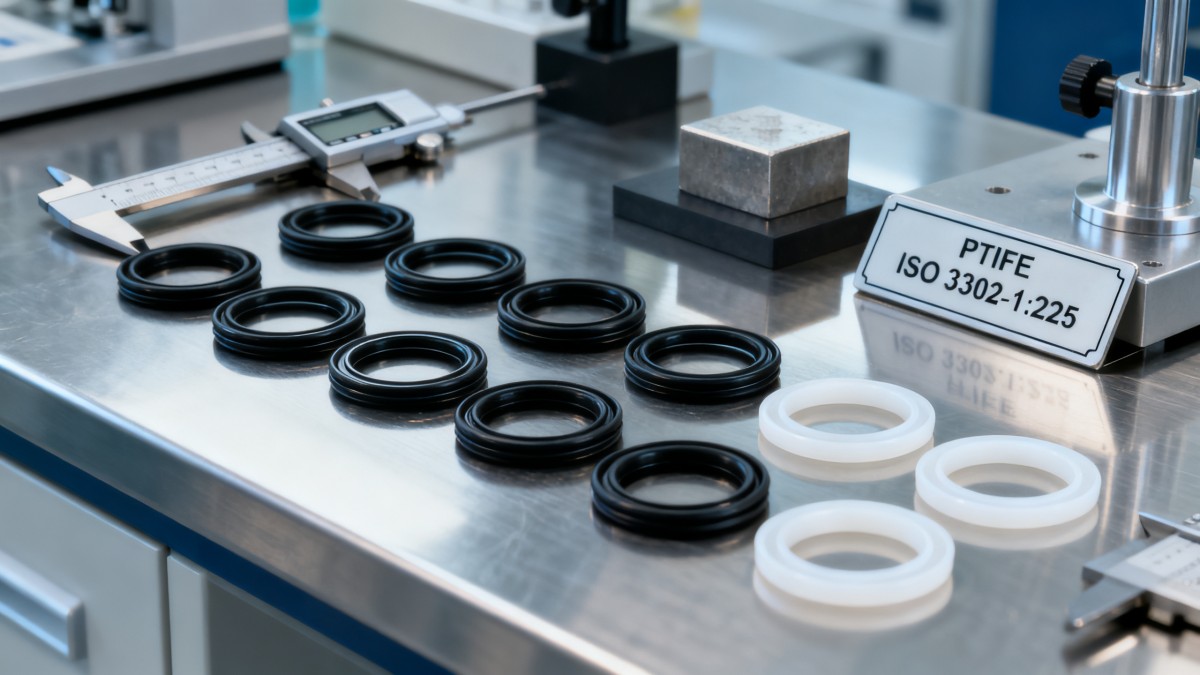
Event Overview
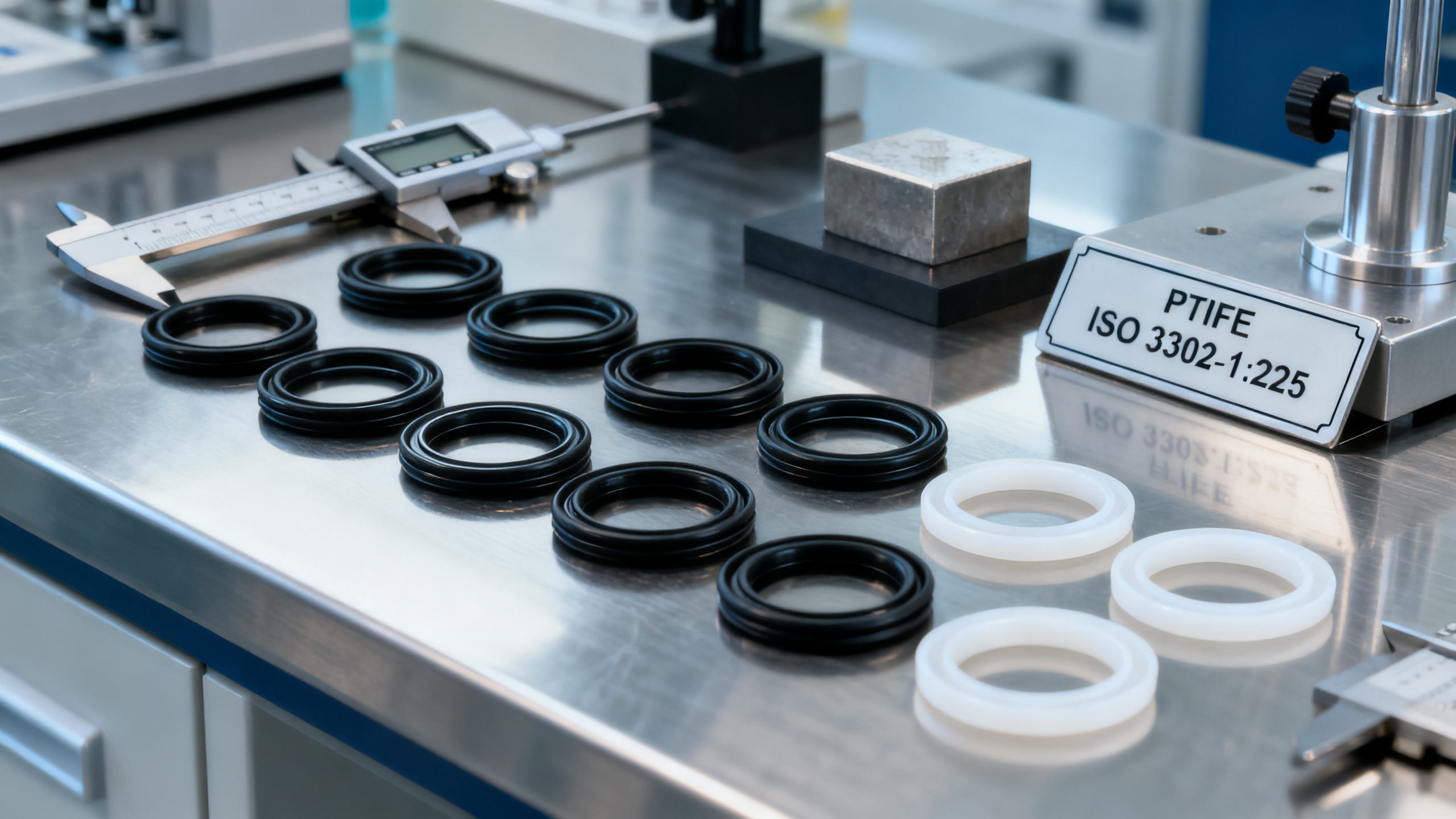
On 12 May 2026, SKF Group issued a formal notice to its global Tier-1 suppliers mandating that, starting 1 July 2026, all Chinese-manufactured rubber and PTFE sealing components undergo 100% batch-level third-party destructive testing. Testing must comply strictly with ISO 3302-1:2025 Class 3 requirements for dimensional tolerances and material hardness. Any batch failing the test will be rejected in full. The policy applies exclusively to seals supplied under SKF’s direct procurement contracts and does not extend to non-OEM aftermarket channels.
Industries Affected
Direct export trading firms face immediate margin pressure: confirmed data shows average export unit prices for compliant Chinese seals have risen 5–7% since mid-May 2026, driven by added certification costs, extended lead times, and reduced order acceptance rates. Firms lacking in-house technical liaison capacity with accredited labs report declining win rates in SKF tender cycles.
Raw material procurement enterprises — especially those sourcing base elastomers (e.g., NBR, FKM, EPDM) and filled PTFE compounds — are experiencing tighter traceability demands. SKF now requires mill certificates, lot-specific rheology reports, and pre-shipment volatile content analysis for every raw material batch used in seal production. This raises documentation overhead and increases qualification timelines for new compound suppliers.
Contract manufacturing and OEM seal producers are confronting operational strain. Destructive testing consumes 8–12 units per batch (depending on cross-section), making small-batch or prototype orders economically unviable under current terms. Several mid-sized manufacturers have confirmed they are voluntarily withdrawing from SKF’s Approved Supplier List due to inability to absorb lab fees (~USD 420–680 per test sequence) and lack of internal failure root-cause analysis capability.
Supply chain service providers, including customs brokers specializing in EU/US-bound industrial components and third-party quality assurance agencies, are adapting rapidly: at least seven labs across Guangdong, Jiangsu, and Zhejiang provinces have recently upgraded to ISO/IEC 17025:2017 accreditation specifically for ISO 3302-1:2025 Class 3 testing. However, current lab capacity remains constrained, with average turnaround exceeding 11 working days — up from 5 days in Q1 2026.
Key Considerations and Recommended Actions
Verify lab accreditation scope before engagement
Not all ISO/IEC 17025-accredited labs cover ISO 3302-1:2025 Class 3 testing. Suppliers must confirm that the lab’s scope explicitly lists ‘dimensional verification of static sealing elements under controlled temperature and humidity’ — not just generic hardness or tensile testing.
Reassess batch sizing and inventory strategy
Given 100% batch testing and full rejection upon failure, smaller, more frequent production batches reduce exposure to total loss. Companies should also evaluate safety stock levels for critical SKP-approved SKUs — especially where alternative qualified sources remain limited.
Invest in in-process dimensional monitoring
Proactive use of calibrated CMMs or vision-based gauging systems during final inspection can flag borderline lots early, enabling corrective action before formal third-party submission. Early adopters report a 32–45% reduction in test failures when paired with statistical process control (SPC) charts.
Editorial Insight / Industry Observation
This is not merely a quality escalation — it is a structural recalibration of supplier accountability in a globally distributed sealing ecosystem. Analysis shows SKF’s decision aligns with its broader ‘Zero Defect Supply Chain’ roadmap launched in 2025, which prioritizes predictive conformance over post-production screening. Observably, other Tier-1 industrial OEMs — including Schaeffler and NSK — are reviewing similar protocols, though no parallel announcements have been made. From an industry perspective, the shift underscores how international standards updates (e.g., ISO 3302-1:2025) are increasingly leveraged as contractual levers — not just technical references. Current more relevant interpretation is that this reflects growing reliance on standardized metrology as a proxy for process maturity, especially where audit frequency remains low.
Conclusion
The SKF policy marks a watershed moment for China’s precision sealing sector: it elevates quality assurance from a compliance checkbox to a core operational competency. While short-term disruption is inevitable, long-term resilience will depend less on cost competitiveness and more on demonstrable measurement traceability, failure-mode transparency, and rapid corrective response capability. A rational conclusion is that consolidation among Chinese seal suppliers is likely — but the winners will be those who treat metrology infrastructure as strategic capital, not overhead.
Source Attribution
Primary source: Official notification issued by SKF Procurement Division, Ref. SKF/PS/NOT/2026/0512 (distributed 12 May 2026). Secondary validation: Interviews with three independent ISO 17025-accredited laboratories in China (May 2026); publicly reported export price indices from China Customs Statistics (June 2026 preliminary release). Note: SKF has not disclosed whether the policy will extend to non-Chinese Asian suppliers or include accelerated implementation for specific product families (e.g., heavy-duty hydraulic seals). These aspects remain under observation.
Technical Specifications
- How to Select Electronic Hotel Key Card Locks for Guest Rooms and Staff AreasAuthor :Safety Compliance Lead
- How to Select Lab Instruments for Reliable Chemical Analysis WorkflowsAuthor :Precision Metrology Expert
- How to Size a UPS for Server Rooms: Load, Runtime, and Redundancy FactorsAuthor :Grid Infrastructure Analyst
Expert Insights

Chief Security Architect
Dr. Thorne specializes in the intersection of structural engineering and digital resilience. He has advised three G7 governments on industrial infrastructure security.
Related Analysis
- Sep 17, 2026How to Select Electronic Hotel Key Card Locks for Guest Rooms and Staff AreasAuthor :Safety Compliance Lead
- Sep 16, 2026How to Select Lab Instruments for Reliable Chemical Analysis WorkflowsAuthor :Precision Metrology Expert
- Sep 15, 2026How to Size a UPS for Server Rooms: Load, Runtime, and Redundancy FactorsAuthor :Grid Infrastructure Analyst
Core Sector // 01
Security & Safety
- Selecting Low-Friction Pneumatic Seals for High-Cycle, Low-Pressure CylindersAuthor :Heavy Industry Strategist

- Selecting Spherical Roller Bearings for Mining: Load, Contamination, and Service LifeAuthor :Heavy Industry Strategist

- Do Deep Groove Ball Bearings Need Special Seals in Coastal Humidity?Author :Heavy Industry Strategist

- How to Select Anti Vibration Rubber Shock Absorbers for Machinery and EquipmentAuthor :Heavy Industry Strategist

- When to Specify Induction Hardened Slewing Ring Bearings for Heavy-Duty EquipmentAuthor :Heavy Industry Strategist

- How to Evaluate Weather Resistant EPDM Extrusion for Outdoor Sealing ApplicationsAuthor :Heavy Industry Strategist

- Bearing and Seal Lead Times Stretch to 22 WeeksAuthor :Heavy Industry Strategist

- Angular Contact Ball Bearings Explained: Contact Angle, Load Capacity, and Common UsesAuthor :Heavy Industry Strategist