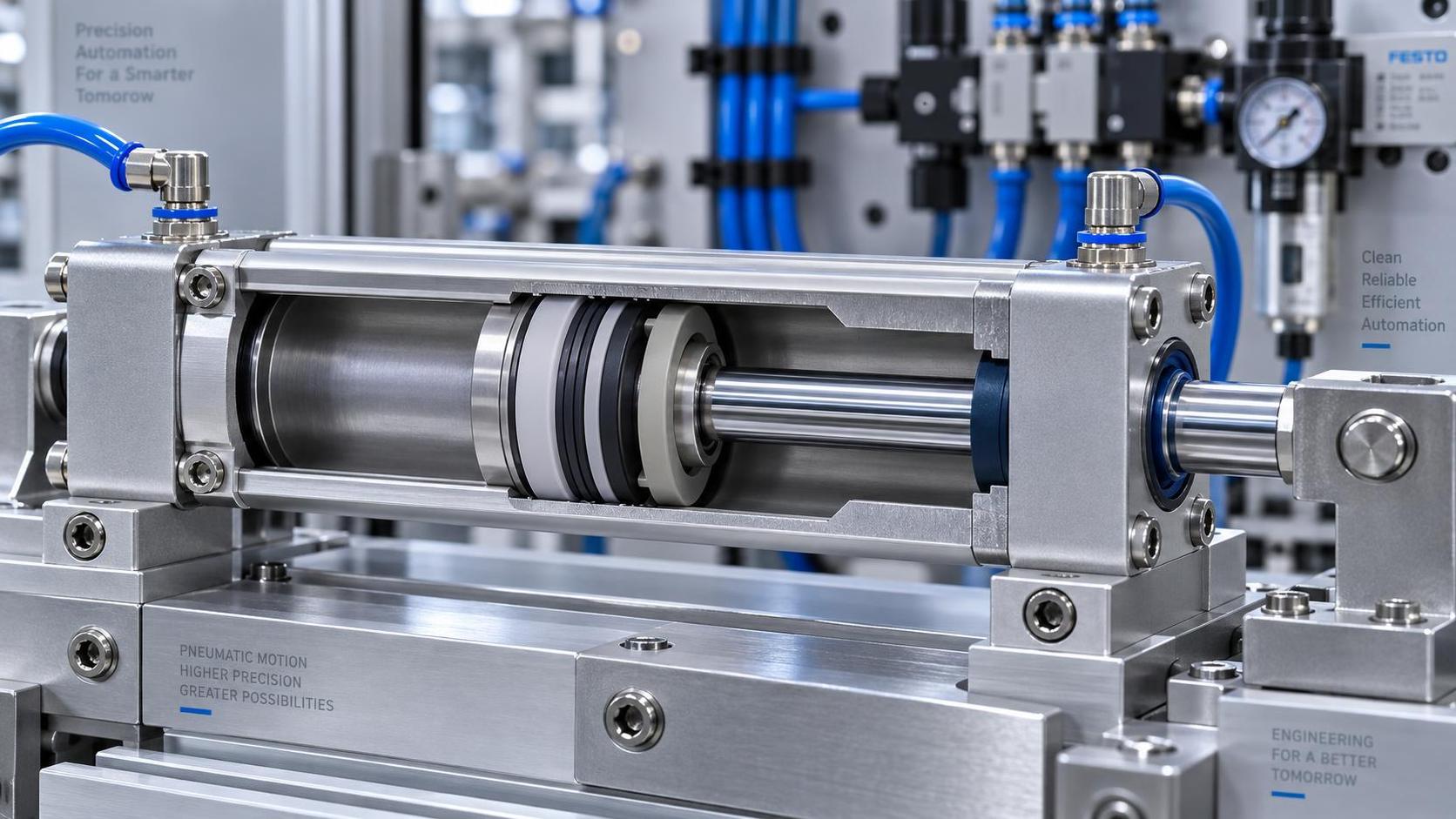
Pneumatic Cylinder Seals: Common Failure Causes and How to Prevent Air Leaks
Author
Date Published
Reading Time
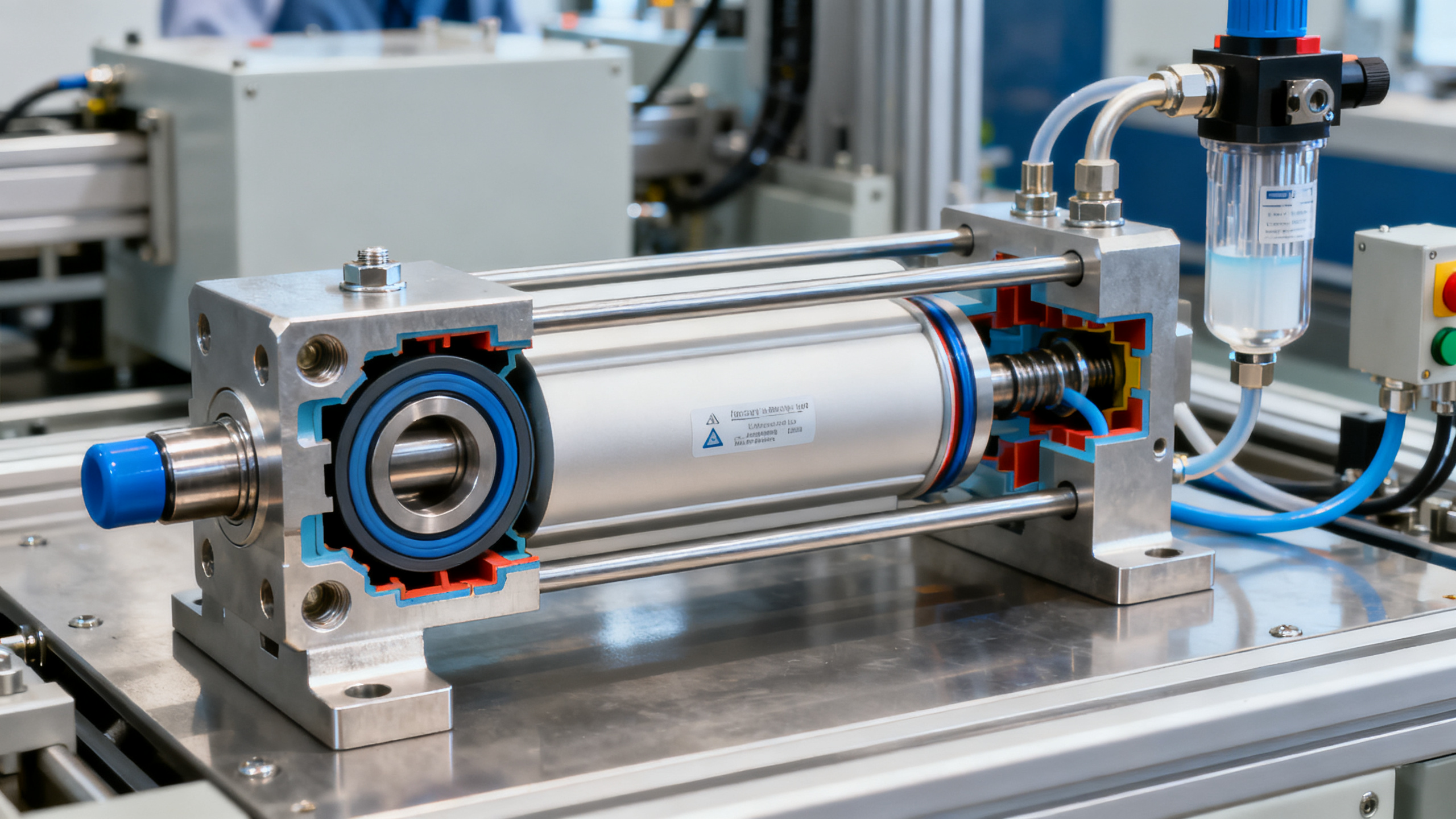
Why do pneumatic cylinder seals fail so often in otherwise healthy air systems?
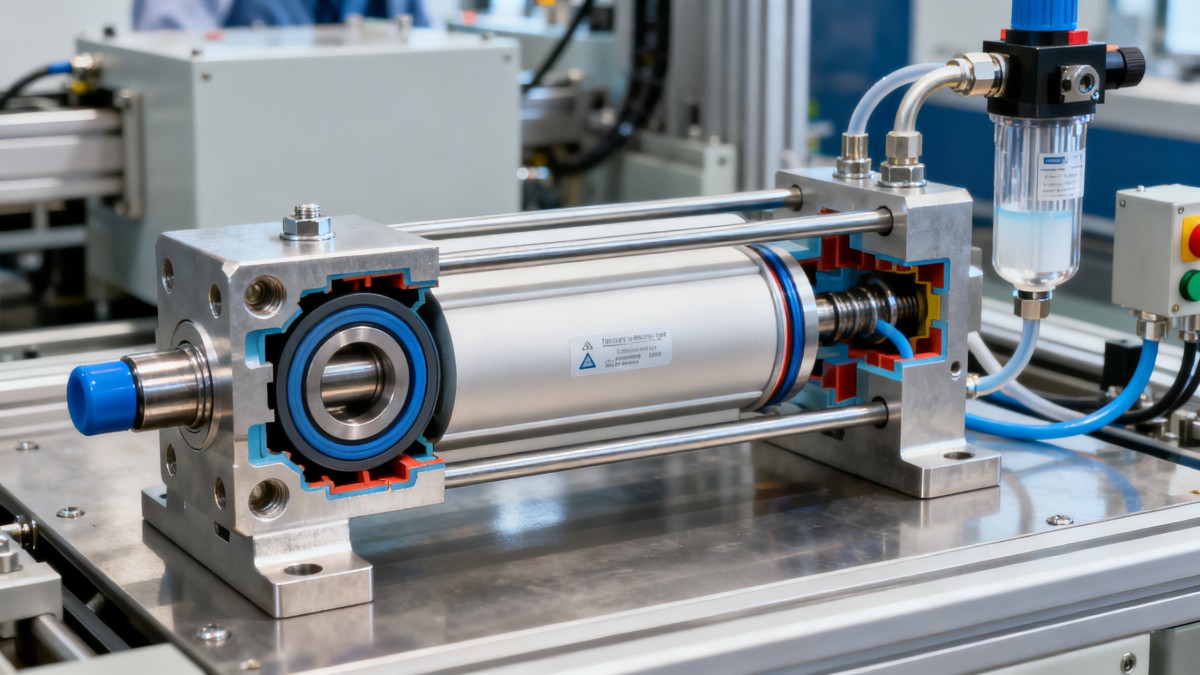
Pneumatic cylinder seals rarely fail without warning. In most cases, leakage starts as a small efficiency loss, then grows into pressure instability and repeated service calls.
That is why pneumatic cylinder seals deserve closer attention than many maintenance routines give them. They sit at the exact point where pressure, motion, heat, and contamination meet.
In practical terms, a seal can look intact and still perform poorly. A slight lip cut, hardening, swelling, or compression set may be enough to create air leaks.
Across heavy industry, this matters because cylinders support clamping, conveying, positioning, and valve actuation. When sealing drops off, machine timing and energy use usually worsen together.
Global Industrial Core often frames this as a reliability issue, not just a spare-parts issue. Seal failure affects safety margins, maintenance intervals, and compliance confidence in demanding operations.
The common causes are usually straightforward: dirty air, wrong lubrication, side loading, excessive speed, temperature stress, poor material fit, and installation errors. The challenge is identifying which factor started the damage.
What are the first signs that pneumatic cylinder seals are causing the leak?
A visible hiss is only one clue. More often, the first signs are slower stroke speed, inconsistent end positioning, and frequent compressor cycling.
Another useful sign is a cylinder that passes a bench test cold, then leaks once the machine warms up. That usually points to marginal seal wear or thermal hardening.
When troubleshooting pneumatic cylinder seals, it helps to separate internal leakage from external leakage. The symptoms are related, but the root causes can differ.
This kind of quick comparison saves time. It prevents replacing valves, fittings, or tubing when the real problem sits inside the cylinder.
Is contamination the main enemy, or do installation mistakes cause more failures?
Both matter, but they leave different fingerprints. Contamination usually causes progressive wear. Installation mistakes tend to trigger early failure, sometimes within days or weeks.
Dirty compressed air carries water, rust, oil residue, and abrasive particles. Those contaminants damage pneumatic cylinder seals by scratching contact surfaces and disrupting the sealing film.
In actual maintenance records, rod seals and wipers often show the first damage. Once debris passes them, the piston seal is usually next.
Installation errors are less gradual. A seal stretched too far, inserted dry, rolled in its groove, or installed backwards may leak from startup.
A common oversight is using metal picks on soft sealing lips. The mark seems minor during assembly, but under repeated cycling it becomes a leak path.
- Filter and dryer condition should match the operating environment, not just the compressor specification.
- Seal grooves need to be clean, burr-free, and lightly prepared with the correct assembly lubricant.
- Rod and bore surfaces should be checked for scoring before any new pneumatic cylinder seals are installed.
- If failure follows a rebuild, review the assembly method before changing seal material.
Simply put, contaminated air shortens life over time. Bad installation shortens life immediately. Both deserve equal attention during root-cause analysis.
How much do heat, speed, and lubrication change seal life?
More than many teams expect. Pneumatic cylinder seals do not fail only because they are old. They fail faster when operating conditions exceed what the material was chosen for.
Heat hardens some elastomers and softens others. Either condition can reduce contact stability and increase leakage, especially in fast-cycling applications.
High speed adds friction and can create micro-burning on the sealing edge. The result is often a polished, glazed, or brittle surface.
Lubrication is more nuanced than “more is better.” Some pneumatic cylinder seals are designed for low-lube or pre-lubricated service. Adding the wrong oil can cause swelling or chemical incompatibility.
The more reliable approach is to match seal material, lubricant type, temperature range, and cycle rate as one system. That is standard practice in high-dependability industrial environments.
If leakage increases during summer peaks, near ovens, or around enclosed machinery, thermal stress should move higher on the suspect list.
When should you suspect the wrong seal material instead of normal wear?
Normal wear usually appears gradually and predictably. Material mismatch often produces unusual symptoms: swelling, cracking, stick-slip motion, or sudden leakage despite low operating hours.
For example, a standard seal compound may work in clean, dry air but fail quickly where oil mist, washdown exposure, or elevated temperatures are present.
This is where pneumatic cylinder seals should be selected with the full duty profile in mind, not only groove size. Media exposure, temperature swings, stroke frequency, and side load all matter.
A practical review often includes these questions:
- Does the seal material match the real operating temperature, not just the average room temperature?
- Is there contact with compressor oil, cleaning chemicals, or moisture that was not considered at installation?
- Has the cylinder been repurposed for faster cycling or heavier loading?
- Are replacement pneumatic cylinder seals sourced to the same dimensional and material standard?
In sectors where compliance and uptime carry equal weight, traceable material data is not just paperwork. It supports repeatable maintenance decisions and avoids trial-and-error substitutions.
What preventive steps reduce air leaks without overcomplicating maintenance?
Prevention works best when it stays simple enough to repeat. The most effective programs focus on condition control, assembly discipline, and early leak detection.
A short preventive routine usually delivers better results than waiting for obvious leakage. By then, wear may already involve the rod, bore, and nearby components.
- Maintain clean, dry compressed air with filters and drains checked on a fixed interval.
- Inspect rod alignment and mounting condition whenever seals fail repeatedly in the same cylinder.
- Use proper installation sleeves, non-metal tools, and the specified lubricant during rebuilds.
- Record failure mode, cycle history, and environment instead of logging every case as generic seal wear.
- Standardize approved pneumatic cylinder seals by application, especially where CE, UL, or ISO-driven reliability matters.
That last point often gets overlooked. Consistent seal selection reduces random variation and helps teams compare failures with better accuracy.
From a broader infrastructure perspective, the goal is not only stopping one leak. It is keeping motion control dependable across mechanical, safety, and energy systems.
So what is the smartest next step when leakage keeps returning?
If pneumatic cylinder seals fail again after replacement, treat that as a system signal. Repeated leakage usually means the original cause was never removed.
Start with a simple sequence: confirm leak location, review operating conditions, inspect surfaces, verify material compatibility, and compare assembly practice with specification.
In actual field work, the best results come from combining visual inspection with data points such as cycle count, line pressure stability, temperature exposure, and air quality history.
That approach aligns with the kind of disciplined, evidence-based maintenance thinking promoted across Global Industrial Core’s coverage of mechanical components and resilient industrial systems.
Air leaks are expensive, but they are also informative. They show where motion systems are losing control, efficiency, or fit between parts and conditions.
If the next review focuses on contamination, alignment, lubrication, temperature, and material traceability together, pneumatic cylinder seals usually stop being a recurring weakness and become a controlled maintenance item.
Technical Specifications
- How to Select Electronic Hotel Key Card Locks for Guest Rooms and Staff AreasAuthor :Safety Compliance Lead
- How to Select Lab Instruments for Reliable Chemical Analysis WorkflowsAuthor :Precision Metrology Expert
- How to Size a UPS for Server Rooms: Load, Runtime, and Redundancy FactorsAuthor :Grid Infrastructure Analyst
Expert Insights

Chief Security Architect
Dr. Thorne specializes in the intersection of structural engineering and digital resilience. He has advised three G7 governments on industrial infrastructure security.
Related Analysis
- Sep 17, 2026How to Select Electronic Hotel Key Card Locks for Guest Rooms and Staff AreasAuthor :Safety Compliance Lead
- Sep 16, 2026How to Select Lab Instruments for Reliable Chemical Analysis WorkflowsAuthor :Precision Metrology Expert
- Sep 15, 2026How to Size a UPS for Server Rooms: Load, Runtime, and Redundancy FactorsAuthor :Grid Infrastructure Analyst
Core Sector // 01
Security & Safety
- Selecting Low-Friction Pneumatic Seals for High-Cycle, Low-Pressure CylindersAuthor :Heavy Industry Strategist

- Selecting Spherical Roller Bearings for Mining: Load, Contamination, and Service LifeAuthor :Heavy Industry Strategist

- Do Deep Groove Ball Bearings Need Special Seals in Coastal Humidity?Author :Heavy Industry Strategist

- How to Select Anti Vibration Rubber Shock Absorbers for Machinery and EquipmentAuthor :Heavy Industry Strategist

- When to Specify Induction Hardened Slewing Ring Bearings for Heavy-Duty EquipmentAuthor :Heavy Industry Strategist

- How to Evaluate Weather Resistant EPDM Extrusion for Outdoor Sealing ApplicationsAuthor :Heavy Industry Strategist

- Bearing and Seal Lead Times Stretch to 22 WeeksAuthor :Heavy Industry Strategist

- Angular Contact Ball Bearings Explained: Contact Angle, Load Capacity, and Common UsesAuthor :Heavy Industry Strategist