Hormuz Shipping Slumps 94% as Spare Parts Freight Jumps
Author
Date Published
Reading Time
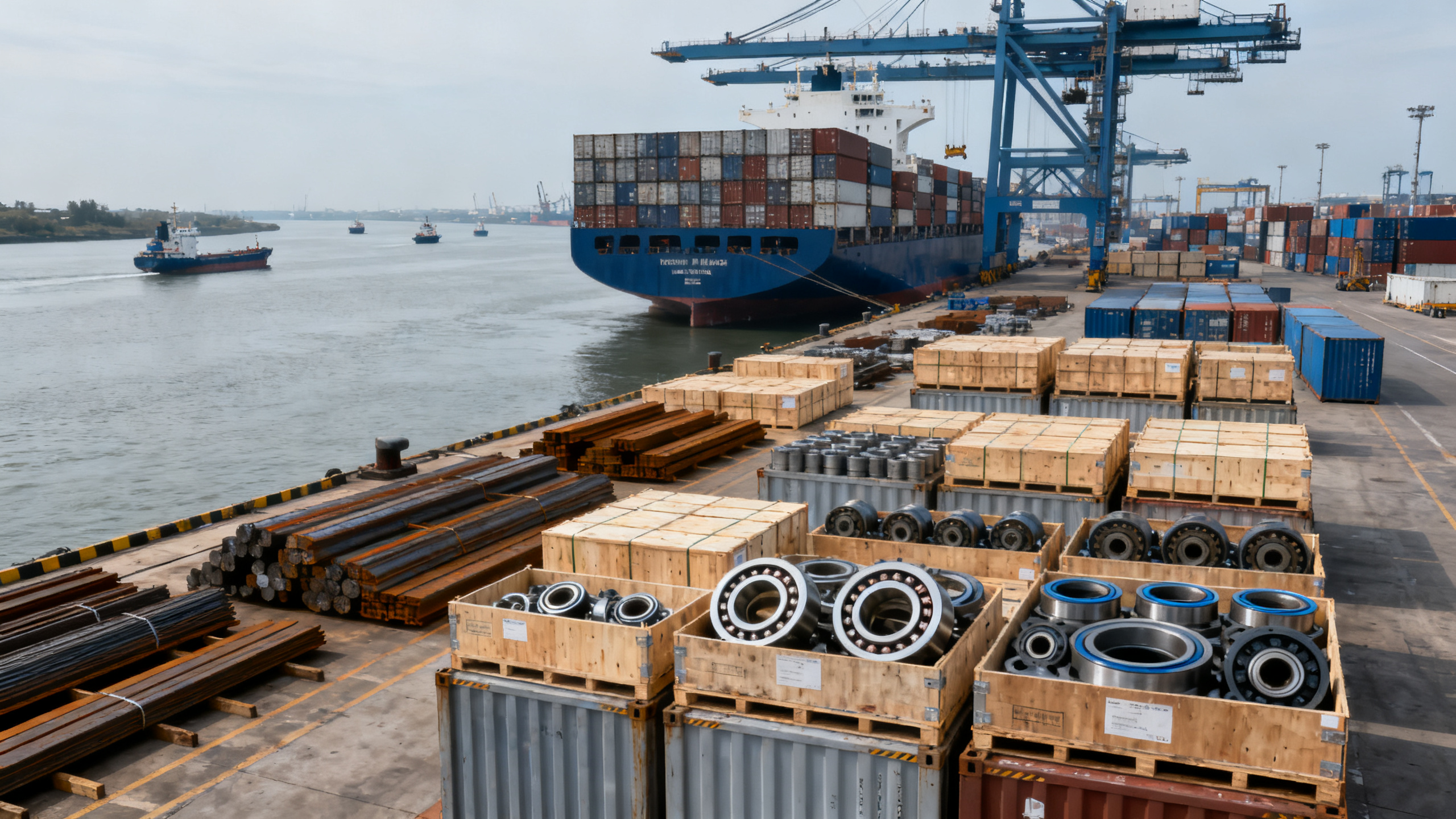
Since the escalation of the U.S.-Iran conflict on 2026-03-16, actual traffic through the Strait of Hormuz has fallen 94% from normal levels, turning a geopolitical shock into an immediate logistics issue for industrial cargo. For importers, manufacturers, distributors, and supply chain service providers handling Bearings & Seals, Power Transmission, and Steel & Metal Profiles, the issue is no longer only transit disruption, but also a sharp rise in per-container shipping costs and a longer delivery cycle that can affect procurement timing, inventory planning, and customer commitments.
What has changed in the route itself
According to the provided information, the disruption began with the conflict escalation on 2026-03-16. Actual vessel traffic through the Strait of Hormuz dropped by 94% compared with normal conditions. Major carriers including Maersk and MSC have fully suspended sailings in the area. As a result, rerouting via the Cape of Good Hope has extended Asia-Europe routes by 10 to 14 days.
The same information indicates that shipping companies have imposed a War Risk Surcharge (WRS) on industrial cargo. For bulky or high-value categories such as Bearings & Seals, Power Transmission, and Steel & Metal Profiles, the added cost per container has increased by USD 2,000 to USD 4,000, while delivery times have generally been pushed back by 3 to 5 weeks.
Where the pressure is likely to appear first
Procurement teams face a timing and budgeting problem
From an industry perspective, procurement-driven businesses are likely to feel the impact quickly because the confirmed changes affect both landed cost and delivery timing. Where industrial spare parts are purchased on tight replenishment cycles, the added WRS and longer route time can complicate quote validity, purchase scheduling, and budget control.
Manufacturers may see disruption in maintenance-linked supply
Analysis shows that manufacturers relying on industrial spare parts may be exposed not only through inbound freight cost, but also through delayed arrival of components used in maintenance, repair, or ongoing production support. The confirmed 3 to 5 week delivery delay is especially relevant for operations that depend on predictable arrival windows rather than large safety stock.
Distributors and channel operators need to watch fulfillment risk
For distributors and circulation businesses, the practical issue is fulfillment reliability. The affected product groups named in the provided information include bulky or higher-value items, which means margin management and promised delivery dates may come under pressure at the same time. What deserves closer attention is whether customer commitments were built on pre-disruption freight assumptions.
Logistics service providers must manage exception handling
For freight forwarders and other supply chain service providers, the disruption shifts day-to-day work toward route adjustment, surcharge communication, shipment revalidation, and transit expectation management. The confirmed suspension by major carriers and the Cape rerouting make operational visibility more important than routine scheduling.
What companies should monitor now
Separate freight inflation from base product pricing
Observably, one of the first practical steps is to distinguish product cost from logistics-driven cost increases. The confirmed additional USD 2,000 to USD 4,000 per container is tied to shipping conditions and war risk surcharges, so companies should review whether quotations, contracts, and internal costing models clearly isolate this variable.
Recheck delivery promises for exposed categories
Businesses dealing in Bearings & Seals, Power Transmission, and Steel & Metal Profiles should pay particular attention to orders already in process or about to ship. The current issue is not simply a longer sea leg, but a broader delivery extension of 3 to 5 weeks, which can affect order confirmation, installation schedules, and downstream planning.
Strengthen document and supplier-side coordination
Analysis shows that during route disruption, supplier confirmation, shipping instructions, and shipment status communication become more important than under normal conditions. Companies should focus on whether suppliers, carriers, and service providers are aligned on routing status, surcharge treatment, and revised lead times, rather than assuming earlier transport plans still apply.
Keep watching for changes in carrier and official language
What deserves closer attention is the difference between a headline disruption and the exact wording used in carrier notices or any later official statements. In practical terms, businesses should continue monitoring whether suspensions, surcharge application, and transit assumptions remain unchanged, because these details shape execution more directly than the headline alone.
Why this matters beyond a single freight spike
This section is an editorial observation. It is more appropriate to understand the current development as both an immediate logistics shock and a signal that route security can quickly reshape industrial spare-parts economics. The confirmed facts already show effects on shipping availability, transit duration, and per-container cost. At the same time, it is still a dynamic situation rather than a closed outcome, because the provided information describes current disruption conditions but does not establish how long they will last.
From an industry perspective, the key meaning is not limited to one surcharge item. The stronger signal is that for industrial cargo with relatively high unit value or larger shipment footprint, freight volatility can move from a background cost issue to a frontline operational issue within a short period.
How the market may best read this development
At this stage, the most balanced reading is that the event represents a clear short-term disruption with immediate consequences for cost and delivery, while also serving as a longer-watch signal for companies exposed to affected sea routes. It would be premature to treat the situation as a settled long-term pattern based only on the current input, but it would also be insufficient to view it as a routine delay. For the industrial supply chain, the most practical interpretation is a live risk event that requires continued monitoring and near-term operational adjustment.
Basis of this article and what still needs verification
This article is based on the user-provided news title, event date, and event summary. The confirmed information used here includes the conflict escalation date of 2026-03-16, the reported 94% drop in actual traffic through the Strait of Hormuz, the full suspension of sailings by major carriers including Maersk and MSC, the 10 to 14 day extension caused by rerouting via the Cape of Good Hope, the application of War Risk Surcharge (WRS) to industrial cargo, the additional USD 2,000 to USD 4,000 per container for specified product groups, and the general delivery delay of 3 to 5 weeks.
No specific official source link was provided in the input, so concrete source documents still need ongoing verification. For this type of development, the categories of information that usually merit follow-up include official notices, company announcements, industry association updates, authoritative media reporting, and other formal shipping-related documents. The main point for continued observation is whether route suspensions, surcharge treatment, and delivery delay assumptions change over time.
Technical Specifications
- How to Select Electronic Hotel Key Card Locks for Guest Rooms and Staff AreasAuthor :Safety Compliance Lead
- How to Select Lab Instruments for Reliable Chemical Analysis WorkflowsAuthor :Precision Metrology Expert
- How to Size a UPS for Server Rooms: Load, Runtime, and Redundancy FactorsAuthor :Grid Infrastructure Analyst
Expert Insights

Chief Security Architect
Dr. Thorne specializes in the intersection of structural engineering and digital resilience. He has advised three G7 governments on industrial infrastructure security.
Related Analysis
- Sep 17, 2026How to Select Electronic Hotel Key Card Locks for Guest Rooms and Staff AreasAuthor :Safety Compliance Lead
- Sep 16, 2026How to Select Lab Instruments for Reliable Chemical Analysis WorkflowsAuthor :Precision Metrology Expert
- Sep 15, 2026How to Size a UPS for Server Rooms: Load, Runtime, and Redundancy FactorsAuthor :Grid Infrastructure Analyst
Core Sector // 01
Security & Safety
- Selecting Low-Friction Pneumatic Seals for High-Cycle, Low-Pressure CylindersAuthor :Heavy Industry Strategist

- Selecting Spherical Roller Bearings for Mining: Load, Contamination, and Service LifeAuthor :Heavy Industry Strategist

- Do Deep Groove Ball Bearings Need Special Seals in Coastal Humidity?Author :Heavy Industry Strategist

- How to Select Anti Vibration Rubber Shock Absorbers for Machinery and EquipmentAuthor :Heavy Industry Strategist

- When to Specify Induction Hardened Slewing Ring Bearings for Heavy-Duty EquipmentAuthor :Heavy Industry Strategist

- How to Evaluate Weather Resistant EPDM Extrusion for Outdoor Sealing ApplicationsAuthor :Heavy Industry Strategist

- Bearing and Seal Lead Times Stretch to 22 WeeksAuthor :Heavy Industry Strategist

- Angular Contact Ball Bearings Explained: Contact Angle, Load Capacity, and Common UsesAuthor :Heavy Industry Strategist