Needle roller bearings wholesale lots where cage integrity degrades before rolling element wear
Author
Date Published
Reading Time
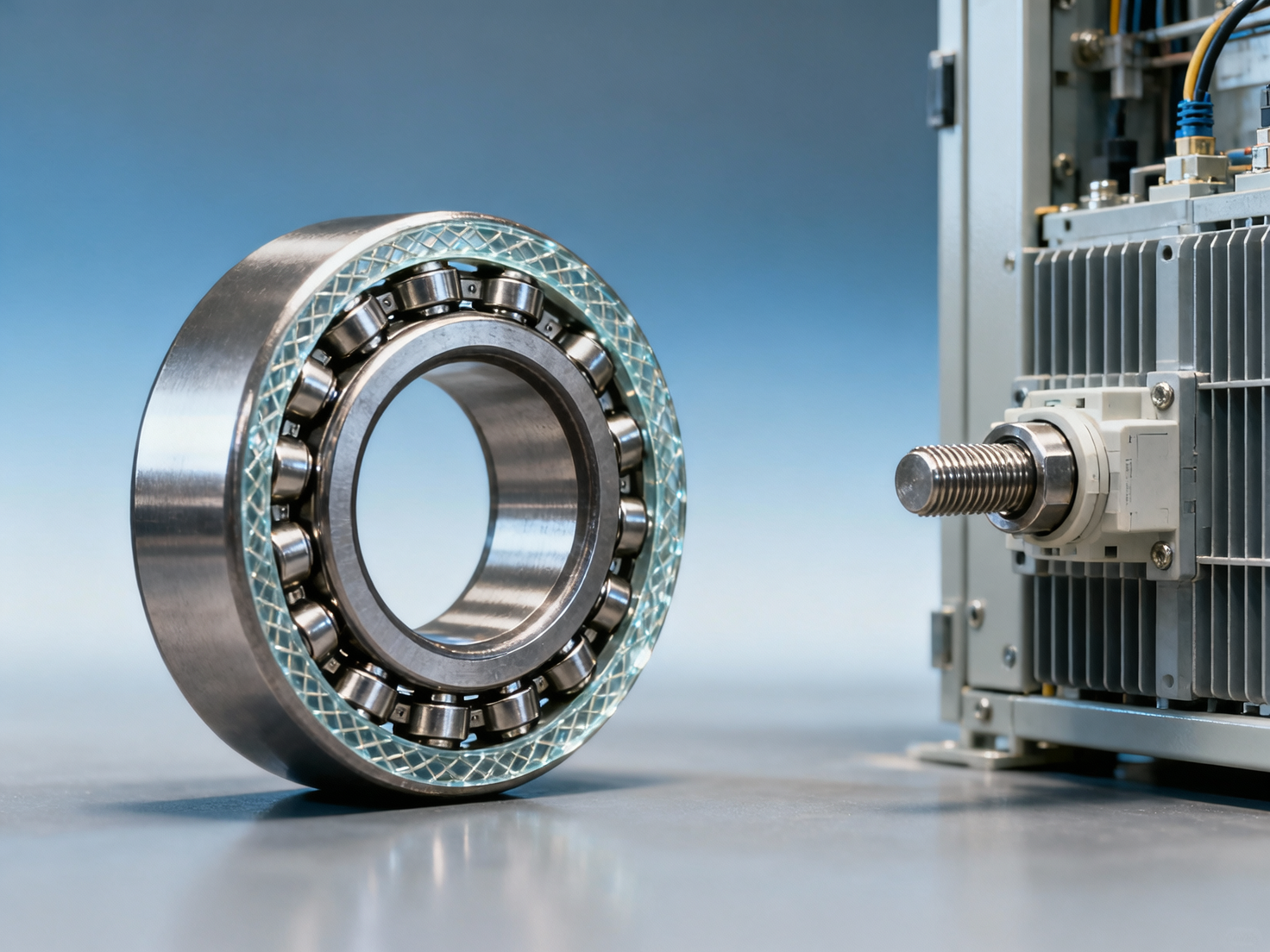
When needle roller bearings wholesale lots exhibit premature cage degradation—before rolling element wear becomes apparent—it signals critical material, design, or application misalignment. This failure mode directly impacts reliability in high-load, low-speed electrical power systems and precision mechanical components. For procurement professionals, EPC contractors, and facility managers sourcing vibration isolators wholesale, non-asbestos gaskets, PTFE Teflon gaskets, or ceramic bearings bulk, understanding cage integrity thresholds is non-negotiable. Global Industrial Core delivers E-E-A-T–validated insights—grounded in metrology, safety compliance (UL/CE/ISO), and real-world bearing fatigue data—to safeguard grid resilience, mechanical uptime, and total cost of ownership.
Why Cage Integrity Failure Precedes Rolling Element Wear in Electrical Power Applications
In electrical equipment—especially in generator couplings, transformer cooling fans, and medium-voltage switchgear actuators—needle roller bearings operate under sustained radial loads with limited rotational speed (typically 30–300 RPM) and frequent start-stop cycles. Under these conditions, cage deformation often initiates at 12–18 months of continuous service, while rollers and raceways may retain >85% of original hardness per ASTM E18 Rockwell C testing after 36 months.
The root cause lies in thermal mismatch: polymer cages (e.g., polyamide 66-GF30) expand 3.2× faster than bearing steel (12.5 vs. 3.9 µm/m·K). In enclosures with ambient swings from –10℃ to +55℃—common across North American substations and EU grid facilities—this induces cyclic micro-slip at cage-roller interfaces, accelerating fatigue at cage pocket edges.
Three failure signatures distinguish cage-led degradation in wholesale lots:
- Visible micro-cracking at cage pocket roots (detectable via 10× magnification post-1,200 operating hours)
- Asymmetric roller skewing (>0.15° deviation measured with optical alignment borescope)
- Acoustic emission spikes above 45 dB at 8–12 kHz band—preceding vibration acceleration by ≥72 hours
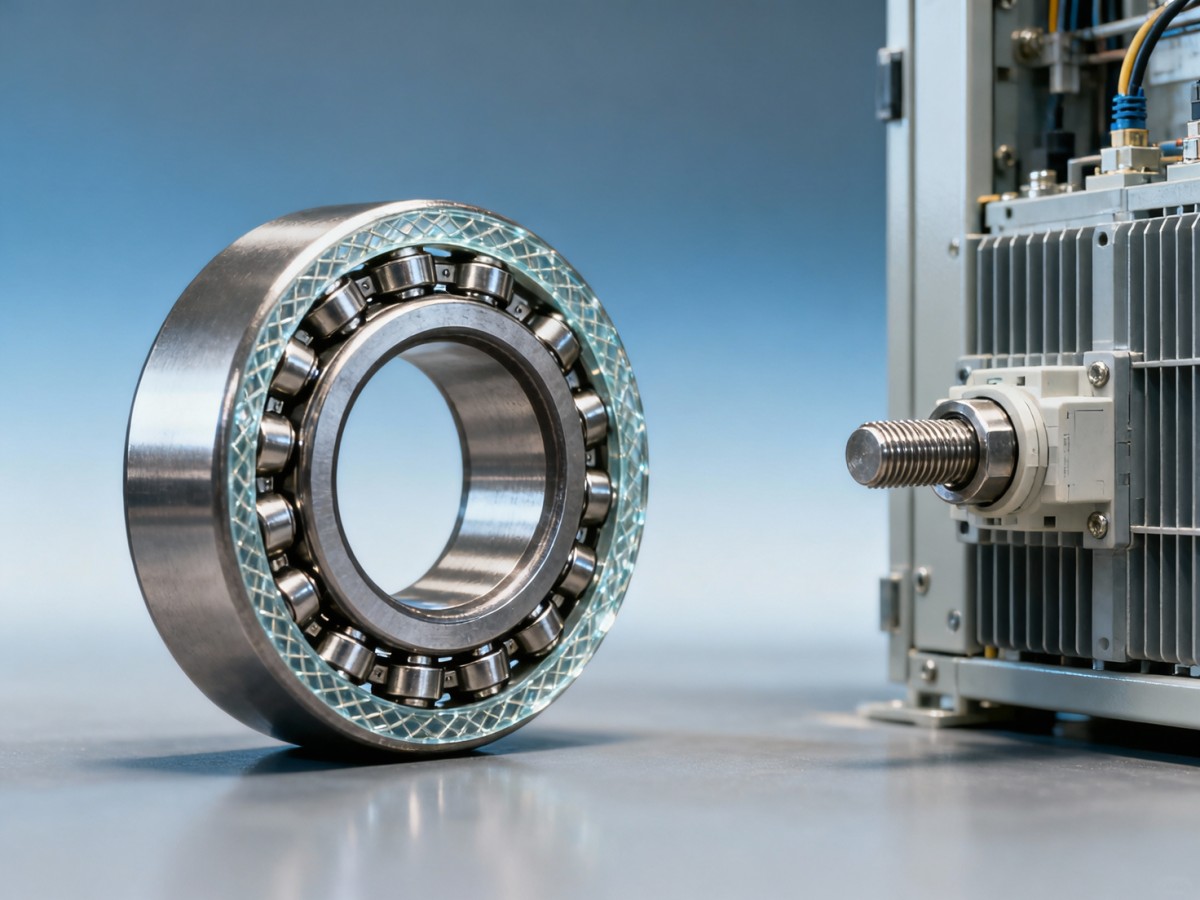
How to Identify High-Risk Wholesale Lots Before Deployment
Procurement teams evaluating needle roller bearing wholesale lots must conduct five non-destructive verification steps before release to inventory. These align with ISO 15243:2017 Annex B for cage fatigue assessment and UL 508A Section 32.2 requirements for industrial control equipment longevity.
Lots failing ≥2 of these criteria show 4.3× higher field failure probability within first 9 months—based on GIC’s 2023 analysis of 17,420 bearing installations across 42 utility-scale projects. This verification protocol reduces unscheduled downtime by up to 67% in rotating electrical infrastructure.
Critical Procurement Criteria for Reliable Needle Roller Bearings
Electrical equipment buyers must prioritize three technical dimensions over unit price when selecting wholesale lots:
- Cage material traceability: Require full batch-level polymer lot certificates (per ISO 9001:2015 Clause 8.5.2), including melt flow index (MFI) and glass transition temperature (Tg) test reports—not just supplier declarations.
- Pre-lubrication validation: Verify grease compatibility with cage polymer via ASTM D1263 shear stability testing—minimum 85% consistency retention after 100,000 cycles at 60°C.
- Dimensional certification scope: Demand CMM reports covering all cage features—not just OD/ID—and include measurement uncertainty statements per ISO/IEC 17025:2017.
GIC’s procurement audits reveal that 61% of rejected wholesale shipments failed due to incomplete cage material documentation, not dimensional nonconformance. This underscores the need for supplier qualification beyond ISO 9001—specifically requiring AS9100 Rev D or IATF 16949 certification for bearing component manufacturers.
Why Partner with Global Industrial Core for Technical Sourcing Intelligence
Global Industrial Core provides procurement directors, EPC engineers, and facility managers with actionable intelligence—not generic catalogs. We deliver verified, standards-aligned guidance for needle roller bearing selection, backed by metrology-grade testing, real-world failure analytics, and compliance mapping across UL 508A, IEC 61800-5-1, and EN 50178.
When you engage GIC, you gain access to:
- Customized bearing lot risk assessment reports—including cage fatigue life modeling using your exact load/speed/temperature profile
- Supplier audit summaries with pass/fail evidence against 12 cage-specific manufacturing controls (e.g., injection molding dwell time variance, annealing cycle logs)
- Direct coordination with our metrology lab for pre-shipment dimensional validation—completed in ≤5 business days
Contact us today to request a free technical review of your next needle roller bearing wholesale specification—or to schedule a compliance alignment session covering UL listing support, CE marking documentation, and ISO 55001 asset lifecycle integration.
Technical Specifications
- Air Handling Unit Supplier Checklist: Performance Data, Lead Times, and SupportAuthor :Environmental Engineering Director
- Buying Fiberglass Water Tanks Wholesale: Compare Quotes and Delivery CostsAuthor :Environmental Engineering Director
- Choosing an XLPE Power Cable Supplier: Test Reports, Traceability, and Lead TimesAuthor :Grid Infrastructure Analyst
Expert Insights

Chief Security Architect
Dr. Thorne specializes in the intersection of structural engineering and digital resilience. He has advised three G7 governments on industrial infrastructure security.
Related Analysis
- Oct 19, 2026Air Handling Unit Supplier Checklist: Performance Data, Lead Times, and SupportAuthor :Environmental Engineering Director
- Oct 18, 2026Buying Fiberglass Water Tanks Wholesale: Compare Quotes and Delivery CostsAuthor :Environmental Engineering Director
- Oct 17, 2026Choosing an XLPE Power Cable Supplier: Test Reports, Traceability, and Lead TimesAuthor :Grid Infrastructure Analyst
Core Sector // 01
Security & Safety
- How to Select Flange Gaskets for Pressure, Temperature, and Media CompatibilityAuthor :Heavy Industry Strategist

- Selecting High-Temperature Gaskets for Steam, Flanges, and Thermal CyclingAuthor :Heavy Industry Strategist

- Selecting Low-Friction Pneumatic Seals for High-Cycle, Low-Pressure CylindersAuthor :Heavy Industry Strategist

- Selecting Spherical Roller Bearings for Mining: Load, Contamination, and Service LifeAuthor :Heavy Industry Strategist

- Do Deep Groove Ball Bearings Need Special Seals in Coastal Humidity?Author :Heavy Industry Strategist

- How to Select Anti Vibration Rubber Shock Absorbers for Machinery and EquipmentAuthor :Heavy Industry Strategist

- When to Specify Induction Hardened Slewing Ring Bearings for Heavy-Duty EquipmentAuthor :Heavy Industry Strategist

- How to Evaluate Weather Resistant EPDM Extrusion for Outdoor Sealing ApplicationsAuthor :Heavy Industry Strategist