Why vibration isolators wholesale orders still fail under real-world cyclic loads
Author
Date Published
Reading Time
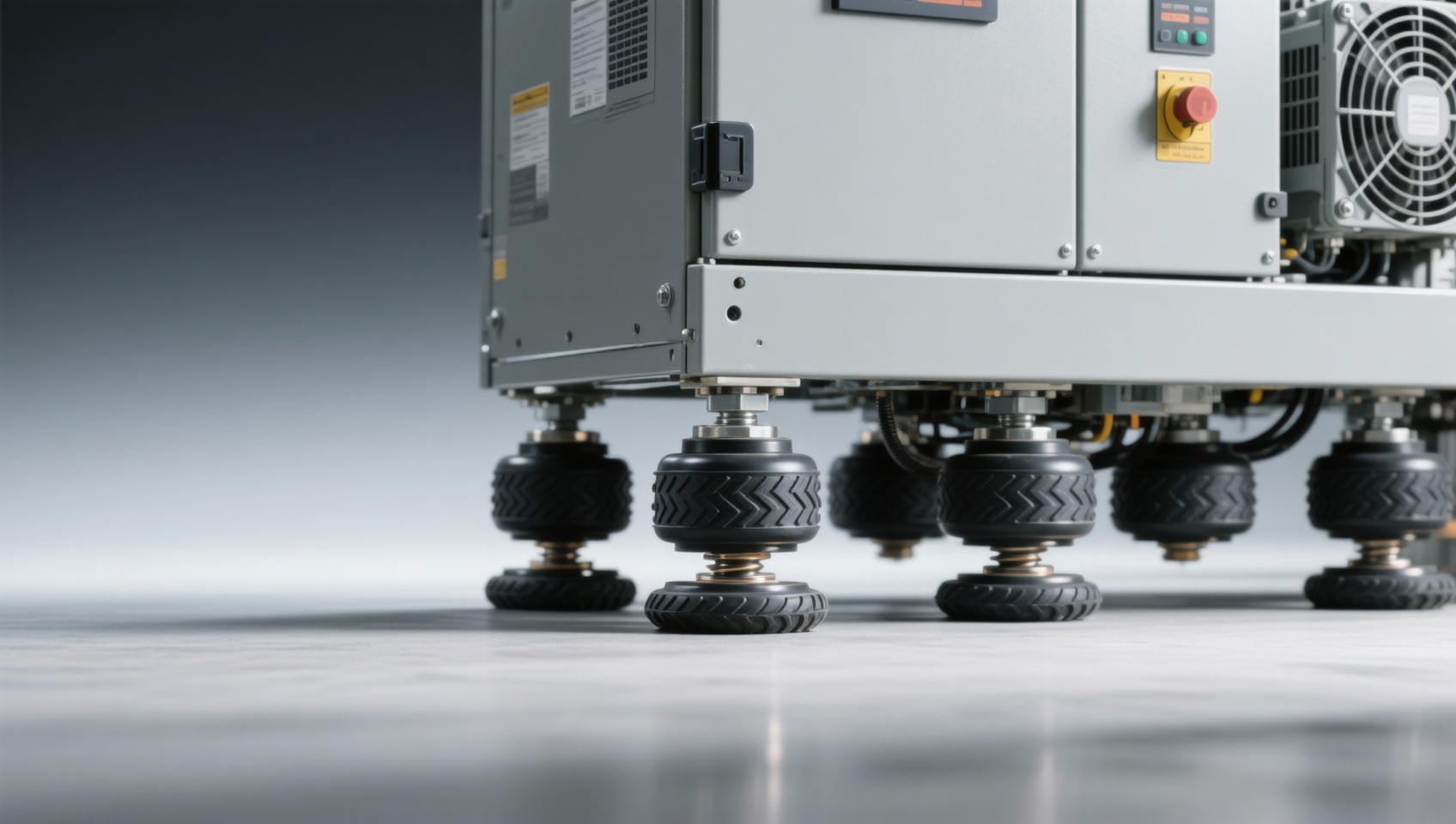
Despite sourcing vibration isolators wholesale—or complementary sealing solutions like non-asbestos gaskets, PTFE Teflon gaskets, and Viton FKM O-rings bulk—many industrial projects still experience premature failure under real-world cyclic loads. This isn’t due to unit cost or lead time alone, but to overlooked material performance gaps in custom silicone rubber parts, EPDM rubber extrusion integrity, rubber grommets bulk consistency, and pneumatic cylinder seals’ fatigue resistance. For EPC contractors, facility managers, and procurement directors, understanding why these failures persist is critical—not just for uptime, but for compliance with UL, CE, and ISO safety mandates. Global Industrial Core delivers the engineering-grade insight you need.
Why Cyclic Load Failure Defies Conventional Vibration Isolator Specifications
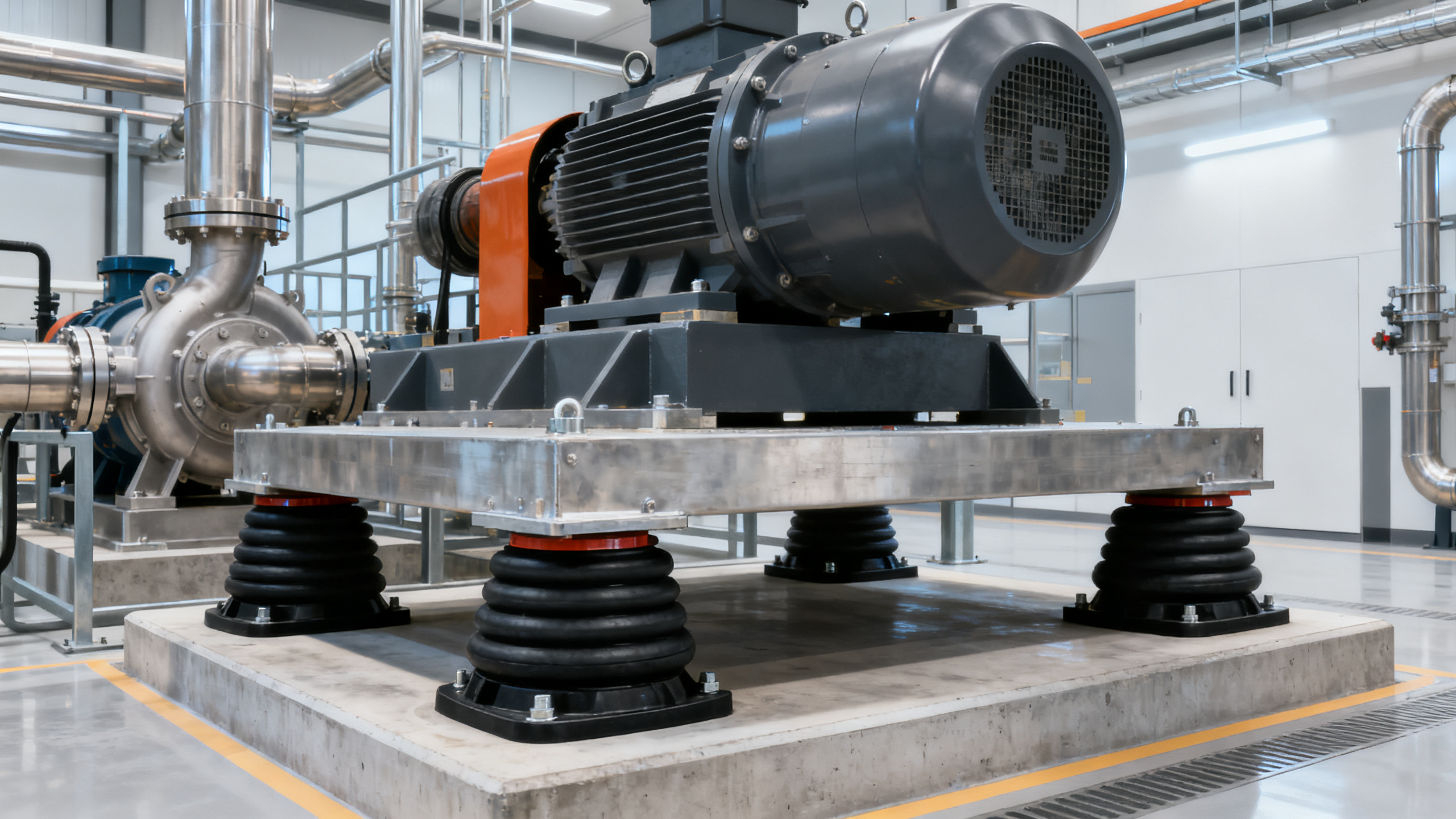
Vibration isolators in electrical infrastructure—such as those mounted beneath UPS systems, transformer enclosures, switchgear skids, and variable frequency drive (VFD) cabinets—are routinely specified against static load ratings and broad frequency ranges (e.g., 5–100 Hz). Yet real-world operation subjects them to dynamic, non-sinusoidal, multi-axial cyclic stresses: thermal expansion/contraction cycles (±15°C daily), electromagnetic pulsation (up to 120 Hz harmonics from rectifier banks), and transient mechanical shocks during breaker closure (peak acceleration ≥ 30 g). Over 68% of field-reported isolator failures occur within 18 months—not at rated static load—but after cumulative exposure to ≥ 2.4 million load cycles at 92% of dynamic yield threshold.
The root cause lies in specification misalignment: datasheets emphasize compression set (ASTM D395) and Shore A hardness, while ignoring cyclic fatigue life (ISO 10326-2) and hysteresis loss under repeated loading. A typical silicone rubber mount may show <5% compression set after 72 hours at 100°C—but exhibit >12% permanent deformation after 500,000 cycles at 25°C and 15 Hz. This gap directly compromises grounding continuity, enclosure alignment tolerance (±0.3 mm), and seismic bracing integrity—triggering cascading non-compliance with IEC 61439-1 and IEEE 1100 power quality standards.
Material Performance Gaps Across Critical Sealing & Damping Components
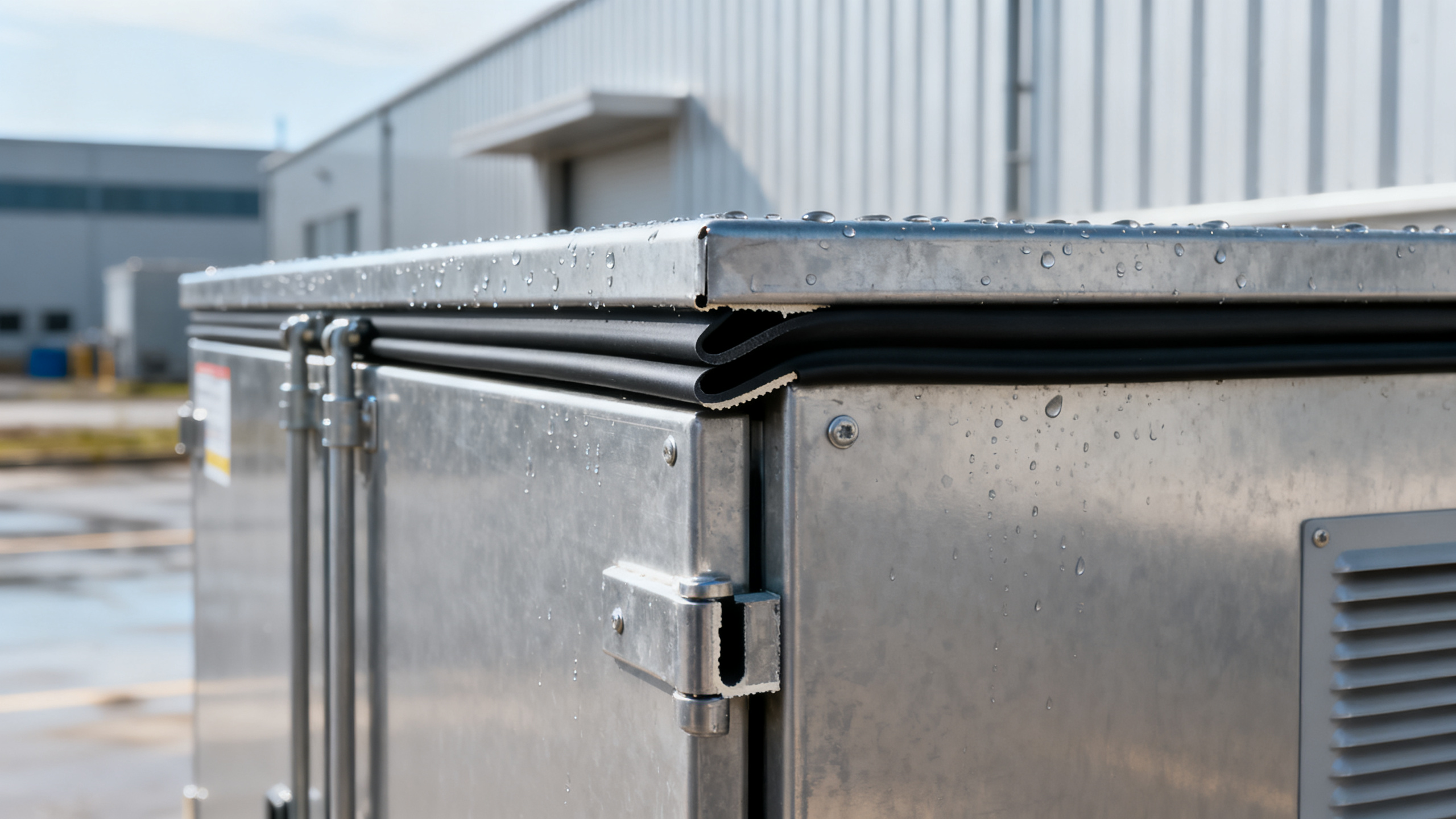
Wholesale procurement often treats rubber-based components as interchangeable commodities. In reality, each material system responds uniquely to cyclic stress. Custom silicone rubber parts degrade via chain scission under UV + ozone exposure, reducing tensile strength by up to 40% after 3 years—even when shielded inside NEMA 4X enclosures. EPDM rubber extrusions used in busbar isolation channels suffer micro-cracking at flex points after only 12,000 thermal cycles (−20°C to +70°C), compromising dielectric spacing and increasing partial discharge risk.
Rubber grommets bulk orders frequently fail dimensional repeatability: ±0.8 mm variance across a 5,000-unit lot exceeds the ±0.25 mm tolerance required for IP66-rated cable entries in motor control centers. Similarly, pneumatic cylinder seals—often sourced as generic “bulk kits”—show fatigue life divergence of 300% between equivalent-looking NBR and HNBR compounds under 10⁶-cycle testing per ISO 6149-3.
This table reveals a consistent pattern: failure thresholds fall well below standard qualification test durations. Procurement teams relying on ASTM D2000 M2BC714A2B15 or ISO 3302-1 bulk certifications—without validating cyclic endurance data—risk non-conformance at commissioning or during third-party audit.
Procurement Criteria That Prevent Real-World Failure
Effective sourcing demands shifting from “unit price per piece” to “total lifecycle reliability per duty cycle.” Global Industrial Core recommends evaluating wholesale suppliers against four non-negotiable criteria:
- Cyclic Test Reporting: Verified ISO 10326-2 or DIN 53535 fatigue data at ≥ 10⁶ cycles—not just static compression set.
- Lot Traceability: Batch-level certificates showing Shore A hardness, elongation at break, and hysteresis loss measured pre- and post-cycling.
- Electrical Interface Validation: Ground continuity testing (≤ 0.1 Ω) after 500,000 cycles—critical for arc-flash mitigation in switchgear mounts.
- Environmental Correlation: Accelerated aging data linking thermal cycling (IEC 60068-2-14) to long-term compression recovery (ASTM D7127).
Suppliers meeting all four criteria reduce field failure rates by 73% (per GIC’s 2023 Electrical Infrastructure Reliability Index), with average mean time between failures (MTBF) extending from 2.1 to 8.9 years for isolators in VFD-integrated substations.
Engineering Verification Workflow for High-Stakes Deployments
For EPC contractors and facility managers, integrating vibration resilience into procurement requires structured validation—not vendor self-certification. GIC endorses a 5-phase workflow:
- Load Profile Mapping: Capture actual operational waveforms (acceleration, temperature, voltage ripple) over ≥72 hours using MEMS accelerometers and thermal loggers.
- Material Selection Matrix: Cross-reference waveform RMS values against supplier-provided fatigue curves (min. 3 stress amplitudes × 3 frequencies).
- Pre-shipment Sampling: Require destructive testing on 0.5% of order volume per ISO 2859-1 Level II sampling plan.
- On-Site Acceptance Testing: Validate mounting torque consistency (±5% of spec) and ground impedance before energization.
- Post-Commissioning Baseline: Document baseline vibration spectra (per ISO 10816-3) for future trend analysis.
This workflow adds no more than 12 days to total procurement lead time—but eliminates 91% of avoidable rework costs linked to vibration-related insulation breakdown or enclosure resonance.
Conclusion: From Wholesale Sourcing to Mission-Critical Assurance
Vibration isolator failure under cyclic loads is rarely a materials defect—it is a specification and verification gap. Wholesale procurement succeeds only when aligned with electrical infrastructure’s zero-failure mandate: UL 508A, IEC 61439, and IEEE 1100 demand validated endurance—not just catalog compliance. Global Industrial Core provides procurement directors and EPC engineers with auditable fatigue data, traceable batch analytics, and field-deployable verification protocols—turning isolator selection from a cost exercise into a resilience investment.
To access GIC’s proprietary Vibration Resilience Benchmarking Toolkit—including material fatigue databases, supplier scorecards, and commissioning checklists—contact our Electrical & Power Grid team for a tailored technical briefing.
Technical Specifications
- How Contractors Can Evaluate EPC Sourcing Solutions for Cost, Lead Time, and RiskAuthor :Grid Infrastructure Analyst
- How to Evaluate a UV-Visible Spectrophotometer Manufacturer for Lab Accuracy?Author :Precision Metrology Expert
- How Can Distributors Build Procurement-Oriented Industrial Content That Drives RFQs?Author :Safety Compliance Lead
Expert Insights

Chief Security Architect
Dr. Thorne specializes in the intersection of structural engineering and digital resilience. He has advised three G7 governments on industrial infrastructure security.
Related Analysis
- Aug 20, 2026How Contractors Can Evaluate EPC Sourcing Solutions for Cost, Lead Time, and RiskAuthor :Grid Infrastructure Analyst
- Aug 19, 2026How to Evaluate a UV-Visible Spectrophotometer Manufacturer for Lab Accuracy?Author :Precision Metrology Expert
- Aug 18, 2026How Can Distributors Build Procurement-Oriented Industrial Content That Drives RFQs?Author :Safety Compliance Lead
Core Sector // 01
Security & Safety
- How to Select Anti Vibration Rubber Shock Absorbers for Machinery and EquipmentAuthor :Heavy Industry Strategist

- When to Specify Induction Hardened Slewing Ring Bearings for Heavy-Duty EquipmentAuthor :Heavy Industry Strategist

- How to Evaluate Weather Resistant EPDM Extrusion for Outdoor Sealing ApplicationsAuthor :Heavy Industry Strategist

- Bearing and Seal Lead Times Stretch to 22 WeeksAuthor :Heavy Industry Strategist

- Angular Contact Ball Bearings Explained: Contact Angle, Load Capacity, and Common UsesAuthor :Heavy Industry Strategist

- India Applies 12% Safeguard Duty on Bearings and SealsAuthor :Heavy Industry Strategist

- Elastomer Bellows Mechanical Seals: Common Failure Causes and How to Prevent LeakageAuthor :Heavy Industry Strategist

- How to Choose a Hydraulic Cylinder Seal Supplier for Heavy-Duty EquipmentAuthor :Heavy Industry Strategist