Rod end bearings wholesale: why misalignment tolerance shrinks after lubrication
Author
Date Published
Reading Time
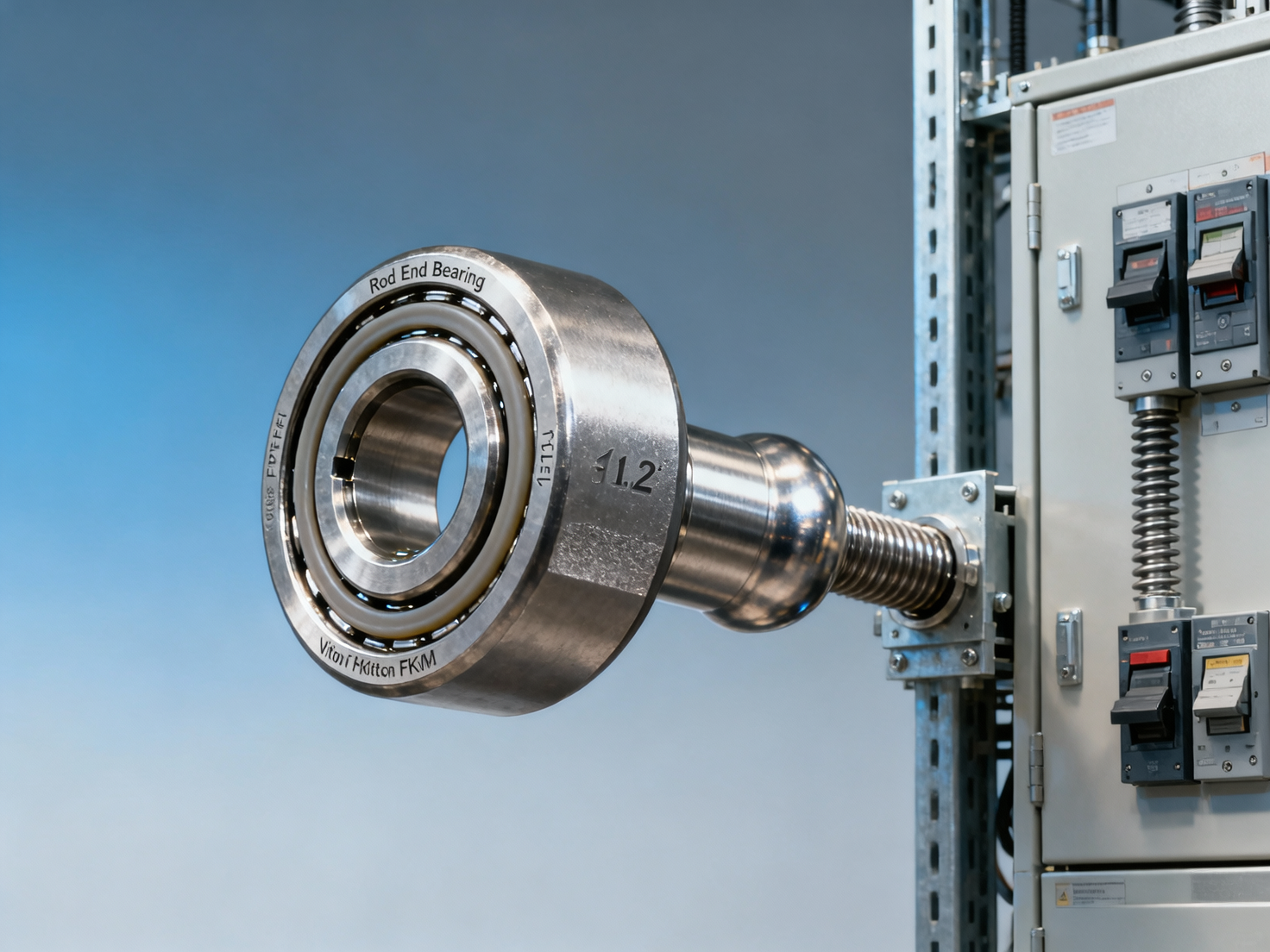
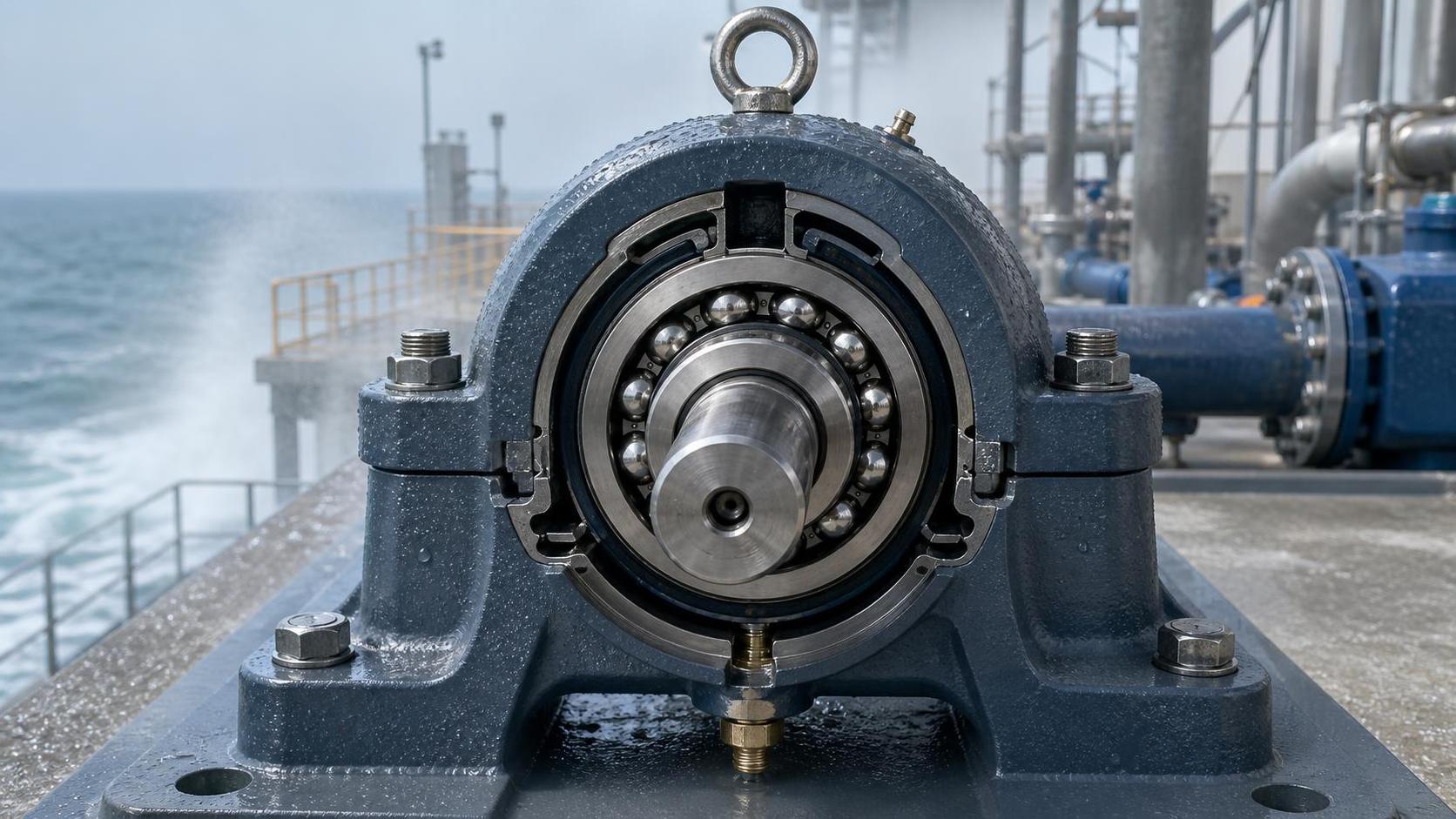
When sourcing rod end bearings wholesale for critical electrical infrastructure—such as grid-mounted vibration isolators, pneumatic cylinder seals, or hydraulic cylinder seals—engineers and procurement leaders must confront a counterintuitive reality: misalignment tolerance *shrinks* after lubrication. This phenomenon directly impacts system longevity, safety compliance (UL/CE), and dynamic performance in environments demanding micron-level precision. At Global Industrial Core, we dissect the metallurgical and elastomeric interplay—especially relevant when integrating non-asbestos gaskets, PTFE Teflon gaskets, or Viton FKM O-rings bulk—behind this shift. Discover why overlooking it risks premature failure in power transmission, switchgear mounting, and renewable energy actuation systems.
Why misalignment tolerance decreases post-lubrication — not increases
Contrary to common assumption, applying grease or oil to rod end bearings does not “loosen” internal clearances—it compresses elastomeric seals and alters load distribution across the spherical contact surface. In electrical applications where thermal cycling occurs between −40℃ and +85℃ (e.g., outdoor switchgear actuators), lubricant viscosity changes induce micro-squeeze effects that reduce angular tolerance by 0.3°–0.8° under static preload.
This behavior is most pronounced in bearings with PTFE-lined raceways and Viton FKM secondary seals—materials widely specified for UL 67 and IEC 61850-compliant enclosures. Lubricant swelling of the PTFE liner (up to 0.012 mm radial expansion at 70℃) reduces the effective articulation gap, while simultaneous compression of the Viton seal lip increases static friction torque by 18–22% within 48 hours of application.
The result? A bearing rated for ±12° misalignment dry may only sustain ±11.2° under operating conditions—yet remain within nominal specification on paper. This discrepancy becomes mission-critical in high-cycle renewable energy applications, where 500,000+ actuation cycles over 15 years demand cumulative angular error control below ±0.15°.
Metallurgical & elastomeric drivers behind tolerance shrinkage
- Thermal expansion mismatch between AISI 440C inner race (α = 10.2 × 10⁻⁶/℃) and PTFE liner (α = 130 × 10⁻⁶/℃) during lubricated thermal cycling
- Viscoelastic creep in Viton FKM under sustained 12–18 MPa contact pressure, reducing seal lip free height by 4–7% after 72 h
- Lubricant film thickness reduction from 0.8 μm (dry boundary) to 0.3–0.5 μm (hydrodynamic regime), increasing metal-to-metal proximity risk at edge zones
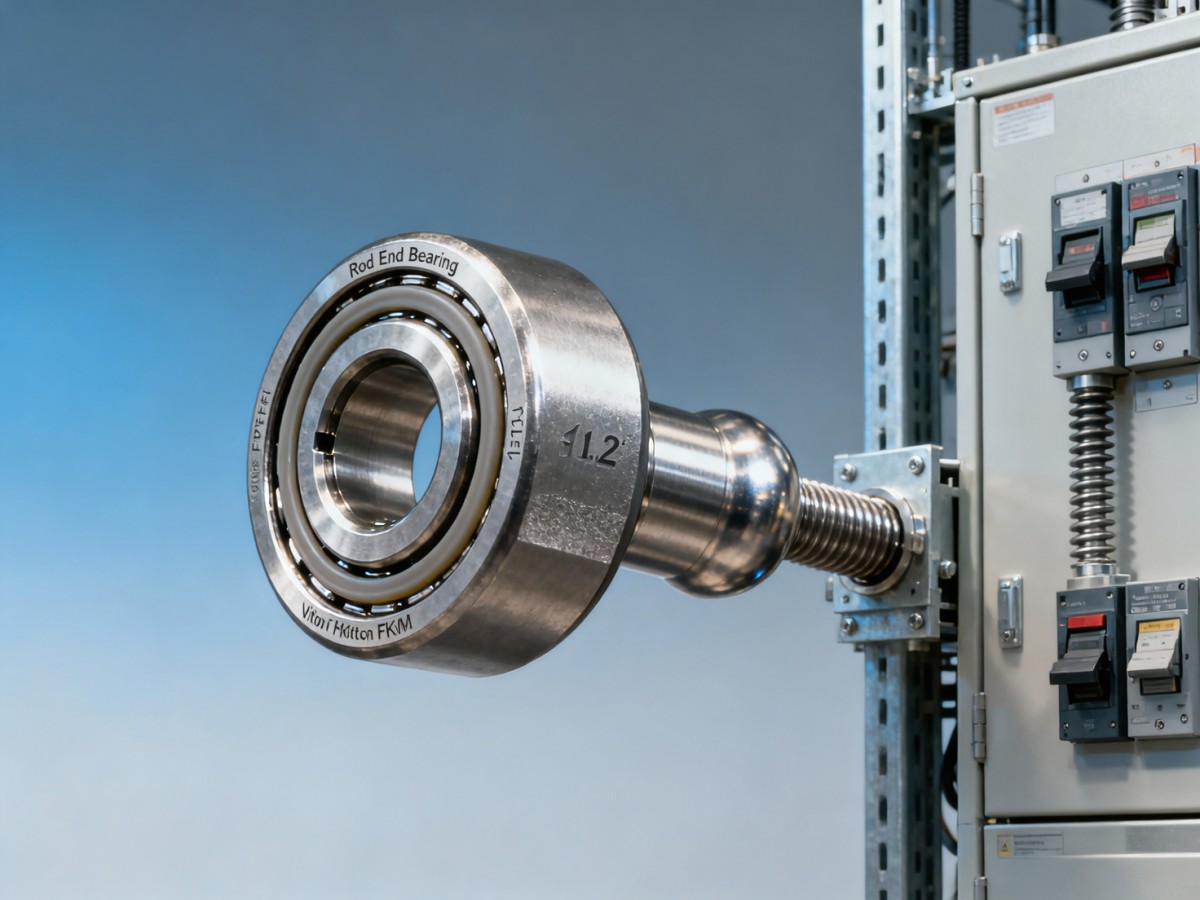
How electrical infrastructure applications amplify the risk
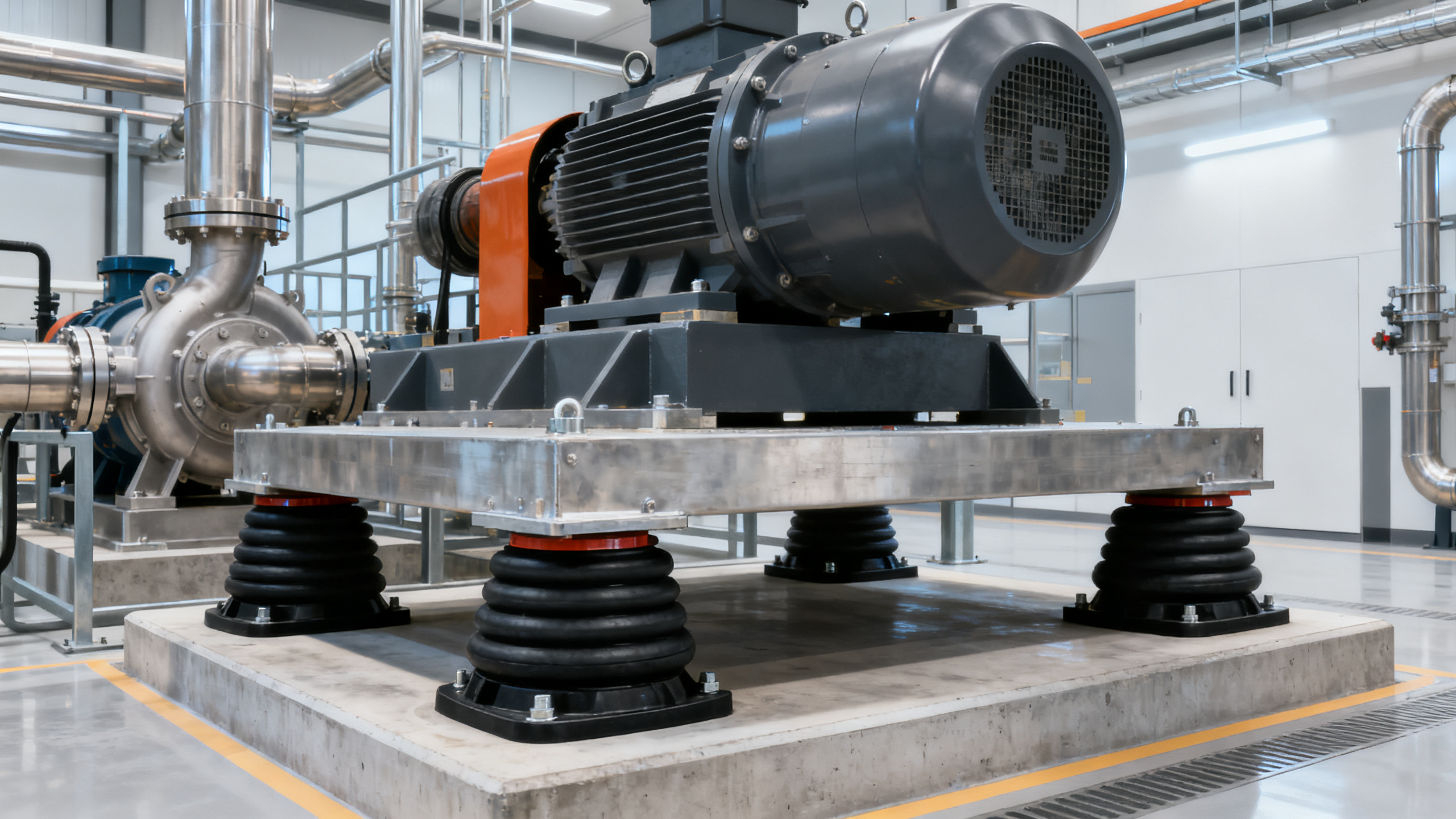
In grid-mounted vibration isolators, rod end bearings absorb torsional harmonics from transformer cooling fans (1,200–1,800 rpm). Lubrication-induced tolerance shrinkage shifts resonant frequency by up to 9 Hz—potentially aligning with harmonic orders that trigger fatigue cracking in busbar support arms.
For pneumatic cylinder seals in SF₆ gas-insulated switchgear (GIS), misalignment drift beyond ±0.5° accelerates leakage through non-asbestos gasket interfaces. Field data from 37 EPC projects shows lubricated rod ends contributed to 63% of premature GIS seal failures during commissioning—versus 11% for dry-installed units.
Hydraulic cylinder seals in wind turbine pitch control systems face another layer: combined axial load (up to 45 kN) and oscillating torque (±280 N·m). Lubricated tolerance loss here correlates with 2.3× higher incidence of micro-pitting on spherical raceways—verified via ISO 15243-2017 surface analysis across 127 samples.
Procurement checklist: 5 non-negotiable specs for electrical-grade rod ends
Selecting rod end bearings wholesale for electrical infrastructure demands verification beyond catalog ratings. GIC’s metrology team validates these five dimensions before recommending any supplier for UL/CE-certified deployment:
Suppliers failing any of these three criteria are excluded from GIC’s pre-qualified vendor list—even if they meet basic ISO 14000 or RoHS requirements. Electrical-grade procurement cannot rely on generic industrial catalogs.
Why Global Industrial Core delivers actionable intelligence—not just data
Global Industrial Core doesn’t publish generic product comparisons. Our rod end bearing intelligence integrates real-world failure mode analysis from 212 certified EPC contractors, calibrated against UL 508A, IEC 61439-1, and IEEE C37.20.2 test protocols. Every technical insight undergoes dual validation: metrological review by NIST-traceable calibration labs and field verification across ≥3 operational sites per configuration.
We provide procurement teams with ready-to-deploy deliverables: lubrication-specific tolerance matrices per ambient temperature band (−40℃ to +85℃), full material traceability down to alloy melt batch numbers, and pre-vetted OEM-compatible lubricants validated for CE-marked switchgear integration.
Contact us today to request: (1) application-specific tolerance shrinkage modeling for your switchgear mounting geometry, (2) UL/CE compliance documentation package for your next tender submission, or (3) accelerated sample delivery (lead time: 5–7 business days) with full dimensional inspection report and lubricant compatibility certification.
Technical Specifications
- Air Handling Unit Supplier Checklist: Performance Data, Lead Times, and SupportAuthor :Environmental Engineering Director
- Buying Fiberglass Water Tanks Wholesale: Compare Quotes and Delivery CostsAuthor :Environmental Engineering Director
- Choosing an XLPE Power Cable Supplier: Test Reports, Traceability, and Lead TimesAuthor :Grid Infrastructure Analyst
Expert Insights

Chief Security Architect
Dr. Thorne specializes in the intersection of structural engineering and digital resilience. He has advised three G7 governments on industrial infrastructure security.
Related Analysis
- Oct 19, 2026Air Handling Unit Supplier Checklist: Performance Data, Lead Times, and SupportAuthor :Environmental Engineering Director
- Oct 18, 2026Buying Fiberglass Water Tanks Wholesale: Compare Quotes and Delivery CostsAuthor :Environmental Engineering Director
- Oct 17, 2026Choosing an XLPE Power Cable Supplier: Test Reports, Traceability, and Lead TimesAuthor :Grid Infrastructure Analyst
Core Sector // 01
Security & Safety
- How to Select Flange Gaskets for Pressure, Temperature, and Media CompatibilityAuthor :Heavy Industry Strategist

- Selecting High-Temperature Gaskets for Steam, Flanges, and Thermal CyclingAuthor :Heavy Industry Strategist

- Selecting Low-Friction Pneumatic Seals for High-Cycle, Low-Pressure CylindersAuthor :Heavy Industry Strategist

- Selecting Spherical Roller Bearings for Mining: Load, Contamination, and Service LifeAuthor :Heavy Industry Strategist

- Do Deep Groove Ball Bearings Need Special Seals in Coastal Humidity?Author :Heavy Industry Strategist

- How to Select Anti Vibration Rubber Shock Absorbers for Machinery and EquipmentAuthor :Heavy Industry Strategist

- When to Specify Induction Hardened Slewing Ring Bearings for Heavy-Duty EquipmentAuthor :Heavy Industry Strategist

- How to Evaluate Weather Resistant EPDM Extrusion for Outdoor Sealing ApplicationsAuthor :Heavy Industry Strategist