How Can Distributors Build Procurement-Oriented Industrial Content That Drives RFQs?
Author
Date Published
Reading Time

For distributors in industrial markets, the real question behind this topic is not whether content matters. It is what kind of content actually helps a buyer move from browsing to issuing an RFQ. In most categories tied to infrastructure, maintenance, plant upgrades, and project delivery, procurement teams are not looking for broad thought leadership when they are close to action. They are checking whether a supplier can reduce risk, document compliance, and make vendor comparison easier without adding more back-and-forth.
That is why procurement-oriented industrial content has become a practical commercial tool rather than a branding exercise. A distributor may carry strong lines, hold local inventory, and know the application well, but if the digital experience stops at short product descriptions and a downloadable catalog, buyers often move on before sales ever sees the opportunity. The RFQ goes to the source that answered more of the buying questions upfront.
For distributors, especially those serving EPC contractors, maintenance teams, OEM buyers, and regional industrial accounts, the shift is important. Search traffic alone is not the goal. The goal is to attract the buyer whose internal process already requires technical validation, delivery confidence, and procurement documentation, then give that buyer enough usable information to contact you with a specific request.
What buyers are really trying to confirm before they inquire
Industrial procurement is usually constrained by more than price. Even when cost pressure is high, the buyer is balancing lifecycle risk, downtime exposure, compliance obligations, and vendor accountability. That changes the type of content that performs.
In practice, buyers often want to answer five questions before they send an RFQ:
- Is this supplier offering the correct product class for my application, not just a similar one?
- Can the supplier document standards, certifications, and test status clearly enough for internal approval?
- What tradeoffs exist between options, materials, ratings, or lead times?
- Does this distributor understand substitution risk, compatibility, and operating conditions?
- Will the quoting process be efficient, or will we need multiple rounds just to clarify basics?
Many distributor sites address only the first of these, and even then at a superficial level. They show part numbers, dimensions, and perhaps a brand name. That may be enough for repeat replenishment of familiar SKUs, but it is rarely enough for project-driven or compliance-sensitive purchases.
Procurement-oriented content works when it is built around the buyer’s approval path. That means the page or article should help someone justify shortlist inclusion internally, not just identify a product externally.
Why generic industrial content rarely produces qualified RFQs
A common assumption is that publishing more technical content will naturally generate better inquiries. That is only partly true. Volume content can improve visibility, but it often fails at the exact point where commercial intent becomes serious.
Three patterns tend to weaken RFQ performance.
First, the content is written for search engines rather than procurement behavior. It may rank for broad terms, but it does not answer specification questions, installation concerns, or compliance checks. Traffic comes in, but intent stays shallow.
Second, the content is too manufacturer-led. It repeats brochure language without translating it into distributor value. Buyers then see the distributor as a passive reseller, not as a sourcing partner who can reduce risk, consolidate options, or solve supply constraints.
Third, the content avoids hard details in the name of simplicity. In industrial procurement, that usually backfires. Leaving out rating ranges, environmental limits, material distinctions, or approval status does not make a page cleaner; it makes it less usable.
The result is familiar: lots of pageviews, few meaningful forms, and sales teams complaining that inbound leads are either vague, mismatched, or impossible to quote efficiently.
What procurement-oriented content looks like in practice
The strongest distributor content does not try to replace a datasheet, nor does it read like a blog post detached from the buying process. It sits between the two. It interprets technical information in a way that helps the buyer make a sourcing decision.
That usually means organizing content around use case, selection logic, and approval requirements. Instead of “Here is our product range,” the page should move closer to “Here is how to choose the right range, what documentation you will need, and where the risk usually sits.”
Useful formats include application guides, specification comparison pages, replacement and interchange notes, compliance checklists, lead-time risk explainers, and category pages built around operating context rather than product family alone.
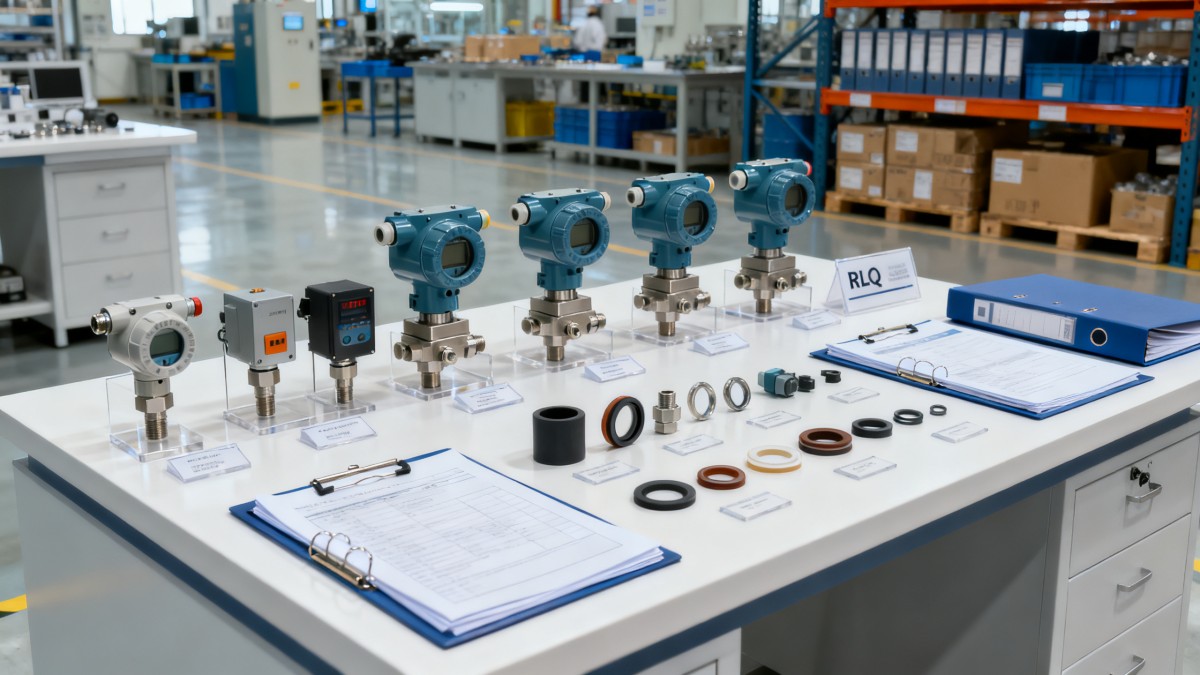
For example, a distributor selling instrumentation components could create a page that compares pressure transmitter options by operating environment, enclosure requirement, calibration expectations, and certification pathway. A buyer under deadline is far more likely to submit a serious inquiry when those factors are already framed clearly.
Similarly, in electrical, mechanical, or safety categories, procurement-oriented content should clarify where low-cost alternatives are acceptable and where they introduce failure, inspection, or warranty risk. Buyers remember suppliers who help them avoid the wrong substitution.
The commercial advantage distributors can claim that manufacturers often cannot
Manufacturers usually own the deepest product knowledge. Distributors, however, often have a different advantage: they see how products are actually bought across brands, regions, project types, and urgency levels. That perspective is commercially valuable when translated into content.
A manufacturer may explain ideal product performance. A capable distributor can explain what happens when the ideal option is backordered, over-specified, under-documented, or incompatible with the buyer’s approval timeline. That is often closer to the real procurement decision.
This is particularly relevant in cross-category environments such as plant maintenance, utilities, process industries, building systems, and infrastructure projects. Buyers are not only selecting a component. They are managing installation windows, contractor coordination, inspection requirements, and budget controls. Content that reflects those realities will outperform content that stays at the catalog level.
For a platform like Global Industrial Core, this is where industrial content can become genuinely high value: not by promoting a brand directly, but by framing buying conditions with enough rigor that a distributor’s credibility becomes visible through the explanation itself.
What information most often moves an RFQ forward
Not every technical detail matters equally at the inquiry stage. Some information mainly supports engineering review after engagement. Other information increases the likelihood that the buyer will reach out at all. Distributors should know the difference.
The content elements that most often support RFQ conversion include:
- Application boundaries: where the product fits, and where it should not be used
- Standards and certifications: CE, UL, ISO, RoHS, REACH, IP/NEMA, or sector-specific approvals where relevant, marked carefully if status is category-dependent
- Material and performance tradeoffs: corrosion resistance, temperature tolerance, duty cycle, precision level, or lifespan expectations
- Procurement constraints: MOQ, stocking profile, alternate brands, lead-time variability, packaging units, and regional availability
- Documentation readiness: datasheets, declarations, test reports, traceability records, and installation references
- Commercial clarity: what information the buyer should include to get an accurate quote quickly
This last point is often underestimated. A distributor can materially increase quote quality by telling buyers exactly what to send: operating conditions, quantity, standard required, target delivery location, replacement reference, and any approval constraints. That is content serving operations, not just marketing.
Where distributors should be careful not to overstate
Industrial buyers are trained to notice vague claims. Terms like “high quality,” “industrial grade,” “cost-effective,” or “fully compliant” mean very little unless supported by context. In some cases, they can create liability if they imply certification or performance status that has not been verified for the exact SKU, market, or application.
Distributors should be especially cautious in four areas.
- Certification claims: approval may vary by model, configuration, market, or revision. If uncertain, mark it clearly as 【待核实】 rather than implying blanket compliance.
- Interchangeability claims: “drop-in replacement” language can be risky when tolerances, sealing, electrical ratings, or software compatibility are not fully matched.
- Lead-time promises: procurement content should distinguish between stocked availability, supplier lead time, and project-volume supply capacity.
- Total cost claims: a lower purchase price does not always mean lower procurement cost once downtime, rework, inspection failure, or shortened service life are considered.
In many industrial categories, credibility is built less by saying more and more by saying precisely what is known, what depends on application, and what requires confirmation before ordering.
Content structure should mirror procurement workflow, not internal product hierarchy
One reason distributor content underperforms is structural. Sites are usually organized around brands and product families because that reflects internal inventory systems. Buyers, however, often search by problem, spec, standard, or replacement task.
That gap matters. If a page forces the user to translate an application need into a brand taxonomy before they can evaluate options, friction rises immediately.
A more effective structure is to connect content to the way procurement actually happens:
This does not require a complete website rebuild. In many cases, a distributor can start by improving high-intent pages: major product categories, key brand landing pages, common replacement searches, and industries where quote value is highest.
How to decide which categories deserve this treatment first
Not every product line needs deep procurement content. For low-risk, commodity, or highly standardized items, the return may be limited. The best candidates are categories where buyers face meaningful selection risk, documentation requirements, or supply complexity.
Distributors should prioritize content investment where at least two of these conditions apply:
- The product is spec-sensitive or application-sensitive
- Certification or traceability influences approval
- Brand substitution is possible but not straightforward
- Lead times or regional stock access affect sourcing decisions
- Average order value or project value justifies pre-sales effort
- Inbound inquiries are frequent but poorly qualified
In broad industrial portfolios, this often points toward controls, power components, measurement devices, safety equipment, sealing systems, specialty metals, process accessories, and other categories where technical and commercial variables interact.
By contrast, categories with stable repeat ordering and minimal evaluation burden may benefit more from better search/filter UX and faster quote response than from long-form editorial content.
The role of trust signals in global and multi-stakeholder buying
As industrial procurement becomes more global and digitally intermediated, trust signals carry more weight earlier in the process. This is especially true when the buyer is evaluating a distributor outside an existing approved vendor list.
Useful trust signals are not limited to logos and testimonials. For procurement audiences, stronger signals usually include documented quality processes, visible technical authorship, transparent handling of standards, and evidence that the distributor understands regulated or high-consequence environments.
That is where editorial discipline matters. A content environment aligned with E-E-A-T principles is not just a search consideration. It is also a buying consideration. If pages are technically sloppy, inconsistent, or obviously generic, procurement teams will assume the quote experience may be the same.
Conversely, when content shows command of compliance language, application conditions, and sourcing tradeoffs, it shortens the trust-building cycle. That does not guarantee an RFQ, but it improves the odds that the inquiry will be specific, relevant, and commercially workable.
What distributors should measure beyond traffic
If the goal is RFQ generation, traffic metrics alone can be misleading. A page with modest visits may outperform a high-traffic article if it consistently brings in complete, quotable requests.
Better indicators include:
- RFQ-to-visit rate on high-intent pages
- Average completeness of inbound quote requests
- Reduction in sales clarification cycles before quoting
- Share of inquiries tied to target industries or target product lines
- Conversion rate on application-specific pages versus generic product pages
- Time from first visit to inquiry submission
These metrics reveal whether content is improving procurement efficiency, not just awareness. For distributor organizations where sales resources are limited, that distinction is central. Better content should not only create more opportunities; it should also make each opportunity easier to qualify and process.
The next shift: from searchable content to decision-ready content
The industrial content landscape is getting noisier, and broad informational pages are becoming easier for anyone to produce. What will remain harder to replicate is content grounded in real procurement friction: documentation gaps, substitute evaluation, compliance risk, regional supply constraints, and approval workflow realities.
For distributors, that means the next competitive step is not publishing more pages for the sake of coverage. It is building decision-ready content around the moments where buyers hesitate, escalate internally, or abandon the quote process because too much remains unclear.
In that sense, procurement-oriented industrial content for distributors is less a marketing tactic than a commercial operating model. It forces the business to clarify what it knows, where it adds value, and how it reduces risk for buyers under pressure. The distributors that do this well will not necessarily attract the most traffic. They are more likely to attract the RFQs worth quoting.
Technical Specifications
- Air Handling Unit Supplier Checklist: Performance Data, Lead Times, and SupportAuthor :Environmental Engineering Director
- Buying Fiberglass Water Tanks Wholesale: Compare Quotes and Delivery CostsAuthor :Environmental Engineering Director
- Choosing an XLPE Power Cable Supplier: Test Reports, Traceability, and Lead TimesAuthor :Grid Infrastructure Analyst
Expert Insights

Chief Security Architect
Dr. Thorne specializes in the intersection of structural engineering and digital resilience. He has advised three G7 governments on industrial infrastructure security.
Related Analysis
- Oct 19, 2026Air Handling Unit Supplier Checklist: Performance Data, Lead Times, and SupportAuthor :Environmental Engineering Director
- Oct 18, 2026Buying Fiberglass Water Tanks Wholesale: Compare Quotes and Delivery CostsAuthor :Environmental Engineering Director
- Oct 17, 2026Choosing an XLPE Power Cable Supplier: Test Reports, Traceability, and Lead TimesAuthor :Grid Infrastructure Analyst
Core Sector // 01
Security & Safety
- How to Build an Equipment Budget for EPC Projects Without Underestimating Lifecycle CostsAuthor :Safety Compliance Lead

- Selecting EPC Procurement Support Tools to Reduce Vendor and Delivery DelaysAuthor :Safety Compliance Lead

- How to Select an Access Control Management System for Multi-Site FacilitiesAuthor :Safety Compliance Lead

- How to Select Electronic Hotel Key Card Locks for Guest Rooms and Staff AreasAuthor :Safety Compliance Lead

- How to Evaluate a Hotel Key Card Lock Supplier for Multi-Property RolloutsAuthor :Safety Compliance Lead

- Pre-Contract Audit Checklist for Verified Production Safety and Environmental ComplianceAuthor :Safety Compliance Lead

- How Can Distributors Build Procurement-Oriented Industrial Content That Drives RFQs?Author :Safety Compliance Lead

- EU Mandates EN 50131-1:2026 for Security SystemsAuthor :Safety Compliance Lead