India Imposes 3-Month Zero Import Duty on Industrial Bearings & Metal Profiles
Author
Date Published
Reading Time
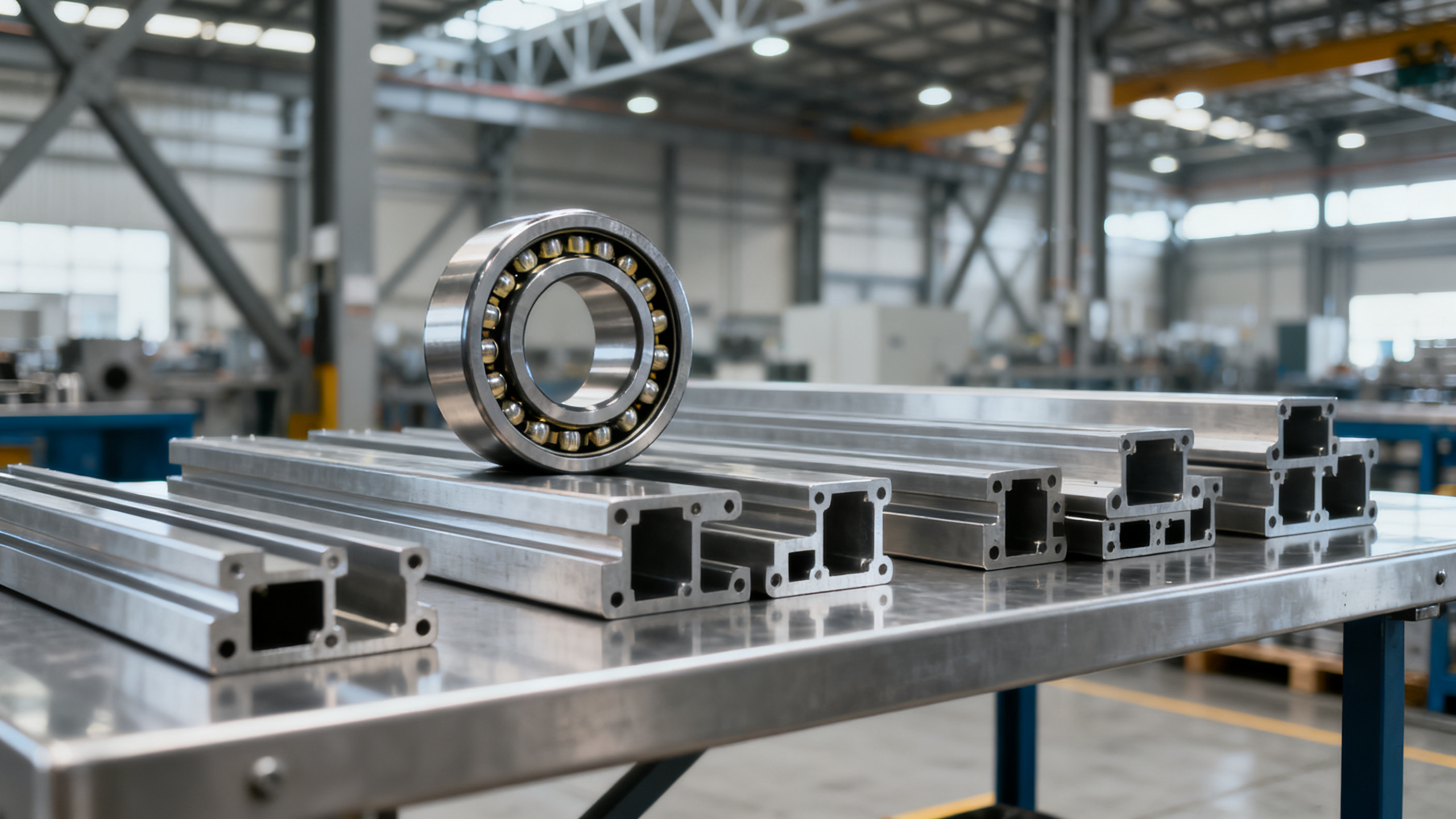
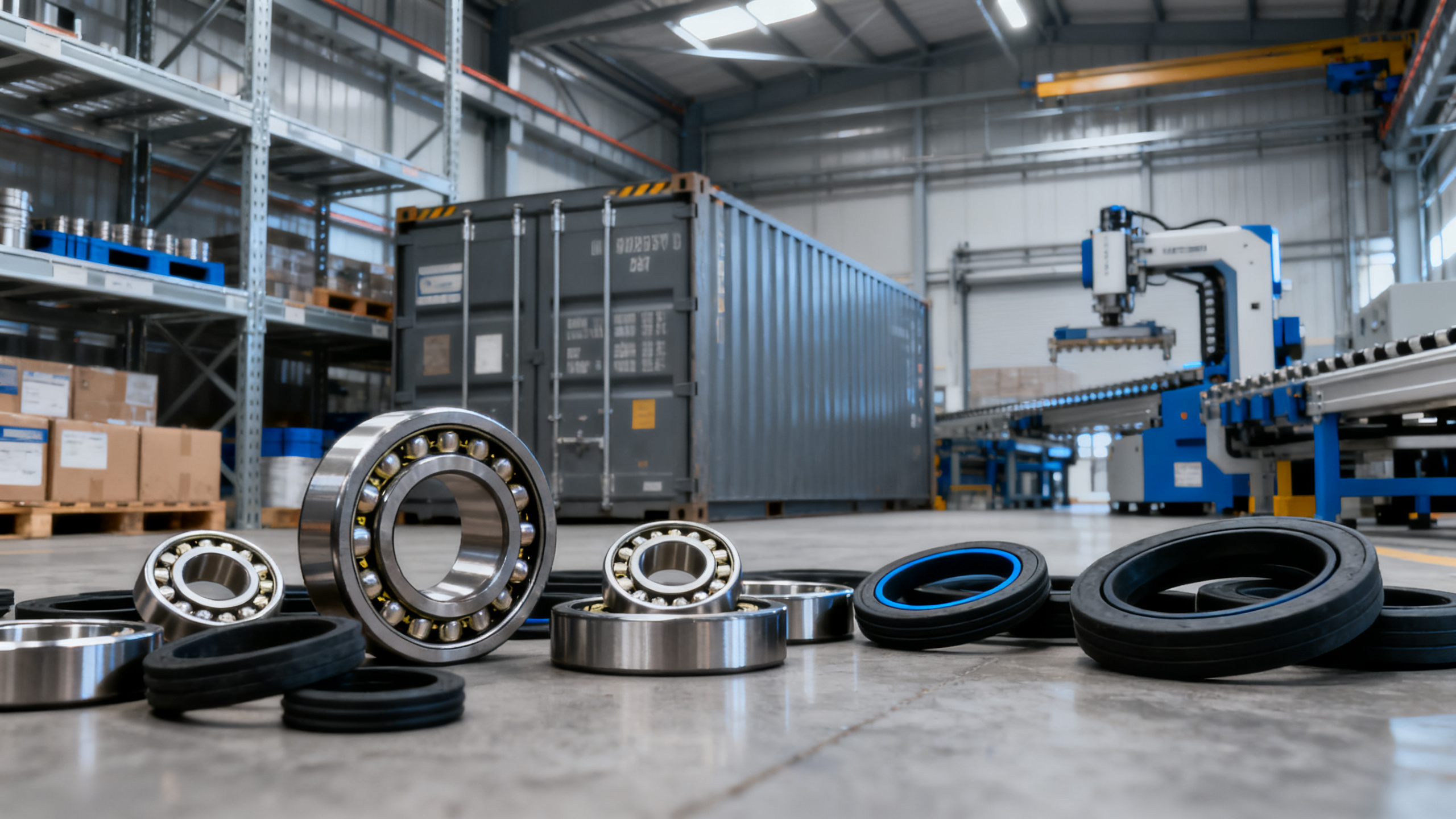
India has introduced a three-month zero import duty policy on selected industrial components—including rolling bearings (HS 8482) and structural metal profiles (HS 7301–7306)—effective May 25, 2026. Announced by the Ministry of Commerce and Industry on May 20, this temporary measure targets supply-side bottlenecks in domestic manufacturing upgrades. Exporters of bearings, seals, steel sections, and metal structural profiles—particularly those based in China—face a short-term window for increased market access and order flow.
Event Overview
The Indian Ministry of Commerce and Industry announced on May 20, 2026, that a zero import duty regime would apply to 17 categories of industrial components, including HS code 8482 (rolling bearings) and HS codes 7301–7306 (structural metal profiles), effective May 25, 2026. The policy is scheduled to remain in force for three months. No extensions, exclusions, or implementation guidelines beyond this announcement have been published as of the effective date.
Industries Affected by This Measure
Direct Exporters (e.g., Bearings & Seals, Steel & Metal Profile Manufacturers)
These firms face immediate eligibility for tariff-free entry into India. Impact manifests primarily in landed cost reduction and improved price competitiveness for quotations submitted during the window—though actual order conversion depends on local procurement cycles and certification compliance.
Raw Material Sourcing & Component Suppliers
Suppliers feeding into exported bearing or profile assemblies may see indirect demand shifts if downstream exporters scale up production to meet anticipated Indian orders. However, no change in Indian import duties applies to upstream inputs (e.g., bearing-grade steel billets or seal elastomers), so cost pass-through remains unaltered at this tier.
Contract Manufacturers & OEMs with India-Focused Assembly Lines
Manufacturers relying on imported sub-assemblies—including pre-assembled bearing units or custom-cut metal profiles—may benefit from lower input costs and faster customs clearance. Yet the policy does not cover finished machinery or end-use equipment, limiting scope to component-level imports only.
Distribution & Channel Partners in India
Local distributors handling international bearing or metal profile brands may experience heightened inbound inquiry volume and shorter quotation-to-order timelines. Inventory planning becomes more time-sensitive given the fixed three-month horizon, with limited buffer for regulatory or logistical delays.
Key Considerations and Practical Responses for Stakeholders
Monitor official updates for extension, exclusions, or procedural clarifications
The Ministry’s May 20 notice contains no detail on documentation requirements, origin certification, or anti-dumping safeguards that may still apply. Stakeholders should track notifications from India’s Directorate General of Foreign Trade (DGFT) and Central Board of Indirect Taxes and Customs (CBIC) for operational guidance.
Confirm HS code alignment and verify product coverage before shipment
Only 17 specified categories are covered—including but not limited to HS 8482 and 7301–7306. Products classified under adjacent codes (e.g., HS 8483 for bearing housings or HS 7225 for hot-rolled coil) remain subject to standard duties. Pre-shipment classification verification with Indian customs brokers is advised.
Distinguish between policy intent and commercial execution
Analysis shows this measure addresses documented delays in domestic capital goods modernization—not broad-based import liberalization. Its duration and narrow scope suggest it functions as a targeted liquidity intervention, not a structural trade shift. Commercial impact will therefore depend on how quickly Indian buyers adjust procurement calendars and whether they treat the window as tactical rather than strategic.
Prepare logistics, documentation, and customer communication ahead of the deadline
Given the three-month limit ending August 24, 2026, stakeholders should align shipping schedules, secure advance customs clearances where possible, and proactively inform Indian partners of eligibility timelines. Delayed shipments arriving post-August 24 will be subject to standard duties unless the policy is formally extended.
Editorial Perspective / Industry Observation
Observably, this policy signals India’s prioritization of near-term manufacturing capacity expansion over long-term import substitution goals in specific mechanical subsystems. It is better understood as a calibrated, time-bound facilitation tool—not a reversal of broader industrial policy direction. From an industry perspective, its significance lies less in tariff magnitude and more in its explicit linkage to equipment upgrade constraints: a rare public acknowledgment of infrastructure and component-level gaps in the ‘Make in India’ ecosystem. Continued attention is warranted not for its duration alone, but for whether similar targeted windows emerge for other foundational components in subsequent quarters.
Conclusion
This three-month duty exemption offers a defined, actionable opportunity for exporters of industrial bearings and structural metal profiles—but one bounded by strict temporal and product scope. Its industry relevance stems from its specificity and timing, not its breadth. It is more accurately interpreted as a short-term procurement enabler for Indian manufacturers, rather than a signal of sustained trade liberalization. Stakeholders are advised to treat it as a finite operational window requiring precise coordination—not a strategic inflection point.
Source Disclosure
Main source: Official notification issued by the Ministry of Commerce and Industry, Government of India, dated May 20, 2026, effective May 25, 2026.
Note: Extension status, implementation procedures, and potential exclusions remain unconfirmed and require ongoing observation.
Technical Specifications
- How to Select Electronic Hotel Key Card Locks for Guest Rooms and Staff AreasAuthor :Safety Compliance Lead
- How to Select Lab Instruments for Reliable Chemical Analysis WorkflowsAuthor :Precision Metrology Expert
- How to Size a UPS for Server Rooms: Load, Runtime, and Redundancy FactorsAuthor :Grid Infrastructure Analyst
Expert Insights

Chief Security Architect
Dr. Thorne specializes in the intersection of structural engineering and digital resilience. He has advised three G7 governments on industrial infrastructure security.
Related Analysis
- Sep 17, 2026How to Select Electronic Hotel Key Card Locks for Guest Rooms and Staff AreasAuthor :Safety Compliance Lead
- Sep 16, 2026How to Select Lab Instruments for Reliable Chemical Analysis WorkflowsAuthor :Precision Metrology Expert
- Sep 15, 2026How to Size a UPS for Server Rooms: Load, Runtime, and Redundancy FactorsAuthor :Grid Infrastructure Analyst
Core Sector // 01
Security & Safety
- Selecting Low-Friction Pneumatic Seals for High-Cycle, Low-Pressure CylindersAuthor :Heavy Industry Strategist

- Selecting Spherical Roller Bearings for Mining: Load, Contamination, and Service LifeAuthor :Heavy Industry Strategist

- Do Deep Groove Ball Bearings Need Special Seals in Coastal Humidity?Author :Heavy Industry Strategist

- How to Select Anti Vibration Rubber Shock Absorbers for Machinery and EquipmentAuthor :Heavy Industry Strategist

- When to Specify Induction Hardened Slewing Ring Bearings for Heavy-Duty EquipmentAuthor :Heavy Industry Strategist

- How to Evaluate Weather Resistant EPDM Extrusion for Outdoor Sealing ApplicationsAuthor :Heavy Industry Strategist

- Bearing and Seal Lead Times Stretch to 22 WeeksAuthor :Heavy Industry Strategist

- Angular Contact Ball Bearings Explained: Contact Angle, Load Capacity, and Common UsesAuthor :Heavy Industry Strategist