India Extends BIS Certification Exemption for SME Bearing Exporters
Author
Date Published
Reading Time
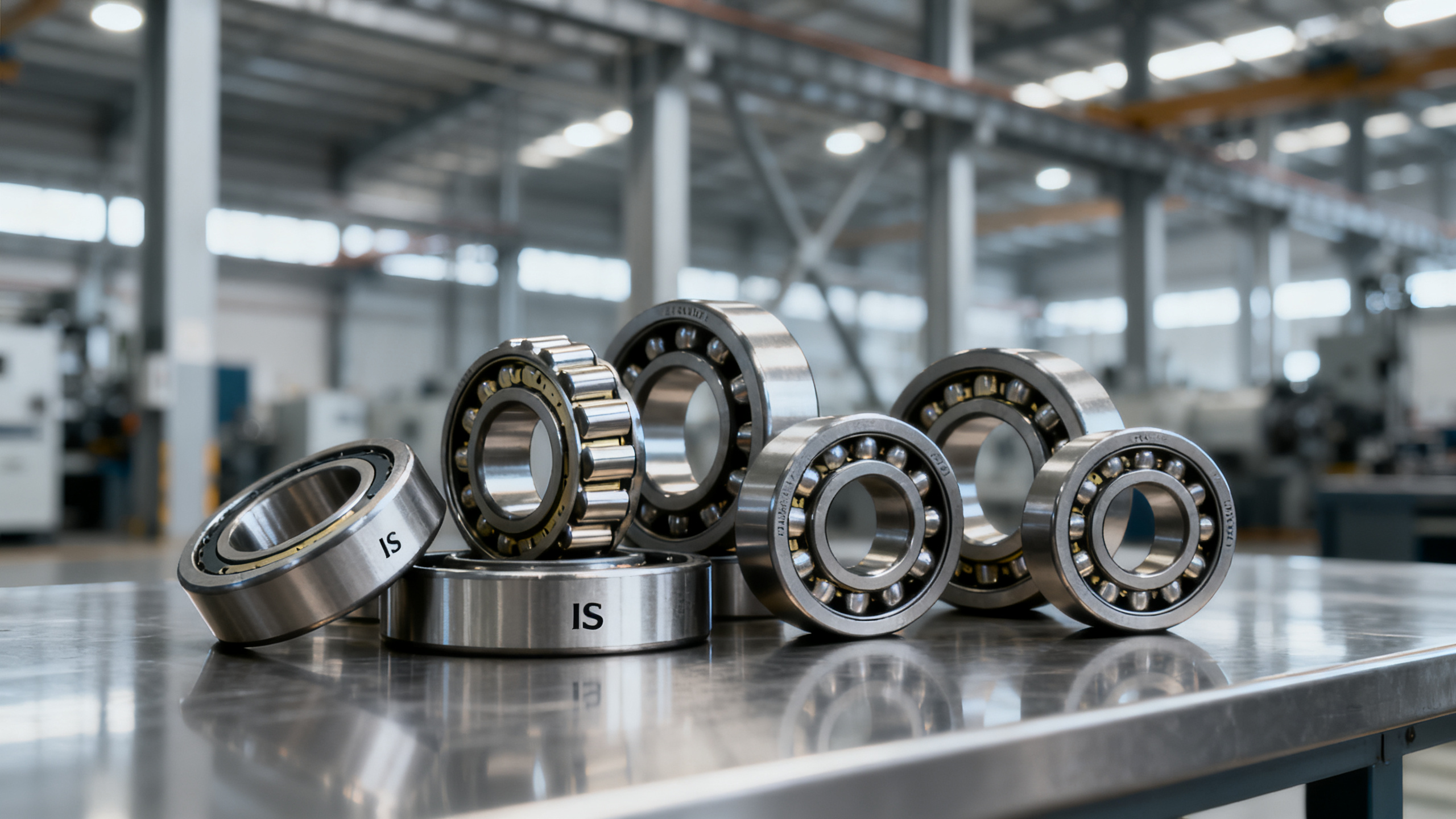
India’s Bureau of Indian Standards (BIS) certification exemption has been expanded to cover small and medium-sized enterprises (SMEs) exporting industrial bearings — a policy shift announced on 21 May 2026. The revision directly affects global suppliers in the mechanical components sector, particularly those serving India’s growing manufacturing and infrastructure markets. Driven by efforts to ease regulatory friction for low-volume exporters while maintaining baseline quality oversight, the change reflects a recalibration of India’s import control framework amid rising trade volumes and supply chain localization initiatives.
Event Overview
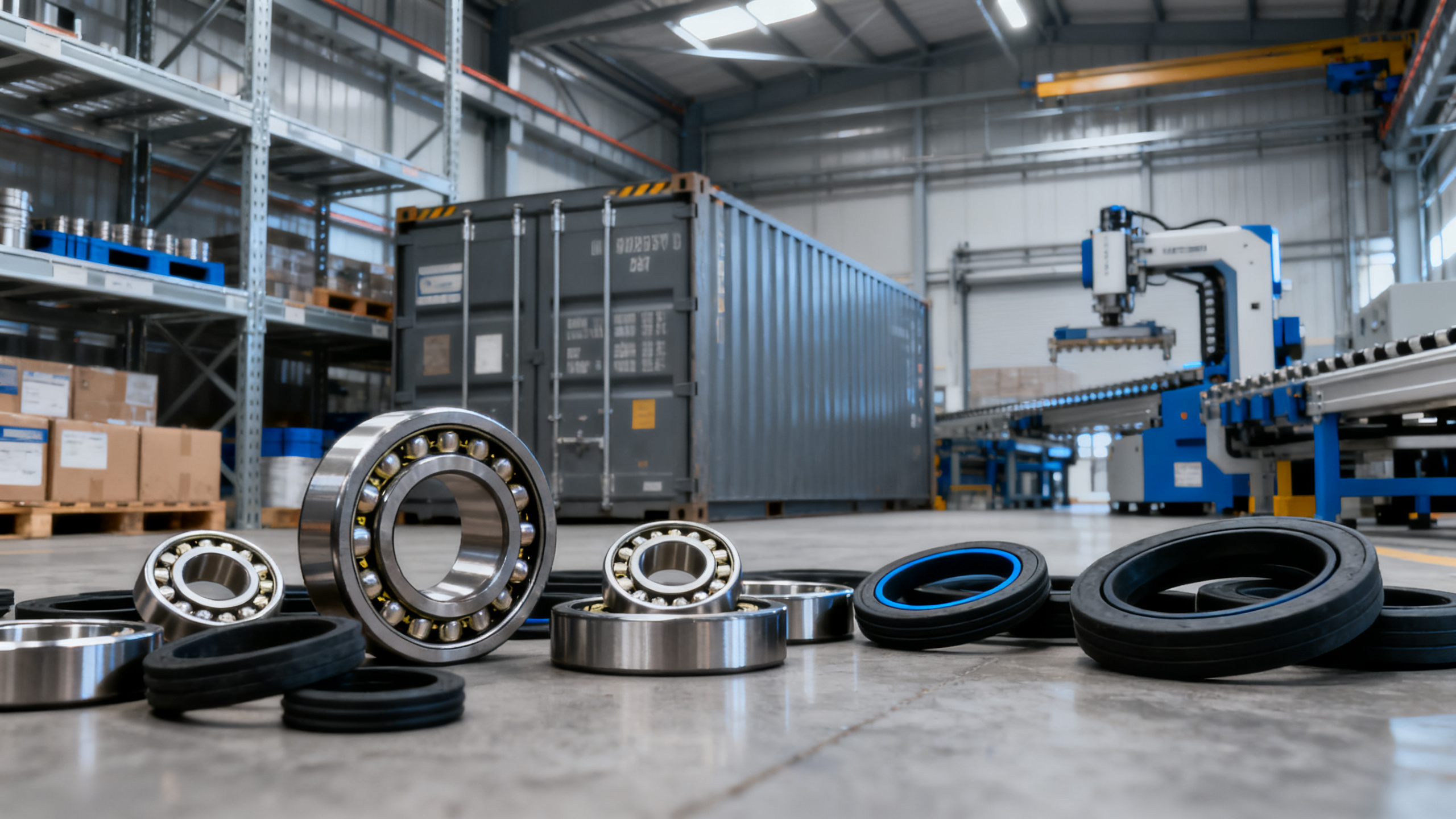
On 21 May 2026, the Department for Promotion of Industry and Internal Trade (DPIIT) amended Quality Control Order No. 8. Under the revision, micro, small, and medium enterprises (MSMEs) with annual export value to India below USD 2 million are exempted from mandatory BIS certification for rolling bearings, plain (sliding) bearings, and sealing components. Applicable standards include IS 1554 and IS 864. Exempted entities must instead submit a self-declaration and a factory audit report; the exemption is valid for 12 months and subject to renewal.
Industries Affected
Direct trading enterprises — Exporters acting as principal sellers (e.g., distributors or brand-holding OEMs outside India) face reduced pre-market entry barriers. While certification costs and timelines drop significantly, the requirement to produce and maintain auditable factory documentation introduces new internal compliance responsibilities. Impact is most pronounced for firms with narrow product portfolios and limited India-specific market penetration.
Raw material procurement enterprises — Suppliers of bearing-grade steel, polymers, or lubricants may see modest downstream demand shifts. Though not directly regulated under this order, their customers’ faster time-to-market could accelerate order cycles and increase pressure for traceable, specification-compliant inputs — especially where audit reports require material certifications.
Manufacturing enterprises — Contract manufacturers and tier-2 component makers supplying bearings for export to India now operate under dual accountability: they remain liable for product conformity (per self-declaration), yet avoid third-party BIS lab testing. This reduces overhead but heightens reliance on internal quality systems — notably in dimensional consistency, hardness verification, and seal integrity testing.
Supply chain service enterprises — Certification consultants, audit firms, and logistics providers specializing in BIS compliance will experience a short-term contraction in demand for full-scope BIS registration support. However, demand is shifting toward streamlined factory readiness assessments and self-declaration documentation services — creating a niche for agile, India-market-savvy advisory offerings.
Key Considerations and Recommended Actions
Verify eligibility thresholds rigorously
Annual export value must be calculated per legal entity (not group-wide) and include all bearing-related shipments to India over the prior fiscal year. Firms near the USD 2 million threshold should maintain auditable shipment records and consider applying for exemption ahead of renewal cycles to avoid certification gaps.
Strengthen internal quality documentation
The self-declaration and factory audit report replace third-party certification but do not lower technical expectations. Enterprises should formalize inspection protocols aligned with IS 1554/IS 864 — including lot-level test reports, calibration logs, and non-conformance tracking — to withstand potential post-import verification.
Engage accredited auditors early
While DPIIT does not prescribe auditor accreditation, Indian customs and BIS retain authority to request evidence of audit credibility. Working with auditors recognized under ISO/IEC 17021 or having prior BIS engagement history mitigates risk during customs clearance or spot checks.
Editorial Perspective / Industry Observation
Observably, this amendment is less a relaxation of standards than a strategic delegation of verification responsibility — moving from prescriptive conformity assessment to outcome-oriented accountability. Analysis shows that the 12-month validity window, coupled with renewal requirements, embeds continuous improvement incentives rather than one-time compliance. From an industry perspective, the exemption better serves SMEs engaged in project-based or intermittent exports (e.g., replacement parts for power plants or rail maintenance), where full BIS registration yields diminishing returns. It is not, however, suited for high-volume, continuous supply chains — where certification economies of scale still favor traditional registration.
Conclusion
This policy adjustment signals India’s incremental move toward risk-proportionate regulation in industrial imports — balancing market access for smaller players with enforceable quality safeguards. For global bearing suppliers, it lowers entry friction without eliminating accountability. The broader significance lies in its precedent: if applied successfully, similar exemptions may extend to other mechanical subassemblies (e.g., couplings, gearmotors) under future QCO revisions.
Source Attribution
Official text published in the Gazette of India, Part I, Section 1, dated 21 May 2026, issued by the Department for Promotion of Industry and Internal Trade (DPIIT). Notification reference: QCO No. 8 (Amendment), G.S.R. 412(E).
Current implementation guidance remains subject to interpretation by the Bureau of Indian Standards (BIS) and Directorate General of Foreign Trade (DGFT). Stakeholders are advised to monitor BIS circulars and DGFT trade notices for updates on audit report format, renewal procedures, and enforcement practice — all of which remain under active clarification.
Technical Specifications
- How to Select Electronic Hotel Key Card Locks for Guest Rooms and Staff AreasAuthor :Safety Compliance Lead
- How to Select Lab Instruments for Reliable Chemical Analysis WorkflowsAuthor :Precision Metrology Expert
- How to Size a UPS for Server Rooms: Load, Runtime, and Redundancy FactorsAuthor :Grid Infrastructure Analyst
Expert Insights

Chief Security Architect
Dr. Thorne specializes in the intersection of structural engineering and digital resilience. He has advised three G7 governments on industrial infrastructure security.
Related Analysis
- Sep 17, 2026How to Select Electronic Hotel Key Card Locks for Guest Rooms and Staff AreasAuthor :Safety Compliance Lead
- Sep 16, 2026How to Select Lab Instruments for Reliable Chemical Analysis WorkflowsAuthor :Precision Metrology Expert
- Sep 15, 2026How to Size a UPS for Server Rooms: Load, Runtime, and Redundancy FactorsAuthor :Grid Infrastructure Analyst
Core Sector // 01
Security & Safety
- Selecting Low-Friction Pneumatic Seals for High-Cycle, Low-Pressure CylindersAuthor :Heavy Industry Strategist

- Selecting Spherical Roller Bearings for Mining: Load, Contamination, and Service LifeAuthor :Heavy Industry Strategist

- Do Deep Groove Ball Bearings Need Special Seals in Coastal Humidity?Author :Heavy Industry Strategist

- How to Select Anti Vibration Rubber Shock Absorbers for Machinery and EquipmentAuthor :Heavy Industry Strategist

- When to Specify Induction Hardened Slewing Ring Bearings for Heavy-Duty EquipmentAuthor :Heavy Industry Strategist

- How to Evaluate Weather Resistant EPDM Extrusion for Outdoor Sealing ApplicationsAuthor :Heavy Industry Strategist

- Bearing and Seal Lead Times Stretch to 22 WeeksAuthor :Heavy Industry Strategist

- Angular Contact Ball Bearings Explained: Contact Angle, Load Capacity, and Common UsesAuthor :Heavy Industry Strategist